Nvidia Cosmos is not a robot, self-driving car or consumer AI app. It is a developer platform for generating, processing and evaluating physical-world data used to train robots, autonomous vehicles and other “physical AI” systems.
At CES 2025, Nvidia said Cosmos won the CNET Group’s Best AI and Best Overall awards. That recognition reflected the platform’s ambition and importance to the AI industry—not proof that autonomous cars or general-purpose robots were suddenly ready for unrestricted real-world deployment.
What is Nvidia Cosmos?
Cosmos is a collection of world foundation models and supporting tools. Nvidia introduced it on January 6, 2025, as a way to help developers overcome one of the biggest obstacles in robotics and autonomous driving: obtaining enough useful physical-world training data.
The original platform combined:
- World foundation models for predicting and generating possible future scenes.
- Tokenizers that convert video and other inputs into representations AI models can process.
- Guardrails intended to improve the reliability and appropriateness of generated content.
- An accelerated video-processing and data-curation pipeline.
- Model families initially described as Cosmos Predict, Cosmos Transfer and Cosmos Reason.
Cosmos was designed to work alongside Nvidia’s broader ecosystem, including Omniverse, Isaac and automotive technologies such as Nvidia DRIVE.
The Tool Desk
Outbyte Driver Updater FREEFix the driver behind crashes, sound loss and screen glitchesFind Drivers →Outbyte PC Repair FREERepair Windows errors before they cause bigger problemsFix Now →#1 Best Overall
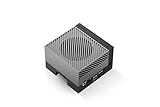
- The NVIDIA Jetson AGX Orin 64GB Developer Kit makes it easy to get started with Jetson Orin. Compact size, lots of connectors, and up to 275 TOPS of AI performance make this developer kit perfect for prototyping advanced AI-powered robots and other autonomous machines.
- The developer kit includes a Jetson AGX Orin 64GB module, and can emulate all the Jetson Orin modules. It supports multiple concurrent AI application pipelines with the NVIDIA Ampere GPU architecture, next-generation deep learning and vision accelerators, high-speed IO and fast memory bandwidth. Now you can develop solutions using your largest and most complex AI models to solve problems such as natural language understanding, 3D perception, and multi-sensor fusion.
- Jetson runs the NVIDIA AI software stack, and use-case specific application frameworks are available, including Isaac for robotics, DeepStream for vision AI, and Riva for conversational AI. You can save significant time with NVIDIA Omniverse Replicator for synthetic data generation (SDG), and by using NVIDIA TAO toolkit to fine-tune pretrained AI models from the NGC catalog.
- Jetson ecosystem partners offer additional AI and system software, developer tools, and custom software development. They can also help with cameras and other sensors, as well as carrier boards and design services for your product.
- With the computing capability of more than 8 Jetson AGX Xavier systems in a developer kit that integrates the latest NVIDIA GPU technology with the world’s most advanced deep learning software stack, you’ll have the flexibility to create tomorrow’s AI solution as well as today’s.
Nvidia’s launch materials described inputs including text, images, video, robot sensor data and motion data. The resulting outputs can include scene variations or possible future states that developers use in training and testing workflows.
For the underlying platform and current releases, see the Nvidia Cosmos repository.
What does “world foundation model” mean?
A language model predicts likely sequences of words. A world model attempts to predict how an environment may change over time.
For example, a robot might observe a box on a table and receive an instruction to move it. A world model could generate possible future frames showing the box being approached, grasped and moved. An autonomous-driving developer could provide a recorded road scene and use a model to explore variations involving traffic, weather, visibility or the movement of nearby vehicles.
Do these 3 things before closing this tab:
1Scan for outdated or missing drivers - takes under a minute2Clear out junk files and repair common Windows errors3Fix the driver behind crashes, sound loss and screen glitchesThose generated futures can help developers create training data, test planning systems and investigate rare situations that are expensive, dangerous or difficult to collect in the real world.
However, “world model” does not mean a formal physics engine or a guaranteed internal simulation of reality. Cosmos produces learned, probabilistic predictions. A clip may look convincing while containing incorrect geometry, object identity, timing, contact or causality. Nvidia’s description of “physics-aware” should therefore be read as a design goal, not a guarantee of physically correct output.
Why robots and autonomous cars need synthetic data
Physical AI systems need far more than ordinary image recognition. They must interpret changing environments, predict what will happen next and select actions that work safely.
Real-world data is valuable because it reflects authentic sensors and environments, but collecting it is slow and costly. Autonomous-vehicle developers need combinations of road layouts, weather, traffic, lighting and unusual events. Robotics teams may need people to demonstrate the same task repeatedly, while dangerous failures cannot simply be staged with a human nearby.
Cosmos is intended to supplement that data collection. Nvidia has presented the approach as a faster and potentially cheaper way to expand datasets, but the exact savings depend on the task, hardware, engineering effort and validation process. Synthetic data is not a universal replacement for real-world data.
How Cosmos could help robots
A typical robotics workflow might look like this:
- Provide real robot footage, sensor data, images, text instructions or motion information.
- Generate plausible scene variations or future states.
- Use the resulting data to train perception, planning, policy or world-model systems.
- Test candidate policies in simulation before transferring them to a physical robot.
- Compare predictions and generated outcomes with real observations.
This could be useful for manipulation, navigation and other tasks where robots need exposure to many combinations of objects, environments and actions. Cosmos can also complement dedicated simulation tools rather than replace them.
Nvidia has subsequently identified companies including Agility Robotics, 1X, Doosan Robotics, LG Electronics, Samsung Electronics, Skild AI and Agile Robots in its ecosystem or adoption announcements. These announcements should be understood as partnerships, adopters or ecosystem participation—not evidence that every company has deployed Cosmos-powered robots at commercial scale.
How Cosmos could help cars
For autonomous-driving development, possible uses include:
Crashes, No Sound, or Screen Glitches?
Random freezes, missing sound and display glitches usually trace back to one bad driver. Find and replace yours safely.Free scan · under a minutePC Slower Than It Used to Be?
A free scan shows the junk files, broken settings and background clutter dragging Windows down - then fixes them in one click.Free scan · Windows 10 & 11Rank #2

- 【Core Parameters】★AI Perf: 34/67 TOPS ★GPU:1024-core official Ampere architecture GPU with 32 Tensor Cores ★CPU:6-core Arm Corte-A78AE v8.2 64-bit CPU 1.5MB L2 + 4MB L3 ★Memory:8GB 128-bit LPDDR5 68 GB/s ★Storage: external NVMe via M.2 Key M
- 【Empowered by Large Al Model, Enhanced Human-Computer Interaction】Jetson Orin Super leverages three AI models and incorporates an AI voice interaction module. This multimodal visual system matches the scene being described, enabling environmental awareness and AI visual gameplay. Combined with a large-scale voice module and camera, it enables speech-to-text, semantic analysis, natural conversation, and real-time video analysis, enabling advanced embodied AI applications.
- 【AI Upgrade】Jetson Orin Nano series modules are compact in size but can deliver up to 34-67 TOPS of AI performance, with power consumption ranging from 7 watts to 25 watts. Compared to the Jetson Nano B01, it offers up to 80 times the performance and sets a new standard for entry-level edge AI.
- 【Highly compatible carrier board】Yahboom's carrier board is fully compatible with orin nano module. Compared to carrier boards that use Jetson Nano on the market, the newly upgraded circuit supports 25W power mode, which enables larger and more complex neural networks and fully leverages the performance of the core module. The resources, size, and interfaces of the Yahboom carrier board are consistent with the official board, with the only difference addition of power switch button.
- 【Tutorial materials provided】The JETSON system based on Ubuntu 22.04 provides a complete desktop Linux environment with accelerated graphics, supporting CUDA 12.6, TensorRT 10.7.0, cuDNN 9.6.0, OpenCV 4.10.0, etc. The performance on AI LLM, VLM and visual Transformer is significantly improved compared with the previous generation.
- Generating additional scenes from existing camera or sensor recordings.
- Exploring rare or hazardous driving situations.
- Varying weather, traffic, road layouts and visibility.
- Predicting likely future states of a scene.
- Supporting perception, trajectory-prediction and planning research.
- Connecting learned generation with Nvidia’s Omniverse and DRIVE workflows.
Cosmos does not itself drive a production vehicle. A deployable autonomous-driving system also requires sensors, vehicle computers, perception and planning software, maps, controls, safety validation, regulatory compliance and operational safeguards. Cosmos is a development and data-generation component, not a complete self-driving stack.
What Nvidia announced at CES 2025
The January 2025 announcement focused on Cosmos as an openly released platform for physical AI. Nvidia presented predictive and generative world-model capabilities aimed at robots, autonomous vehicles and related applications, with connections to its simulation and computing ecosystem. The company also emphasized model access, tokenizers, guardrails and data tools.
Nvidia later reported that Cosmos received the CNET Group’s Best AI and Best Overall awards in its Best of CES program. Saying Cosmos “won Best of CES 2025” is reasonable shorthand, but it should not imply that Cosmos won every award category or that the result was a universal technical certification. The precise claim is that it received those two reported awards.
What changed after CES?
March 2025
Nvidia announced additional Cosmos world foundation models and physical-AI data tools, including Cosmos Transfer and expanded Omniverse integration. Agility Robotics was identified as an early adopter for synthetic-data generation.
Late 2025
Project documentation lists Cosmos Predict 2.5 and Cosmos Transfer 2.5 releases. These were subsequent developments, not features that should be attributed to the January CES announcement.
2026: Cosmos 3
The current Cosmos repository lists Cosmos 3, released in 2026, as an omnimodal model family combining language, images, video, audio and action sequences. Listed variants include Cosmos3-Nano at 16 billion parameters and Cosmos3-Super at 64 billion parameters, alongside generator, reasoner and policy-oriented models.
Cosmos 3 shows that Nvidia continued developing the concept, but its later capabilities should not be presented as if they were demonstrated or available at CES 2025.
Is Nvidia Cosmos open source?
The safest description is that Cosmos is openly released and available under Nvidia’s OpenMDW-1.1 License. “Open source” can mean different things for software, model weights, training data and dependencies, so the label should not be treated as an unrestricted permission to use everything for any purpose.
Recommended Free Tools
Developers should review the model and source-code license, attribution and notice requirements, patent provisions, usage conditions and the separate licenses of third-party dependencies. Commercial users should also verify the terms applying to the particular release and dataset they intend to use.
Independent reader supportYour contribution helps us test, update, and keep practical guides available for everyone.Who can run Cosmos?
Open availability does not make Cosmos a typical consumer download. Nvidia’s current Cosmos Framework setup documentation lists requirements including:
- An Nvidia Ampere GPU or newer.
- CUDA 12.8 or newer.
- Linux.
- Python 3.10 or newer.
- Approximately 150 GB of free disk space for a first workflow.
Larger models and production workloads may require multiple GPUs, offloading or serving infrastructure. Hardware, CUDA, driver and PyTorch incompatibilities can prevent installation or inference.
The practical route for a small team may be rented cloud GPU capacity. Organizations running repeated, demanding workloads may consider managed infrastructure such as DGX Cloud or on-premises systems. Those infrastructure choices involve costs beyond the model itself.
Quick wins for a faster PC:
Repair Windows errors before they cause bigger problemsFix Now →Fix the driver behind crashes, sound loss and screen glitchesFind Drivers →Clear out junk files and repair common Windows errorsFree Scan →Rank #3

- This product is only a baseboard and needs to be used with a core module.
- Jetson Orin Nano/NX Super Carrier Board – Designed for Jetson Orin Nano/NX AI Modules, Compatible with NV Jetson Orin Nano Super Official Kit Carrier Board. Compatible with Jetson Orin Nano/NX Super Core Modules, featuring five USB ports, two M.2 Key M slots, and one M.2 Key E slot.
- 2× 4-Lane CSI Camera Ports For AI Applications Such As Face Recognition, Road Sign Recognition And License Plate Recognition
- Supports Connecting To More Peripherals, USB 3.2 Gen 2 Ports For Data Transmission Up To 10Gbps, And The Type-C Port Can Be Used For System Burning
- Supports DP High-Definition Port. Onboard 2× M.2 Key M Ports For Easy Connecting Solid State Drives And 1× M.2 Key E Interface For Connecting Wireless NIC, Which Can Reduce Cable Connection
Cosmos’s biggest limitations
Convincing video can still be wrong
A generated vehicle may move in a visually plausible way while violating friction, collision dynamics or the timing of a real sensor sequence. Robots may appear to make contact with objects without providing reliable information about force or grasp stability.
Domain shift
A model trained or tuned around one geography, sensor configuration, camera position, lighting condition or robot design may not generalize to another. Generated data must be checked against the target hardware and environment.
Synthetic-data artifacts
If a model is trained mostly on generated footage, it may learn recurring artifacts from the generator instead of the real world. Synthetic data generally works best as a controlled supplement to carefully selected real data.
Evaluation can mislead
Generated test scenes that closely resemble training material can make a system appear better than it is. Useful evaluation should include held-out real-world data, varied conditions and physical testing where safety permits.
Free tools Windows power users keep installed
One-click scans. No signup required.
Compute and storage are substantial
Current requirements illustrate the gap between “available” and “easy to run.” Cosmos is aimed primarily at developers and organizations with compatible Nvidia hardware or access to suitable cloud infrastructure.
It does not solve deployment safety
Cosmos can support training and development, but it does not replace validation on physical robots or vehicles. It cannot by itself provide safety certification, regulatory approval or reliable behavior in every unexpected situation.
Cosmos versus other approaches
The relevant comparison is not simply which system generates the most attractive video. Developers should ask whether a tool preserves geometry and object identity, represents actions and contact correctly, improves downstream performance, generalizes to the target environment, produces auditable results and has commercially usable licensing.
Traditional physics engines and hand-built simulators offer greater control and reproducibility for defined tasks. Game-engine workflows can create large synthetic datasets but often require extensive asset and scenario work. Real-world fleet or robot telemetry provides authentic distributions but is expensive and slow. Other world models, robotics policy systems and hosted generative services may be easier to access, but their usefulness depends on controls, benchmarks, physical consistency and terms of use.
Cosmos is most naturally viewed as a learned generative and predictive layer that complements Nvidia’s simulation, robotics and automotive tools. That makes it particularly attractive to teams already invested in Nvidia GPUs, CUDA, Omniverse, Isaac or DRIVE, while teams seeking hardware-neutral or small-scale experimentation may find the ecosystem coupling significant.
What the CES award really means
Cosmos was notable at CES 2025 because it targeted a genuine bottleneck: the lack of affordable, diverse and safely collected data for physical AI. It also fit Nvidia’s strategy of supplying the models, software, simulation tools and compute infrastructure needed to build the next generation of robots and autonomous vehicles.
But an award for technical ambition and relevance is not evidence that Cosmos has solved robotics, autonomous driving or sim-to-real transfer. The real measure will be whether generated and predicted data reliably improves systems on unseen, physical-world tasks without introducing new safety failures.
Quick Recap
Product prices and availability are accurate as of the date/time indicated and are subject to change. Any price and availability information displayed on Amazon at the time of purchase will apply.
What’s actually slowing this PC down?
Pick the symptom - the matching free tool is one click away.




