The NTSB’s preliminary report says the Cessna 550 carrying former NASCAR driver Greg Biffle, members of his family and three other people experienced a series of instrument and cockpit indications problems before turning back toward Statesville Regional Airport in North Carolina. The aircraft crashed short of Runway 28 at the Statesville airport on Dec. 18, 2025, killing all seven people aboard.
The report does not identify a probable cause. As of Aug. 11, 2026, the investigation remained open, and the NTSB warned that its preliminary information could change before the final report addresses the cause and any contributing factors.
As an Amazon Associate I earn from qualifying purchases.
Reporting basis: This account is based on the NTSB preliminary report for investigation WPR26MA063, FAA registry information, NASCAR’s official Greg Biffle biography and an Associated Press report on the victims’ names. No final NTSB cause had been issued as of Aug. 11, 2026.
The Tool Desk
Outbyte PC Repair FREEClear out junk files and repair common Windows errorsFree Scan →Outbyte Driver Updater FREEScan for outdated or missing drivers - takes under a minuteDriver Scan →Who was aboard the Cessna 550?
The seven people aboard were identified in a joint statement released by the victims’ families and reported by the Associated Press:
#1 Best Overall

- SUPERIOR AUDIO CLARITY – Featuring a premier noise reduction rating (NRR) of 24db and stereo sound output, this aviation headset ensures crystal-clear audio with minimal background noise.
- COMFORTABLE AND DURABLE DESIGN – Designed for extended wear during long flights that can withstand the rigors of regular aviation use, the ultra-plush silicone gel ear seals (which are replaceable) and extra-thick head pad with adjustable headband deliver unmatched comfort and durability.
- HIGH-QUALITY MICROPHONE - Equipped with an electret noise-canceling microphone with preamp on 360° flex boom, ensuring your communication is consistently clear and uninterrupted, even in noisy environments. The microphone is adjustable and stays in position well.
- VERSATILE AUDIO & COMPATIBILITY – Independent volume controls for each ear, clear hear speakers, a mono/stereo switch, and a 3.5mm AUX input. Connect to apps like ForeFlight for real-time alerts, navigation cues, and in-flight updates straight to your headset.
- COMPLETE PACKAGE - A custom-fit headset bag is included to protect your headset outside of flying times. This bag is FREE when purchasing the headset.
- Greg Biffle, the retired NASCAR driver
- Cristina Grossu Biffle, his wife
- Ryder Biffle, his son
- Emma Biffle, his daughter
- Craig Wadsworth
- Dennis Dutton, an airline pilot
- Jack Dutton, Dennis Dutton’s son
There were no survivors.
What happened at Statesville Regional Airport?
The aircraft was a Cessna 550, commonly known as a Citation II, registered as N257BW. It was parked on the airport’s south parking ramp for passenger loading and preflight. Ground personnel told investigators that the jet was fully fueled.
The cockpit voice recorder began recording at 9:44:21 a.m. local time. The left engine initially failed to start. Both engines were running at approximately 9:53 a.m., after which the aircraft began taxiing for departure.
During the taxi, the pilot and the two pilot-rated occupants discussed an inoperative thrust-reverser indicator light. The discussion indicated that the affected thrust reverser itself appeared to operate, even though the cockpit light was not functioning. That observation is part of the preliminary factual record; it is not an NTSB finding that the thrust reverser caused the crash.
The jet departed Runway 10 at approximately 10:06 a.m. under visual flight rules. The planned destination was Sarasota/Bradenton International Airport in Florida, and the crew intended to activate an instrument-flight-rules flight plan after takeoff.
During the takeoff roll, a passenger seated toward the rear commented that the left engine appeared to be producing more power than the right and suggested that a gauge might be faulty. The preliminary report does not conclude that either engine had failed or that an engine-power imbalance caused the loss of control.
Timeline of the flight
| Approximate time | What the preliminary report records |
|---|---|
| 9:44:21 a.m. | The cockpit voice recorder began recording while the aircraft was on the south parking ramp. |
| 9:53 a.m. | Both engines had been started after the left engine initially failed to start. |
| 10:06 a.m. | The Cessna 550 departed Runway 10 under visual flight rules. |
| Approximately 4,500 feet | The pilot reported that the left-side altitude indicator was not working properly and suggested that other left-side flight instruments might also be failing. |
| After the instrument indications began | The Garmin GTN-750 stopped recording airspeed and then heading data. The autopilot disengaged, and the aircraft turned back toward Statesville. |
| Approximately 10:13 a.m. | The aircraft was about 1,800 feet above ground level. Occupants indicated that they could see the ground. |
| Approximately 10:14:10 a.m. | The aircraft entered a left turn toward Runway 28. |
| Approximately 10:14:50 a.m. | Recorded data showed the aircraft aligned with the runway heading at about 1,240 feet mean sea level and 114 knots indicated airspeed. |
| 10:15:18 a.m. | The aircraft was recorded at 984 feet mean sea level and 99 knots indicated airspeed. |
| 10:15:23 a.m. | The recorded data ended. |
Instrument problems developed after takeoff
At about 4,500 feet, the pilot reported that the altitude indicator on the left side of the cockpit was not functioning properly. The pilot also suggested that other instruments on that side might be affected.
The preliminary report says the Garmin GTN-750 stopped recording airspeed information and then heading information. The autopilot disengaged around the same portion of the flight. The aircraft then turned back toward Statesville instead of continuing toward Florida.
These details establish what the crew reported and what the recorded data showed. They do not yet establish the underlying failure. The available preliminary materials do not conclusively determine whether the issue involved an individual instrument, an electrical or avionics system, a broader power problem, or another source.
After the turnback, Jack Dutton, the right-seat passenger, temporarily handled the controls, checklists and radio communications. The NTSB said its review found that he held a private pilot certificate with single-engine-land and instrument ratings, but that he was not qualified under the applicable rules to perform the required second-in-command duties for this aircraft.
Rank #2
![Bose A30 Bluetooth Aviation Headset - Lightweight Comfortable Design, Adjustable ANR and Noise Cancelling Microphone, [Dual Plug] – Black](https://m.media-amazon.com/images/I/41sTva8tf5L._SL160_.jpg)
- UNPARALLELED COMFORT: The Bose A30 is a full-sized circumaural aviation headset with a lightweight design and 20% lower clamping force than the A20 along with soft, comfortable ear seals.
- PRECISION-FOCUSED NOISE CANCELLING MICROPHONE: The Bose A30’s microphone is engineered for aircraft with “hot mic” or PTT systems to increase clarity and reduce background noise during transmission.
- FAA TSO and EASA E/TSO-C139a CERTIFIED: The Bose A30’s robust design has passed 145 tests by the Bose engineering and quality assurance team to ensure endurance in challenging flight environments.
- THREE SELECTABLE MODES OF ACTIVE NOISE CANCELLATION: Industry-leading active noise reduction with adjustable modes accommodates different use cases or pilot personal preference.
- ACTIVE EQUALIZATION: Incoming signals are shaped and equalized for unmatched audio clarity and intelligibility to this headset with mic.
The report also states that the pilot’s CE-500 type rating carried a “Second in Command Required” limitation. This qualification issue is a factual finding, not a conclusion that Jack Dutton’s participation caused the crash or that the NTSB has assigned it causal weight.
The crew attempted to return to Statesville
At approximately 10:13 a.m., the aircraft was around 1,800 feet above ground level. Occupants indicated that they could see the ground. The pilot resumed control, turned toward the airport traffic pattern and requested flap and landing-gear extension.
Quick wins for a faster PC:
Scan for outdated or missing drivers - takes under a minuteDriver Scan →Clear out junk files and repair common Windows errorsFree Scan →The landing-gear indicator lights did not illuminate. The report does not establish from the preliminary information whether the gear itself failed to extend, whether only the indication system was affected, or how that issue influenced the landing attempt.
The aircraft entered a left turn toward Runway 28 at approximately 10:14:10. Recorded data showed it aligned with the runway at approximately 10:14:50, at 1,240 feet mean sea level and 114 knots indicated airspeed.
It then continued to lose altitude and airspeed. At 10:15:18, the aircraft was recorded at 984 feet mean sea level and 99 knots indicated airspeed. The data ended five seconds later.
Where the aircraft struck the ground
The first identified point of impact was the easternmost light station of the Medium Intensity Approach Light System with Runway Alignment Indicator Lights for Runway 28. That light station was approximately 1,380 feet before the runway threshold.
What’s actually slowing this PC down?
Pick the symptom - the matching free tool is one click away.
The debris path continued through trees and the runway overrun. The main wreckage came to rest about 400 feet short of the Runway 28 threshold. A post-impact fire consumed much of the fuselage and damaged both wings, the empennage and both engines.
The preliminary report does not describe a pre-impact breakup. Investigators reported no evidence of a pre-impact separation of an aircraft component or structure. All major flight-control components were located in the debris path or main wreckage.
What investigators found about the engines and aircraft structure
Both engines remained attached to their pylons. Investigators found no evidence of an uncontained engine failure, meaning they did not identify evidence that an engine component broke apart and penetrated the engine case or aircraft before impact.
Rank #3

- COMFORTABLE AND DURABLE DESIGN – The RA200s lightweight design weighing only 16 oz paired with soft foam ear seals provides unparalleled comfort over extended flights.
- UNMATCHED AUDIO CLARITY - Premier noise reduction rating (NRR) of 24db and electret noise-canceling microphone provides crystal clear audio ensuring minimal background noise.
- AUDIO ADJUSTABILITY - Individual volume control on each ear with ultra-lite neodymium speakers and a 3.5mm input jack for phone connection (AUDIO ONLY).
- HIGH QUALITY MICROPHONE - Equipped with an advanced noise canceling electret microphone, you can ensure your communication remains clear and uninterrupted.
- PROTECT YOUR INVESTMENT - A custom padded headset bag is included to protect your headset outside of flying times. This bag is FREE when purchasing the headset.
The throttle-quadrant positions were consistent with both thrust reversers being stowed. Both engines showed evidence consistent with rotation and impact damage. Those findings do not amount to a final determination that the engines were operating normally throughout the flight, nor do they rule out every possible engine, control or power-related issue.
Do these 3 things before closing this tab:
1Clear out junk files and repair common Windows errors2Fix the driver behind crashes, sound loss and screen glitches3Repair Windows errors before they cause bigger problemsIn particular, the NTSB’s preliminary examination should not be rewritten as a conclusion that the aircraft had no mechanical problem. It shows that investigators did not identify an obvious pre-impact structural breakup or uncontained engine failure during the initial examination.
Weather changed during the short flight
Statesville Regional Airport’s automated weather observation at 9:45 a.m. reported:
- Calm wind
- 10 statute miles of visibility
- A broken ceiling at 3,900 feet
- An overcast layer at 4,800 feet
At 10:15 a.m., close to the end of the flight, the reported conditions were:
- Calm wind
- 5 statute miles of visibility
- Heavy drizzle
- Broken ceilings at 1,200 and 2,200 feet above ground level
- An overcast layer at 5,000 feet
The observations show that visibility decreased and lower cloud layers and heavy drizzle were present during the return to the airport. The NTSB preliminary materials do not establish that weather alone caused the crash. Weather was one part of a rapidly developing sequence that also included instrument indications, avionics behavior, cockpit workload, aircraft control and the approach to Runway 28.
Free tools Windows power users keep installed
One-click scans. No signup required.
It would therefore be inaccurate to describe the event as being conclusively caused by fog, drizzle or low clouds. The reported conditions included drizzle and reduced visibility, but the record does not assign those conditions a causal role.
What is known about the pilot and right-seat occupant?
Dennis Dutton held type ratings for several large aircraft, including the CE-500. He reported approximately 17,000 hours of total civil flight experience and approximately 400 hours during the preceding six months, according to information in the NTSB report from his most recent first-class medical application.
Jack Dutton held a private pilot certificate with single-engine-land and instrument ratings. The NTSB’s review of his records indicated approximately 175.3 hours of single-engine-land flight time. The agency concluded that he was not qualified to perform second-in-command duties under the applicable regulation and the aircraft type-rating limitation.
The distinction matters. The preliminary report identifies a qualification and cockpit-crew issue, but it does not say that Jack Dutton caused the crash. It also does not assign a probable cause to the pilot’s actions, crew coordination, the instrument indications or any other factor.
Windows Errors? Fix Them Before They Spread
Repair common Windows errors and clear accumulated junk for a smoother, more stable PC - no reinstall needed.Free scan · no reinstallCrashes, No Sound, or Screen Glitches?
Random freezes, missing sound and display glitches usually trace back to one bad driver. Find and replace yours safely.Free scan · under a minuteRank #4
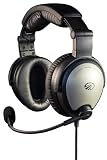
- FIVE STAR COMFORT: Embark for every journey sporting maximum comfort. Our over the ear headphones are constructed for a lightweight fit with a reversible headband and microphone design. Sierra wired headphones with microphone ear seals are constructed to create a better seal and greater distribution of side pressure. Give yourself the luxury head set you deserve.
- FIVE BY FIVE COMMS: We understand reliable communication is key for safety. Our noise canceling headset with a microphone provides advanced noise reduction through state-of-the-art technology. Sierra communication headset allows full Bluetooth connectivity and offers an integrated control box with auxiliary input to make pairing your devices easy!
- EXCEPTIONAL QUALITY: Invest in your future. Aviation headsets for pilots are essential aviation tools that should be built to last. Our head phones are designed with durability and longevity in mind to endure the harshest flying environments and last long-term. Sierra is made for high-quality performance. All of our Sierra headsets are made in America.
- PREMIUM FEATURES: Pair with our exclusive app to capture incoming and outgoing communication. Sierra bluetooth headset with microphone automatically lowers the volume of any auxiliary device during radio or intercom transmissions. The soft mute feature gently eases music back in for a smooth listening transition. Incorporate the features you desire in your bluetooth headset for your ultimate experience.
- DESIGNED BY FELLOW PILOTS: As a company of pilots and flight enthusiasts, we strive to know our customers well and deliver an innovative in-flight experience. Our Sierra bluetooth headphones with microphone are constructed by our finest engineers who understand what pilots need. Sierra aviation headsets are designed as pilot headsets for airplanes but can also be used as tactical headset or military headset.
What type of aircraft was N257BW?
FAA registry information identifies N257BW as a Cessna model 550 fixed-wing, multi-engine aircraft with turbofan engines. The aircraft was manufactured in 1981 and used Pratt & Whitney Canada JT15D-1 engines.
The Cessna 550 is commonly called the Cessna Citation 550 or Citation II. It was a mid-sized business jet, not a small piston-powered airplane. At the same time, this was a general-aviation Part 91 personal flight rather than an airline flight carrying passengers under scheduled-airline operating rules.
The FAA registry listed GB Aviation Leasing LLC of Mooresville, North Carolina, as the registered owner. Registry ownership is not, by itself, proof of beneficial ownership, who arranged the flight or who had operational control of the aircraft. The registry record also does not establish the aircraft’s complete maintenance history or its airworthiness condition before the flight.
What did the cockpit voice recorder reveal?
The cockpit voice recorder contained approximately 31 minutes of analog audio. The NTSB successfully downloaded the recording, but described the audio quality as poor, with a low signal-to-noise ratio.
Recommended Free Tools
At one point, audio quality degraded across channels in a manner consistent with a possible electrical-power issue. The preliminary report did not resolve the cause of that degradation. That finding is another reason a definitive explanation cannot yet be drawn from the preliminary account.
Independent reader supportYour contribution helps us test, update, and keep practical guides available for everyone.Greg Biffle’s NASCAR career
Greg Biffle was a retired NASCAR driver and was named among NASCAR’s 75 Greatest Drivers. NASCAR’s official biography lists 19 NASCAR Cup Series victories in 515 starts.
He also won the NASCAR Truck Series championship in 2000 and the Xfinity Series championship in 2002. Those accomplishments made him one of the drivers to win championships in both of NASCAR’s national support divisions before competing in the Cup Series.
The crash was not connected to a NASCAR event. Biffle was traveling on a private general-aviation flight aboard the Cessna 550.
What the NTSB has not determined
The NTSB had not issued a probable cause as of Aug. 11, 2026. The final report is expected to address the cause and any contributing factors, and the agency cautions that preliminary information may change.
Best Value

- [ULTRA LIGHT WEIGHT]The lightest ANR aviation headset in the world only 175g weight super comfortable for long time wear let you enjoy flying all the time. Until now many thousands of pilots are using it and most of pilots are love it. New version comes with reinforced cables and connectors,MORE durable! NOTE:UFQ L2 is an ANR in ear aviation headset without bluetooth If you want to buy with bluetooth, then you can choose UFQ BT L2
- [GREAT ANR and PNR PERFORMANCE] Great ANR aviation headset total 52 dB NRR with ANR and PNR light weight more quiter and more comfortable Pay Less But Get More. when ANR is ON, like you close the door to Isolate noise for a quieter environment and a more enjoyable flight experience with less fatigue. New version comes with reinforced cables and connectors,MORE durable! NOTE:UFQ L2 is an ANR in ear aviation headset without bluetooth If you want to buy with bluetooth, then you can choose UFQ BT L2
- [CLEAR COMMUNICATION] Comes with UFQ M-7U aviation microphone provides clear, crisp voice transmission.comes with flex boom for perfect microphone placement Designed for high noise environment aircraft cockpits and ensures crystal clear communication. The same performance with DC M-7A who declares Exclusive M-7A, the most advanced noise-cancelling microphone available
- [SUPER COMFORTABLE] Both headband and ear loops can be adjusted to suit for individual pilot's needness. 2 kinds of ear tips include silicon rubber and memory foam, every kind has 3 pairs different sizes (S,M,L) you can choose which ear tips you pefer to. comes with new gel rubber ear cushions,feel softer. also comes with great design earphone comply to ergonomics great fit for ear canal and the latest fashion design makes pilots cool.
- [DURABLE] Comes with steel headband, also comes with reinforced cables with Kevlar inside and reinforced connectors, with GOLDEN plated twin GA plugs,MORE durable!
The current record does not conclusively establish whether the decisive link was:
- A failure or malfunction involving the aircraft’s flight instruments
- An electrical or avionics problem
- The behavior of the Garmin GTN-750 or autopilot
- The landing-gear indication issue
- Weather or changing visibility
- Cockpit workload or crew coordination
- Air-speed management during the return and approach
- An engine-related condition
- A combination of these or another factor
Accordingly, it is not supported by the preliminary report to say that a particular gauge failure, an engine failure, an unqualified copilot, pilot error, fog or drizzle caused the crash. Those conclusions should wait for the NTSB’s final findings and any supporting docket material.
What happens next in the investigation?
The NTSB’s investigation page and docket are expected to provide additional material from the systems, powerplant, avionics, recorder, operational, meteorological and human-factors portions of the investigation. A final report may revise or add to the preliminary factual account and will be the authoritative source for probable cause.
Any later lawsuits, expert reconstructions or social-media accounts should be treated as separate material. The existence of litigation or a public theory would not, by itself, establish why the Cessna 550 crashed.
Frequently Asked Questions
What type of aircraft crashed at Statesville Regional Airport?
The aircraft was a 1981 Cessna 550, commonly called a Citation II, registered as N257BW. It was a mid-sized business jet with two Pratt & Whitney Canada JT15D-1 turbofan engines.
Did the NTSB determine what caused the crash?
No. As of Aug. 11, 2026, the NTSB investigation remained ongoing and no probable cause had been issued. The preliminary report described instrument, avionics and approach-related events but did not assign causal responsibility.
Was an engine failure confirmed?
No. Investigators found no evidence of an uncontained engine failure, and both engines remained attached to their pylons. The preliminary report did not establish that the engines were free of every possible mechanical or power-related problem.
Was Jack Dutton qualified to serve as the aircraft’s second-in-command?
The NTSB said its review found that Jack Dutton was not qualified under the applicable rules and the aircraft type-rating limitation to perform the required second-in-command duties. The report did not conclude that this qualification issue caused the crash.
The Bottom Line
Bottom line: The preliminary NTSB record describes a Cessna 550 that developed reported instrument and avionics problems after departing Statesville, turned back in changing weather, lost altitude and airspeed on the approach, and struck the approach-light system short of Runway 28. All seven people aboard died, but the NTSB had not determined the probable cause as of Aug. 11, 2026.
Quick Recap
Product prices and availability are accurate as of the date/time indicated and are subject to change. Any price and availability information displayed on Amazon at the time of purchase will apply.




