Quick wins for a faster PC:
Scan for outdated or missing drivers - takes under a minuteDriver Scan →Repair Windows errors before they cause bigger problemsFix Now →Fix the driver behind crashes, sound loss and screen glitchesFind Drivers →Middleware lets autonomous-vehicle software components exchange data and request services without each component having to manage every hardware, operating-system, network, and transport detail itself. It is an integration layer—not an autonomy system or a safety certification—and vehicles can combine multiple middleware standards rather than rely on one universal product.
What middleware does in an autonomous vehicle
An autonomous vehicle is built from software components that produce, consume, and act on information. A perception component might publish object positions and speeds; another component may use that information to plan motion, while other software manages vehicle functions. Middleware supplies communication abstractions and interfaces among these components.
The abstraction matters because an application should not necessarily need to know every detail of the processor, operating system, network topology, or transport used to deliver a message or service. Middleware can help define how components communicate and what communication mechanisms are available. The degree of abstraction, and what must still be configured for a particular vehicle, depends on the platform.
- It does: support communication among software components and abstract some lower-level infrastructure.
- It does not, by itself: make a vehicle autonomous, guarantee that data arrives in time, ensure components are compatible, or establish a system safety case.
Those outcomes depend on the complete system: component behavior, configuration, hardware, networks, integration, and the evidence assembled for the vehicle program.
#1 Best Overall

- Powerful GPS Module: Utilizing advanced technology, it eliminates the need for external storage, supports applications at altitudes up to 80 kilometers, and its GNSS engine automatically calculates and predicts ephemeris data upon power-on, supporting three-day calculations and storing the predictions in memory. If satellite data is insufficient, the GNSS engine can use this information for subsequent positioning, making it an ideal choice for developers and adventure enthusiasts.
- Precise Positioning: During operation, the GPS module provides a positioning accuracy of -162dBm tracking mode and -148dBm acquisition mode, with a CEP of up to 2.5 meters, enabling stable positioning even in complex environments such as urban canyons or dense jungles.
- GPS Module Parameters: Operating voltage 2.8V to 4.3V, power consumption only 18mA at 3.3V, update frequency up to 10Hz, operating temperature -40°C to 85°C, storage temperature -45°C to 125°C
- Product Applications: Portable devices, vehicle management, asset tracking, smart security systems, networked PNDs, GIS applications, industrial PDAs. It can also be used with Mesh nodes T114, V4 development boards, Arduino, ESP32, LoRa modules, etc., to quickly build IoT applications such as GPS trackers and weather stations.
- Note: ① Normally, the GNSS module enters periodic mode after successful positioning. However, if acquisition fails, the GNSS module can still enter this mode. ② If GNSS acquisition fails during operation, to ensure successful re-acquisition, it is best to set a longer second run time. For example: PMTK225, 1, 3000, 12000, 18000, 72000*16, cycle mode, tracking mode lasts for 3 seconds, standby mode sleeps for 12 seconds. Average current is approximately 3.7mA.
How AUTOSAR and ROS 2 approach the problem
AUTOSAR and ROS 2 are useful reference points, but they are not interchangeable products. They come from different ecosystems and offer different platform and communication abstractions. AUTOSAR itself includes distinct platform approaches, so “AUTOSAR middleware” does not refer to one identical layer in every vehicle design.
| Approach | How it structures communication | Context described by its official sources |
|---|---|---|
| AUTOSAR Classic | Application software communicates through defined interfaces and an RTE above Basic Software. The Virtual Functional Bus (VFB) presents communication from the application’s point of view, while implementation mechanisms sit below it. | Deeply embedded systems with high predictability, safety, security, and responsiveness requirements; runs on a microcontroller. |
| AUTOSAR Adaptive | The Adaptive Platform uses ara::com for service-oriented communication. AUTOSAR describes automated-driving interfaces linking sensor services with automated-driving functions. | Adaptive-platform applications and service-oriented communication, including automated-driving interfaces. |
| ROS 2 | ROS 2 exposes communication concepts through a client-facing API and an abstract middleware interface. A vendor-specific rmw package connects that interface to a concrete middleware API; DDS implementations are one possible foundation. |
A ROS 2 software ecosystem whose middleware implementation and support depend on the target and ROS 2 distribution. |
AUTOSAR Classic: a layered embedded platform
AUTOSAR’s Classic Platform description divides the software platform into Application, Runtime Environment (RTE), and Basic Software (BSW) layers. The RTE is the communication abstraction between application software and lower-level services. The VFB describes application communication in a way that can be mapped to implementation mechanisms, helping separate the application’s view from details below it.
This is a design for structured embedded software, not a promise that an application can move unchanged across arbitrary ECUs. The actual mapping, configuration, hardware, and implementation still matter. An abstraction can make boundaries explicit; it cannot independently create portability or prove safety.
Rank #2
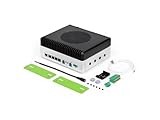
- Powerful embodied AI Platform Compatible with the Jetson AGX Orin 32GB module, offering computing capability of 200 TOPS. Perfect platform for embodied AI and AMR
- Multi-Connectivity Featuring 2x M.2 Key M slots for SSD, M.2 Key E slot for Wi-Fi and M.2 Key B slot for 4G/5G
- Wide Voltage Input Range Can be used in 48V battery power system
- Rich IO capabilities Includes most common IOs used in robotics and AMR prototyping, such as USB, 10G Ethernet, CAN, RS-232/422/485, I2C, SPI and I2S
- Vision AI Support Features 4x 4-lane CSI output, and can be connected up to 8x GMSL2 cameras, making it ideal for vision AI applications such as BEV, Occupancy Grid, SLAM etc
AUTOSAR Adaptive: service-oriented communication
For Adaptive Platform communication, AUTOSAR identifies ara::com as the middleware used for service-oriented communication. Its cross-standard working group describes automated-driving interfaces between sensor services and automated-driving functions. The logical information described includes object classification, position, speed, and direction.
AUTOSAR’s Common Adaptive Platform Implementation (CAPI) page describes CAPI 1.0 as following Adaptive Platform release R20-11, with forward-looking compatibility for some R23-11 interfaces. The page lists 15 core functional clusters, including communication, execution management, logging, and diagnostics. These are claims about the CAPI page’s stated version alignment, not a count of features shared by all vehicle middleware.
ROS 2: an API separated from the middleware implementation
ROS 2’s design uses an abstract middleware interface between ROS and a particular middleware implementation. Applications can use ROS communication concepts such as publish/subscribe without directly depending on one vendor’s API. DDS is a commonly discussed foundation, but ROS 2’s design does not make one concrete middleware vendor universal.
Rank #3

- For Raspberry Pi 5 & ROS2 Robot Car. MentorPi A1 smart AI robot car is powered by Raspberry Pi 5, compatible with ROS2, and programmed in Python, making it an ideal platform for AI robot development.
- High-Performance Hardware. Equipped with Ackerman chassis, closed-loop encoder motors, TOF lidar, depth camera, AI voice interaction box, and other advanced components to ensure optimal performance and efficiency.
- Advanced AI Capabilities. Supports SLAM mapping, path planning, multi-robot coordination, vision recognition, target tracking, and more, covering a wide range of AI applications.
- Autonomous Driving with Deep Learning. Utilizes YOLO model training to enable road sign and traffic light recognition, along with other autonomous driving features, helping users explore and develop autonomous driving technologies.
- Empowered by Large AI Model, Human-Robot Interaction Redefined. MentorPi AI robot car deploys multimodal models with ChatGPT at its core, integrating 3D vision and Al voice interaction box. This synergy enhances its perception, reasoning, and actuation capabilities, enabling advanced embodied AI applications and delivering natural, context-aware human-robot interaction.
In ROS 2 documentation, the integration point is an rmw package that implements the abstract interface against a middleware vendor’s API. Available vendors and support vary by target and ROS 2 distribution. Check the documentation for the specific distribution and deployment target before assuming an implementation is supported.
What is the difference between ROS 2 and AUTOSAR Adaptive?
The key difference is the ecosystem and platform context, not a simple ranking of which is “better.” ROS 2’s middleware interface gives ROS clients a way to use different middleware implementations through rmw. AUTOSAR Adaptive is a platform whose ara::com interface supports service-oriented communication. A vehicle design may evaluate one, the other, or an integration between them according to its existing software, requirements, and system architecture.
Do these 3 things before closing this tab:
1Fix the driver behind crashes, sound loss and screen glitches2Repair Windows errors before they cause bigger problems3Scan for outdated or missing drivers - takes under a minuteTheir concepts should not be conflated: ROS 2 publish/subscribe APIs and DDS-backed middleware are not the same thing as AUTOSAR ara::com, and a shared communication concept does not guarantee identical interface definitions, behavior, or deployment requirements.
Rank #4

- Package Include: 1pcs* MicroROS-Pi5-Car (With RPi5 Board 16GB)
Can ROS 2 and AUTOSAR work together in a car?
They can be considered in a combined architecture, but interoperation is an engineering task, not an automatic consequence of using standards. AUTOSAR’s technical overview discusses combining Classic, Adaptive, DDS, and ROS middleware. It describes the Classic PDU Router as connecting communication patterns and serialization to lower transport mechanisms, and ara::com network binding as a way for underlying network technologies to realize service orientation. It also discusses DDS as an underlying middleware option.
That architectural discussion shows possible integration points; it does not establish that arbitrary ROS 2 and AUTOSAR components will communicate correctly or meet a vehicle program’s timing, performance, or safety requirements. A bridge or gateway must account for the particular interfaces, data representation, transport, configuration, and responsibilities on each side.
Questions an integration design must answer
- Which component owns each interface, and how are message or service definitions maintained across the boundary?
- How is data serialized, routed, and mapped to the vehicle’s transport and network?
- What happens when data is delayed, missing, stale, malformed, or produced at an unexpected rate?
- How will the integrated behavior be observed, diagnosed, and maintained across software and platform updates?
- What evidence is needed to show the complete configured system meets its safety and cybersecurity requirements?
How to choose middleware for an autonomous-vehicle program
Start with the workload and system constraints, then compare actual candidate stacks and configurations. The available official descriptions do not establish a universally best choice or a general performance winner.
Free tools Windows power users keep installed
One-click scans. No signup required.
Best Value

- Part Number: WAVE ROVER
- WAVE ROVER Flexible And Expandable 4WD Mobile Robot Chassis, Full Metal Body, Multiple Hosts Support, With Onboard ESP32 Module
- The WAVE ROVER is a full metal body 4WD mobile robot chassis, which features superb off-road crossing ability and shock-absorbing performance, open source all code for secondary development.
- It supports multiple host computers (Raspberry Pi, Jetson Nano, Jetson Orin Nano, etc), the host computer can communicate with the ESP32 slave computer through the serial port.
- Equipped with four N20 geared motors using a high-quality gearbox, which allows the mobile robot to drive at high speed with great power.
- Classify the workload. Identify whether the software is deeply embedded control, an adaptive application, or another role. Specify whether it needs publish/subscribe, request/response, service orientation, or some combination, and how fresh the data must be.
- Define timing and quality-of-service needs. State the required latency, predictability, delivery behavior, resource limits, and consequences of stale or missing data. Do not treat a framework name as a timing guarantee; evaluate the chosen configuration on the target system.
- Check platform coverage. Confirm support for the intended operating system, processor, vehicle network, transport, and deployment constraints. For ROS 2, verify the middleware vendor and
rmwpackage against the specific distribution and target. - Map interfaces and integration work. Inventory existing AUTOSAR descriptions, ROS message or interface definitions, DDS support, serialization formats, gateways, and ownership of the integration boundary.
- Set safety and cybersecurity evidence requirements. Consider isolation, access control, secure communication, diagnostics, and lifecycle processes. Middleware can contribute to an evidence package, but selection alone does not certify a system.
- Plan operations over the vehicle lifecycle. Evaluate logging, tracing, diagnostics, updates, vendor support, licensing, release compatibility, and maintainability for the program’s expected lifecycle.
What a middleware standard does—and does not—settle
Shared standards can help multiple organizations work from common interfaces and architectural assumptions. AUTOSAR’s homepage attributes to former spokesperson Günter Reichart the view that shared technology used by multiple partners can become a basis for broader adoption and may alleviate certification. That statement explains a rationale for standardization; it is not proof that a standard by itself guarantees compatibility, certification, or safety.
Likewise, the available framework descriptions establish architectural roles and integration concepts, not system-specific performance, production suitability, comparative total cost, or safety outcomes. Those questions require evidence tied to the actual vehicle program, implementation, configuration, and operating conditions.
Quick Recap
Product prices and availability are accurate as of the date/time indicated and are subject to change. Any price and availability information displayed on Amazon at the time of purchase will apply.




