The Mercedes-Benz E-Class badge began in June 1993 with the W124, but the sedan lineage usually traced as the E-Class story starts with the 1953 W120/W121. Here are the predecessors, every named generation through the current W214, and the model-year caveats that prevent launch, production, and registration dates from being confused.
The Mercedes-Benz E-Class name began in June 1993, but the sedan lineage usually traced as the E-Class story starts four decades earlier with the 1953 W120/W121. That makes the W124 both a historical predecessor and the first series officially to receive the E-Class name.


As an Amazon Associate I earn from qualifying purchases.
Mercedes-Benz E-Class generations at a glance
The table below uses approximate launch and production periods rather than claiming a single worldwide model-year calendar. Mercedes-Benz production dates, European registration years, and United States model years can overlap or differ.
| Lineage position | Mercedes-Benz series | Approximate period | Sedan-focused description |
|---|---|---|---|
| 1 | W120/W121 | 1953–1962 | Ponton-era predecessor and the beginning of the commonly cited modern E-Class lineage. |
| 2 | W110 | 1961–1968 | Tailfin-era, four-cylinder predecessor with an emphasis on safety. |
| 3 | W114/W115 | 1968–1976 | Stroke/8 upper-mid-range predecessor, with separate internal series for different engine configurations. |
| 4 | W123 | 1976–1985/86 | Highly successful predecessor immediately before the E-Class name appeared. |
| 5 | W124 | Sedan presented in 1984; market launch in 1985; sedan production ended in 1995 | First series to receive the E-Class name, in June 1993. |
| 6 | W210 | 1995–2002 | First E-Class successor to the W124, identified by its twin/quad oval headlamp design. |
| 7 | W211 | 2002–2009 | Expanded electronic safety and convenience systems. |
| 8 | W212 | 2009–2016 | More angular styling and a broad sedan powertrain range. |
| 9 | W213 | 2016–2023 | Connected services, advanced driver assistance, and a more unified Mercedes-Benz design language. |
| 10 overall / current | W214 | Launched from 2023; 2024 onward in many markets; 2026 US model year verified | Current eleventh-generation E-Class Sedan. |
Why the E-Class lineage starts before the E-Class badge
Mercedes-Benz did not create the E-Class name for the first car in this family. The company’s upper-executive sedan line evolved through several internal series before the nomenclature change that applied the E-Class identity to the W124. Histories that begin with the W120 are describing the lineage; they are not claiming that a 1950s Mercedes wore an E-Class badge.
#1 Best Overall
W120/W121: the 1953 Ponton beginning
The 1953 Model 180, internally designated W120, established the design and engineering direction from which the later line developed. Its self-supporting Ponton body structure was a significant change from the preceding construction approach, and its clean, integrated bodywork gave this era its Ponton description.
The W120/W121 designation is therefore the logical starting point for a long-form E-Class sedan history. Strictly speaking, however, these were Mercedes-Benz Model 180-series cars, not E-Class cars. The combined W120/W121 period is generally placed at 1953–1962.
W110: the tailfin-era predecessor, 1961–1968
The W110 followed in 1961. It brought the lineage into Mercedes-Benz’s tailfin period and is described in Mercedes-Benz historical material as a safety-oriented successor. It was a four-cylinder predecessor series, and it overlapped the final years of the W120/W121 rather than replacing it on a perfectly clean calendar boundary.
What’s actually slowing this PC down?
Pick the symptom - the matching free tool is one click away.
That overlap is one reason a simple list of model years can be misleading. A new internal series could be introduced while an earlier series was still present in production or registration channels.
W114/W115: the 1968 Stroke/8 generation
Mercedes-Benz moved to the W114/W115 series in 1968. This generation is commonly known as the Stroke/8, referring to the model-year naming convention used in its era. Modern histories usually group W114 and W115 together as one major stage in the E-Class lineage, but Mercedes-Benz used separate internal series designations for different engine configurations.
In broad terms, the W114 designation is associated with six-cylinder cars, while W115 covered four-cylinder and diesel variants. That distinction matters when identifying a car or ordering parts: W114/W115 is a useful family label, but it does not describe every mechanical configuration in exactly the same way.
W123: the successful direct predecessor, 1976–1985/86
The W123 arrived in 1976 as the successor to the W114/W115 and became one of the most important cars in the family’s history. It carried the upper-mid-range Mercedes-Benz sedan formula toward the W124 while expanding the public’s association between this model line and longevity, solid construction, and long-distance use.
Rank #2
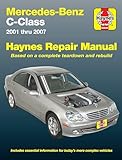
- Step-by-step procedures written from a complete teardown and rebuild, giving you the confidence to tackle repairs at any skill level.
- Over 700+ clear photos and diagrams that simplify complex systems, helping you complete jobs faster and with fewer mistakes.
- Comprehensive troubleshooting and fault-finding guides to quickly diagnose problems and reduce costly downtime.
The W123’s reputation for durability is widespread among enthusiasts, but it is better treated as enthusiast consensus than as a universal, independently measured reliability ranking. Condition, maintenance history, engine, market, corrosion exposure, and repairs are more useful when evaluating an individual W123 than a claim that one entire generation is automatically the best.
W124: the turning point and first officially named E-Class
The W124 is the key to understanding both halves of the E-Class story. The sedan was first presented in Seville on November 26, 1984, and entered the market in 1985. At that stage it was a W124-series Mercedes-Benz, not yet an officially named E-Class.
Mercedes-Benz later changed its nomenclature system. In June 1993, the W124 model series received the E-Class name. That makes the W124 the first series officially to carry the E-Class designation, even though the car had already been on sale for years. It is accurate to call early W124s predecessors in a badge-history sense and equally accurate to call the W124 the first E-Class generation in Mercedes-Benz’s official naming sequence.
What made the W124 important as a sedan?
Mercedes-Benz USA’s historical account highlights several engineering priorities: lightweight construction, aerodynamic development, a multilink rear suspension, emissions improvements, and a broad powertrain range. Those features helped make the W124 more than a cosmetic continuation of the W123. It was a major technical and structural step in the family.
Free tools Windows power users keep installed
One-click scans. No signup required.
The sedan’s production numbers also explain its importance. Mercedes-Benz USA reports that 2,213,167 W124 sedans were built. It reports 2,737,860 vehicles for the complete W124 model series, but that larger number includes body styles beyond the sedan. It must not be presented as sedan production.
Sedan production ended in 1995. Parts-kit production continued into 1996, which is another reason an apparent 1996 date does not necessarily mean that a complete W124 sedan was built as a 1996 model. Market-specific registration and inventory practices can add further confusion.
Named Mercedes-Benz E-Class generations
W210: 1995–2002
The W210 was the first successor to the W124 after the E-Class identity had become established. Its most recognizable visual feature is the front end with twin oval headlamp units on each side, often described as a four-lamp or twin/quad oval arrangement. This was a clear design break from the W124 and gave the E-Class a new face for the late 1990s.
For a sedan-focused history, the important point is not to combine every W210 body style into one undifferentiated date range. Mercedes-Benz offered several body configurations during this era, but the W210 sedan is the relevant subject here. A car’s exact market, body style, engine, and build date remain important when researching specifications or parts.
W211: 2002–2009
Mercedes-Benz introduced the W211 at the beginning of 2002. Its historical role was to move the E-Class further into electronic safety and convenience technology. The W210 had made the biggest visual statement; the W211 made the car’s electronic systems a more prominent part of the ownership and repair experience.
That distinction matters when comparing older E-Class sedans. A W211 is not simply a newer-looking W210: its diagnostics, control modules, electrical architecture, and system integration can change how maintenance is approached.
W212: 2009–2016
The W212 sedan and estate generation arrived in 2009. Its styling was more angular than the W211’s, and the generation covered a broad range of powertrains and body styles. This article treats the W212 as the eighth stage of the overall lineage and the third generation to wear the E-Class name from its launch.
Haynes lists a W212 online diagnostics and service guide covering 2009–2016. That is useful evidence that owners need model-specific documentation, but it should not be confused with a verified physical Amazon book or with the W211 diesel manual described above. A W211 guide is not automatically suitable for a W212 simply because the cars share the E-Class name.
Do these 3 things before closing this tab:
1Clear out junk files and repair common Windows errors2Fix the driver behind crashes, sound loss and screen glitches3Repair Windows errors before they cause bigger problemsW213: 2016–2023
The W213 debuted in 2016 and brought the E-Class closer to Mercedes-Benz’s unified design language. Its generation is also strongly associated with connectivity, advanced driver-assistance features, and parking technologies.
Those systems should be described precisely. Driver assistance is not the same as autonomous driving, and the operation, availability, and limitations of a feature can depend on equipment, market, software, road conditions, and the driver’s continued responsibility. The useful historical conclusion is that the W213 made electronic assistance and connected services central to the E-Class identity, not that it removed the need for an attentive driver.
Rank #4

- Used Book in Good Condition
W214: 2023–present
The W214 is the current E-Class generation and is identified by Mercedes-Benz regional material as the eleventh generation of the lineage. Its market introduction began in 2023, with market-specific timing after that; for example, the Korean launch was in January 2024. In many markets the W214 is therefore encountered as a 2024-onward car, while the underlying generation began in 2023.
As of the August 12, 2026 research snapshot, the Mercedes-Benz USA configurator lists these E-Class sedans:
Recommended Free Tools
- E 350 Sedan
- E 350 4MATIC Sedan
- E 450 4MATIC Sedan
- AMG E 53 HYBRID Sedan
The current US model page lists the AMG E 53 HYBRID Sedan at 577 hp combined and up to 43 EPA-estimated purely electric miles. These are live-market specifications, not permanent facts about every W214 or every country. Trims, equipment, ratings, pricing, and availability can change, so buyers should recheck the current Mercedes-Benz USA page before publication or purchase.
Independent reader supportYour contribution helps us test, update, and keep practical guides available for everyone.How to interpret E-Class model years correctly
There is no single global table that converts every E-Class chassis into one universally correct set of model years. Four dates can be relevant:
- Presentation date: when Mercedes-Benz first showed a new series, as with the W124 sedan in Seville on November 26, 1984.
- Market-launch date: when the car went on sale in a particular market, such as the W124 in 1985.
- Production date: when an individual vehicle or series was built. Production can overlap with the preceding or following model.
- Model or registration year: a market’s sales, registration, or taxation label, which does not always match the build year.
For that reason, the most defensible way to describe the timeline is with approximate launch and production periods. A W124 built near the end of production may be registered later, and a W214 introduced in 2023 may appear as a 2024 or later model in many markets. Neither situation changes the internal series designation.
Use the chassis code when identifying a car
When researching parts, service information, or equipment, start with the internal series—W123, W124, W210, W211, W212, W213, or W214—then verify the build date, engine, fuel type, body style, drivetrain, and market. The word E-Class by itself is too broad. Even within one generation, a diesel sedan, petrol sedan, 4MATIC car, estate, and performance model can require different procedures or components.
The Tool Desk
Outbyte Driver Updater FREEScan for outdated or missing drivers - takes under a minuteDriver Scan →Outbyte PC Repair FREERepair Windows errors before they cause bigger problemsFix Now →Which E-Class generation is relevant to your research?
The answer depends on what you mean by generation:
- Earliest lineage: start with W120/W121 in 1953, the Ponton-era predecessor.
- Pre-badge history: follow W110, W114/W115, and W123.
- First official E-Class: choose W124, remembering that the name arrived in June 1993 rather than at the 1985 launch.
- Distinctive late-1990s styling: look at the W210 and its twin/quad oval headlamps.
- Electronic-systems transition: compare W211 and W212, while matching service information to the exact car.
- Connected assistance and current technology: examine W213 and W214, with equipment and availability checked by market.
This is a classification framework, not a ranking of the generations. Claims that one E-Class is universally the best, most reliable, or most desirable are opinions unless tied to a defined test and a specific vehicle configuration.
Classic ownership, restoration, and maintenance resources
W123 and W124 ownership often involves preserving originality as well as keeping an older car roadworthy. For that audience, the Mercedes-Benz Classic Center is a more relevant starting point than a generic parts search, particularly when researching historical documentation, restoration support, or specialist parts pathways. Availability and service scope should be verified for the vehicle’s market; no source establishes that every part or restoration service remains available for every car.
For W211 and later cars, documentation needs become more configuration-specific as electronic systems and powertrain choices multiply. A repair manual can help with routine work and fault-finding, but it should supplement—not replace—the correct service information for the specific chassis and engine. Confirm whether the manual covers petrol or diesel, rear-wheel drive or 4MATIC, sedan or estate, and the relevant market before relying on it.
Bottom line
The cleanest answer is two-part: the E-Class lineage begins with the 1953 W120/W121, while the E-Class name begins with the W124 in June 1993. From there, the named sedan generations are W124, W210, W211, W212, W213, and the current W214. Use those chassis codes—not a broad year range alone—to identify a car, understand its place in the history, and select accurate ownership or repair information.
Frequently Asked Questions
What was the first official Mercedes-Benz E-Class?
The W124 was the first Mercedes-Benz series to receive the E-Class name. Mercedes-Benz changed its nomenclature system in June 1993, several years after the W124 sedan entered the market.
Is the W123 an E-Class?
No. The W123 is a direct predecessor in the commonly cited E-Class lineage, but it was not officially badged as an E-Class. The same distinction applies to the W120/W121, W110, and W114/W115.
What is the current E-Class generation?
The W214 is the current E-Class generation. It began market introduction from 2023, appears as a 2024-onward vehicle in many markets, and is verified as the 2026 US model-year generation.
Will a W211 E-Class repair manual fit a W212?
No. A W211-specific manual is not automatically suitable for a W212. Match the manual to the exact chassis, engine, fuel type, drivetrain, body style, and market. The Haynes W211 diesel listing researched here excludes petrol and 4MATIC models and does not cover the W212.
Crashes, No Sound, or Screen Glitches?
Random freezes, missing sound and display glitches usually trace back to one bad driver. Find and replace yours safely.Free scan · under a minutePC Slower Than It Used to Be?
A free scan shows the junk files, broken settings and background clutter dragging Windows down - then fixes them in one click.Free scan · Windows 10 & 11The Bottom Line
The E-Class badge began with the W124 in June 1993, but the sedan family’s commonly cited lineage reaches back to the 1953 W120/W121. The named generations that followed are W210, W211, W212, W213, and the current W214. Because launch dates, production dates, registration years, and US model years can differ, identify any car by chassis, build date, engine, drivetrain, body style, and market.
Quick Recap
Product prices and availability are accurate as of the date/time indicated and are subject to change. Any price and availability information displayed on Amazon at the time of purchase will apply.




