Recommended Free Tools
Mercedes 4MATIC is not one all-wheel-drive system. It is Mercedes-Benz’s trade name for a family of drivetrains that have appeared in rear-wheel-drive cars, front-wheel-drive-based compact models, SUVs, AMG performance vehicles, hybrids, plug-in hybrids, and battery-electric vehicles.
Depending on the Mercedes you are looking at, 4MATIC may mean a permanently connected mechanical drivetrain, an on-demand multi-plate clutch, a compact transverse system that normally prioritizes the front axle, independently controlled electric motors, or a G-Class drivetrain with low range and differential locks. The model, platform, generation, and powertrain matter far more than the badge.
As an Amazon Associate I earn from qualifying purchases.
What does 4MATIC mean?
In practical terms, 4MATIC means the vehicle can drive all four wheels, either continuously or when the control system decides that extra traction, stability, or performance is useful. Mercedes pairs the system with electronic stability and traction controls such as ESP and 4ETS, but the exact mechanical arrangement varies significantly.
The name alone does not tell you:
- whether the system is permanent or on demand;
- whether the normal torque bias is toward the front or rear;
- whether a mechanical driveshaft connects the axles;
- whether an electric motor drives one axle independently;
- whether the vehicle has a low-range transfer case;
- whether it has locking differentials; or
- whether it was designed mainly for winter traction, road handling, towing, or technical off-road driving.
That is why a W124 E-Class, a current compact AMG, an EQS, and a G-Class can all carry a 4MATIC badge while using very different hardware.
#1 Best Overall
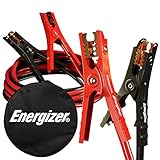
- ENERGIZER 16 FEET JUMPER CABLES - 6 Gauge, 16 FT booster battery jumper cables for jump starting a dead or weak battery. Ideal for trucks, SUVs, full-size cars, mid-size cars and small/compact cars
- THICK VINYL COATING - Includes a strong spring and a comfortable handle for secure placement and easy positioning. Thick vinyl coating for protection against rust and corrosion.
- CARRYING CASE INCLUDED - Our Energizer jumper cables come with a high-grade travel bag for easy transport and compact storage.
- TANGLE FREE CCA BOOSTER CABLES - 16 Foot length makes it easy to reach from one car battery to another. Copper clad aluminum cables remains flexible even at -40°C.
- THE BRAND NAME YOU CAN TRUST - We are here to power your car battery and truck with our booster jumper cables. We keep you going and going!
Mercedes 4MATIC generations at a glance
| 4MATIC family | Typical application | Torque strategy | Basic architecture | Primary mission |
|---|---|---|---|---|
| First generation | W124 E-Class | Automatically engaging AWD with electronic traction and locking functions | Mechanical AWD with electronically controlled engagement | Early all-weather traction |
| Second generation | W210 E-Class and related applications | Permanent, nominally 40:60 front to rear | Longitudinal engine, transfer case, and 4ETS | Stable road traction |
| Later longitudinal 4MATIC | E-Class, S-Class, GLC, GLE, GLS, and other rear-drive-based models | Permanent or torque on demand, depending on model | Electronically managed transfer case or multi-plate clutch | Road driving, towing, comfort, and SUV utility |
| Compact transverse 4MATIC | A-Class, CLA, GLA, GLB, and related AMGs | Variable rear-axle engagement | Front-drive-based transverse platform with compact rear drive | Packaging, efficiency, winter traction, and performance |
| AMG Performance 4MATIC and 4MATIC+ | AMG cars and SUVs | Highly variable and performance calibrated, often rear biased | High-capacity mechanical AWD or advanced electric torque management | Launches, cornering, and dynamic drive modes |
| Electric 4MATIC | EQS, EQE, and newer electric Mercedes models | Independent front and rear motor control | Separate electric drive units on the axles | Fast, efficient electric AWD |
| Hybrid and E PERFORMANCE 4MATIC | Mercedes plug-in hybrids and AMG hybrids | Engine and electric-motor coordination; layout varies | Mechanical drivetrain, electric drive, or a combination | Efficiency, traction, and high performance |
| G-Class 4MATIC | Mercedes-Benz G-Class | Permanent drive with low range and selectable locks | Off-road transfer case and differential-lock hardware | Serious low-speed off-road use |
The original 4MATIC: W124 E-Class
Mercedes first presented its passenger-car 4MATIC system at the Frankfurt Motor Show in 1985. Series production followed in the W124 E-Class, where automatically engaging 4MATIC was offered on six-cylinder models from 1985.
This first-generation system was considerably more complex than the simplified descriptions often attached to modern AWD. It combined automatically engaging four-wheel drive with electronically controlled differential-lock functions and the car’s existing traction-control systems.
Quick wins for a faster PC:
Repair Windows errors before they cause bigger problemsFix Now →Scan for outdated or missing drivers - takes under a minuteDriver Scan →Clear out junk files and repair common Windows errorsFree Scan →Rather than operating as a simple fixed front-to-rear split, the system could move through different operating states as wheel slip changed. The electronics determined when additional drive engagement and traction intervention were needed.
The W124 system is important historically because it established the 4MATIC name, but it should not be used as a description of every later Mercedes AWD system. Its transfer case, control logic, differentials, sensors, and service requirements belong to that generation and its derivatives.
Mercedes’ historical timeline also identifies further 4MATIC development or rollout milestones in 1987, 1997, 1999, and 2008. Those dates should not be interpreted as a single uninterrupted progression in which every system replaced the previous one. Mercedes continued to use different solutions for different platforms.
Second generation: W210 permanent 40:60 4MATIC
The next major version appeared in the W210 E-Class in 1997. It used a permanent all-wheel-drive layout with a single-stage transfer case and a nominal 40:60 front-to-rear torque distribution. In other words, the basic bias was rear oriented, with 40 percent nominally going to the front axle and 60 percent to the rear.
Electronic Traction System, or 4ETS, managed individual wheelspin through brake intervention. If one driven wheel began to spin, the system could brake that wheel so the open differential and drivetrain could direct useful force toward a wheel with more grip.
This creates an important distinction: a nominal 40:60 split is not a promise that every tire receives a fixed percentage of engine torque in every situation. Wheel-speed differences, differential behavior, available grip, braking intervention, and the control system’s response all affect the force that reaches the road.
- W124: automatically engaging AWD with electronically controlled locking and traction functions.
- W210: permanently connected AWD with a nominal rear-biased 40:60 distribution and 4ETS.
These are two fundamentally different generations even though both carry the same 4MATIC name.
Later longitudinal 4MATIC: E-Class, S-Class, and SUVs
On later rear-wheel-drive-based Mercedes cars and SUVs, 4MATIC became a family of electronically controlled transfer-case systems rather than one universal design. Longitudinal-engine applications may use permanent AWD, torque-on-demand AWD, or a configuration that can reduce mechanical drag by disconnecting an axle under appropriate conditions.
Free tools Windows power users keep installed
One-click scans. No signup required.
One important SUV implementation uses an electronically controlled multi-plate clutch. Mercedes has described this arrangement as capable of varying torque between the axles from 0 to 100 percent, depending on the vehicle and operating situation. Some SUV versions can also be equipped with a separate off-road transfer case that adds low range.
Torque-on-demand does not mean the system waits until the car is already stuck. The control unit can use throttle position, steering angle, wheel speed, yaw behavior, acceleration, and the selected drive mode to anticipate or respond to changing traction. A road-oriented calibration may emphasize efficiency and predictable cornering, while an SUV calibration may prioritize towing stability or loose-surface traction.
As a result, 4MATIC on a GLC, GLE, GLS, E-Class, or S-Class does not guarantee identical hardware or torque behavior. Even within one model line, a change in engine, transmission, generation, or optional off-road equipment can alter the system.
Compact transverse 4MATIC
The A-Class, CLA, GLA, GLB, and related compact AMG models use a different packaging strategy from the larger longitudinal Mercedes vehicles. Their engines are mounted transversely on a front-drive-based platform, and the all-wheel-drive system is integrated with the compact-car transmission and rear axle.
Rank #2
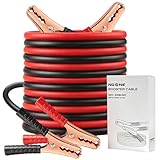
- UNIVERSAL FITMENTS :NOONE 10 FT car jumper cables support 200A peak current for jumping start 12/24V car battery. So NOONE booster cables are suitable for your vehicles with up to 3.0 L Gas Engines
- SUPERB PERFORMANCE :With rubber covered, NOONE battery booster cables can provide you insulated protection to prevent leakage current. Equipped with superb conductivity, our copper-clad aluminum cables conductors work well even in extreme temperatures(-40°F to 140°F)
- HIGH QUALITY CLIPS :Super strong bite, tight crimping and more conductive. Extra thick PVC sheath at the handle, can be fireproof flower, higher safety
- JUMPER CABLES KIT :The package includes a Jumper Cables, and is a quality choice for family cars
- THE BRAND NAME YOU CAN TRUST : Our NOONE automotive battery jumper cables provide a 2-year products service. If you encounter any problems, please do not hesitate to contact us via Email
Mercedes describes the compact AMG 35-series family as sending drive through an eight-speed dual-clutch transmission and variable all-wheel drive. In normal driving, the arrangement can preserve the efficiency and packaging advantages of a front-drive-based vehicle. When the driver accelerates hard, turns quickly, or encounters a low-grip surface, the system can send more drive to the rear axle.
This compact layout should not be confused with the permanently connected longitudinal systems used in many larger rear-drive-based Mercedes models. It may provide excellent traction, but it does so with different components and different operating priorities.
Compact AMG 4MATIC+
The A45 and CLA45 4MATIC+ family uses a more aggressive performance strategy than ordinary compact 4MATIC. Depending on the model generation and equipment, the system can support high-performance launches and greater cornering flexibility through more advanced rear-axle torque management.
The exact torque-vectoring functions are not identical across every A45, CLA45, GLA45, or GLB45. Buyers should verify the specific generation and drive modes instead of assuming that the 4MATIC+ badge describes one fixed mechanism.
Do these 3 things before closing this tab:
1Repair Windows errors before they cause bigger problems2Fix the driver behind crashes, sound loss and screen glitches3Clear out junk files and repair common Windows errorsAMG Performance 4MATIC and 4MATIC+
AMG Performance 4MATIC is not merely a cosmetic version of regular 4MATIC. It is calibrated for high power, rapid torque changes, launch performance, and handling balance.
AMG GLE 53 4MATIC+
The AMG GLE 53 4MATIC+ uses a fully variable system in which the rear axle remains continuously connected while torque sent to the front axle is varied according to the driving situation and driver demand. That allows Mercedes to balance traction, straight-line acceleration, and corner-exit behavior without committing to one permanent torque split.
AMG systems that can emphasize rear-wheel drive
Some AMG 4MATIC+ systems can move continuously between rear-drive-oriented and all-wheel-drive behavior. Mercedes describes the AMG CLE Coupé as able to completely decouple the front axle during moderate driving for efficiency, then reconnect it continuously when extra traction is required. Certain dynamic modes can also be programmed to produce a rear-drive character.
The phrase 4MATIC+ generally signals a more performance-focused AMG system, but the plus sign is not a universal mechanical specification. It does not, by itself, tell you whether the front axle can decouple, whether the rear axle has torque vectoring, or how the system behaves in every drive mode.
Electric AMG 4MATIC naming
The same naming caution applies to AMG electric models. The AMG EQE 43 4MATIC and EQE 53 4MATIC+ both use fully variable electric front-to-rear torque management. The plus designation identifies the higher-performance AMG variant; it does not mean that it uses the same hardware as a mechanical AMG 4MATIC+ system.
Electric 4MATIC: two independent drive units
Battery-electric Mercedes models create AWD in a fundamentally different way from combustion-powered cars. Instead of mechanically linking the axles through an engine, transmission, driveshaft, transfer case, and differentials, an electric 4MATIC vehicle can use separate electric drive units at the front and rear.
For example, Mercedes’ EQS technical information describes the rear-wheel-drive version as using a rear electric drive unit and the 4MATIC version as adding a front electric drive unit. The two drive units can be controlled independently, allowing the system to vary torque between the axles continuously.
This architecture offers several advantages:
- the front and rear motors can be controlled independently;
- torque changes do not need to wait for a conventional gear change;
- the control system can favor the more efficient axle when conditions allow;
- traction management can react extremely quickly to wheel slip; and
- regenerative braking can be coordinated between the drive units.
Mercedes says the EQS 4MATIC system checks and adjusts torque substantially more frequently than a conventional mechanical AWD system. That is possible because electric motor output can be changed electronically and almost instantaneously compared with the engagement of a mechanical clutch.
Crashes, No Sound, or Screen Glitches?
Random freezes, missing sound and display glitches usually trace back to one bad driver. Find and replace yours safely.Free scan · under a minuteWindows Errors? Fix Them Before They Spread
Repair common Windows errors and clear accumulated junk for a smoother, more stable PC - no reinstall needed.Free scan · no reinstallElectric 4MATIC can therefore deliver strong traction without having the same parts as combustion-powered 4MATIC. A vehicle carrying the badge may not have a conventional transfer case, a mechanical propeller shaft, or a front differential in the familiar combustion-engine sense. It still has reduction gearing, differentials or differential-like gearing within its drive units, cooling systems, and other serviceable components, but the architecture is different.
New electric GLA 350 4MATIC
The electric GLA 350 4MATIC is another example of Mercedes extending the name into its newer modular electric range. Mercedes lists it as an electric all-wheel-drive variant and pairs it with a TERRAIN mode for off-pavement driving. That mode does not turn the vehicle into a G-Class, but it demonstrates how software and independently controlled electric axles can be calibrated for loose surfaces.
Plug-in-hybrid and AMG E PERFORMANCE 4MATIC
Hybrid 4MATIC is especially difficult to summarize because Mercedes has used more than one layout. A combustion engine may drive one axle while an electric motor assists that axle or drives another. On other models, the electric motor is integrated into a conventional transmission and transfer-case arrangement.
Rank #3

- Strong And Safe Clamps: The TOPDC Jumper Cables booster cable has four giant alligator clamps with strong jagged teeth and springs for excellent grip force. The jaws are strong and make connections easy. And the High Peak Jumper Cables has insulating rubber material to prevent electric shock and protect the safety of users. The clamps are engineered with reinforced structure and well-designed jaws that provide a firm, secure grip on both top-post and side-terminal batteries, ensuring long-lasting durability and ease of use.
- 20 Feet Jumper Cables: The TOPDC 20 Feet Jumper Cables has an extremely long usage distance, which is suitable for use with SUVs, full-size cars, mid-size cars, and compact cars. The Jumper Cables adopts insulating material to prevent rust, corrosion so effective insulation. The 20 Feet Jumper Cables are suitable for various car models and are powerful helper in emergency situations. Made from high-quality Copper Clad Aluminum (CCA), the thick-gauge cables offer excellent conductivity and maintain flexibility even in extreme cold, providing reliable performance when you need it most.
- UL-Listed & qualified quality: The TOPDC Jumper Cables surface is made with premium PVC which is resistant to freezing, cracking & folding and won’t tangle. Each jumper clamp has undergone rigorous testing and successfully passed UL certification, which is exhibiting excellent performance under extreme temperature conditions (-40 °F to 140 °F). The thick vinyl coating is built to resist wear, prevent tearing, and protect the internal wire from exposure, enhancing safety and durability over time.
- Convenient storage and carrying: The TOPDC Jumper Cables will give a Carry Bag. When you need to use Jumper Cables, you can always carry it in your bag. When you don't need to use Jumper Cables, you can pack it in a bag and store it in any place. Convenient storage and carrying are truly essential items at home. The included 600D Oxford fabric storage bag is tough, spacious, and features a smooth zipper for easy access—perfect for neatly organizing cables and accessories without the hassle.
- Quality Assurance: TOPDC provides a 5-year quality guarantee and full after-sales support, reflecting our commitment to excellence and customer satisfaction. Every product undergoes strict quality inspection to ensure superior performance, consistent reliability, and long-lasting durability. The included clearly labeled step-by-step guide makes operation simple even for first-time users. With robust design, dependable construction, and a focus on user experience, TOPDC jumper cables are built to deliver confidence in any emergency situation—whether at home, on the road, or in extreme weather conditions.
AMG E PERFORMANCE
Mercedes-AMG’s E PERFORMANCE arrangement normally uses a rear-drive-oriented operating strategy. The mechanical connection to the AMG Performance 4MATIC+ hardware can allow the electric motor’s power to reach the front wheels when additional traction is needed.
The Tool Desk
Outbyte Driver Updater FREEScan for outdated or missing drivers - takes under a minuteDriver Scan →Outbyte PC Repair FREERepair Windows errors before they cause bigger problemsFix Now →This is not the same as simply adding a small electric motor to a conventional AWD car. The control system must coordinate engine output, electric power, front-axle engagement, battery state of charge, regenerative braking, transmission behavior, and traction control.
Other plug-in hybrids
Other Mercedes plug-in hybrids use more conventional engine, transmission, transfer-case, and front/rear drive hardware, with the electric motor integrated into the drivetrain. Mercedes has described the updated C-Class 4MATIC system as using a new front-axle drive and a revised longitudinal transfer case intended to improve torque capacity, weight, and friction losses.
The safe conclusion is that hybrid 4MATIC does not identify one universal layout. Check the exact model, generation, engine, transmission, and technical documentation before assuming which axle the electric motor drives or how it contributes to AWD.
G-Class 4MATIC: the off-road specialist
The G-Class makes the difference between 4MATIC families especially clear. It combines 4MATIC with dedicated off-road hardware, including selectable low range and separately controllable differential locks.
What’s actually slowing this PC down?
Pick the symptom - the matching free tool is one click away.
Low range changes the gearing so the vehicle can multiply torque at low speeds. That gives the driver more control when climbing, descending, crossing uneven terrain, or maneuvering over obstacles. Differential locks reduce the ability of an open differential to send most of the available torque to a wheel with poor grip.
Mercedes owner documentation specifies that the G-Class differential locks are available only when the transfer case is in LOW RANGE. That operating restriction is a useful reminder that the G-Class system is not merely a sedan-style traction system with a tougher body.
The G-Class should be understood as a specialized off-road drivetrain that carries the 4MATIC name. It is materially different from the road-focused 4MATIC systems found in a sedan or compact crossover.
What all 4MATIC systems have in common
Although the hardware differs, Mercedes uses the 4MATIC concept to pursue several overlapping goals:
- Improve launch traction on snow, wet pavement, gravel, and loose surfaces.
- Stabilize the vehicle when grip differs between tires.
- Increase traction during corner exit and acceleration.
- Coordinate drivetrain behavior with ESP, braking, steering, drive modes, and hybrid or electric energy management.
- Balance traction against efficiency, comfort, towing ability, sportiness, and off-road capability.
AWD does not create grip that the tires and road surface do not have. It can distribute available propulsion more effectively, but it does not shorten every stop, eliminate hydroplaning, or make excessive speed safe. Mercedes owner documentation explicitly cautions that 4MATIC cannot override road, weather, traffic, or physical limitations.
4MATIC is not a substitute for suitable tires
Four driven wheels can help a car start moving on a slippery surface, but the tires remain the parts that transmit acceleration, steering, and braking forces to the road. A 4MATIC Mercedes on unsuitable or badly worn tires can still have poor control and stopping performance. Tire choice, condition, pressure, and speed remain more important than the badge when conditions become severe.
How to identify which 4MATIC system a Mercedes has
If you need to understand a specific vehicle rather than the general technology, use this checklist:
- Start with the model series and year. A W124, W210, W203, current GLE, compact CLA, EQS, and G-Class do not share the same 4MATIC design.
- Identify the platform. A longitudinal engine usually points toward the larger rear-drive-based architecture; a transverse engine points toward the compact-car system; an electric vehicle may use separate motors on each axle.
- Check the transmission. A conventional automatic, dual-clutch transmission, hybrid transmission, and electric reduction drive lead to different AWD packaging.
- Look for low range and differential-lock controls. Their presence is a strong indication of a specialized off-road system, especially on a G-Class or suitably equipped SUV.
- Read the vehicle’s manual and technical data. Look for terms such as transfer case, front-axle drive, 4ETS, 4MATIC+, electric drive unit, LOW RANGE, and differential lock.
- Verify the VIN for service work. VIN-level information is safer than relying on a generic parts listing or the badge alone.
Do not infer the system from the name alone. Even two vehicles with the same 4MATIC lettering can differ in normal torque bias, axle-disconnect behavior, fluid requirements, drive modes, and diagnostic procedures.
Free tools Windows power users keep installed
One-click scans. No signup required.
Maintenance: why there is no universal 4MATIC fluid
Maintenance is system-specific. A W124 transfer case, a later 9G-TRONIC-based longitudinal system, a compact transverse AWD unit, an AMG performance drivetrain, and an electric drive unit do not necessarily use the same lubricant, service interval, seals, fill procedure, or replacement parts.
For example, a W203 C-Class 4MATIC owner manual separately specifies front-axle gear oil and Mercedes-Benz transfer-case fluid. That is why searching for generic Mercedes 4MATIC transfer case fluid without identifying the model, year, transmission, and VIN can lead to the wrong product.
Afton Chemical identifies its HiTEC 4017 fluid as approved for certain Mercedes nine-speed automatic-transmission and transfer-case applications under MB 236.17. That approval does not establish compatibility with every 4MATIC vehicle. It is an example of why the Mercedes-Benz fluid specification matters more than the words transfer case or 4MATIC on a retailer’s page.
Rank #4

- Strong, Secure Clamps: Four insulated, serrated clamps give jumper cables a firm grip on top-post and side-terminal batteries.
- 12-Foot Copper-Clad Aluminum Jumper Cables: Flexible cables provide reliable conductivity and extended reach for cars, SUVs, and trucks.
- Reliable Quality: Jumper cables feature UL-listed clamps and a durable PVC jacket that stays flexible from -40°F to 140°F.
- Convenient Storage: Jumper cables include a durable 600D Oxford fabric carry bag with a smooth zipper for neat organization.
- Quality Assurance: TOPDC jumper cables include a 2-year guarantee, full after-sales support, and a clear step-by-step guide.
Before ordering or servicing a mechanical 4MATIC system:
Windows Errors? Fix Them Before They Spread
Repair common Windows errors and clear accumulated junk for a smoother, more stable PC - no reinstall needed.Free scan · no reinstallCrashes, No Sound, or Screen Glitches?
Random freezes, missing sound and display glitches usually trace back to one bad driver. Find and replace yours safely.Free scan · under a minute- identify the exact model series and model year;
- verify the transmission and transfer-case configuration;
- check the operating-fluid approval specified for that vehicle;
- confirm the required quantity and fill procedure;
- do not assume that front-axle, differential, transmission, and transfer-case fluids are interchangeable; and
- remember that electric 4MATIC may not use a conventional transfer case at all.
For VIN-specific fluid selection, scheduled service, or a suspected drivetrain problem, a Mercedes-Benz service center can verify the vehicle’s installed hardware and the applicable Mercedes-Benz operating-fluid approval. An independent Mercedes specialist can also be appropriate, provided the shop is working from the vehicle’s exact service data.
Common 4MATIC problems and diagnostic mistakes
A 4MATIC warning does not automatically mean the transfer case has failed
Because 4MATIC works with ESP, ABS, wheel-speed sensors, steering-angle data, transmission controls, and engine or motor management, a warning may originate in another connected system. A wheel-speed sensor, voltage problem, communication fault, brake-system issue, or drivetrain-control fault can change AWD operation.
Read the stored fault codes before replacing expensive mechanical parts. A generic OBD reader may retrieve basic engine codes but may not communicate with every Mercedes ABS, ESP, transmission, or AWD control module. A Mercedes-compatible diagnostic scan tool can be useful for this job, but compatibility varies by chassis, model year, software version, and module coverage.
Symptoms that deserve investigation
- 4MATIC, ABS, ESP, or drivetrain warning messages;
- binding, shuddering, or hopping during tight turns;
- new whining, grinding, or humming from an axle or transfer-case area;
- fluid leaks near a differential, transfer case, or drive unit;
- loss of front- or rear-axle drive;
- unexpected inability to select a drive mode or low range; or
- repeated wheelspin that was not present previously.
These symptoms do not identify one failed component by themselves. Diagnosis should begin with the exact fault codes, fluid level and condition where applicable, tire condition and circumference, and the vehicle’s service history.
Do not apply a combustion-era repair assumption to an electric Mercedes
An electric 4MATIC Mercedes may not have a conventional transfer case or engine-driven propeller shaft. A noise or warning in an EQ model may involve an electric drive unit, reduction gearing, inverter, high-voltage control system, cooling circuit, or software-controlled torque management. Use the appropriate electric-vehicle service procedure rather than assuming that a combustion 4MATIC repair applies.
Which 4MATIC type is best for which use?
| Use case | Most relevant 4MATIC characteristic | What to verify |
|---|---|---|
| Snow and wet roads | Fast traction intervention and stable torque delivery | Tire specification, winter capability, and model-specific drive modes |
| Daily road driving | Efficient on-demand or road-calibrated AWD | Whether the system can decouple an axle and how it behaves in normal driving |
| Fast launches and cornering | AMG Performance 4MATIC or 4MATIC+ torque management | Generation-specific torque-vectoring functions and available drive modes |
| Towing and SUV use | Longitudinal AWD with appropriate stability and torque capacity | Towing rating, cooling, transfer-case equipment, and trailer-control features |
| Technical off-road driving | Low range and differential locks | Whether the vehicle is a G-Class or an SUV with the relevant off-road hardware |
| Electric AWD | Independent front and rear motors | Range impact, charging behavior, terrain modes, and electric-drive service support |
There is no universally best 4MATIC system. A compact on-demand system may be the sensible choice for winter commuting, AMG 4MATIC+ may be preferable for high-performance road driving, and the G-Class architecture is the appropriate comparison only when low-speed off-road capability is the priority.
The key differences in one sentence each
- W124 4MATIC: the original automatically engaging passenger-car system with electronic traction and locking functions.
- W210 4MATIC: a permanently connected, nominally rear-biased 40:60 system using 4ETS.
- Later longitudinal 4MATIC: a model-dependent permanent or torque-on-demand transfer-case family for road cars and SUVs.
- Compact 4MATIC: a transverse, front-drive-based system that can engage the rear axle for traction or performance.
- AMG Performance 4MATIC and 4MATIC+: high-output AWD with more aggressive and often fully variable torque control.
- Electric 4MATIC: independently controlled electric drive units on the front and rear axles.
- Hybrid and E PERFORMANCE 4MATIC: coordinated combustion and electric drive, with the layout varying by model.
- G-Class 4MATIC: a dedicated off-road drivetrain with low range and selectable differential locks.
Frequently Asked Questions
Is every Mercedes 4MATIC system permanent all-wheel drive?
No. Some older and later longitudinal systems are permanently connected, while other Mercedes systems use an electronically controlled clutch or compact rear-axle drive that engages or varies torque when needed. Electric 4MATIC uses independent front and rear electric drive units rather than one conventional mechanical connection.
Do these 3 things before closing this tab:
1Fix the driver behind crashes, sound loss and screen glitches2Clear out junk files and repair common Windows errors3Scan for outdated or missing drivers - takes under a minuteIs Mercedes 4MATIC the same as four-wheel drive?
Both terms describe drive being available at all four wheels, but they do not describe identical hardware. Most road-car 4MATIC systems are designed for automatic traction and stability management, while the G-Class adds low range and selectable differential locks for serious off-road use.
Does a 4MATIC badge mean the Mercedes is good for off-road driving?
Not necessarily. A compact crossover or sedan with 4MATIC may be very effective on wet roads, snow, and gravel but lack low range, differential locks, or the ground clearance needed for technical terrain. Check the actual equipment rather than the badge.
Does electric 4MATIC have a transfer case?
Not necessarily, and usually not in the same sense as a combustion-powered Mercedes. Many electric models use separate front and rear electric drive units with independently controlled torque. Their service requirements and diagnostic procedures are therefore different.
Can I use any fluid labeled for Mercedes 4MATIC?
No. Fluid requirements vary by chassis, year, transmission, transfer case, differential, and drivetrain architecture. Verify the exact Mercedes-Benz operating-fluid approval and vehicle configuration before buying or filling any component.
Recommended Free Tools
What should I do if the 4MATIC warning light appears?
Avoid assuming that the transfer case has failed. Read the vehicle’s stored fault codes with equipment that can access the relevant Mercedes ABS, ESP, transmission, and AWD modules, then inspect the service history, tires, fluid levels where applicable, and any unusual noises or leaks.
The Bottom Line
Mercedes 4MATIC is a portfolio, not a single drivetrain. The W124 and W210 systems are historically distinct; later longitudinal and compact systems use different mechanical layouts; AMG versions prioritize variable performance torque; electric versions use independently controlled motors; hybrids combine mechanical and electric drive; and the G-Class adds low range and differential locks.
For buyers, the model and generation matter more than the badge. For owners, maintenance specifications should be checked against the exact drivetrain and VIN. The most accurate way to explain 4MATIC is by architecture and purpose, not as though every Mercedes wearing the name works the same way.
Quick Recap
Product prices and availability are accurate as of the date/time indicated and are subject to change. Any price and availability information displayed on Amazon at the time of purchase will apply.
Quick wins for a faster PC:
Clear out junk files and repair common Windows errorsFree Scan →Fix the driver behind crashes, sound loss and screen glitchesFind Drivers →Repair Windows errors before they cause bigger problemsFix Now →



