Free tools Windows power users keep installed
One-click scans. No signup required.
CANcrypt is a configurable security framework for CAN—not just an encryption add-on. It places security processing near the CAN driver and combines authenticated pairing, grouped-device heartbeats, dynamic shared-key updates, message signatures, counters, and optional encryption. The result is a way to protect selected ECU traffic before it reaches CANopen, diagnostic, bootloader, or application code.
CANcrypt is a configurable security layer for CAN networks, not merely an encryption wrapper. Its original functionality combines authenticated pairing, secure device grouping, dynamic shared-key updates, protected heartbeats, message signatures, and optional encryption. The layer is designed to sit close to the CAN driver, where it can intercept selected identifiers, validate protected traffic, and prevent unauthenticated messages from reaching application protocols such as CANopen.
As an Amazon Associate I earn from qualifying purchases.
That design makes CAN security practical for constrained automotive networks, but it does not make a CAN bus invulnerable. CANcrypt can authenticate and reject forged application messages; it cannot prevent an attacker with physical bus access from flooding the network, nor can it repair an ECU whose firmware, debug interface, transceiver, or key storage has already been compromised.
Do these 3 things before closing this tab:
1Clear out junk files and repair common Windows errors2Scan for outdated or missing drivers - takes under a minute3Repair Windows errors before they cause bigger problemsWhy CAN needs an added security layer
Classical CAN was built for deterministic distributed control. Its strengths are short frames, priority-based arbitration, and efficient communication between electronic control units. Security properties were not part of the original design.
#1 Best Overall

- DSD TECH: DSD TECH focuses on the development of communication connection devices such as USB/Serial/Wireless. We have served more than 100,000 customers in Europe, North America and Japan.
- Open Source Hardware, Actually Published: We do not only build on open hardware — we publish our own design back. The full schematic and PCB layout for this exact board are on our GitHub (dsdtech-official) as editable design files, not pictures, under the CERN-OHL-S-2.0 licence, together with the firmware images. Every claim above is in that schematic. Go and check it.
- Based on CANable 2.0, Hardened for the Field: An enclosure instead of a bare board, and protection the reference design leaves out — a resettable fuse in series with CAN_H and with CAN_L, and TVS clamping on both. A 120 ohm termination switch is built in, and the bus lands on a 3.81 mm screw terminal rather than a header.
- CAN FD Works Out of the Box: No second firmware, no serial port, no reflashing — the candleLight firmware fitted at the factory carries CAN FD over the same interface as classic CAN. Measured on this board: 64-byte FD frames at 5 Mbit/s data rate, bidirectional for 75 minutes, zero frames lost and zero bus errors. Units produced from September 2026 ship with our current build, v1.4.
- Support That Does Not Stop at the Sale: Permanent technical support, 1-year replacement, and an answer within 1 working day. Questions can also go in the open issue tracker on our GitHub, where the answer stays readable for the next person — next to the wiring, termination and firmware guides.
In an ordinary CAN network, a frame generally does not prove:
- which ECU actually sent it;
- whether its contents were changed in transit;
- whether the sender is authorized to issue that command;
- whether the frame is an old valid message being replayed; or
- whether the payload should remain confidential from a listener.
Those gaps matter in a vehicle. A maliciously injected frame aimed at a body controller, gateway, instrument cluster, or powertrain-related ECU may be accepted by higher-layer software simply because the identifier and payload look syntactically correct. Adding security to every application object individually is possible, but it duplicates logic and makes migration difficult. CANcrypt instead places much of the security processing at the boundary between the CAN controller and the application stack.
What CANcrypt actually provides
The original CANcrypt functionality is best understood as a framework with several operating modes and configurable security functions:
Outdated Drivers Are Slowing You Down
One free scan finds every outdated or missing driver and matches the right update for your exact hardware.Free scan · exact hardware matchWindows Errors? Fix Them Before They Spread
Repair common Windows errors and clear accumulated junk for a smoother, more stable PC - no reinstall needed.Free scan · no reinstall| Function | Purpose |
|---|---|
| Pairing | Establishes a secure relationship between two participants, such as a configurator and an ECU, or two devices handling particularly sensitive traffic. |
| Grouping | Creates a mutually authenticated set of CANcrypt devices that share network security state. |
| Secure heartbeat | Provides liveness information, group authentication, and fresh randomness for dynamic-key updates. |
| Dynamic keys | Changes the operational key while the system is running instead of relying indefinitely on one session value. |
| Message signatures | Allows receivers to detect forged, modified, incorrectly sequenced, or otherwise invalid protected messages. |
| Optional ciphering | Encrypts a complete CAN message or selected payload bytes, depending on configuration. |
| Driver-level filtering | Stops failed security checks below the application layer, before higher-level protocols process the message. |
The documented implementation also describes a grouping mechanism for up to 15 participating devices and a protected stream of up to eight messages. These are useful practical limits to keep in mind when using the word scalable. CANcrypt scales security across a configured group and across multiple security levels; it is not an unlimited-node, automatically secure replacement for CAN.
Where CANcrypt fits in the ECU software
CANcrypt is normally configured with the CAN identifiers that require protection. It is therefore selective rather than automatically universal.
On reception, the security layer is placed around the CAN receive interrupt or an equivalent low-level receive path. On transmission, it works with the software transmit mechanism, commonly a transmit FIFO. When a configured identifier arrives, CANcrypt captures the related traffic, performs the authentication and ciphering operations, and forwards the message to the higher-layer protocol only after the checks succeed.
The arrangement can be represented like this:
CAN controller
    ↓
CAN receive interrupt / transmit FIFO
    ↓
CANcrypt security layer
    ├─ identifier selection
    ├─ preamble and data-frame handling
    ├─ counter and timeout checks
    ├─ dynamic-key selection
    ├─ signature/checksum verification
    └─ optional decryption
    ↓
CANopen, diagnostics, bootloader, or application logic
This separation is important. An application such as CANopen does not need to implement a separate cryptographic check in every object or service. CANcrypt can protect selected traffic while leaving non-sensitive control traffic in its existing form. The trade-off is that the driver integration, buffering, timing, and identifier configuration must be correct across every ECU in the protected exchange.
Quick wins for a faster PC:
Repair Windows errors before they cause bigger problemsFix Now →Fix the driver behind crashes, sound loss and screen glitchesFind Drivers →Clear out junk files and repair common Windows errorsFree Scan →Pairing mode: the higher-security point-to-point path
Pairing establishes a protected relationship between two participants. One common example is a vehicle configurator or service tool communicating with a CANcrypt-enabled ECU. Another is a sensitive device-to-device exchange, such as communication associated with bootloader activation or configuration.
The pairing key is dynamic. New shared bits are introduced through a documented bit-generation cycle, and the update frequency can be configured. The technique uses CAN message timing and arbitration behavior to create a shared bit that is not directly visible in an ordinary CAN trace. A normal trace can show frames and their timing at the protocol level, but it does not necessarily reveal which participant generated or selected each bit.
That property should not be overstated. Signal-level access, transceiver-level observation, compromised endpoints, poor randomness, or disclosure of permanent key material can undermine the security result. Pairing is a lightweight embedded key-establishment and secure-channel mechanism; it is not a guarantee against an attacker who has complete control of both endpoints or can probe their internal signals.
Pairing is particularly appropriate when the system needs a stronger relationship than ordinary group membership provides:
- authorizing a service tool or configurator;
- activating a protected bootloader;
- changing security configuration;
- performing a sensitive point-to-point exchange; or
- introducing or updating key material under controlled authority.
Grouping mode: authenticated membership on a shared bus
Grouping is designed for a network in which several CANcrypt devices must share authenticated state. Each participant belongs to a protected set and contributes to the group’s ongoing security activity.
Rank #2

- [Usb Canbus Adapter] USB TO CAN adapter provides users with basic CAN bus monitoring and processing for automotive signal processing, servo motor debugging and other scenarios.
- [Canable Project] Is derived from the Canable project in the Github platform. It provides high quality Canable hardware for automotive engineers, industrial robotics engineers, hobbyists and other CAN bus users. All technical information about this product is publicly available on Canable.IO and Github.
- [Can Bus Analyzer]RH-02 factory burns the default Candlelight firmware of Canable project, meanwhile, users can also get more featured firmware in Canable project in Github platform, and use RH-02 boot button with DfuSeDemo software to burn it.
- [High Compatibility]A variety of CAN bus software is available, and users can use the open source software to monitor and process CAN bus data. You can also burn other firmware to support BUSMASTER, PCAN, SLCAN and other CAN bus software.
- [Buyer Support]Jhoinrch backs this usb to canbus with lifetime technical support, a one-year product replacement and warranty, and a 100% customer satisfaction guarantee.
The central mechanism is the secure heartbeat. It is more than a conventional keepalive. The heartbeat includes a status byte, random values, and a checksum. The random and checksum bytes are protected with the current dynamic key. A receiving device decrypts the protected portion, recomputes the checksum, and treats a valid result as evidence that the sender’s preceding communication still satisfies the CANcrypt authentication rules.
A successful heartbeat also drives the group cycle:
- A device receives and validates a heartbeat.
- It participates in the cycle by transmitting its own heartbeat.
- Its heartbeat timer is reset.
- The fresh random values become input to the next dynamic-key update.
- Event and inhibit timing coordinate the process without making every device transmit continuously.
This gives the heartbeat three jobs at once: it reports liveness, helps authenticate group membership, and supplies fresh shared randomness for key evolution.
The Tool Desk
Outbyte Driver Updater FREEScan for outdated or missing drivers - takes under a minuteDriver Scan →Outbyte PC Repair FREEClear out junk files and repair common Windows errorsFree Scan →The behavior also provides a response to certain forms of manipulation. If a device detects an injected message using an identifier associated with another node, it can stop producing the secure heartbeat. Other participants then see an absent or invalid heartbeat rather than continuing to treat that device as a healthy authenticated member. The exact system response still has to be designed: a vehicle may log the event, isolate a function, enter a degraded mode, or require service intervention.
Key hierarchy and dynamic-key management
The original documentation describes a hierarchy of up to six keys. Each key has a key ID corresponding to a security level. The intent is to separate authority among roles such as the manufacturer, the system builder or integrator, and the system owner.
That separation is more useful than giving every participant one all-powerful secret. For example, a manufacturer-level key can govern activities that should not be delegated to a service organization, while an integrator-level key can authorize system configuration without granting authority to create manufacturer-approved firmware.
According to the technical material, keys cannot simply be read out of a CANcrypt device. Erasing or regenerating keys requires an active secure pairing based on a key at the same or a higher hierarchy level. This is a provisioning and lifecycle control, not a substitute for secure manufacturing. The initial permanent key still has to be generated, installed, and protected in a trusted environment.
Recommended Free Tools
Permanent and dynamic keys
The permanent key supplies long-term initialization material. A dynamic key is used during operation and changes over time.
In paired mode, new random bits are introduced through the shared bit-generation process. In grouped mode, the random values carried by authenticated heartbeats contribute to synchronized updates. The documented implementation describes update cycles such as 500 milliseconds, one second, or two seconds, depending on configuration.
Key rotation creates an implementation detail that is easy to miss: a message can already be in transit when the network changes from one dynamic key to the next. A receiver therefore needs access to both the current and previous dynamic key during the transition. Without that overlap, a legitimate frame generated just before the update could arrive after the receiver has switched keys and be rejected incorrectly.
A robust implementation must coordinate at least these elements:
- the dynamic-key update timer;
- message counters;
- heartbeat and inhibit timers;
- receive buffering;
- the current and previous key slots; and
- the behavior when synchronization is lost.
How the pseudo one-time pad is used
CANcrypt’s default approach emphasizes lightweight pseudo one-time pads rather than assuming that a complete Internet security stack can be inserted unchanged into a short classical-CAN payload.
Rank #3

- USB CAN Converter Universality:This USB to CAN cable connects Raspberry Pi 5/4/3B+/3/Zero, Jetson Nano, Tinker Board, all SBCs, desktops & laptops
- Multi-OS USB CAN Adapter:Plug-and-play USB CAN bus interface for Windows, Linux (Raspbian/Ubuntu), macOS, Android & Venus OS
- Industrial USB CAN Bus Protection:3000V signal isolation + 2500V ESD shielded USB CAN cable with 120Ω configurable terminal resistor
- Programmable USB CAN Baud Rate:Supports 20Kbps-1Mbps CAN bus speed & CAN 2.0A/2.0B protocols, no external power required
- USB CAN Developer Toolkit:Includes C/Python SDK, SocketCAN drivers & Mac OS(Big Sur) IOUSBKit demos for CAN bus projects
The pad is derived from shared parameters that include the permanent key, the current dynamic key, and message counters. Transmit and receive sides maintain corresponding counters. The counter is carried in the preamble so that the receiving side can recreate the pad needed for that protected message.
The documented material describes configurable ciphering rather than one universal algorithm for every installation. Variations of Speck and AES-128 appear in the original overview and demonstrations. CANcryptFD demonstration material additionally identifies SPECK-64, XTEA-64, and AES-128 options. These should be treated as documented implementation choices, not as a claim that every CANcrypt deployment uses one fixed cipher or that every cipher option has the same security properties in every configuration.
The checksum initialization is also customizable, and custom versions can substitute more advanced cryptographic functions. In other words, CANcrypt is best regarded as a configurable security framework and software interface, not an immutable wire protocol with one compulsory cryptographic profile.
The protected CAN message format
A protected CANcrypt message is transmitted as a pair rather than as one ordinary application frame.
- Preamble: announces the protected data message and carries control information, including the relevant CAN identifier and a message counter. It also carries a signature.
- Data message: follows immediately and contains the application data. Depending on configuration, all of the data or only selected bytes are encrypted.
The extra preamble means protected traffic consumes more bus time and requires additional receive-state management. That is why selective protection is important in a real vehicle. A design may protect commands that affect safety, configuration, diagnostics, or firmware updates while leaving low-risk, high-frequency data outside the CANcrypt path after a careful threat and bandwidth analysis.
Receive-side processing
The documented receive procedure is roughly:
- Receive and store the preamble.
- Start the timeout for the expected data frame.
- Confirm that the data frame arrives within the documented 10-millisecond timeout.
- Check the sequence counter.
- Select the current dynamic key or, when appropriate during rotation, the previous dynamic key.
- Reconstruct the pseudo one-time pad.
- Decrypt the configured data bytes.
- Rebuild the checksum or signature.
- Compare the result with the protected signature.
- Pass the message to the application or higher-layer protocol only if validation succeeds.
A failed signature, invalid counter, mismatched identifier, missing data frame, or timeout should result in rejection at the security boundary. The application should not receive partially trusted data merely because the frame itself was well formed at the CAN protocol level.
Multi-message streams
For larger back-to-back transfers, the documented functionality supports a stream of up to eight messages. Instead of attaching a complete signature to every message in the sequence, the stream can use an epilog carrying the signature for the transfer. This reduces repeated authentication overhead, but it also means the receiver must buffer and track the stream correctly and must not release the data as trusted before the final validation point required by the implementation.
Secure bootloading: separating connection trust from code trust
Secure bootloading is the clearest documented example of why CANcrypt’s key hierarchy matters.
The vendor separates two decisions that are often incorrectly combined:
| Decision | Key or relationship | What it establishes |
|---|---|---|
| Who may activate the bootloader? | CANcrypt connection key | Whether the host, service tool, or update utility is authorized to open the bootloader communication session. |
| Which firmware image is authorized? | Code-protection key | Whether the transferred image was protected and authenticated by the party authorized to create firmware. |
That distinction allows a system builder or service technician to operate an approved update process without gaining the manufacturer’s ability to create an authorized firmware image.
The documented flow is:
- Provision the bootloader and initial keys in a trusted environment.
- Generate a protected firmware file using the manufacturer’s code-protection key.
- Establish a CANcrypt connection using the authorized connection key.
- Activate the bootloader.
- Transfer the protected firmware image.
- Complete the update only if the image passes authentication using the code-protection key.
This is authorization at two levels: authorization to begin the update conversation and authorization for the content being installed. It still requires a secure bootloader implementation, protected key storage, rollback and recovery planning, power-loss handling, and a clear policy for failed updates. CANcrypt does not by itself guarantee that an ECU will recover from an interrupted flash operation.
The vendor has also documented a CAN-FD demonstration using three OM13094 LPCxpresso54618 kits. That hardware belongs to the demonstration path and should not be confused with a requirement that every original classical-CAN CANcrypt deployment use the same board. Availability, current download terms, and licensing should be checked before basing a new project on the demonstration.
Rank #4

- DSD TECH: DSD TECH focuses on the development of communication connection devices such as USB/Serial/Wireless. We have served more than 100,000 customers in Europe, North America and Japan.
- Open Source Hardware, Actually Published: SH-C30A comes from the CANable open hardware project — and we publish our own design back. The full schematic and PCB layout for this exact board are on our GitHub (dsdtech-official), as editable design files rather than pictures, under the CERN-OHL-S-2.0 licence, together with the firmware images. Inspect it, modify it, build your own.
- USB to CAN Bus: With this adapter, your computer can be connected directly to the CAN bus. Built-in 120 ohm switch and programming switch(DSD TECH is the first to feature this switch design on a USB CAN adapter).
- Flexibility on Open Protocols: SH-C30A ships with candleLight firmware, which speaks gs_usb — a protocol whose driver is built into the Linux kernel, so it comes up as a standard SocketCAN interface with nothing to install. Works with cangaroo, can-utils, python-can and BUSMASTER. You can also reflash it to slcan firmware from your browser at canable.io.
- New Firmware, Free on GitHub: SH-C30A shipped with the stock CANable candleLight build, which ignores the 24 MHz crystal fitted on the board. Our own build runs from that crystal and lights the TX and RX LEDs the stock build left dark. Units produced from September 2026 ship with it already installed; earlier units can be updated over USB — free, and entirely optional.
A practical implementation sequence
CANcrypt should be introduced as a system design exercise rather than switched on indiscriminately. A sensible sequence is:
1. Classify the traffic
List the CAN identifiers used by each ECU and classify them by impact. Identify commands, diagnostic services, configuration writes, bootloader traffic, and data whose confidentiality matters. Decide which identifiers need authentication and which also need encryption.
2. Map trust roles
Define who is allowed to manufacture firmware, integrate the vehicle system, configure an ECU, authorize service operations, and own or operate the vehicle. Map those roles to the available key hierarchy instead of distributing one shared secret to every party.
What’s actually slowing this PC down?
Pick the symptom - the matching free tool is one click away.
3. Choose pairing and grouping deliberately
Use pairing when two endpoints need a sensitive, controlled relationship. Use grouping when several devices must maintain shared authenticated state on the same bus. A vehicle may need both: grouping for normal protected network operation and pairing for provisioning, configuration, or bootloader access.
4. Decide the key-update policy
Choose an update interval appropriate to the traffic, processor, and bus load. The documented examples include 500 milliseconds, one second, and two seconds, but the right setting depends on the system’s timing and recovery requirements. Define what happens if a heartbeat is missed, a counter is out of range, or a device falls behind during rotation.
5. Integrate below the application protocol
Place the security processing around the receive interrupt and transmit FIFO or their equivalent in the target driver. Make sure the higher-layer application receives only validated messages. Confirm that interrupt latency, buffering, and timeout handling are compatible with the vehicle’s real-time requirements.
6. Test transition and failure cases
Do not limit testing to valid frames. Exercise:
- modified payload bytes;
- wrong identifiers in a preamble or data frame;
- replayed valid messages;
- missing or delayed data frames;
- counter jumps and counter reuse;
- dynamic-key transitions with frames already in flight;
- invalid or absent heartbeats;
- bus flooding and saturation;
- power loss during bootloader transfer; and
- loss of synchronization between group members.
7. Measure bus and memory costs
Protected messages use a preamble/data pair and may require buffering, counters, previous-key storage, and stream state. Measure worst-case bus utilization and interrupt load rather than assuming that a low average message rate is sufficient. Protection should be selective when the added traffic could interfere with higher-priority control messages.
Do these 3 things before closing this tab:
1Fix the driver behind crashes, sound loss and screen glitches2Clear out junk files and repair common Windows errors3Scan for outdated or missing drivers - takes under a minuteWhat CANcrypt does not solve
Physical compromise
CANcrypt cannot compensate for an ECU with compromised firmware, exposed debug access, readable key storage, or a transceiver that has been physically probed. The pairing bit-generation design can hide information from ordinary message-level observation, but signal-level and transceiver-level access exposes a stronger attack surface.
Denial of service
Authentication does not make a shared physical bus available under all conditions. An attacker able to transmit can still attempt to monopolize bandwidth, win arbitration repeatedly with high-priority identifiers, or otherwise prevent legitimate frames from getting through. CANcrypt may cause malicious frames to fail authentication, but rejected frames still consume physical bus capacity.
Bad provisioning or weak randomness
The dynamic-key and pairing processes depend on secure permanent key material and suitable device randomness. Predictable random seeds weaken fresh key material and can undermine the intended protection. Key generation, storage, manufacturing access, service procedures, and device decommissioning therefore belong in the security design from the beginning.
Uncontrolled overhead
Because a protected exchange requires additional protocol handling and commonly a preamble/data pair, protecting every identifier may be neither necessary nor practical. The correct design is not the one with the most encryption; it is the one that protects the traffic whose authenticity, authorization, replay resistance, or confidentiality matters while preserving the network’s timing budget.
Outdated Drivers Are Slowing You Down
One free scan finds every outdated or missing driver and matches the right update for your exact hardware.Free scan · exact hardware matchPC Slower Than It Used to Be?
A free scan shows the junk files, broken settings and background clutter dragging Windows down - then fixes them in one click.Free scan · Windows 10 & 11CANcrypt V1 versus CANcrypt V2/SPsec
The original CANcrypt functionality described here should not be silently merged with CANcrypt V2/SPsec. V2/SPsec is a newer, distinct CAN-FD security-sublayer direction.
Best Value
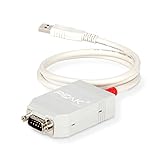
- MPN: IPEH-002021
- USB 1.1 , 2.0 , and 3.0 compatible
- Supports baud rates up to 1M
- 9-pin Male SUB-D. Storage Temperature-( -40°C) to +100°C
- Supports all interrupt and port addresses configurations of the USB interface
| Original CANcrypt functionality | CANcrypt V2/SPsec direction |
|---|---|
| Designed around the documented original CANcrypt approach for classical CAN systems. | Newer CAN-FD-oriented security-sublayer direction. |
| Uses selected identifiers and configurable protected message handling. | Described as protecting all addressed data units after secure-state entry. |
| Uses pairing, grouping, heartbeats, dynamic keys, counters, signatures, and optional encryption. | Described with replay protection, authenticated configuration, and automatic key rotation as newer capabilities. |
| Should be evaluated according to the limits and implementation details of the original documentation. | Should be evaluated as a separate version and not assumed to be present in a V1 deployment. |
This distinction matters when comparing documentation, buying software, planning a CAN-FD migration, or writing a security case. Features attributed to V2/SPsec should not be advertised as properties of every original CANcrypt installation.
Further implementation reference
For engineers who need protocol details and implementation examples, Implementing Scalable CAN Security with CANcrypt is the most directly relevant physical reference. The official material identifies a paperback with ISBN 978-0-9987454-0-4 and a hardcover with ISBN 978-0-9987454-1-1. The editions do not have identical software rights: the paperback includes demonstration software under educational or evaluation terms, while the hardcover includes a different commercial software version documented for prototyping and an initial pilot production run of up to 500 devices.
Those edition-specific terms should be checked before purchase or deployment. A current listing, price, stock status, and exact edition offered by a retailer should not be assumed from the ISBN alone.
What’s actually slowing this PC down?
Pick the symptom - the matching free tool is one click away.
Frequently asked questions
Does CANcrypt encrypt every CAN frame?
No. The original implementation is configured for selected CAN identifiers. Encryption can apply to an entire protected message or only selected bytes. This selective model reduces unnecessary overhead, but it means the system designer must maintain an accurate protection list.
Is the secure heartbeat just a keepalive?
No. It is simultaneously a liveness signal, a group-authentication signal, and a source of fresh shared randomness for dynamic-key updates. A missing or invalid heartbeat can indicate that a participant should no longer be trusted as an authenticated group member.
Can CANcrypt stop someone from taking the bus offline?
No. A transmitter with physical access can still flood the shared bus or consume bandwidth with high-priority traffic. CANcrypt helps distinguish valid protected messages from forged ones, but cryptography cannot guarantee availability against physical-layer denial of service.
Why does a receiver need the previous dynamic key?
A message may be transmitted just before a key update and arrive just after the receiver changes keys. Keeping the previous key available for the transition lets the receiver validate legitimate in-flight traffic instead of rejecting it solely because the update boundary occurred during transmission.
Free tools Windows power users keep installed
One-click scans. No signup required.
Is CANcrypt V2/SPsec the same as the original CANcrypt?
No. V2/SPsec is a newer, distinct CAN-FD-oriented direction with capabilities described separately from the original implementation. Verify the version, supported bus type, wire behavior, and license before applying V2 claims to a classical-CAN CANcrypt design.
Frequently Asked Questions
Does CANcrypt encrypt every CAN frame?
No. The original implementation is selective: configured CAN identifiers are protected, and encryption can cover an entire message or only selected payload bytes. This avoids unnecessary bus overhead but makes the protection list an important part of the system design.
What makes the CANcrypt heartbeat different from a normal keepalive?
No. The secure heartbeat reports liveness, helps authenticate group membership, and contributes fresh randomness to dynamic-key updates. A missing or invalid heartbeat can be treated as evidence that a device should no longer be trusted as an authenticated group member.
Can CANcrypt prevent CAN-bus denial-of-service attacks?
No. Authentication can make forged application messages fail validation, but an attacker with physical bus access can still consume bandwidth or flood the network. Availability requires additional physical, network, and system-level controls.
Recommended Free Tools
Why does CANcrypt retain the previous dynamic key?
A message may be transmitted before a dynamic-key update and arrive after the receiver has switched keys. Retaining the previous key during the transition allows that in-flight message to be decrypted and authenticated correctly.
Is CANcrypt V2/SPsec the same as the original CANcrypt?
No. CANcrypt V2/SPsec is a newer, distinct CAN-FD-oriented direction. Its documented capabilities should not automatically be attributed to the original classical-CAN CANcrypt functionality.
The Bottom Line
Bottom line: CANcrypt makes embedded CAN security practical by combining driver-level interception, selective message protection, point-to-point pairing, authenticated grouping, secure heartbeats, dynamic shared keys, counters, signatures, and optional encryption. Its strongest use cases are protected ECU communication, configuration, diagnostics, and bootloader authorization. It still requires disciplined provisioning, careful timing and buffering, protection against physical compromise, and a separate plan for bus flooding and recovery.
Quick Recap
Product prices and availability are accurate as of the date/time indicated and are subject to change. Any price and availability information displayed on Amazon at the time of purchase will apply.




