Quick wins for a faster PC:
Fix the driver behind crashes, sound loss and screen glitchesFind Drivers →Clear out junk files and repair common Windows errorsFree Scan →Scan for outdated or missing drivers - takes under a minuteDriver Scan →There is no single best automotive image sensor: the right choice depends on what the camera must see, in what conditions, and how the rest of the imaging system handles the data. HDR can preserve detail across bright and dark areas, while LED flicker mitigation (LFM) helps capture pulsing lights—but each affects exposure, saturation, or processing. Resolution, low-light sensitivity, frame rate, reliability, and safety documentation also have to fit the camera’s role.
What should I look for in an automotive camera image sensor?
Start with the camera’s job and operating environment, then compare sensors using matching modes and conditions. A forward-facing sensing camera, a surround-view camera, and a driver-monitoring camera do not necessarily need the same resolution, low-light performance, frame rate, or shutter behavior.
A useful evaluation covers the entire camera chain, not just the sensor’s headline megapixels or dynamic-range number. The lens, exposure controls, interface bandwidth, image processing, power and thermal limits, and downstream perception software all affect what the system can use.
- Scene and role: Define the objects and lighting conditions the camera must handle, including night driving, glare, shadows, and pulsing LED signals or lamps.
- HDR and LFM modes: Record the HDR method and measurement standard, whether HDR and LFM can run simultaneously, the supported frame rate, and any stated motion-artifact limitations.
- Image detail and speed: Compare resolution, pixel size, optical format, frame rate, exposure control, and the system’s ability to transport and process the resulting data.
- Low-light behavior: Review sensitivity alongside noise and dark-current data under conditions relevant to the camera’s intended use. A single lux figure without its test context is not a complete comparison.
- Motion and shutter: Check the candidate sensor’s behavior for the motion and exposure conditions the camera will face. Neither rolling nor global shutter is a universal winner.
- Integration limits: Check interface, power, operating temperature, thermal envelope, and image-processing requirements in the device documentation.
- Automotive and safety evidence: Verify the exact part’s qualification and safety documentation; a sensor’s component-level claims do not establish functional safety for the complete camera or vehicle system.
Vendor figures can illustrate design choices, but they are not a controlled ranking across manufacturers. For example, Sony announced the IMX490 as a 5.4-effective-megapixel sensor, while onsemi lists the AR0820 at 8.3 MP and up to 40 fps on its ADAS front-camera page. Those figures describe different products and do not, by themselves, establish which is better for a particular camera.
Outdated Drivers Are Slowing You Down
One free scan finds every outdated or missing driver and matches the right update for your exact hardware.Free scan · exact hardware matchPC Slower Than It Used to Be?
A free scan shows the junk files, broken settings and background clutter dragging Windows down - then fixes them in one click.Free scan · Windows 10 & 11#1 Best Overall

- Broad Vehicle Compatibility: This U3000-49 multifunctional camera module fits multiple Honda vehicle models including Odyssey, Accord, Civic and other mainstream Honda series, featuring high precision fit and steady, dependable operational performance
- Premium Reliable Performance: Equipped with high-grade sensor components for precise signal acquisition. It operates stably under all driving conditions and delivers consistent long-term service for your vehicle
- Functional Versions Available: You can choose the version with LKAS function or the standard version without LKAS function to achieve accurate replacement according to your actual vehicle requirements
- Simple Space-Saving Installation: Designed with compact and streamlined structure for hassle-free mounting. It takes no extra space and enables neat, trouble-free replacement work
- Individual Single Unit Packaging: Each package holds only one camera module, which is perfect for targeted single-piece repair replacement, eliminating unnecessary material waste and precisely meeting your repair demands
Why do automotive cameras need HDR and LED flicker mitigation?
Road scenes can contain bright glare and dark areas at the same time. HDR is intended to preserve useful image information across that contrast. LED traffic signals and vehicle lights create a different challenge: they pulse quickly enough that people may not perceive flicker, but a camera exposure can still fall between emissions and record a light as dim or off.
Longer exposure can help capture a pulsing LED, but may saturate bright pixels and wash out highlight detail. HDR and LFM therefore address related but distinct problems, and their useful operation depends on the sensor’s mode, timing, scene, and processing.
HDR: preserve detail across bright and dark regions
One approach described by Sony uses two pixel types: one optimized for darker subjects and another designed to resist saturation on bright subjects. Sony says they capture simultaneously, avoiding time lag during their combination. This is one implementation; other sensor architectures and HDR methods may behave differently. See Sony’s automotive HDR explanation.
Rank #2
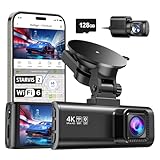
- [4K+1080P Front & Rear Recording] REDTIGER F7NP dash cam captures every detail with stunning 4K front and 1080P rear video. Featuring the advanced STARVIS 2 sensor plus the 170° front and 140° rear wide-angle lens, this dash camera delivers sharper images, balanced lighting, and reliable evidence day or night. Ideal for commuting, road trips, rideshare drivers, and new drivers.
- [STARVIS 2 Sensor & WDR Night Vision] Equipped with the advanced STARVIS 2 sensor, F1.5 large aperture, and 6-layer optical lens, F7NP 4K dual dash cam delivers clear, high-contrast footage in any lighting. WDR and HDR technology balance highlights and shadows, ensuring sharp night vision and crisp details day or night, providing reliable evidence and enhanced safety for every drive.
- [Built-in 5.8GHz WiFi & Smart App] Connect your smartphone to the dashcam’s built-in 5.8GHz WiFi to enjoy ultra-fast downloads up to 20MB/s. Using Redtiger Cam app, you can preview, download, and replay videos in real time, check GPS ata (route, speed, and location), and manage settings effortlessly, making it simple to review footage and share important moments.
- [Loop Recording & Free Memory Card] This car camera supports seamless loop recording to ensure continuous coverage without interruption. Older files are automatically overwritten when storage is full, while important events are safely locked. A free memory card is included, giving you ample space for 4K recordings and allowing you to use the camera right out of the box.
- [24/7 Parking Mode* & G-Sensor] Enjoy round-the-clock protection with two parking modes: time-lapse recording for continuous low-bitrate monitoring and G-sensor mode that records when collision is detected. The car security camera with G-sensor automatically locks important clips, ensuring crucial evidence is safely preserved even while your vehicle is parked.(*Hardwire kit needed.)
For a specific example, Sony’s 2018 announcement for the IMX490 reported 120 dB dynamic range under EMVA 1288 with HDR and LFM active, and a 140 dB mode that prioritized dynamic range. Sony also described the device as a 5.4-effective-megapixel sensor. These are manufacturer-reported specifications for stated modes and conditions, not a universal benchmark for automotive sensors. The IMX490 announcement also reported operation at 0.1 lux in its stated context and approximately 15% improved sensitivity over the previous generation; those figures should not be generalized beyond Sony’s stated conditions.
What’s actually slowing this PC down?
Pick the symptom - the matching free tool is one click away.
LFM: reduce the chance of missing pulsing lights
If a short exposure coincides with the off portion of an LED’s cycle, the camera can miss its emission. Extending exposure may capture more of the pulse but risks saturating the pixel. Sony describes LFM as allowing exposure longer than the LED emission period while preventing saturation so light can be captured in each period. onsemi also explains the conflict between preserving highlights and capturing pulsed LEDs in its HDR and LFM overview. LFM reduces this imaging conflict; it does not guarantee capture of every real-world signal under all timing and scene conditions. Sony’s automotive LFM explanation describes its approach.
Check the combined operating mode
Do not compare a sensor’s HDR figure in one mode with its LFM performance in another and assume both are available together. For each candidate, record whether HDR and LFM run simultaneously, the measurement convention, frame rate, and any stated motion limitations. Sony’s IMX490 announcement is a model-specific example that reports both functions, including the mode associated with its 120 dB figure.
Rank #3

- 【Crystal-Clear 1080P: 1/2.7-inch 2MP+ CCD Sensor + ISP Processor】Most backup cameras use ordinary CMOS sensors that blur details. We use a professional 1/2.7-inch 2MP+ 200W CCD sensor with an ISP processor - delivering true 1920×1080p output with automatic dimming, color correction, and 3D noise reduction. When reversing at night or in bad weather, this rear view camera for car shows every detail behind your vehicle with stunning clarity
- 【Super Night Vision: F1.5 Aperture + Auto Low-Light】Ordinary reverse cameras go blind when it's pitch black. Our F1.5 large aperture captures significantly more light than common F1.8 or F2.0 lenses. Combined with the 200W CCD sensor's natural light sensitivity and ISP auto low-light boost, you get clear, noise-free visuals even in complete darkness — no extra lights needed. Perfect for late-night parking or early morning trailer hitching — a night vision backup camera you can trust
- 【Support HD and AHD Switching】Default 720P HD output via CVBS/NTSC signal, compatible with 90%+ car screens. This back up camera for car can be switched to AHD signal output to deliver true 1080P resolution — provided that your display supports AHD 1080P 30fps signals - for a sharper and more detailed view. Cut orange ring→upgrade from CVBS (720P) to AHD (1080P) 30fps; Cut green ring→switch from reverse camera to car front camera ; Cut white ring→remove guide lines, complete control in seconds
- 【IP69K Metal Armor: Built to Outlast Your Vehicle】Plastic housings expand and crack with temperature changes — that's why 90% of back up cameras for cars fail within two years. Our aerospace-grade metal housing is 100% sealed with nano waterproof glue. This waterproof backup camera withstands high-pressure car washes, heavy rain, snow, and extreme temperatures from -22°F to 140°F. Whether you live in the desert heat or snowy mountains, this rearview camera keeps working
- 【Zero Blind Spots: 170° Ultra-Wide 6-Glass Lens】Narrow-angle rear view cameras miss obstacles on the sides. Our 6-layer high-transmittance glass lens delivers a 170° ultra-wide view, so you can see curbs, pedestrians, and low obstacles that other back up cameras miss. Whether you're parallel parking on a busy street or backing into a tight garage, this license plate backup camera gives you full confidence
How do sensitivity, resolution, and frame rate trade off?
Higher resolution can provide finer spatial detail or cover a wider field of view while retaining a given level of detail on an object. It also increases the volume of image data the camera chain must read, transfer, and process. Low-light sensitivity matters for night scenes, while frame rate, exposure time, and motion determine whether image updates are timely and useful. These factors need to be evaluated together rather than treated as independent wins.
Published examples help show the range of designs but do not provide a normalized comparison. Sony’s 2018 IMX490 announcement reported approximately 15% better sensitivity than its previous generation and 0.1-lux operation in a stated context. onsemi’s 2023 Hyperlux family announcement cited 2.1 μm pixel size and 150 dB ultra-HDR as family-level vendor specifications; the announcement’s mode and comparison conditions matter when interpreting those claims. Its Hyperlux announcement does not make those figures a direct, controlled comparison with another maker’s product.
Free tools Windows power users keep installed
One-click scans. No signup required.
The AR0820’s listing of 8.3 MP and up to 40 fps on onsemi’s front-camera page is likewise not enough to predict performance in every mode. Confirm the current datasheet for the resolution, frame rate, exposure, and other operating conditions the intended system needs.
Rank #4

- Note:Viidure APP doesn't require VIP for footage. [No VIP needed for: online video viewing, front/rear view switching, playback viewing, video downloading, social media sharing, camera setup.] [Developed with a third-party, Viidure isn't exclusive. Some features need membership: video speed adjustment, timeline viewing, cloud disk uploads.]
- 4K + 2.5K Dual Recording Dash Cam (Front and Rear):The WANLIPO A13 front and rear dash cam captures incredibly sharp footage in Ultra HD 4K (3840*2160P) for the front and 2.5K rear camera.This enables you to clearly identify crucial details like road signs and license plates with ease. Equipped with a 170° wide - angle front lens and a 120° rear lens, the dual dash cam significantly reduces blind spots, offering comprehensive coverage to safeguard vital evidence during events such as collisions
- 5GHz WiFi with APP & Built-in GPS: The dash cam front and rear wireless comes with state-of-the-art 5GHz WiFi and a free app, the video download speed reaches up to 8MB/s, while the 2.4GHz option only offers 2MB/s. This significantly reduces download times and lag during video review. The integrated GPS logs your driving speed, route, and real-time latitude and longitude, allowing you to track your journey on Maps via app or GPS Player,Which will provide additional evidence you may need.
- Loop Recording & 64GB SD Card:The WANLIPO A13 front and rear dash cam features intelligent loop recording, ensuring you never miss a moment, as it automatically overwrites the oldest files when storage is full. This dual dash cam comes with a 64GB SD card, allowing you to start recording immediately and continuously without worrying about running out of space. Equipped with a premium F1.8 aperture and a 6-layer optical lens, this dash cam's WDR technology enhances clarity in low-light conditions
- Built-In G-Sensor:The 4K dash cam is equipped with a high-performance G-sensor, designed to detect collisions or abrupt events, and optimized to detect even minor impacts. When the G-sensor detects an impact, the dash cam automatically locks the relevant footage, ensuring that critical recordings are not overwritten during loop recording. This feature provides reliable protection by preserving essential video evidence in the event of an accident, making it an essential safeguard for driving.
Does shutter type determine which sensor is best?
No. Shutter choice is an application axis, not a universal ranking. Motion, exposure timing, camera role, sensor design, and system constraints all matter. Texas Instruments’ 2023 camera white paper uses examples with different resolutions, frame rates, and shutter types to illustrate application-driven variation; it is not an automotive-specific endorsement of rolling or global shutter. For a decision, use documentation for the exact candidate sensor and intended camera application.
What automotive reliability and safety claims should I verify?
Automotive use requires more than acceptable image quality. Operating temperature, reliability testing, and safety-related documentation should be checked for the exact device and system role. Sony’s automotive sensor page describes its portfolio as complying with or aligning to standards that include IATF 16949, ISO 26262, ISO/SAE 21434, and AEC-Q100-related reliability testing. That is a portfolio-level statement, not proof that every listed sensor carries every qualification. Consult the particular part’s datasheet and safety documentation, and distinguish component evidence from system-level functional-safety claims. Sony’s automotive sensor page provides its portfolio context.
How should an engineering team compare candidate sensors?
Build the comparison around the target camera and use identical operating assumptions wherever possible. Ask vendors for mode-specific documentation rather than comparing isolated headline numbers.
Recommended Free Tools
- Define the camera’s task and conditions. Specify the field of view, lighting range, motion, day/night use, and whether pulsing LEDs are a critical target.
- Match HDR and LFM requirements. Record the HDR method and measurement standard, whether HDR and LFM are simultaneous, supported frame rates, and known motion limitations.
- Compare usable image performance. Review sensitivity, noise and dark-current data, resolution, pixel size, optical format, frame rate, exposure control, and shutter behavior for the intended mode.
- Check system capacity. Confirm that interface bandwidth, power, temperature, processing, and downstream software can support the selected image modes.
- Verify evidence for automotive deployment. Check exact-part operating limits, qualification records, and safety documentation against the intended system requirements.
- Compare like with like. Note each vendor’s test method, mode, date, and conditions. If those differ or are unstated, treat the figures as product-specific claims, not a head-to-head result.
An automotive image sensor such as Sony’s IMX490 is a component for integration into a camera system, not a plug-and-play upgrade for a consumer dash camera. No universal best sensor follows from the available product examples: the right choice is the one whose documented behavior and integration limits meet the specific camera’s requirements.
Quick Recap
Product prices and availability are accurate as of the date/time indicated and are subject to change. Any price and availability information displayed on Amazon at the time of purchase will apply.




