What’s actually slowing this PC down?
Pick the symptom - the matching free tool is one click away.
A petrol SUV runs on its combustion engine; a mild hybrid adds electric assistance but still cannot drive on electric power alone; a full hybrid can use its electric motor to move the vehicle briefly, usually at low speeds. The best choice depends on the exact SUV’s price and official fuel-economy rating, your driving pattern, local fuel costs and how long you plan to keep it.
What is the difference between petrol, mild-hybrid and full-hybrid SUVs?
The labels describe what the powertrain can do, not a guaranteed level of economy. In a petrol-only SUV, the combustion engine provides propulsion. A mild hybrid adds an electric motor-generator and a small battery to assist the engine and recover some energy during deceleration, but the engine remains responsible for driving the vehicle. A full hybrid has an electric motor and battery capable of propelling the SUV electrically for short periods or at low speeds, as well as combining motor and engine power.
As an Amazon Associate I earn from qualifying purchases.
Both mild and conventional full hybrids are typically non-plug-in vehicles: their batteries are replenished by energy recovery and, depending on the design, by the engine. They do not require a charging cable. A plug-in hybrid (PHEV) is a separate category because it can be charged externally; it is not the same as a conventional full hybrid.
Do these 3 things before closing this tab:
1Fix the driver behind crashes, sound loss and screen glitches2Clear out junk files and repair common Windows errors3Scan for outdated or missing drivers - takes under a minute| Feature | Petrol-only SUV | Mild-hybrid SUV (MHEV) | Full-hybrid SUV (HEV) |
|---|---|---|---|
| What drives the vehicle | Combustion engine | Combustion engine; electric system assists | Engine, electric motor, or both |
| Can the motor propel the vehicle on its own? | No traction motor | No | Yes, typically briefly or at low speeds |
| How the battery is replenished | No hybrid traction battery | Recovered energy, according to the system design | Regenerative braking and, in some designs, the engine |
| Does it need external plug-in charging? | No | No | No, for a conventional non-plug-in HEV |
| General cost/economy tendency | Must be compared by exact model | The U.S. Department of Energy says mild hybrids are generally less costly than full hybrids, with less fuel-economy benefit | The U.S. Department of Energy says full hybrids are generally more costly than mild hybrids, with better fuel-economy benefits |
The cost and economy statements in the table are broad system-level tendencies, not promises about a particular SUV, trim, market or model year. The U.S. Department of Energy’s Alternative Fuels Data Center (AFDC) says mild hybrid systems cannot power the vehicle using electricity alone. The UK Driver and Vehicle Standards Agency (DVSA) likewise describes mild hybrids as mechanically propelled by the engine, while noting that system designs differ by make and model. Always check the technical description for the specific vehicle.
#1 Best Overall

- High-quality car model: Package size: 7.91×3.86×3.66 in. package weight: 0.97 pounds. Made of zinc alloy, plastic and electronics. Safe material. Suitable for children as well as adults to play.
- Realistic light: Press on the front of the car to trigger light effect.
- Exquisite design:It has detailed interior. The doors, hood and trunk can be opened. The wheels simulates shock absorption.
- Interesting pull back car: Put the car on the ground, press and hold the car body, then pull back, it will drive forward. Very funny.
- Awesome Gift: The car toy is perfect for birthdays, Christmas gifts, party and cake decorations. It can be a valuable reward gift for kids. It is also good for model car collectors.
There is not one universal boundary that a badge communicates to every buyer. Government guidance describes several hybrid system levels, from micro or mild systems through full hybrids and plug-in hybrids. The useful buying question is not simply whether an SUV is advertised as a hybrid; it is whether its motor can propel the vehicle, how the system replenishes its battery, and what the exact version costs and consumes.
What does a mild-hybrid SUV actually do?
A mild hybrid does not turn an engine-driven SUV into an electric car. Its electric system supports the combustion engine and can capture some energy that would otherwise be lost during braking or slowing. That assistance may contribute to improved fuel efficiency, but the mild-hybrid system cannot independently drive the wheels. The U.S. Environmental Protection Agency (EPA) makes the same functional distinction in its 2025 Automotive Trends Report: its model-year 2024 discussion describes “mild” hybrid systems (MHEVs) as unable to propel the vehicle on their own, unlike “strong” hybrid systems (HEVs), which can temporarily power it without engaging the engine.
That distinction matters when comparing marketing claims. A badge containing the word “hybrid” does not tell you whether the vehicle can move electrically, how much fuel it will use, or whether it costs less to own. Confirm whether the model is an MHEV or HEV in the manufacturer’s technical specifications, and compare its official consumption rating and purchase price with the relevant petrol version.
Quick wins for a faster PC:
Clear out junk files and repair common Windows errorsFree Scan →Scan for outdated or missing drivers - takes under a minuteDriver Scan →For a mild hybrid, think of the electric hardware as assistance rather than an alternative propulsion mode. The SUV remains mechanically driven by its engine. Energy recovery is part of the system, but the presence of a battery and motor-generator alone does not mean there is an electric-only driving range. The AFDC’s concise rule is that mild hybrid systems cannot power the vehicle using electricity alone.
That can make an MHEV easy to misunderstand in a showroom or online listing, especially when several versions of the same SUV have similar names. Read the specification sheet, not just the badge: look for the maker’s stated system category and its description of the motor’s role. If the description does not make clear whether the motor can propel the wheels independently, ask the manufacturer or dealer to confirm the category before comparing it with a full hybrid.
When might each type suit your driving?
Choose a petrol SUV if its overall value is stronger
A petrol SUV may be the better purchase if its price and official fuel-consumption rating make more sense for your budget and expected use than the comparable hybrid versions. The category label alone cannot establish that result: petrol economy varies by vehicle and configuration, and a hybrid’s additional purchase cost may or may not be recovered through fuel savings.
Rank #2

- [Product Specification] Dimension: L5.3" x W2.6" x H1.7"; Weight: 0.9 lb / 410 g; Color: Blue.
- [Material] This Forester toy car is made primarily from diecast metal with plastic parts and rubber tires, ensuring durability and making it a robust toy vehicle or a collectible item.
- [Interactive Functions] Equipped with a pull-back mechanism, opening doors, hood, and trunk, as well as light and sound effects, this 1/30 Forester model car offers immersive and engaging fun.
- [Detailed Design] This Forester SUV toy displays a detailed design that mimics the actual Forester, complete with a rugged bumper, openable doors, realistic tires, and a detailed interior. These elements make the toy car not only fun to play with but also a great display piece.
- [Perfect for Collectors and Kids] It’s a great addition to any model car collectors or as a gift for kids (Birthday and Christmas Gifts Choice). Whether you’re a dedicated model car collector or looking for a memorable gift for a child, this Forester diecast model car is always a perfect choice.
Petrol-only is also a clear comparison baseline when you are assessing the financial difference between versions from the same manufacturer. Check that the vehicles are similarly equipped; otherwise a price gap may reflect trim or equipment as well as powertrain. A lower purchase price is not automatically the lowest overall cost for your ownership period, just as a hybrid’s fuel-economy benefit does not automatically offset its initial price.
The Tool Desk
Outbyte PC Repair FREEClear out junk files and repair common Windows errorsFree Scan →Outbyte Driver Updater FREEScan for outdated or missing drivers - takes under a minuteDriver Scan →Consider a mild hybrid when you want assistance without electric-only driving
A mild hybrid may appeal if you want an engine-driven vehicle with an electric system that assists and recovers energy, but do not need electric-only propulsion. The system still relies on the combustion engine to move the SUV. Whether the MHEV is worthwhile depends on the actual price gap and the official economy ratings for the versions you are considering, rather than the mild-hybrid label itself.
In practical terms, choosing an MHEV does not mean planning to charge the vehicle, nor does it mean expecting to drive away from the engine at low speed. It is an engine-led powertrain with electric assistance. If electric-only propulsion is important to you, a mild hybrid does not meet that requirement; check whether the full-hybrid version of the SUV, or another powertrain category, is available.
Consider a full hybrid if its capability and ratings fit your use
A full hybrid can move under electric power for short distances or at low speeds, or use the motor and engine together. That capability may be useful in some kinds of driving, but it does not establish a universal fuel-saving percentage or guarantee that the vehicle will use less fuel in every situation. Assess the exact model’s official rating and price against your likely annual distance and local fuel price.
A conventional full hybrid does not need to be plugged in. Its battery is replenished through regenerative braking and, in some designs, by the engine. This is different from a PHEV, whose external charging capability makes it a separate option. If a listing just says “hybrid,” verify which type it means; an electric mode or plug-in port should not be assumed from the generic term.
Driving pattern is relevant because regenerative braking recovers some energy that ordinary braking would dissipate, and a full hybrid can also move electrically for short stretches. Neither point predicts a particular buyer’s savings on its own. The government sources describing these systems do not provide one universal fuel-saving figure for unspecified SUVs.
Rank #3
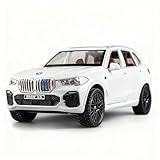
- 1.Product dimension: 6.29 * 2.5 * 3 inches, Package weight: 0.48 pounds,Suitable for playing
- 2. High-Quality Materials and Strong Pull Back: Diecast automobile model, zinc alloy, plastic parts, rubber tires, detailed interior and exterior decoration. Install a strong pull-back device,Place the car on the ground, hold down the car body and pull it back, the model car will drive forward
- 3. Function: Side doors, hood and tailgate can be opened movably; Then press the two wheels of the front vehicle or open the front door to trigger the sound of engine and lamp
- 4. Best Gifts Toys: This 1 / 32 toy car is very suitable for children. The paint is fine and feels good. It's very heavy to carry. It is also very suitable for car model lovers as decoration
- 5.Accessories and collections: This product is very suitable for static accessories and can be used as an accessory next to a computer. For those who are passionate about collecting model car models, this is a great art collection.
So, use your driving pattern to decide which capability matters, not to assume a precise outcome. A driver who values the ability to move electrically for short stretches may prefer to consider a full hybrid, while someone who does not need that capability may find an MHEV or petrol version worth comparing. The actual economy difference still has to come from the specific versions’ official ratings and your own expected use.
How to compare two SUVs and estimate whether a hybrid is worth its price
- Match the vehicles before comparing them. Select the same model year where possible, and check engine, drivetrain, trim and equipment. A comparison between differently equipped or configured vehicles can obscure whether the difference comes from the powertrain or from other specifications.
- Use official consumption ratings for each exact version. Confirm the rating for the relevant model year, engine, drivetrain and trim in your market. Ratings produced under different local test cycles are not directly interchangeable, so do not compare numbers from unlike testing systems as if they were measured on the same basis.
- Compare like-for-like purchase prices. Use similarly equipped versions and account for the actual price difference in your market. A general claim that one type costs more cannot establish the premium for the SUVs on your shortlist.
- Estimate fuel spend using your own inputs. Use your expected annual distance and local fuel price with the official consumption ratings. This gives you a more relevant estimate than a generic claim about what a hybrid saves.
- Account for how long you expect to own the SUV. A fuel-cost difference can only offset a purchase-price difference over the period you own the vehicle. Do not assume a hybrid will pay back its premium: the result depends on the actual price gap, consumption difference, fuel price, annual distance and ownership period.
- Confirm the powertrain category. Check the manufacturer’s specification to distinguish MHEV from HEV, and from PHEV if a plug-in model is also on your list. Do not infer electric-only capability from a generic “hybrid” badge.
For U.S. shoppers, the Department of Energy specifically points to FuelEconomy.gov for comparing a hybrid with a comparably equipped non-hybrid from the same manufacturer, including estimated fuel-cost savings. That comparison is more useful than applying an unverified, one-size-fits-all savings figure to an SUV whose model, year and market have not been specified.
To make the comparison concrete, start with the difference in the listed purchase prices for the versions you would actually buy. Then use the official consumption ratings to estimate each vehicle’s fuel use over your expected annual distance, applying the fuel price where you live. Compare the resulting annual fuel-cost estimates, and consider them over the number of years you expect to keep the SUV. This will not predict every real-world tank, but it lets you test whether the purchase-price difference appears plausible to recover under your own assumptions.
Keep the assumptions visible. If you change annual mileage, fuel price, the purchase price or the ownership period, the comparison changes too. Avoid presenting a simple “hybrid pays back after X years” claim unless it is based on the exact prices, ratings and buyer inputs. There is no single reliable payback calculation for all petrol, mild-hybrid and full-hybrid SUVs.
Use one market’s official figures consistently. Different countries can use different fuel-consumption test cycles, so two numbers may not be directly comparable simply because both are labelled as fuel economy. Compare local ratings for the exact model year and configuration, and treat them as a consistent starting point rather than a promise of the consumption every driver will achieve.
Why there is no single best SUV type for every buyer
The title covers powertrain categories, not named vehicles. Without a country, model year, shortlist, prices and official ratings, it is not possible to rank a petrol SUV against a mild hybrid or full hybrid, calculate a reliable payback period, or account for local incentives. Even the broad cost and economy tendencies between mild and full hybrids may not describe the price or performance of a particular pair of models.
Rank #4

- DURABLE CONSTRUCTION: Premium die-cast metal body with plastic trim details and rubber tires ensures long-lasting quality and authentic appearance
- DURABLE CONSTRUCTION: Premium die-cast metal body with plastic trim details and rubber tires ensures long-lasting quality and authentic appearance
- PERFECT DISPLAY SIZE: Compact 5-inch length makes it ideal for showcasing while preserving the iconic Defender's distinctive styling elements
- QUALITY DETAILS: Precision-engineered model includes accurate body contours, wheels, grille design, and authentic two-tone color scheme
Official ratings also answer a narrower question than every driver’s real-world fuel use. They provide a basis for comparing exact versions under the applicable test procedure, but the rating does not eliminate differences in driving, route and usage. Treat it as a consistent starting point for your shortlist, not as a guarantee that two buyers will record the same consumption.
Recommended Free Tools
Government guidance supports the distinctions between MHEV and HEV systems, but it does not supply an SUV-specific price, fuel-economy or payback result for the unspecified vehicles in this comparison. The EPA’s 2025 Automotive Trends Report discusses fleet technology and model-year 2024 systems; it is not a forecast of savings for a particular SUV. A meaningful recommendation requires the buyer’s market and a comparison of exact versions.
That uncertainty is a reason to compare carefully, not a reason to treat all three options as equivalent. The categories do have real functional differences: petrol SUVs rely on the engine; MHEVs add assistance but cannot propel themselves electrically; and HEVs can provide electric propulsion briefly or at low speeds. What cannot be settled by the category alone is which actual SUV has the strongest value for a particular buyer.
Manufacturers’ technology strategies and model line-ups also vary and change over time. The EPA’s fleet-level discussion of model-year 2024 technology is useful context for understanding that manufacturers use different approaches, but fleet context cannot substitute for the price, equipment and official rating of the SUV you are considering. Recheck the specification for the model year on sale rather than relying on an older description or a generalization about the brand.
Independent reader supportYour contribution helps us test, update, and keep practical guides available for everyone.Questions to ask before choosing a powertrain
- Is this exact SUV a mild hybrid, full hybrid or plug-in hybrid, and can it propel itself electrically?
- What are the official fuel-consumption ratings for the exact model year, engine, drivetrain and trim in my market?
- What is the purchase-price difference between similarly equipped versions?
- What annual distance, local fuel price and ownership period should I use to estimate fuel costs?
- Were the ratings I am comparing measured using the same local test cycle?
Also ask what the manufacturer means by its hybrid terminology. The U.S. EPA describes strong hybrids (HEVs) as temporarily able to power the vehicle without engaging the engine and mild hybrids (MHEVs) as unable to propel the vehicle on their own. That distinction is especially useful if sales material uses a broad “hybrid” label without explaining the electric motor’s role.
Free tools Windows power users keep installed
One-click scans. No signup required.
If you are comparing a full hybrid with a plug-in hybrid, treat them as separate options. A conventional HEV does not require external charging, while a PHEV can be charged externally. The distinction affects the question of how the battery is replenished and whether you want a vehicle that uses a charging cable; it does not, by itself, decide which model is the better purchase.
Best Value

- High-quality toy car: Package size: 8.6×3.7×2.9 in. package weight: 1.3 pounds. Suitable for playing.
- Exquisite design: Four doors can be opened. The hood and Tailgate can also be opened. Made of zinc alloy, plastic and electronics. Safe material. This model car has detailed interior and exterior. Wheels simulates shock absorption.
- Cool light and sound: Press the front of the car to trigger sounds and lights. Press steering wheel to trigger horn sound.
- Pull back model car: Place the toy car on the ground, hold down its body and pull it back, it will drive forward. Very interesting.
- Awesome Gift: It is an ideal gift toy model car for children, also great to use for collection and decoration.
Finally, ask whether the price and fuel-consumption figures refer to the same specification you intend to buy. A comparison is only useful when the model year, drivetrain, engine and equipment are clear. If any of those details differ, note the difference before attributing all of the price or consumption gap to the hybrid system.
Frequently Asked Questions
Is a mild hybrid better than a petrol SUV?
Not automatically. A mild hybrid adds electric assistance and energy recovery, but the engine still propels the vehicle and the system cannot drive it on electric power alone. Compare the purchase price and official consumption rating of similarly equipped versions for the exact model year and market.
Can a mild-hybrid SUV drive on electric power alone?
No. The U.S. Department of Energy’s Alternative Fuels Data Center states that mild hybrid systems cannot power the vehicle using electricity alone. The motor-generator assists the engine and can recover energy, but the SUV remains engine-driven.
Crashes, No Sound, or Screen Glitches?
Random freezes, missing sound and display glitches usually trace back to one bad driver. Find and replace yours safely.Free scan · under a minutePC Slower Than It Used to Be?
A free scan shows the junk files, broken settings and background clutter dragging Windows down - then fixes them in one click.Free scan · Windows 10 & 11Can a full-hybrid SUV drive without the engine running?
A full hybrid can temporarily propel itself electrically, typically for short distances or at low speeds. Its motor can also work with the engine. The capability and operating conditions vary by model, so check the specific vehicle’s technical description.
Do non-plug-in hybrid SUVs need to be charged?
No. A conventional non-plug-in full hybrid replenishes its battery through regenerative braking and, in some designs, the engine. A mild hybrid also does not need an external charging cable. A plug-in hybrid (PHEV) is a separate category that can be charged externally.
Is a full hybrid more expensive than a mild hybrid?
The U.S. Department of Energy describes full hybrids as generally more costly than mild hybrids, but that is a broad system-level tendency, not a guarantee about two particular SUVs. Compare actual prices for similarly equipped versions in your market.
Will a hybrid SUV always save enough fuel to repay its higher price?
No universal payback is guaranteed. It depends on the actual purchase-price difference, consumption difference, local fuel price, annual distance and how long you own the vehicle. Use those inputs with official ratings for the exact versions rather than relying on a generic savings percentage.
How should I compare fuel-economy ratings from different countries?
Do not treat ratings from different local test cycles as directly interchangeable. Compare exact versions using the official ratings applicable to your market and model year, and use them as a consistent starting point rather than a promise of real-world consumption.
The Bottom Line
Choose by capability and by the numbers for the SUV you will actually buy. A petrol SUV is engine-driven; a mild hybrid adds assistance but cannot drive on electricity alone; a full hybrid can propel itself electrically for short periods and does not need to be plugged in. Compare like-for-like prices and official ratings for the exact model year, then estimate fuel costs using your annual distance, local fuel price and expected ownership period. No powertrain label alone proves that one SUV will be the cheapest or best choice for every driver.
Quick Recap
Product prices and availability are accurate as of the date/time indicated and are subject to change. Any price and availability information displayed on Amazon at the time of purchase will apply.




