Free tools Windows power users keep installed
One-click scans. No signup required.
To keep batteries alive through winter, maintain a full charge, test aging 12-volt car batteries before freezing weather, and use a compatible smart maintainer when a vehicle sits. EVs need plugged-in preconditioning and extra range planning, while AA and AAA batteries should stay dry at normal room temperature—not in a refrigerator or freezer.
Cold-weather battery care depends on the battery type. Conventional 12-volt batteries must deliver high starting current, EVs manage a large high-voltage pack and charging temperature, and household cells mainly need proper storage. Treating all three the same creates avoidable failures.
As an Amazon Associate I earn from qualifying purchases.
Key takeaways
- A healthy, fully charged 12-volt car battery is substantially more winter-ready than a weak or partially discharged battery.
- At freezing temperatures, a car engine needs about 30% more starting energy, while at 0°F a vehicle battery may deliver only about 50% of its rated capacity under the cited AAA conditions.
- For a stored gasoline or diesel vehicle, disconnecting the negative cable can reduce drain, while a compatible smart maintainer is better when parasitic loads must remain powered.
- EV drivers should precondition the cabin and battery while plugged in, keep an adequate charge, and expect temporary limits on range, regenerative braking, acceleration, or charging speed.
- AA, AAA, coin, and other household batteries should be stored dry at normal room temperature—not in a refrigerator or freezer.
Why does winter kill car batteries?
Winter attacks the starting system from both directions: cold slows the chemical reactions that produce battery power, while cold engine oil and mechanical resistance make the engine harder to crank. According to AAA Northeast’s winter battery guidance, updated December 29, 2025, “A car engine needs about 30% more energy to start when the temperatures drop to freezing.” The same guidance says, “At zero degrees your vehicle battery can only deliver at 50% of its rated capacity.” Those are approximate conditions, not a guarantee for every battery design, vehicle, or state of charge.
A fully charged battery is also less vulnerable to freezing than a discharged battery. AAA Northeast says a fully charged battery normally freezes only far below ordinary winter temperatures, while a nearly discharged battery can freeze around the freezing point. Interstate Batteries likewise warns that storing a battery discharged increases the risk of freezing and sulfation.
#1 Best Overall
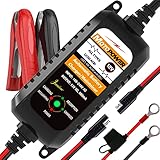
- Charger, Maintainer & Desulfator - An all-weather battery charger, battery maintainer, trickle charger, and battery desulfator. Perfect for charging and maintaining all 12-volt lead-acid, flooded or sealed maintenance free batteries (AGM and gel cell).
- Automatic Desulfation & Optimization - Automatic detection of battery sulfation problem. Applying with pulse current technology to desulfate the batteries effectively. Optimize the battery performance during charging without any manual operation.
- Energy Saving & Spark Free - Zero output in standby mode. No battery drain when connecting with the battery. Spark proof during lead connection for safety.
- Multi-level Safety Protection & Timer Set Up - Overcharge, short circuit and reverse polarity protected. Charge the battery up to 14.4V and Maintain the battery at 13.6V for long time to avoid gasing and to extend the battery life. 24-hour Timer is set up in the program to terminate the charge and enter the maintaining mode once the voltage is above 14V to ensure safety.
- Easy Operation -Just plug-in, connect to the battery and start charging or maintaining your battery. The desulfation is working automatically during the charing. No manual operation.
| Winter condition | What happens | Best response |
|---|---|---|
| Freezing temperatures | The battery produces less available starting power and the engine needs more starting energy. | Keep the battery fully charged and test an aging battery before cold weather arrives. |
| Vehicle sits for days or weeks | Alarms, computers, keyless-entry systems, and other parasitic loads continue drawing power. | Use a compatible smart maintainer or follow the owner’s storage procedure, which may include disconnecting the negative cable. |
| Battery is nearly discharged | The battery can freeze at much warmer temperatures than a fully charged battery and may suffer permanent damage. | Recharge it promptly with the correct charger; replace or professionally assess it if it will not hold charge. |
| Severe cold and outdoor parking | Starting becomes harder and the battery remains exposed to low temperatures. | Use sheltered parking where possible and consider a battery blanket only as supplemental protection. |
How do I keep my car battery from dying in winter?
Keep the 12-volt battery charged, confirm that the charging system works, reduce unnecessary time sitting unused, and identify a weak battery before the first major cold snap. For ordinary winter driving, these steps matter more than adding insulation to a battery that is already failing.
- Drive the vehicle regularly. AAA recommends driving weekly and taking longer rides when possible. Very short trips may not replace the energy used during starting, especially when the heater, defroster, lights, and heated seats are operating.
- Park under cover when possible. A garage or covered space reduces exposure to extreme cold. Covered parking does not repair a weak battery, but it can make starting conditions less severe.
- Keep terminals clean and tight. Corrosion or a loose cable increases electrical resistance. Inspect the terminals and cable ends, clean corrosion safely, and make sure the battery is firmly secured.
- Check the charging system. A good battery cannot remain charged if the alternator, wiring, or voltage regulation system is faulty.
- Test an older or symptomatic battery. Test before winter if cranking has slowed, headlights dim during starting, the vehicle has needed jump-starts, or the battery is approaching the end of its service life.
- Keep the battery from sitting discharged. If the vehicle will be parked for an extended period, choose a maintainer or approved disconnect procedure rather than leaving the battery to drain.
AAA’s car-battery maintenance guidance also recommends clean terminals, covered or garage parking, and an engine-block heater in cold conditions. An engine-block heater helps the engine start more easily; it does not recharge or replace a weak battery.
What should I check before the first hard freeze?
Inspect the battery and its electrical connections before cold weather exposes a marginal starting system. A professional test is especially sensible for an older battery or a vehicle that has already shown slow-cranking symptoms.
- Check the battery’s age and service history.
- Look for a cracked, swollen, or distorted case.
- Stop using a battery that is leaking or producing a strong sulfur or rotten-egg odor.
- Confirm that the hold-down bracket is secure; vibration can shorten battery life.
- Inspect terminals and cable ends for corrosion, looseness, or damaged wiring.
- Test the battery and charging system, especially after repeated jump-starts.
- For batteries with accessible serviceable cells, check fluid levels only as the manufacturer instructs.
Many modern automotive batteries are maintenance-free. Do not open a sealed battery or add water unless the battery manufacturer explicitly permits that procedure. Swelling, cracking, leakage, venting, and a strong sulfur odor are reasons to stop using the battery and seek qualified service rather than attempting a winter repair.
A 12-volt car battery tester can help identify a weak battery before winter, but a tester does not replace a charging-system diagnosis when the battery repeatedly loses charge. A terminal-cleaning brush is useful only for dirty or corroded connections; cleaning cannot restore a battery with damaged plates or inadequate capacity.
Should I disconnect my car battery for the winter?
Disconnecting the negative cable can be appropriate when a conventional vehicle will be stored, but the owner’s manual should be consulted first because modern vehicles may lose settings, alarm functions, window calibration, or other learned information. Some vehicles also specify a particular shutdown and reconnection procedure.
Disconnecting is most useful when the vehicle will sit long enough for parasitic loads to discharge the battery and the vehicle does not need to remain ready for immediate use. The battery should still be fully charged before storage, and the disconnected cable must be secured so it cannot accidentally contact the terminal.
Recommended Free Tools
Rank #2

- PREVENT BATTERY FAILURE: Ensure reliable starts after storage with this 3-in-1 device that charges, maintains, and reconditions batteries for cars, motorcycles, ATVs, trucks, SUVs, and boats.
- MULTI-FUNCTION VALUE: Maximize battery life and performance with advanced desulfation mode, automatic voltage detection for 6V and 12V batteries, smart trickle charging , and multi-stage charging algorithms.
- REVIVE DEAD BATTERIES: Delivers 1.5A immediate charging power to keep standard, AGM, and deep-cycle batteries healthy, making it the perfect garage upgrade for seasonal or infrequently used vehicles.
- EASY OPERATION: Experience peace of mind with smart trickle charging that safely maintains battery health over time without overcharging, plus reverse hook-up protection for safety.
- COMPLETE PACKAGE: Includes (1) SC1355 Battery Charger and Maintainer, (1) Quick-Connect Battery Clamps, (1) Quick-Connect Ring Connectors, (1) User Manual
A compatible 12-volt battery maintainer is usually more convenient when the vehicle has unavoidable parasitic loads, must remain accessible, or will be stored for weeks or months. Choose a maintainer that matches the battery’s voltage and chemistry, such as flooded lead-acid, AGM, or lithium, and follow both the vehicle and maintainer instructions. AAA recommends a trickle or maintenance charger for vehicles that sit unused, while Interstate recommends keeping stored batteries fully charged.
Interstate Batteries advises checking a stored battery every 45–60 days and charging it as needed. The exact schedule depends on the battery, vehicle, storage temperature, and whether the battery is connected to electrical loads.
| Storage choice | Best fit | Important limitation |
|---|---|---|
| Drive weekly | A vehicle used throughout winter. | Short trips may not fully replace starting energy. |
| Disconnect the negative cable | A conventional vehicle stored without needing its electronics powered. | Settings may be lost; follow the owner’s manual and reconnection procedure. |
| Smart battery maintainer | A vehicle stored for weeks or months, especially when parasitic loads remain. | Voltage and battery chemistry must be compatible; a maintainer is not automatically safe for every battery. |
| Battery blanket | Optional supplemental protection in severe cold or exposed outdoor parking. | It does not cure a weak, discharged, damaged, or incorrectly charged battery. |
Is a trickle charger safe to leave on all winter?
A charger can be safe for extended winter storage when it is a suitable automatic maintainer for the battery’s voltage and chemistry and is installed according to its instructions. Do not assume that an inexpensive, continuously charging device is suitable simply because it is labeled a trickle charger.
A smart maintainer monitors battery condition and adjusts or stops charging according to its design. It still needs appropriate ventilation, sound cables, dry connections, and protection from damaged cords or water. Never connect a charger without confirming the battery type and the manufacturer’s required charging profile.
Odyssey’s manufacturer instructions provide a specific AGM example: measure at least 12.84 volts before winter storage, disconnect the negative cable to prevent an applied load, and, when parasitic loads remain during extended storage, use a 12-volt trickle charger measuring 13.5–13.8 volts at the battery terminals. Those figures apply to the specified Odyssey AGM guidance and must not be generalized to every 12-volt battery.
For a stored vehicle, a smart battery maintainer is the most direct product choice. Confirm that the product supports the battery chemistry, voltage, and storage arrangement before connecting it.
Does a battery blanket really work?
A battery blanket can reduce exposure to severe cold, but a battery blanket is supplemental protection rather than a solution for a weak or discharged battery. AAA identifies a battery blanket as an optional measure in cold climates, not a substitute for testing, charging, clean connections, or a functioning charging system.
Rank #3
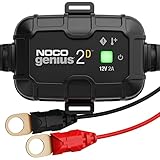
- MEET THE GENIUS2D — The all-new direct-mount onboard battery charger for an under-the-hood battery charging system and year-round battery maintenance.
- DO MORE WITH GENIUS — Designed for 12-volt lead-acid (AGM, Gel, SLA, VRLA) batteries, including flooded, maintenance-free, deep-cycle, marine and RV batteries.
- DIRECT MOUNT — Securely attaches near the battery using a durable snap-fit mounting bracket and installs easily into most surfaces with truss-head self-tapping screws for a hassle-free, reliable setup.
- ENJOY PRECISION CHARGING — An integrated thermal sensor dynamically adjusts the charge based on ambient temperature, preventing overcharging in hot weather and undercharging in cold, ensuring optimal battery performance.
- CHARGE DEAD BATTERIES — Charge batteries from as low as 1 volt, or use Force Mode to manually charge completely dead batteries down to zero volts. Perfect for recovering deeply discharged or neglected batteries.
Use only a blanket designed for the vehicle battery and follow its electrical, temperature, installation, and fire-safety instructions. A blanket may be worthwhile for an outdoor vehicle in a very cold climate, but sheltered parking, a healthy fully charged battery, and an appropriate maintainer usually address more fundamental causes of winter failure.
Quick wins for a faster PC:
Repair Windows errors before they cause bigger problemsFix Now →Scan for outdated or missing drivers - takes under a minuteDriver Scan →How should I store an EV battery in cold weather?
Store and operate an EV with an adequate charge, plug in at home when possible, and precondition the cabin and battery while the vehicle is still connected to charging power. Cold weather can temporarily reduce range, regenerative braking, acceleration, and charging speed, and exact behavior varies by EV model, software, battery temperature, and state of charge.
- Plug in when possible. The U.S. Department of Energy recommends covered parking where available, preconditioning while the EV is still charging, maintaining an adequate charge, and protecting an outdoor charging connector from snow or sleet in its January 30, 2024 winterizing guidance.
- Schedule departure and preconditioning. Heating the cabin and battery from shore power uses less stored energy than beginning the trip with an unplugged vehicle, although the exact controls differ by manufacturer.
- Allow extra charging time. A cold battery may accept energy more slowly until its temperature is suitable, particularly during fast charging.
- Precondition before fast charging. Use the vehicle’s route planner or battery-preconditioning function when available. Tesla’s cold-weather owner guidance explains that route planning can warm the battery before arrival at a fast charger.
- Plan more conservatively. Keep enough charge for the planned trip and possible detours, because cold weather can reduce range.
- Protect outdoor charging equipment. Keep snow and sleet away from the charging connector using only covers or accessories approved for the vehicle and charging equipment. Do not force a frozen charge-port door or latch; use the vehicle’s prescribed defrost or preconditioning procedure.
- Avoid extended deep discharge. Tesla warns against allowing the high-voltage battery to fully discharge. Tesla also notes that a battery can discharge at approximately 1% per day, with the rate varying according to environmental factors, vehicle configuration, and settings, in its Range Tips guidance.
Leaving an EV plugged in while parked can allow the charging system, rather than the high-voltage battery alone, to help maintain battery temperature on vehicles designed for that behavior. The vehicle’s own manual and charging settings control the precise limits and procedure.
| EV winter concern | Likely temporary effect | Practical response |
|---|---|---|
| Cold cabin and battery | More energy use and reduced initial efficiency. | Precondition while plugged in and schedule departure when possible. |
| Cold battery at a fast charger | Reduced charging rate until the battery warms. | Use route planning or battery preconditioning before fast charging. |
| Cold-weather driving | Lower range and possible limits on regenerative braking or acceleration. | Maintain an adequate charge and plan extra energy and time. |
| Snow or sleet at the connector | Charging-port or connector exposure and a potentially frozen latch. | Protect the connector as approved; do not force the port or latch. |
Should I keep AA batteries in the refrigerator?
No. AA, AAA, coin, disposable, and rechargeable household batteries generally belong in a dry place at normal room temperature, not in a refrigerator or freezer. Duracell recommends normal room-temperature, dry storage and says refrigeration is unnecessary and not recommended in its battery FAQ.
Keep household cells organized so their contacts cannot touch one another or metal objects. Store batteries in their original packaging or a suitable battery case, and remove batteries from devices that will not be used for a long period when the device manufacturer permits removal. Keep rechargeable cells separate from loose metal objects and charge them only with a charger designed for that battery type.
Never recharge a disposable battery. Only batteries specifically labeled “rechargeable” should be recharged, and the charger must match the cell chemistry and size. Household batteries should not be handled like a car battery: refrigeration is not a winter-preservation method, and a car-battery maintainer is not suitable for AA, AAA, coin, or other household cells.
Which winter battery solution fits the situation?
The right winter battery procedure depends on the battery type, storage duration, electrical load, parking conditions, and manufacturer instructions.
Rank #4

- Adaptive Smart Charging: Our battery maintainer adapts to the needs of your 12V battery, ensuring optimal charging and extending battery life. Ideal for Automotive, Motorcycle, and Lawn Mowers.
- 4-Step Charging Program: This 12V battery charger safely charges and maintains your battery utilizing a 4-Step program to promote optimal battery health. Smarter than a trickle charger.
- Includes: 12V, 1.25 AMP battery charger, fused ring terminal and alligator clip accessory cables, 10-year manufacturer's warranty, and lifetime customer support.
- Quick Disconnect Harness: Easily connect and disconnect with our quick disconnect harness. This 12V battery charger makes maintaining your battery hassle-free, ideal for those who appreciate convenience and efficiency.
- Two-Color Charge Status: Solid state two-color LED light indicates the state of the charge and if the battery voltage drops too far under load, charging will resume full charger output power.
| Battery or vehicle | Recommended winter routine | Do not do |
|---|---|---|
| 12-volt vehicle driven regularly | Drive weekly when possible, inspect terminals, test an aging battery, and verify the charging system. | Rely on short trips to recharge a deeply discharged battery. |
| 12-volt vehicle stored for weeks | Fully charge it, then disconnect the negative cable if the manual permits or connect a compatible smart maintainer. | Leave a weak battery connected indefinitely without checking its condition. |
| 12-volt vehicle stored outdoors in severe cold | Use covered parking, maintain charge, and consider an approved battery blanket as supplemental protection. | Use a blanket to conceal swelling, leakage, cracking, or a failing battery. |
| EV used in winter | Plug in, precondition while charging, plan for lower range and slower cold charging, and protect the connector from snow or sleet. | Force a frozen charge-port latch or assume another EV model has the same limits. |
| AA, AAA, coin, or household rechargeable cells | Store dry at normal room temperature with contacts protected from metal and accidental contact. | Refrigerate, freeze, or recharge a non-rechargeable cell. |
When should I stop using a battery?
Stop using a battery and seek qualified service when the case is swollen or cracked, electrolyte is leaking, the battery vents, or a strong sulfur odor is present. Repeated jump-starts, slow cranking, or a battery that will not hold a charge also justify testing or replacement before winter rather than repeated roadside starts.
A battery that has frozen should not be charged while frozen. Have a qualified technician assess it after it has safely thawed, and follow the battery manufacturer’s instructions. Battery service may be safer than home troubleshooting when the battery is damaged, the charging system is faulty, or the vehicle’s disconnect procedure is unclear.
The Tool Desk
Outbyte PC Repair FREERepair Windows errors before they cause bigger problemsFix Now →Outbyte Driver Updater FREEScan for outdated or missing drivers - takes under a minuteDriver Scan →Frequently Asked Questions
How do I keep my car battery from dying in winter?
To keep a conventional car battery from dying in winter, keep it fully charged, drive the vehicle regularly, clean and tighten the terminals, verify the charging system, and test an aging or slow-cranking battery before freezing weather. Use a compatible smart maintainer if the vehicle will sit for weeks.
Should I disconnect my car battery for the winter?
Disconnecting the negative cable can reduce electrical drain while a conventional vehicle is stored, but the owner’s manual should be consulted because modern vehicles may lose settings or require a specific reconnection procedure. A compatible smart maintainer is usually more convenient when parasitic loads remain.
Is a trickle charger safe to leave on all winter?
A trickle charger or smart maintainer can be left connected during winter storage when it matches the battery’s voltage and chemistry and is installed according to its instructions. Do not assume every continuously charging device is suitable for extended unattended use.
How should I store an EV battery in cold weather?
EV owners should plug in when possible, precondition the cabin and battery before departure, keep an adequate charge, allow extra time for cold-weather charging, and protect outdoor connectors from snow or sleet. Cold may temporarily reduce range, regenerative braking, acceleration, and charging speed.
Do these 3 things before closing this tab:
1Repair Windows errors before they cause bigger problems2Scan for outdated or missing drivers - takes under a minute3Clear out junk files and repair common Windows errorsShould I keep AA batteries in the refrigerator?
AA and AAA batteries should be stored in a dry place at normal room temperature, with their contacts protected from metal objects and accidental contact. Refrigeration and freezing are unnecessary and not recommended for ordinary household batteries.
The Bottom Line
To keep batteries alive through winter, start with the fundamentals: maintain charge, test weak or aging 12-volt batteries, keep terminals clean and secure, and use a chemistry-compatible smart maintainer for vehicles stored for long periods. EVs need plugged-in preconditioning and extra range and charging-time planning; household batteries need dry, room-temperature storage—not refrigeration.
Quick Recap
Product prices and availability are accurate as of the date/time indicated and are subject to change. Any price and availability information displayed on Amazon at the time of purchase will apply.




