If pop-up headlights won’t open or close, don’t replace the motor or relay based on the symptom alone. First identify the vehicle’s exact make, model, year, and market, then use its owner’s or service manual and wiring diagram to check the relevant fuse, controls, wiring, motor, and mechanical movement. Retractable-headlight systems differ by vehicle, so there is no universal fuse location, test value, or safe manual-override procedure.
Start by identifying what is and isn’t working
Before checking parts, note whether the problem affects both headlights or just one, and whether the lamps themselves illuminate. These observations help narrow down which part of the system to investigate, but they do not prove that a particular component has failed. A pop-up headlight system has a movement function and a lighting function; they can produce different symptoms and should not automatically be treated as one fault.
As an Amazon Associate I earn from qualifying purchases.
- Neither headlight moves: Check the vehicle-specific diagnostic guidance for shared controls, fuses, relays, and wiring. A problem affecting both sides may direct attention to something shared, but the symptom alone cannot confirm which shared component or connection is faulty.
- Only one headlight moves: The fault may be isolated to one side, but confirm that with the wiring diagram and service procedure. Do not assume that the motor on the stationary side is necessarily the failed part; the relevant circuit, wiring, controls, and mechanical movement still need to be checked as directed.
- The lights work, but the doors do not move: The lamp circuit may be working while the retractable mechanism is not. Diagnose the two functions separately using the correct vehicle documentation rather than replacing a lamp-related part based only on a movement problem.
- The doors move, but the lights do not turn on: Opening movement and illumination are distinct symptoms; consult the wiring diagram rather than assuming the retractor motor is at fault.
- A door stops partway or behaves erratically: Check the prescribed electrical and mechanical inspection steps. Do not force the door to complete its travel.
Write down exactly what happens when you operate the system: whether one or both doors move, whether either lamp illuminates, and whether movement is complete, partial, or inconsistent. This record helps you describe the symptom accurately to a technician and compare it with the troubleshooting steps in the service information. It is useful evidence, not a substitute for the tests: the same visible symptom can have more than one possible cause.
A 1993 Toyota MR2 service-manual reproduction includes vehicle-specific troubleshooting for its retractable-headlight system. Its component list includes fuses, switches, relays, wiring, and the retractor motor. That is a useful example of the kinds of checks a diagnosis may involve, not a parts list or procedure that applies to every pop-up-headlight car. 1993 Toyota MR2 service-manual material is hosted by Manuals+, which disclaims manufacturer affiliation.
#1 Best Overall

- Versatile Digital Multimeter - Accurately measures AC/DC Current, AC/DC Voltage, Capacitance, Frequency, Duty Cycle, Resistance, Diode, Continuity and Temperature.
- Thoughtful Design - Support Data Hold, Large LCD Backlit Screen, Auto Shut-off and Kickstand make the process of measurements easier. Professional level is reflected in some features include Auto-Ranging capability, and True RMS for measuring both AC Current and Voltage.
- Suitable For Many Occasions - This Multimeter is a golden partner to help to troubleshoot a variety of automotive and household electrical problems safely and accurately.
- Ensure Safety - Double ceramic fuse is anti-burn and protects from overloading,and it will be more secure and reliable; F400mA/600V and F10A/600V explosion-proof ceramic fuse tubes can protect the multimeter effectively.
- Additional Tips - Please take off the cap before using the test leads. Check the manual for more usage information.
The MR2 example should not be used to supply test values or steps for a different vehicle. Even if another car has a similar-looking headlight door or uses a component with the same general name, its circuit and service instructions may differ. First confirm the exact model and year, and check the market or trim when the documentation or parts catalog makes those distinctions relevant.
Check the fuse using the correct vehicle manual
Use the owner’s or service manual to identify the fuse and fuse block for your exact vehicle. Fuse locations and circuit layouts vary. For example, the official 2000 Mazda MX-5 Miata owner’s manual directs readers to check the under-hood fuse block when the relevant cabin fuses are OK. That instruction is specific to that Mazda; it is not a general rule for other cars.
- Find the fuse information for your vehicle in its manual. Identify the correct circuit and fuse location rather than guessing from a diagram or another model’s instructions.
- Inspect the specified fuse according to the manual. If it is blown, replace it only with a fuse of the same rating.
- If the replacement fuse blows again, stop replacing fuses and have the circuit diagnosed. A repeatedly blown fuse can indicate an underlying electrical fault.
Mazda’s 2000 MX-5 manual states: “Always replace a fuse with one of the same rating. Otherwise you may damage the electric system.” Do not apply a fuse rating mentioned for a particular car or configuration to another vehicle.
Do not infer a fuse rating from an online discussion, a picture of another model’s fuse box, or a number that happens to be printed on a part you have on hand. No universal fuse rating for pop-up headlights is established here. The correct rating and circuit identification come from the documentation for the vehicle being repaired. Replacing a fuse with a higher rating is not a way to keep the headlights moving; it risks damaging the electrical system.
If a fuse is intact, that does not establish that the system is healthy. The documented MR2 procedure, for example, goes beyond fuse inspection and includes checks of switches, relays, wiring, and the retractor motor. Likewise, replacing a blown fuse may restore operation, but if it blows again, repeated replacement does not address the cause. Stop and use the vehicle-specific diagnostic procedure or seek qualified help.
Follow the wiring diagram and diagnostic sequence
If the fuse is intact—or replacing it does not restore normal operation—use the service manual’s troubleshooting sequence for the exact vehicle. The documented 1993 MR2 procedure includes voltage and continuity checks and inspection of the retractor motor. Its terminal values, connector locations, and test order are model-specific; do not transfer them to another car.
- Locate the relevant retractable-headlight circuit in the vehicle’s wiring diagram.
- Follow the service procedure to check the specified switches, relays, wiring, and motor. Do not probe terminals or apply power based on a diagram for a different model.
- Use a multimeter only for the measurements the applicable procedure calls for. The MR2 material supports voltage and continuity checks, but it does not establish a universal test sequence or meter setting for every vehicle.
- Compare your measurements with the specifications in that vehicle’s manual. If the procedure or readings are unclear, stop and get help from a qualified technician rather than guessing.
A multimeter capable of voltage and continuity measurements can support this work, but the correct vehicle-specific instructions matter more than the tool. Measurement functions and suitable probes are useful comparison points when choosing a meter; no particular brand or model is established as necessary here.
What’s actually slowing this PC down?
Pick the symptom - the matching free tool is one click away.
Rank #2

- Additional Tips - The following incorrect operations may cause the multimeter not to show results: Firstly, the plugs of test leads are not fully inserted or not inserted into the correct sockets. Secondly, the manual rotary switch is not placed in the correct position. In addition, this meter can not test all AC Current and below 100mV AC Voltage. Please check the user manual carefully before measurement.
- Versatile Digital Multimeter - Accurately measures AC/DC Voltage, DC Current, Resistance, and Diode. This Multimeter is a really useful tool for solving industrial and household electrical issues. Suitable for Household Outlets, Fuses, Batteries (including Vehicles), Automotive Circuit Troubleshooting, Charging Systems, Testing electronics in Cars etc.
- Troubleshooting with Accuracy - This Multimeter has a sampling speed of 2 times per second; Built-in a backlight LCD display with 3 ½ digits (1999 count) 0.6”, and high polarity including negative and positive readings.
- Ensures Safety - Double fuse is anti-burn and protects from overloading. The silicone cover can protect the multimeter from failing damage and prevent electric shocks. And low battery indication will be displayed when battery power is low.
- Ease of Use - Support Data Hold and Continuity Buzzer. Includes Convenient feature like LCD Backlit Screen makes it easy to use in dimly light areas. Batteries/Set of Test Leads/User Manual are Included.
Read the procedure before making measurements so you know which circuit, connector, and test points it actually specifies. A meter is only useful when the test is set up as instructed and the reading is compared with the correct specification. A number obtained from the wrong terminal, under the wrong conditions, or using instructions for another vehicle can mislead you rather than identify a failed component.
If you are shopping for a meter, compare whether it supports the voltage and continuity checks called for in the service information and whether it has probes appropriate for the specified test points. The source material does not endorse a brand, model, or particular accessory. You do not need a special product recommendation to understand the key point: acquire and follow the correct diagnostic instructions first, and do not use a meter as a reason to guess at terminals or apply power.
The same restraint applies to individual parts. The MR2 example identifies fuses, switches, relays, wiring, and the retractor motor as parts of its troubleshooting context; it does not show that every stationary headlight has a failed relay or motor. Follow the steps in the exact service sequence. If the sequence points to an electrical check you are not equipped or confident to perform, a technician can continue with the correct information rather than relying on trial-and-error replacement.
Inspect for an obstruction without forcing the mechanism
Once the manual’s instructions permit it, look for obvious obstruction or visible damage around the headlight door and its mechanism. Do not push the door through its travel or turn an adjustment knob unless the vehicle manual specifically explains how to do so. The available vehicle examples do not establish one safe manual-override method for all retractable-headlight systems.
Recommended Free Tools
There is no universal emergency release or hand-turning procedure established by the sources reviewed. A knob or other feature on one car should not be treated as proof that the same action is safe on another. If the owner’s or service manual describes a manual operation for your specific model, follow that procedure and its safety cautions exactly. If it does not, avoid improvising: forcing a door can add damage or make diagnosis harder.
An inspection for an obvious obstruction is not a full mechanical diagnosis. If nothing visible is blocking movement, that does not establish that the motor or another component has failed. Continue only with the prescribed inspection and diagnostic steps. If movement is incomplete or erratic, record what you observed and tell the technician; do not repeatedly cycle or force the mechanism in an attempt to make it work.
Replace a part only after confirming the fault
A headlight that stays open, stays closed, or moves erratically does not by itself prove that the relay or retractor motor has failed. The documented MR2 troubleshooting includes several possible electrical and mechanical causes, and the correct checks depend on the vehicle.
Rank #3

- VERSATILE FUNCTIONALITY: Measures AC/DC voltage up to 600V, 10A DC current, 2MΩ resistance; additional features include continuity, diode test and battery test
- LEAD-ALERT PROTECTION: LEDs on the meter illuminate to indicate proper test lead placement, enhancing accuracy and safety during measurements
- BACKLIT DISPLAY: LCD shows clear readings in low-light conditions for enhanced visibility
- BATTERY TEST: Battery test mode can be used for checking if batteries are working
- CONVENIENT FEATURES: Test lead holders on the back of the meter, kickstand and optional magnetic hanger (Cat. Nos. 69445 or 69417) for hands-free operation
Before ordering a fuse, relay, switch, wiring component, or motor, record the car’s year, model, trim, and market where relevant. Confirm the diagnosis and verify part fitment against the vehicle and the exact part number. If comparing replacement options, check exact fitment, new or used condition, return and warranty terms, and whether the correct connector or complete assembly is included.
Do these 3 things before closing this tab:
1Clear out junk files and repair common Windows errors2Fix the driver behind crashes, sound loss and screen glitches3Repair Windows errors before they cause bigger problemsUse a replacement category only when testing or the service procedure has identified the component that needs attention. A symptom such as “won’t go up” is not enough to choose a relay, and a part description that says it fits a model family may not settle fitment for every year, trim, or market. Check the catalog details and the exact part number against the vehicle before buying. The source material does not establish a particular retailer, part number, or suitable repair price.
New and used parts can differ in condition and in what is included. When comparing options for a confirmed fault, check whether the listing is for the exact component or an assembly, whether the connector matches, what condition is being sold, and what return or warranty terms apply. These are buying checks, not a substitute for diagnosis. No universal component recommendation can be made without the vehicle details and confirmed fault.
There is also no reliable general repair-cost figure to give from the available information. The required part and work depend on the actual vehicle and the result of its diagnosis. A quote should be based on the make, model, year, market where relevant, and the part or test that has actually been identified—not on a generic estimate for all pop-up-headlight cars.
When to stop and get vehicle-specific help
Pause the repair if you cannot identify the correct fuse, wiring diagram, test points, or service procedure, or if a replacement fuse blows again. Without the exact vehicle details, a general guide cannot reliably provide fuse ratings, terminal values, part numbers, or override steps. A technician with the applicable service information can diagnose the circuit without relying on guesswork.
Free tools Windows power users keep installed
One-click scans. No signup required.
Professional help is also the sensible next step if you are unsure how to make the specified voltage or continuity checks, cannot confirm that your measurements correspond to the manual’s test conditions, or are tempted to force the mechanism to finish moving. It is better to stop before probing an unknown terminal or ordering an unconfirmed motor than to treat a plausible guess as a diagnosis.
For precise next steps, the essential details are the vehicle’s make, model, year, and market; trim may also matter. “Pop ups won’t go up” is a common way owners describe the problem, but the symptom alone is not enough to select a part or repair procedure. The wording “Pop Ups won’t go up or turn on” also appears in owner discussions, but such phrasing records how people describe the issue; it is not authoritative repair guidance.
Rank #4
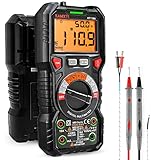
- WIDE APPLICATIONS: KAIWEETS HT118A Multimeter measures up to 1000V DC voltage and 750V AC voltage, 10A AC/DC current and 60 MOhms resistance, electrical tester also tests temperature, capacitance, frequency, duty-cycle, wire on-off, and test diodes and continuity
- EASY OPERATION: Switch the dial to the function you need, and the LED lights on the jacks will shine accordingly. To plug in the leads is easy. Autoranging saves you the hassle of having to know which range of value. Large 2.9” LCD backlight display, easy-to-read digits offer a 6000-count resolution
- MULTI-FUNCTION: Non-contact voltage testing and Live function with sound and light alarm. Flashlight on the back ensures easy use in dimly lit places. Min/Max/Average to record signal fluctuations. Stable kickstand, Pen slot on the back, Low battery prompt, Data retention, Auto power-off
- SAFETY FIRST: IEC Rated CAT III 1000V, CAT IV 600V, CE, RoHS certified. Anti-Burn with double ceramic fuse and thermistor protection circuit. High Voltage Protection is active on all ranges. Double insulated unit. Silicone protective case prevents it from falling damage
- AFTERSALES: KAIWEETS provides a 36-Month after-sale service, lifetime technical support. Please feel free to contact us if you have any concerns. Package includes multimeter, test leads, thermocouple, batteries and user manual. ( Note: Please take off the cap before using the leads)
Frequently asked questions
Why won’t my pop-up headlights open or close?
There is no single cause that applies to every car. Depending on the vehicle and symptom, the diagnostic checks may involve a fuse, switch, relay, wiring, retractor motor, or mechanical movement. Those are examples documented in the 1993 MR2 service material, not a diagnosis for an unidentified vehicle. Use the exact vehicle’s service information before replacing parts.
What should I check first if neither headlight moves?
Start by identifying the exact vehicle and finding its fuse information, wiring diagram, and service procedure. Check the specified fuse and then follow the prescribed diagnostic sequence for shared controls and other listed components. Both headlights being stationary may help focus the investigation, but it does not prove which component is faulty.
PC Slower Than It Used to Be?
A free scan shows the junk files, broken settings and background clutter dragging Windows down - then fixes them in one click.Free scan · Windows 10 & 11Crashes, No Sound, or Screen Glitches?
Random freezes, missing sound and display glitches usually trace back to one bad driver. Find and replace yours safely.Free scan · under a minuteWhat if only one headlight moves?
That observation may indicate a fault affecting one side, but it does not confirm that side’s motor has failed. Use the vehicle’s wiring diagram and service steps to check the relevant circuit and mechanical movement. Do not assume that a diagnosis or test value for another make or model applies.
The doors move, but the lamps do not turn on. Is the retractor motor bad?
Not on the basis of that symptom alone. Headlight movement and illumination are distinct functions. Consult the wiring diagram and troubleshooting procedure for the vehicle, and diagnose the lighting symptom rather than replacing the retractor motor without evidence.
Can I manually raise a stuck headlight?
Only use a manual procedure if the owner’s or service manual for your exact vehicle describes one. The sources reviewed do not establish a safe universal override method. Do not force the door or turn a knob based on instructions for another car.
Can I replace a blown fuse with a higher-rated one?
No. Replace a blown fuse only with one of the same rating specified for the vehicle. Mazda’s 2000 MX-5 manual warns that using a different rating may damage the electric system. If the replacement blows again, stop replacing it and have the circuit diagnosed.
Quick wins for a faster PC:
Clear out junk files and repair common Windows errorsFree Scan →Scan for outdated or missing drivers - takes under a minuteDriver Scan →Do I need a multimeter?
A multimeter that can perform voltage and continuity checks can support a vehicle-specific diagnostic procedure, such as the one documented for the 1993 MR2. The correct test points, sequence, and values vary by vehicle. Do not probe terminals or interpret readings using another model’s instructions.
Best Value
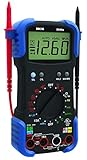
- Designed to pinpoint engine problems; tests alternator diodes, duty cycle, solenoids, breaker points, wiring, switches and more
- Features auto-ranging, auto shut-off and over-load protection
- Measures up to 15 amps for device testing
- 10 MegOhm input impedance; safe for electrical and automotive use; prevents damage to the vehicle’s ECU
- Includes temperature probe, inductive RPM clamp and carrying case
How much does it cost to fix pop-up headlights?
No dependable general cost is established by the available information. The diagnosis and any required parts depend on the exact vehicle and confirmed fault. Get an estimate based on vehicle details and the test results, rather than relying on a universal price or replacing parts by guesswork.
What information should I provide to get specific advice?
Provide the make, model, year, and market, plus trim if relevant. Describe whether one or both doors move, whether the lamps illuminate, and whether movement is complete, partial, or erratic. Those details help someone consult the correct manual and wiring diagram; they still do not replace diagnosis.
Frequently Asked Questions
Why won’t my pop-up headlights open or close?
There is no single cause that applies to every car. Depending on the vehicle and symptom, checks may involve a fuse, switch, relay, wiring, retractor motor, or mechanical movement. Use the exact vehicle’s service information before replacing parts.
Can I manually raise a stuck headlight?
Only use a manual procedure if the owner’s or service manual for your exact vehicle describes one. There is no safe universal override method established by the sources reviewed, so do not force the door or turn a knob based on instructions for another car.
Can I replace a blown fuse with a higher-rated one?
No. Replace a blown fuse only with one of the same rating specified for the vehicle. If it blows again, stop replacing it and have the circuit diagnosed.
Do I need a multimeter?
A meter capable of voltage and continuity checks can support the correct vehicle-specific procedure. Test points, sequence, and values vary; do not probe terminals or interpret readings using another model’s instructions.
How much does it cost to fix pop-up headlights?
No dependable general cost is established by the available information. The diagnosis and parts depend on the exact vehicle and confirmed fault, so request an estimate based on those details.
The Tool Desk
Outbyte PC Repair FREEClear out junk files and repair common Windows errorsFree Scan →Outbyte Driver Updater FREEScan for outdated or missing drivers - takes under a minuteDriver Scan →The Bottom Line
Don’t guess at a motor, relay, fuse, or manual override. Identify the exact vehicle, use its manual and wiring diagram, replace fuses only with the same rating, and confirm the failed part before buying anything. If the fuse blows again or the procedure is unclear, stop and get vehicle-specific help.
Quick Recap
Product prices and availability are accurate as of the date/time indicated and are subject to change. Any price and availability information displayed on Amazon at the time of purchase will apply.




