Ford’s 5.0-liter Coyote V8 is generally a durable engine, but its reliability depends heavily on the generation, vehicle application, maintenance history, and any modifications. Well-maintained examples can reach very high mileage without internal engine work. Neglected engines can become expensive because the Coyote combines four camshafts, variable cam timing, a complex timing drive, and—on Gen 3 engines—both direct and port fuel injection.
For a used buyer, the 2015–2017 Gen 2 Mustang GT and closely related applications are often the safest conservative target. Early Gen 1 engines need especially careful inspection for timing and misfire concerns. Certain 2018–2020 F-150s have a Ford-documented oil-consumption issue. The newer Gen 4 Mustang engine is promising but does not yet have the same long-term mileage history.
The short answer: usually reliable, but not maintenance-proof
The Coyote earned its reputation in the Mustang GT and F-150 by producing strong naturally aspirated V8 performance while tolerating substantial mileage when serviced correctly. Owner discussions include reports of engines reaching approximately 225,000 miles and 300,000 kilometers or more without being opened.
Those reports are encouraging, but they are not controlled reliability data. They also represent the best-maintained or most memorable examples, not every engine sold. Other owners report costly repairs after missed oil changes, low-oil operation, timing-system problems, oil consumption, poor tuning, or unknown used-vehicle history.
Recommended Free Tools
#1 Best Overall

- Easy on Your Hands: Even hands-free, Orion Motor Tech's tailgate assist safely and smoothly controls the drop rate of your pickup's tailgate, making it safer and easier to use; it also acts as a tailgate lift and makes your tailgate easier to close
- Gentle Tailgate Control: Say goodbye to strain and shock from free-fall tailgates! Our tailgate damper minimizes stress on cables and hinge points, extending the life of your truck's back end
- Built to Last: This tailgate assist is constructed of structural-grade 45 steel electroplated for outstanding strength, durability, and corrosion resistance
- Wide Compatibility: Our tailgate assist is specially designed for compatibility with Ford F-150 models from 2015 to 2026. For 2021-2026 models, the removal of one tie-down hook may be required prior to installation
- Fast & Easy to Install: With the clear instructions, this tailgate assist will be out of our box and working on your truck within minutes; you'll need a few wrenches (M5 and 10mm), but no drilling or taillight removal is required
The fairest conclusion is therefore:
- Durability: fundamentally strong when the engine has correct oil, regular service, and a sensible calibration.
- Complexity: higher than a simple pushrod V8 because the Coyote uses dual overhead camshafts, 32 valves, four cam phasers, variable cam timing, and a long timing-chain system.
- Risk: generation-sensitive and application-sensitive. A Mustang GT and an F-150 may share the 5.0 name but do not have identical calibration, output, packaging, service history, or known issues.
- Used-buying verdict: condition and documentation matter more than the Coyote badge alone.
First, identify which Coyote you are looking at
“Gen 1,” “Gen 2,” “Gen 3,” and “Gen 4” are useful shorthand, but the labels are not perfectly uniform across Mustang and F-150 applications. Ford Performance’s technical references identify Gen 1 as the 2011–2014 Mustang GT engine, Gen 2 as 2015–2017, and Gen 3 as 2018–2019 in that specific reference. Enthusiast and industry references commonly extend the Gen 3 label through later applications, while the seventh-generation Mustang introduced a Gen 4 version for the 2024 model year.
Do not rely on the generation nickname when ordering parts or judging reliability. Confirm the vehicle’s exact model year, platform, engine application, engine code, transmission, and service history. A Mustang GT’s engine can differ from an F-150’s version even when both are described as a 5.0 Coyote.
| Common designation | Typical Mustang GT range | What changed or matters most | Used-buying view |
|---|---|---|---|
| Gen 1 | 2011–2014 | First modern Coyote generation; early timing, misfire, and production-related concerns deserve attention. | Can be dependable, but inspection and repair records matter particularly heavily. |
| Gen 2 | 2015–2017 | Revised heads, valves, cams, springs, rods, crank balance, intake hardware, and cam phasers. | Often the most attractive conservative used target, provided the individual car is maintained. |
| Gen 3 | 2018 onward in commonly used Mustang terminology | Higher compression, revised valvetrain, PTWA cylinder bores, and combined direct/port injection. | Strong performance, but check application-specific issues—especially oil consumption on certain 2018–2020 F-150s. |
| Gen 4 | 2024 and newer Mustang-era applications | Newest major Coyote evolution; long-term mileage evidence is still limited. | Too new for a definitive lifetime-reliability verdict. |
What owners say about high-mileage Coyotes
Owner experience tends to split into two groups. One group reports exceptionally durable engines that have accumulated very high mileage with routine oil changes and ordinary repairs. The other group points out that the same engine can become costly when oil service is neglected or when a timing, fuel, ignition, or calibration problem is ignored.
That apparent contradiction is important. A high-mileage success story proves that the engine can last; it does not prove that every Coyote will do so. A failure story proves that a particular engine had a problem; it does not establish a universal failure rate.
What’s actually slowing this PC down?
Pick the symptom - the matching free tool is one click away.
In owner discussions, Gen 2 is frequently preferred over Gen 1, while some F-150 owners mention Gen 1 valvetrain or idle-knock complaints, Gen 2 VCT-solenoid concerns, and Gen 3 oil-consumption complaints. That is owner sentiment rather than a representative survey, but the preference for Gen 2 is consistent with Ford’s documented hardware revisions.
Owners also use terms such as “typewriter tick,” “BBQ tick,” injector tick, cam-phaser rattle, and rod knock inconsistently. These labels are not diagnoses. A sound that is normal injector or valvetrain noise on one engine may be a genuine timing or internal-engine problem on another. The correct response to an alarming noise is a structured inspection—not an online sound-clip comparison.
Gen 1 reliability: capable, but inspect early examples carefully
Gen 1 established the Coyote’s reputation in the 2011–2014 Mustang GT and related early F-150 applications. Many have been reliable for years, especially when they were not repeatedly over-revved, aggressively modified, or run with low oil. However, early production deserves the closest inspection.
Timing-chain tensioner and tensioner-arm service
Ford issued TSB 12-3-1 for 2011–2012 F-150 and Mustang 5.0-liter vehicles. The procedure addressed replacement of the left-hand timing-chain tensioner and tensioner arm. The existence of the bulletin does not mean every Gen 1 engine has a defective tensioner. It does mean that a vehicle with a documented repair is more reassuring than one with unexplained startup rattle and no service history.
A brief noise immediately after a long period of sitting is not enough to prove catastrophic timing failure. Persistent rattle, repeated cold-start noise, cam-timing faults, rough running, low oil pressure, or timing-correlation codes should be treated as a reason for professional diagnosis.
Rank #2

- Smooth, One-Handed Operation: Tired of your tailgate slamming down? This Tailgate Assist gives you a smooth, controlled drop every time - no more juggling gear or worrying about sudden slams.
- Made for Ford Trucks: Custom-designed to fit driver-side tailgate setups on F-150, F-250, and F-350 models, this assist works seamlessly with factory cables and installs in minutes.
- Built To Last: Constructed from durable A1018 plate steel, this damper is made to handle the rough-and-tumble life of a truck owner - on or off the road.
- Easy Bolt-On Installation: No need to drill or modify. Includes everything you need for a fast, DIY-friendly install.
- Precision Fit: Designed specifically for 2015+ Ford F-150, F-250, and F-350 models and backed by Rough Country’s 3-year warranty for added confidence.
Misfire-related codes on certain Mustangs
TSB 13-6-15 covered certain 2011–2014 Mustangs built on or before May 1, 2013. The condition involved the malfunction indicator lamp illuminating with misfire-related codes such as P0300 through P0308 and/or P0316, sometimes without other obvious drivability symptoms.
When inspecting one of these cars, scan for current, pending, and historical powertrain codes. Look at ignition components, spark plugs, coils, intake leaks, and the calibration. Aftermarket tuning or modifications can create misfires or make an otherwise straightforward diagnosis more difficult.
Gen 1 buying verdict
A Gen 1 Coyote is not automatically a bad purchase. It becomes attractive when it has:
- documented oil and filter changes;
- a clean, stable cold start;
- no unexplained misfire or timing codes;
- no persistent abnormal rattle or knock;
- evidence that applicable timing-system work was completed;
- limited evidence of repeated racing, over-revving, forced induction, or careless tuning.
Gen 2 reliability: the best all-around used target for many buyers
Gen 2 covers the 2015–2017 Mustang GT in Ford Performance’s common Mustang classification. It is often the favorite among owners shopping for a used Coyote, and that preference has a technical basis rather than being purely internet folklore.
Compared with Gen 1, Ford’s technical material identifies several important revisions, including:
- larger intake and exhaust valves;
- revised camshafts;
- stiffer valve springs;
- revised cylinder heads;
- stronger sinter-forged connecting rods derived from the Boss 302 program;
- a rebalanced forged crankshaft;
- charge-motion-control intake hardware; and
- mid-lock intake cam phasers.
These changes improved high-rpm breathing and increased the engine’s durability margin. They help explain why 2015–2017 engines are often viewed as the sweet spot for buyers who want a modern Coyote without taking on the newest generation’s limited long-term history.
Gen 2 is not trouble-free. Its variable cam timing remains dependent on clean oil and correct oil pressure. VCT-solenoid faults, cam-phaser problems, timing-correlation codes, poor oil quality, extended service intervals, and cold-start rattle are still relevant. A Gen 2 with a neglected oil history is a worse purchase than a higher-mileage example that has been consistently maintained.
Free tools Windows power users keep installed
One-click scans. No signup required.
Gen 3 reliability: major improvements, plus an F-150 oil-consumption caveat
Gen 3 introduced a substantially revised Coyote architecture. Ford identifies larger bores and valves, higher-lift camshafts, stiffer valve springs, a 12.0:1 compression ratio, PTWA cylinder-bore technology, and combined direct and port fuel injection.
The dual-injection system is a major engineering change. It can support the engine’s performance and emissions requirements, but it also adds hardware and control complexity compared with a single fuel-injection arrangement. As with the earlier generations, maintenance quality and correct calibration matter.
Rank #3
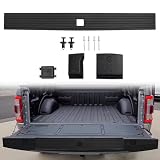
- [Vehicle Fitment]: Compatible with 2015 2016 2017 2018 2019 2020 Ford F-150 (WILL NOT FIT SUPER DUTY)
- [Replace Part Number]: FL3Z9940602B, FO1904135, FO1904135C, FO1904135D, FO1904135DSC, FO1904135N, FO1904135P
- [Seamless Aesthetic Integration]: Features precision-molded components in matte black finish that conceal existing tailgate imperfections. The low-profile design complements factory body lines, creating uniform surface continuity from bumper to cab.
- [Heavy-Duty Protection]: Engineered with premium polypropylene (PP) construction, this tailgate molding system combines thickened material density with a micro-textured surface pattern. The advanced polymer formulation resists abrasions and surface deformation while maintaining flexibility to withstand extreme temperatures and repetitive use on pickup trucks.
- [Warranty]: For any reason, if you are not satisfied with your purchase, please contact us directly. We offer half a year warranty, 100% satisfaction guarantee.
The documented 2018–2020 F-150 oil-consumption issue
The clearest Gen 3 reliability caveat is Ford TSB 19-2365, which concerns certain 2018–2020 F-150s equipped with the 5.0-liter engine. Ford states that some affected trucks may consume more than one quart of oil in 3,000 miles without visible external leaks.
Ford attributed the condition to high intake-manifold vacuum during some deceleration-fuel-shutoff events. That vacuum can draw oil into the combustion chamber through the crankcase, valve guides, and PCV system. The bulletin’s procedure includes checking for leaks, changing the engine oil and filter, reprogramming the powertrain control module, and, for applicable vehicles, installing a revised oil-level indicator.
This bulletin is specific to certain F-150s. It should not automatically be applied to every Gen 3 Mustang or every 5.0 Coyote. For an affected F-150, ask the seller:
- Was an oil-consumption test performed?
- Was TSB 19-2365 carried out?
- Was the PCM calibration updated?
- Was the revised oil-level indicator installed where applicable?
- How much oil does the truck use between documented changes?
Check the oil level yourself before and after a known-distance interval. Record the mileage and level rather than relying on a seller’s general statement that the truck “uses a little oil.” The TSB threshold is more than one quart in 3,000 miles without a visible leak, but any unexplained oil loss deserves investigation.
Gen 3 buying verdict
Gen 3 offers compelling performance and newer vehicle features. It is not fair to call the entire generation unreliable because of an F-150-specific bulletin. It is equally unwise to ignore the bulletin when buying an affected truck. The exact application is the deciding factor.
Gen 4 reliability: promising, but the long-term verdict is not in
Ford Performance lists Gen 4 5.0-liter Coyote crate-engine and power-module products, and industry references generally identify the Gen 4 Coyote with the seventh-generation Mustang’s 2024 launch.
Do these 3 things before closing this tab:
1Fix the driver behind crashes, sound loss and screen glitches2Clear out junk files and repair common Windows errors3Scan for outdated or missing drivers - takes under a minuteThe engine may ultimately prove highly durable, but it has had substantially less time to accumulate 10-year ownership histories and very high mileage. That makes confident claims about lifetime reliability premature. For a Gen 4 purchase, give greater weight to:
- remaining factory warranty coverage;
- complete dealer or owner service records;
- recall and campaign verification;
- cold-start behavior;
- an OBD diagnostic scan;
- oil-level history; and
- whether the car has been modified or tuned.
“Newer” reduces age-related risk, but it does not replace inspection or maintenance records.
The Coyote problems that deserve attention
1. Timing chains, tensioners, phasers, and VCT
The Coyote’s variable cam timing is central to its performance and efficiency, but it also makes oil quality, oil pressure, solenoids, phasers, and chain tensioners important. Timing components can produce startup rattle, persistent mechanical noise, rough running, reduced performance, or diagnostic trouble codes.
Rank #4

- FITMENT LIST: Compatible with Ford 1980-2014 F150, 2004 F150 Heritage, 1990-1999 F-250/ F-350, 1999-2016 F-Series Superduty F250/ F350/ F450/ F550, 1980-1999 F250/ F350 Light Duty, 1980-1996 Bronco, 1984-1990 Bronco II, 1983-2011 Ranger, 1991-2004 Explorer, 1991-2010 Explorer Sport Trac, 2000-2005 Excursion, 1997-2002 Expedition, 2006-2008 Lincoln Mark LT, 1997 Mercury Mountaineer.
- HIGH POWER LED CHIPS: Using high power 9-SMD led chips, bright white light output for maximize rear end illumination. About 1130 lumens, 10 times brighter than halogen bulbs, greatly improve the visibility of the rear license plate lamp when driving at night.
- HIGH-QUALITY PERFORMANCE: All of our led license plate lights passed waterproof test, made of high quality PC lens and ABS plastic housing for fully sealed, no corrosion and anti-scratch. IP66 waterproof rate ensures the bulbs can adapt to all kind of extreme weather.
- ERROR FREE: Built-in error-free resistor, perfectly fit for 99% of vehicles, no dashboard error warnings, no interference with FM radio. DOT & SAE approved, meet all regulations in USA & Canada, 100% street legal. Each package comes with a pair of right and left side LED license plate lights.
- 15 MINUTES QUICK INSTALLATION: Non-polarity design, just plug and play, direct upgrade replacement part for replacing the old or defective OEM license plate lights. Simply take out your original bulbs and insert the new plug into original socket, twist to lock the housing and push back on the rear bumper, finish installation.
Warning signs include:
- rattle that continues after startup or becomes more frequent;
- camshaft-position or timing-correlation codes;
- rough idle or unexplained misfires;
- low oil pressure;
- metallic debris in the oil or filter; and
- noise that changes abnormally with engine speed or temperature.
Do not approve a timing repair solely because an engine makes a vague ticking sound. Diagnosis may require checking oil pressure, scan data, cam timing, the timing drive, and the source of the noise. A generation-specific Coyote timing-chain tool kit belongs in an advanced-repair discussion only: tool compatibility varies, and it is not a substitute for diagnosis or experience.
The Tool Desk
Outbyte PC Repair FREERepair Windows errors before they cause bigger problemsFix Now →Outbyte Driver Updater FREEScan for outdated or missing drivers - takes under a minuteDriver Scan →2. Oil consumption and low-oil operation
Oil consumption is especially important on the affected 2018–2020 F-150s covered by TSB 19-2365, but low oil is dangerous to any Coyote. Low oil can affect lubrication, cam timing, chain tension, bearing life, and piston-cylinder durability.
Inspect for external leaks around the front cover, valve covers, oil pan, filter area, and other seals. Also look for blue exhaust smoke, oil-fouled spark plugs, oily intake or PCV components, and a history of topping off between services.
3. Misfires
Misfires can result from ignition components, fuel delivery, intake leaks, mechanical compression problems, calibration, or timing faults. On certain early Mustangs, Ford’s TSB 13-6-15 addressed misfire-related codes without necessarily producing obvious drivability symptoms.
Do not assume a stored code is harmless because the engine currently feels smooth. Scan both current and pending codes, inspect freeze-frame data where available, and determine whether the code returned after repairs.
4. Ticks, rattles, and supposed “rod knock”
Not every Coyote tick is a failing engine. Fuel injectors and valvetrain components can make noticeable mechanical sounds, and owners often use the same informal label for very different noises. Conversely, dismissing every noise as a normal Coyote characteristic can allow a real fault to worsen.
For an ambiguous engine, listen during a genuinely cold start, again at operating temperature, and during a controlled increase in engine speed. Check the oil level, scan for codes, and have a qualified technician evaluate the source. If the noise is accompanied by low oil pressure, misfire, loss of power, or metal in the oil, stop treating it as a harmless characteristic.
Maintenance is the biggest reliability variable
Ford’s owner-manual guidance emphasizes using the specified oil viscosity and specification for the exact vehicle. The correct grade and capacity vary by model year and application, so a generic recommendation from a forum should not replace the vehicle-specific manual.
Ford also warns that incorrect oil can cause component damage, reduced performance, and other problems. Supplemental oil additives are generally unnecessary and may cause damage that is not covered by warranty. Oil additives cannot repair a worn phaser, failing tensioner, damaged bearing, or mechanical oil-consumption problem.
Outdated Drivers Are Slowing You Down
One free scan finds every outdated or missing driver and matches the right update for your exact hardware.Free scan · exact hardware matchWindows Errors? Fix Them Before They Spread
Repair common Windows errors and clear accumulated junk for a smoother, more stable PC - no reinstall needed.Free scan · no reinstallThe maintenance evidence that matters most when buying a used Coyote includes:
Best Value

- 【Programming】This car key fob are easy to follow step by step programming by yourself via refering website which are included with the third product picture or the product details page.
- 【Fitment】The key remote control compatible with Ford E-Series 03-13/ Edge 07-15/ Escape 01-13/ Escort 99-03/ Expedition98-11/ Excursion 00-05/ Explorer 98-15/ Freestyle 05-07/ F-Series 98-16/ Freestar 04-07/ Ranger 98-11/ Windstar 98-03/ Flex 09-16/ Fusion 06-12/ Taurus X 08-09.
- 【Fitment】The key remote control compatible with Lincoln Mark LT 06-08/ Navigator 98-02. Mazda B-series 99-09/ Tribute 01-11. Mercury Mariner 05-11/ Mountaineer 98-10/ Monterey 04-07. Please Check Our Product Description and Vehicle Fitment Tool for Full Compatible Vehicles List. More vehicles please check Production Description below.
- 【Part Numbers】This car remote works as a replacement for Part Number:CWTWB1U212, CWTWB1U331, GQ43VT11T, CWTWB1U345, 1788A-FWB1U345, 1470102326, 8L3Z15K601B,8L-3Z-15K-601B, 178810457.
- 【Note】This is a key fob replacement part to match the original in form and function. Please check the compatibility before your purchase, make sure it is exactly what you need.If you have any questions with our key fob, please communicate with us at any time .
- regular oil-and-filter service at sensible intervals;
- the correct oil specification and capacity for that exact vehicle;
- prompt investigation of low-oil warnings and unexplained oil loss;
- documented completion of applicable Ford service bulletins;
- replacement of worn ignition, VCT, or timing components before secondary damage occurs;
- avoiding sustained high-rpm operation before the engine reaches operating temperature; and
- careful documentation of modifications, tunes, superchargers, track use, and drag-racing use.
For owners doing their own work, use a vehicle-specific Ford 5.0 Coyote repair manual rather than a generic V8 guide. The correct manual must match the model year and platform: Mustang GT procedures and F-150 procedures are not interchangeable in every detail.
For routine service, a vehicle-specific Motorcraft oil filter and Ford-specified engine oil can be sensible starting points, but confirm the exact specification in the owner’s manual before purchasing. The oil and filter may support preventive maintenance; they do not fix an underlying mechanical fault.
Independent reader supportYour contribution helps us test, update, and keep practical guides available for everyone.Used-buying inspection checklist
- Identify the application. Record the model year, Mustang or F-150 platform, engine designation, transmission, mileage, and any modifications.
- Insist on a cold start. Ideally, the engine should be cold when you arrive. Listen for sustained rattle, abnormal knock, irregular idle, or a misfire.
- Scan the powertrain computer. Check current, pending, and historical codes. Look for misfire codes, cam-timing codes, and evidence that codes were recently cleared.
- Check the oil before driving. Verify the level and condition. An oil level below the safe range is a serious warning, particularly if the seller claims the engine was recently serviced.
- Look for leaks and smoke. Inspect the engine, underbody, PCV and intake areas, exhaust, and spark plugs for evidence of oil loss or oil burning.
- Ask about timing-system repairs. This is particularly important on early Gen 1 examples and any vehicle with startup rattle or timing-related codes.
- Ask F-150 buyers about oil consumption. For a 2018–2020 5.0 F-150, specifically ask about TSB 19-2365, PCM reprogramming, the revised oil-level indicator, and any formal consumption test.
- Review the modification history. A naturally aspirated engine can still be damaged by repeated over-revving, poor tuning, forced induction without supporting hardware, or aggressive track use.
- Test drive it fully warm. Watch for hesitation, rough idle, warning lights, abnormal temperature, loss of power, and noises that change as the engine warms.
- Escalate when the evidence justifies it. Compression or leak-down testing is appropriate when mileage, smoke, poor running, noise, or service history raises doubt.
- Get a professional inspection. A Ford 5.0 pre-purchase inspection is especially worthwhile when the seller cannot explain a noise, oil loss, warning light, modification, or missing service record.
- Price the actual engine. Do not pay a premium simply because the vehicle has a Coyote. Condition, oil consumption, diagnostics, and documentation should determine the price.
How to interpret common inspection results
| Finding | What it may mean | Best response |
|---|---|---|
| Short, repeatable injector or valvetrain tick with no codes, normal oil pressure, and stable operation | May be normal operating noise, but the sound source still matters. | Have a technician confirm it before purchase; do not diagnose from a video alone. |
| Persistent startup rattle or cam-timing code | Possible VCT, phaser, tensioner, chain, oil-pressure, or calibration issue. | Obtain a professional diagnosis and price the repair before buying. |
| Misfire code with a smooth current idle | Could be an intermittent ignition, fuel, intake, mechanical, or timing problem. | Check freeze-frame and pending data; verify whether the fault returns after repair. |
| Low oil level with no clear explanation | Possible neglected service, external leak, or oil consumption. | Treat it as a negotiation and diagnostic issue, not as a minor detail. |
| 2018–2020 F-150 using more than one quart per 3,000 miles | Matches the threshold described in Ford TSB 19-2365 when there is no visible external leak. | Request records of the oil-consumption test and bulletin procedure. |
| Heavy tuning, forced induction, racing, or no records | Greater uncertainty, even if the engine currently runs well. | Require independent inspection or walk away. |
Should you buy a Coyote-powered Mustang or F-150?
Choose a Coyote when you value:
- naturally aspirated V8 response and sound;
- strong stock performance;
- a large enthusiast and repair-information community;
- the potential for very high mileage with disciplined maintenance; and
- an engine with substantial aftermarket support.
Be more cautious when:
- the vehicle has no service records;
- the oil level is low or oil consumption is unexplained;
- the seller will not allow a cold start or diagnostic scan;
- there is persistent timing noise, low oil pressure, smoke, or misfire;
- the vehicle has extensive modifications with no tuning or installation documentation; or
- you are buying an affected F-150 without evidence that the oil-consumption concern was evaluated.
A 2015–2017 Gen 2 is a sensible conservative target for many used buyers, but it is not a guarantee. A well-maintained Gen 1 can be a better purchase than an abused Gen 2. A Gen 3 Mustang should not be rejected solely because of an F-150-specific bulletin, while a 2018–2020 F-150 should not be purchased without checking its oil history. A Gen 4 may be the newest and most advanced choice, but it has the shortest real-world durability record.
Quick wins for a faster PC:
Repair Windows errors before they cause bigger problemsFix Now →Fix the driver behind crashes, sound loss and screen glitchesFind Drivers →Clear out junk files and repair common Windows errorsFree Scan →What about replacing or rebuilding one?
Most buyers should focus on inspection and maintenance rather than replacement engines. Ford Performance lists Gen 4 5.0-liter Coyote crate-engine and power-module products, but those are specialized options for engine-swap builders and project vehicles—not ordinary preventive maintenance.
If an engine has confirmed internal damage, compare the cost of a properly documented replacement, a professional rebuild, and another vehicle. Confirm compatibility before buying any engine: generation, vehicle electronics, intake and exhaust configuration, fuel system, accessories, oil pan, wiring, calibration, and emissions equipment can all affect whether a replacement is genuinely suitable.
Frequently Asked Questions
How many miles can a Ford 5.0 Coyote engine last?
There is no dependable universal mileage guarantee, but properly maintained examples have been reported by owners at approximately 225,000 miles and 300,000 kilometers or more without internal engine work. These are anecdotal reports, not a controlled reliability study. Oil level, service history, timing-system condition, use, and modifications matter more than a specific mileage number.
Which Coyote generation is the most reliable?
For many used buyers, Gen 2—the 2015–2017 Mustang GT generation—is the most attractive conservative choice because Ford made substantial hardware revisions over Gen 1 and owner communities frequently favor it. That is a comparative judgment, not an official Ford reliability ranking. A well-maintained Gen 1 can be excellent, while a neglected Gen 2 can be expensive.
Does every 5.0 Coyote have the F-150 oil-consumption problem?
No. Ford TSB 19-2365 concerns certain 2018–2020 F-150s and describes consumption of more than one quart in 3,000 miles without visible external leaks. It should not automatically be generalized to every Gen 3 Mustang or every Coyote engine. Buyers of affected F-150s should request oil-consumption-test and repair records.
Is a ticking Coyote engine failing?
Not necessarily. Injector, valvetrain, cam-phaser, timing-chain, and internal-engine noises are often described with overlapping informal terms. A persistent or worsening noise, especially with misfires, timing codes, low oil pressure, smoke, or loss of power, requires professional diagnosis rather than an internet sound comparison.
What oil should I use in a 5.0 Coyote?
Use the viscosity, specification, capacity, and service procedure listed in the owner’s manual for the exact model year and application. Mustang and F-150 requirements can differ, and Ford warns that incorrect oil or unnecessary additives can cause problems. Do not use a generic forum recommendation as a substitute for the vehicle-specific manual.
The Bottom Line
The Ford 5.0 Coyote is usually reliable, but it is not maintenance-proof. Gen 2 is a reasonable conservative used-buying target because of its meaningful hardware improvements. Gen 1 can last when updated and maintained, but early timing and misfire concerns make inspection especially important. Gen 3 brings major performance and fuel-system changes, while certain 2018–2020 F-150s require specific oil-consumption checks. Gen 4 is too recent for a definitive long-term verdict.
Recommended Free Tools
The best Coyote is not simply the newest generation or the one with the highest owner praise. It is the individual engine with verified service, correct oil, normal oil consumption, clean diagnostics, no unresolved timing or noise symptoms, and a credible history of sensible use.
Quick Recap
Product prices and availability are accurate as of the date/time indicated and are subject to change. Any price and availability information displayed on Amazon at the time of purchase will apply.




