Quick wins for a faster PC:
Scan for outdated or missing drivers - takes under a minuteDriver Scan →Repair Windows errors before they cause bigger problemsFix Now →There is no single price for owning a diesel SUV: the total depends on the vehicle, what you pay for it, how far and where you drive, and how long you keep it. A U.S. Department of Energy model of small SUVs for model year 2025 estimated lifetime ownership costs of $88,505 for its diesel vehicle and $88,248 for its gasoline counterpart. Those modeled totals are useful for comparing cost categories, not as a quote for a particular SUV or driver.
To estimate your own cost, compare realistic vehicles over the same period and include depreciation, financing, fuel, insurance, taxes and fees, maintenance, tires, and repairs. The figures below are U.S.-based; costs and taxes differ by location and can change over time.

As an Amazon Associate I earn from qualifying purchases.
What does the DOE comparison say about diesel versus gasoline?
The U.S. Department of Energy Alternative Fuels Data Center’s modeled comparison for small SUVs in model year 2025 puts the diesel case just above the gasoline case overall: $88,505 versus $88,248 in estimated lifetime costs, a $257 difference. The diesel model uses less fuel money in the scenario, but its higher modeled costs in other categories offset that difference. The report is a modeled comparison, not a price quote for a named SUV or a prediction of what any individual will spend. See the DOE total-cost-of-ownership report for the underlying assumptions and tables.
Do these 3 things before closing this tab:
1Scan for outdated or missing drivers - takes under a minute2Clear out junk files and repair common Windows errors3Fix the driver behind crashes, sound loss and screen glitches| Modeled cost category | Diesel, ICE-CI | Gasoline, ICE-SI | Diesel minus gasoline |
|---|---|---|---|
| Vehicle | $27,744 | $26,051 | +$1,693 |
| Financing | $3,072 | $2,884 | +$188 |
| Fuel | $15,939 | $17,488 | −$1,549 |
| Insurance | $13,357 | $13,289 | +$68 |
| Maintenance | $15,714 | $16,302 | −$588 |
| Repair | $7,270 | $6,990 | +$280 |
| Taxes and fees | $5,409 | $5,244 | +$165 |
| Total | $88,505 | $88,248 | +$257 |
These are the report’s modeled values for its MY2025 small-SUV comparison. The category differences show why fuel economy alone does not settle the ownership-cost question: the diesel scenario saves $1,549 on fuel but has higher modeled vehicle, financing, insurance, repair, and taxes-and-fees costs. Its maintenance estimate is lower. Those figures describe that model, not a universal diesel premium or a guarantee that every diesel SUV will follow the same pattern.
#1 Best Overall
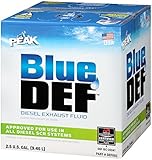
- One gallon of is used approximately every 300 miles
- A truck with a 20 gallon DEF tank can go up to 6000 miles between fill-ups
- When used in an SCR system will reduce the levels of NOx emissions of those engines
- Fit type: Universal
Which costs belong in your estimate?
Set a consistent ownership period, mileage, location, and vehicle class before adding costs. Include the same categories for each SUV you compare so that one option does not appear cheaper simply because an expense was left out.
- Depreciation: Estimate what the SUV will be worth when you sell or trade it, then subtract that value from your purchase price. Depreciation is different from the full purchase price: it represents the value lost while you own the vehicle. AAA identifies depreciation as the largest overall ownership-cost component in its 2026 analysis, although that national result is not specific to diesel SUVs.
- Financing: Count the interest you expect to pay during your ownership period, based on your down payment, loan amount, rate, and term. A vehicle’s sticker or transaction price is not the same as its financing cost.
- Fuel: Estimate the gallons you will use from your miles and realistic fuel economy, then multiply by local diesel prices. Use your expected city/highway mix rather than relying on a single advertised number.
- Insurance: Get quotes for the exact vehicle and your driver profile, address, and coverage choices. A national average cannot account for your individual premium.
- Taxes, registration, and fees: Add the costs that apply where the vehicle will be registered. They vary by jurisdiction and can also depend on vehicle price.
- Maintenance, tires, and repairs: Account for the service schedule, expected tire replacements, and possible repairs over the period. AAA’s cost framework includes routine maintenance, unexpected repairs, and tire replacement.
- Diesel emissions-system needs: Check the owner’s manual for the particular SUV. If its emissions system uses selective catalytic reduction (SCR), determine whether it specifies diesel exhaust fluid (DEF) and what service or fluid requirements apply. This is conditional, not a cost to assign automatically to every diesel.
AAA’s ownership-cost methodology uses a five-year ownership and trade-in horizon and exposes inputs such as location, mileage, vehicle, and fuel price. Its vehicle ownership cost estimate can help organize a comparison, but use vehicle-specific details and current local inputs where available.
How do you calculate your fuel cost?
Fuel is the category where annual distance, driving mix, fuel economy, and local prices directly interact. A simple estimate is:
What’s actually slowing this PC down?
Pick the symptom - the matching free tool is one click away.
Rank #2

- Meets GM Original Equipment specifications to be approved for use in GM vehicles as well as in non-GM diesel vehicles that have an SCR (Selective Catalytic Reduction) system to meet regulated NOx emissions (Based on EPA certification testing. Your actual emissions will vary based on several factors including temperature, terrain, and driving conditions).
- High quality formula is made from high purity urea and deionized water.
- Meets API regulations and ISO 22241 standard for purity and concentration
- Nozzles sold separately
Fuel cost for the ownership period = (total miles ÷ expected real-world MPG) × local price per gallon.
For example, if you expect to drive 12,000 miles a year for five years, your total distance for the calculation is 60,000 miles. Do not treat that as a cost estimate by itself: you still need a defensible MPG figure for the specific SUV and your driving pattern, plus the diesel price where you buy fuel. The DOE Alternative Fuels Data Center’s Vehicle Cost Calculator accepts diesel city and highway fuel-economy inputs and can compare make/model choices or custom entries.
Compare the fuel penalty or saving against the price premium
To find whether fuel savings could offset a diesel SUV’s higher acquisition cost, estimate both vehicles over identical miles and years. Subtract the diesel’s total fuel estimate from the gasoline vehicle’s fuel estimate; then compare the result with the diesel’s additional depreciation, financing, insurance, taxes, service, tire, and repair costs. If the fuel saving is smaller than those additional costs, the diesel is not cheaper over that ownership period. This is a break-even comparison, not a claim that diesel fuel will always be cheaper or that a particular model will retain a particular resale value.
Rank #3
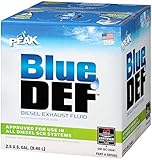
- Blue Def DEF002-2PK Diesel Exhaust Fluid, 2.5 Gallon, 2 Pack
Fuel tax is already reflected in the pump price, so do not add it a second time if using retail prices. For context, the U.S. Energy Information Administration’s January 2026 figures list federal fuel taxes of 18.40 cents per gallon for gasoline and 24.40 cents for diesel. Average state taxes were 33.27 cents per gallon for gasoline and 35.50 cents for diesel; those state figures exclude county and local taxes. These are U.S. tax figures for that date, not a forecast of future pump prices. The EIA explains the figures in its fuel-tax overview.
How can you make a fair comparison between specific SUVs?
- Choose a common ownership period and mileage. For instance, compare both vehicles over the number of years you actually expect to keep them and the miles you realistically drive annually.
- Use the same location and fuel assumptions. Enter local diesel and gasoline prices, and keep assumptions current. Use a city/highway mix that resembles your routes.
- Compare transaction prices and depreciation, not just list prices. Use the price you expect to pay and a reasonable estimate of resale or trade-in value at the end of your chosen period.
- Enter your own borrowing and insurance details. Use the loan terms you can obtain and quotes for the specific vehicles; generic averages cannot determine your actual costs.
- Check the maintenance schedule and equipment. Confirm service intervals, tire needs, warranty coverage, and the vehicle’s emissions-system configuration in its manual and documentation.
- Add the complete totals, then inspect the difference by category. A single total shows which estimate is lower under your assumptions; the category breakdown reveals what would have to change for the result to reverse.
The DOE calculator allows make/model selections or custom vehicle entries, including diesel city and highway MPG. AAA’s calculator provides another way to examine location, mileage, vehicle, and fuel-price inputs. Specifications and prices can change, so confirm the details for the exact model year, trim, and market before relying on a dollar result.
How should you interpret annual ownership-cost averages?
AAA reported an average annual new-vehicle ownership and operating cost of $12,863 in its 2026 analysis. The analysis used a five-year, 75,000-mile horizon and covered seven vehicle categories and 34 top-selling models. AAA says actual costs vary with driving habits, location, and operating conditions. This is broad U.S. context, not a diesel-SUV average; it should not be multiplied or divided to claim a particular diesel SUV’s annual cost. See the AAA 2026 ownership-cost announcement for its scope.
Rank #4

- One gallon of is used approximately every 300 miles
- A truck with a 20 gallon DEF tank can go up to 6000 miles between fill-ups
- When used in an SCR system will reduce the levels of NOx emissions of those engines
An annualized figure is most useful when it comes from your own period total divided by the number of years, with one-time costs and recurring expenses treated consistently. A short ownership period can make purchase and resale costs loom large, while a longer one can make fuel and maintenance differences more influential. The result depends on the inputs; neither a national average nor a modeled SUV category can substitute for your transaction price, routes, and local costs.
Independent reader supportYour contribution helps us test, update, and keep practical guides available for everyone.Does a diesel SUV’s emissions system add costs?
Some diesel SUVs use SCR and require DEF; others may have different equipment. Read the manual for the exact vehicle to find whether DEF is specified, its required specification, and the vehicle’s instructions for filling and monitoring it. EPA describes DEF monitoring and SCR-related issues, but does not establish one shared system or ownership cost for every diesel SUV. Its DEF guidance is useful background; the vehicle manual controls the requirements for your SUV.
Emissions performance is a separate question from ownership cost. The EIA says ultra-low-sulfur diesel used with advanced exhaust controls can produce up to 90% lower particulate emissions and 25% to 50% lower nitrogen-compound emissions. Those are emissions figures, not a fuel saving, a dollar benefit, or a vehicle-specific guarantee. They do not establish that a diesel SUV is cheaper to own. See the EIA’s diesel fuel and environment overview.
What information do you need for a personal estimate?
A defensible annual or lifetime number needs more than “diesel SUV.” Gather the following before comparing offers:
- Model year, make, model, trim, and whether the SUV is new or used.
- Expected transaction price, down payment, loan amount, interest rate, and term, if financing.
- Your location and expected registration period.
- Annual miles and approximate city, highway, and towing use.
- Realistic diesel and gasoline fuel economy for each vehicle and current local fuel prices.
- Insurance quotes for each exact vehicle using the same coverage assumptions.
- Expected ownership years and estimated end-of-period resale or trade-in value.
- Maintenance schedule, tire costs, warranty terms, repair exposure, and any specified emissions-system service or fluid needs.
Without these details, a precise personal total would imply more certainty than the available figures support. Start with a range if resale value, fuel use, or repair costs are uncertain, and keep the same assumptions for the diesel and its gasoline or hybrid alternative.
So, is a diesel SUV cheaper to own?
It can be, but higher fuel economy alone does not prove it. In the DOE’s modeled MY2025 small-SUV comparison, diesel fuel costs were lower but total modeled lifetime costs were $257 higher than gasoline. For an individual buyer, the result can change with the specific SUV’s purchase and resale prices, annual mileage, routes, local fuel prices, financing, insurance, and repair history. Compare the full cost over your expected ownership period; if the inputs are not vehicle- and driver-specific, treat the result as an illustration rather than a personal quote.
Crashes, No Sound, or Screen Glitches?
Random freezes, missing sound and display glitches usually trace back to one bad driver. Find and replace yours safely.Free scan · under a minuteWindows Errors? Fix Them Before They Spread
Repair common Windows errors and clear accumulated junk for a smoother, more stable PC - no reinstall needed.Free scan · no reinstallQuick Recap
Product prices and availability are accurate as of the date/time indicated and are subject to change. Any price and availability information displayed on Amazon at the time of purchase will apply.




