There is no universal mileage figure that predicts how long a motorcycle engine will last. Mileage is useful context, but the model’s service schedule, maintenance records, riding conditions, oil history, storage, and current condition all matter. To judge a particular motorcycle, compare its history with the owner’s manual for its exact model and year rather than treating the odometer as a diagnosis.
Does motorcycle mileage predict engine life?
Not by itself. Manufacturer manuals set maintenance checkpoints for particular motorcycles; they do not promise a common engine lifespan across makes and models. The sources reviewed establish no universal mileage at which an engine should fail or remain healthy.
A higher-mileage motorcycle with complete, timely records cannot be judged by its odometer alone. Nor does low mileage establish that a motorcycle is in good condition: oil performance can deteriorate over time, including when a bike is ridden infrequently or stored for long periods, according to Honda’s guidance on engine-oil replacement.
Why the correct maintenance schedule matters
Use the owner’s manual for the exact motorcycle and year to check oil specifications, inspections, and service intervals. A schedule from a different model is not a safe substitute. For example, the 2025 Indian Scout manual lists model-specific maintenance checkpoints through 40,000 miles (64,000 km), including air-filter inspections and replacements. Those are Scout schedule figures, not an engine-life estimate or a general interval for motorcycles.
#1 Best Overall

- Up to 10X better friction protection vs. JASO T903:2016 friction std. and up to 5X better wear protection vs. industry standards in IVA engine tests
- Reformulated premium full synthetic with advanced technology and superior additives to maximize horsepower, acceleration, fuel efficiency and oil life
- Exceptional wet clutch protection helps prevent slippage for smooth shifting and maximum performance
- Enhanced protection against deposits and sludge that can reduce oil flow
- Meets or exceeds requirements of API SL and JASO MA-2 for 4-stroke motorcycles including Honda, Yamaha, Kawasaki, and Suzuki
Oil timing also varies by motorcycle. Honda advises owners to use their manual for recommended inspection and replacement timing, explaining that deteriorated oil can contribute to internal wear and shorten engine life. Use the oil and filter specified for the exact bike, and account for time-based work as well as mileage-based work.
Severe use may require more frequent service
The 2024 Indian Motorcycle Rider’s Manual identifies extended high- or low-speed riding, dusty or adverse conditions, below-freezing operation, prolonged maximum RPM, lugging (low RPM under high load), and extreme loads as examples of severe use. It says vehicles used this way may need more frequent inspection or service. Check the applicable manual to see whether your riding fits its definition.
Rank #2

- Up to 3X better durability vs. industry standards in sequence IVA engine tests
- Superior wet clutch protection to ensure smooth shifting plus consistent power transfer and acceleration
- Formulated to maximize horsepower and minimize wear on critical moving parts, while safeguarding against harmful deposits that can reduce oil flow
- Improved formula for enhanced friction protection
- Meets or exceeds requirements of API SL and JASO MA-2 for 4-stroke motorcycles including Harley Davidson, Honda, Yamaha, Kawasaki, Suzuki and others
Oil-change advice published for specific motorcycles should not be applied to all bikes. Indian’s oil-change guidance, dated March 19, 2026, describes annual or mileage-based changes, whichever comes first, for the models named on that page. It also identifies stop-start use, extended storage, large ambient temperature changes, and prolonged severe heavy-throttle use as conditions that can accelerate oil degradation.
Other manufacturers use different schedules. Ducati’s model-specific maintenance information gives examples of oil-service intervals of 12,000 km (7,500 miles) or 15,000 km (9,000 miles) for certain high-performance engines. These are Ducati examples, not a recommendation for other motorcycles.
Crashes, No Sound, or Screen Glitches?
Random freezes, missing sound and display glitches usually trace back to one bad driver. Find and replace yours safely.Free scan · under a minutePC Slower Than It Used to Be?
A free scan shows the junk files, broken settings and background clutter dragging Windows down - then fixes them in one click.Free scan · Windows 10 & 11Rank #3

- Complete OEM Compatibility: Compatible with Honda, Kawasaki, Yamaha, Bombardier, Arctic Cat, Can-Am, Polaris, Argo, Linhai, Suzuki, and many others
- No-Compromise Performance: Advanced 100% synthetic ester formulation with built-in friction modifiers delivers superior clutch engagement, stable viscosity, and consistent performance under high thermal stress and at high RPMs
- Meets & Exceeds OEM Specifications: Exceeds JASO MA-2 for motorcycle engines and wet clutch integrated transmission, as well as API SL / SN, meeting all Japanese OEM warranty requirements
- Exceptional Wear & Oxidation Protection: High oxidation stability resists oil thickening, sludge, and varnish while shear-stable VI improvers protect against viscosity breakdown in severe service and racing conditions
- Smooth, Fast Shifting Performance: Optimized frictional characteristics provide quick, smooth gear changes, excellent clutch feel, and reliable protection for cam lobes, chains, and other highly loaded components in small 4T engines in motorcycles, scooters, off-road dirt bikes, etc
How storage can affect an engine
Storage is part of engine care, not a reason to ignore the manual. Indian’s 2024 manual warns that temperature and humidity changes can cause condensation in the crankcase to mix with oil; running the engine on oil containing condensation can cause damage. For a motorcycle stored through wide environmental swings, follow that model’s oil-check and return-to-use instructions.
Do not assume that briefly starting a stored motorcycle from time to time is beneficial. The Indian manual says periodic starts are not recommended if the engine is not run long enough to bring the oil and exhaust to normal operating temperature; combustion produces water vapor and corrosion may result. Its advice is specific to the manual, so consult the instructions for the motorcycle you own.
Rank #4
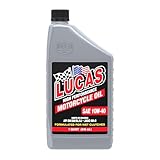
- Lower oil temperatures
- Longer oil life
- Longer component life
- Less noise and fewer leaks
- All Lucas motorcycle oils meet JASO specifications
Prepare for storage and return to riding by the manual
Storage procedures vary. The 2025 Indian Challenger manual discusses preparation for a motorcycle that will not be operated for more than 60 days. That threshold is a Challenger manual example, not a universal rule for deciding when storage preparation is needed.
Indian’s 2024 manual recommends a durable, breathable cover to limit moisture buildup that can oxidize metal surfaces. The manuals also describe model-specific preparation and return-to-use checks. Before normal riding, follow the correct manual’s procedure, including checks for leaks and the required pre-ride inspection. Fuel-system steps, including whether to use a stabilizer, should follow the motorcycle manual and the product instructions; no single procedure applies to every motorcycle.
Do these 3 things before closing this tab:
1Repair Windows errors before they cause bigger problems2Scan for outdated or missing drivers - takes under a minute3Clear out junk files and repair common Windows errorsBest Value
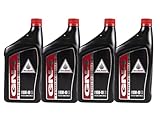
- Set of 4 Genuine Pro Honda factory GN4 4-Stroke 10W-40 SJ motorcycle oils. This oil is specially formulated for motorcycles and it works well with our vintage wet-clutch Honda's!
- "Honda set the standard for motorcycle oil when it introduced GN4 way back in 1975. We selected the highest-quality base stocks and created an additive package specifically designed for the unique requirements of motorcycle and ATV engines. Constant testing and development give today’s GN4 even better shear resistance, viscosity stability and cleanliness to meet the requirements and stresses of a new era of engine technology."
- 32 fl. oz. / 1 Quart / 946 ml
- Honda OEM Part Number: 08C35-A141M02
How to assess a motorcycle’s engine history
When buying or evaluating a bike, treat missing history as uncertainty rather than assuming the work was done. Compare the motorcycle’s records and present condition with the requirements for its exact model and year.
- Identify the exact model and year. Get the matching owner’s manual and note its time- and mileage-based service requirements.
- Review maintenance records. Look for evidence of scheduled oil service and inspections, and compare dates and odometer readings with the manual.
- Ask how it was used. Determine whether its history included severe-use conditions such as dust, sustained high or low speeds, extreme loads, or prolonged high RPM, as defined by the applicable manual.
- Ask about storage. Find out how long it was stored, the conditions, what preparation was done, and whether the maker’s return-to-use checks were completed.
- Assess current condition. Use an inspection appropriate to that motorcycle. Neither mileage nor a service history alone is a mechanical diagnosis.
These checks help put mileage in context; they do not convert odometer readings into a reliable estimate of remaining engine life. If records are incomplete or the bike’s condition is uncertain, a qualified service professional can assess it against the correct model-specific requirements.
What to conclude from the odometer
Use mileage as one part of the history, alongside the correct service schedule, documented maintenance, operating severity, storage, and current condition. The manufacturer guidance cited here is model-specific and does not establish a typical motorcycle-engine lifespan by mileage. A sound judgment about an individual bike requires evidence beyond its odometer.
Quick Recap
Product prices and availability are accurate as of the date/time indicated and are subject to change. Any price and availability information displayed on Amazon at the time of purchase will apply.
What’s actually slowing this PC down?
Pick the symptom - the matching free tool is one click away.




