What’s actually slowing this PC down?
Pick the symptom - the matching free tool is one click away.
How many of the Tesla Cybertruck’s problems are genuine issues? The evidence supports eight distinct, documented issue categories in the records examined, including propulsion loss, wiper failure, pedal-pad retention, panel separation, camera delay, parking-lamp noncompliance, accessory detachment, and a narrow brake-hardware concern. That is not an overall failure rate, and it does not mean every Cybertruck is affected.
The available official record does not provide a defensible percentage showing how many Cybertruck complaints are genuine. It does establish multiple real defects, software noncompliances, and attachment problems, while leaving ordinary design criticism and unsupported owner anecdotes in a separate category.
As an Amazon Associate I earn from qualifying purchases.
Key takeaways
- The available records support eight distinct genuine Cybertruck problem categories and nine campaign-level entries, because exterior attachment includes separate cantrail and sail-appliqué campaigns.
- The most consequential confirmed issues involve loss of propulsion, accelerator-pedal control, windshield visibility, rear-camera timing, lighting compliance, and components that can detach into the road.
- A recall population identifies vehicles that may contain a specified condition; it does not show how many vehicles actually failed or establish an overall Cybertruck defect rate.
- According to the Insurance Institute for Highway Safety, the 2025–26 Cybertruck is a Top Safety Pick+ for vehicles built after April 2025, but crash-test performance is separate from recall history.
- Cybertruck owners and used-car buyers must check the VIN, build date, software version, wheel configuration, optional accessories, and recall-completion records rather than relying on the model year alone.
How many of the Tesla Cybertruck’s problems are genuine issues?
The defensible answer is eight distinct documented issue categories in the records examined, covering nine campaign-level entries. That count includes accelerator-pedal-pad retention, windshield-wiper failure, drive-inverter propulsion loss, two exterior-attachment campaigns, rear-camera delay, front-parking-lamp intensity, optional lightbar attachment, and a narrow brake-hardware concern.
The count is not a percentage of all Cybertruck complaints. No authoritative source in the available research publishes a defensible percentage showing how many online complaints are genuine. The evidence does establish that multiple complaints correspond to real manufacturing defects, electrical failures, software noncompliances, or attachment problems; the evidence does not establish that every Cybertruck has failed or that every internet complaint is accurate.
#1 Best Overall
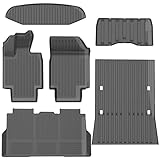
- 1-Perfect custom fit for 2025-2026 Model Y (Juniper),3D scanned for seamless contour matching
- 2-Premium Safe TPE Material:Crafted from odorless, non-toxic thermoplastic elastomer that stays flexible in extreme temperatures (-40°F to 176°F). Free of harmful chemicals, safe for kids and pets; wear-resistant for long-term use.
- 3-All-Weather Heavy-Duty Protection:Deep channels and raised edges trap mud, slush, rain, and sand, keeping interior dry and clean. Textured anti-slip surface prevents cargo sliding during transit—ideal for daily commutes, off-roading, or pet travel.
- 4-No-Slip Safety Design:Reinforced anti-skid backing and vehicle-specific anchors lock mats in place, avoiding pedal interference. Raised edge trim contains spills, reducing cleanup hassle and enhancing driving safety.
- 5-Effortless Clean & Quick Install:Install in minutes—just lay and press to fit. Clean by hosing off, wiping with soapy water, or shaking out; stain and water-resistant surface dries fast for ongoing protection.
The underlying campaigns are documented in Tesla’s official recall information index, individual Tesla recall notices, and National Highway Traffic Safety Administration safety-recall reports. The most accurate verdict is therefore “several serious and genuine problems, but no proven overall failure rate.”
What are the confirmed Cybertruck problems?
The following table separates the documented condition, its actual scope, its safety consequence, and the remedy. “Certain Cybertrucks” does not mean every truck, and a campaign population does not equal the number of vehicles that experienced the failure.
| Documented issue | Vehicles or configuration covered | Why the issue is genuine | Stated remedy |
|---|---|---|---|
| Accelerator-pedal pad retention | All 2024 Cybertrucks manufactured from November 13, 2023, through April 4, 2024. | High force could dislodge the pedal pad and trap it in the interior trim above the pedal, potentially affecting pedal operation and increasing collision risk. | Rework or replacement of the accelerator-pedal assembly; Tesla states the work takes less than 15 minutes and may be performed by Mobile Service where permitted. Tesla’s accelerator-pedal recall notice provides the campaign details. |
| Windshield-wiper motor failure | Certain 2024 Cybertrucks built through June 6, 2024. | Electrical overstress to a gate-driver component could stop the front wiper motor controller from functioning, reducing visibility. | Replacement of the windshield-wiper motor, with Tesla estimating approximately 30 minutes. See Tesla’s wiper-motor recall notice. |
| Drive-inverter loss of propulsion | Certain 2024 Cybertrucks manufactured from November 6, 2023, through July 30, 2024, using a specified MOSFET in the drive inverter. | A fault could stop the inverter from producing torque, leaving the driver unable to accelerate. Tesla says there may be no warning before propulsion is lost. | Drive-inverter replacement, estimated at approximately three hours. Tesla’s drive-inverter recall notice says no related crashes, fatalities, or injuries were known at the time of the notice. |
| Cantrail-panel separation | Certain 2024 and 2025 Cybertrucks manufactured from November 13, 2023, through February 27, 2025. | The stainless-steel cantrail panel could delaminate at the adhesive joint and separate from the vehicle, creating a road hazard for following motorists. | Replacement with a cantrail assembly meeting durability-testing requirements. A detectable cabin noise may precede separation in some cases. See Tesla and NHTSA’s cantrail-replacement information. |
| Sail-appliqué separation | 2024 Cybertrucks built through May 26, 2024. | The applique or adhesive may not have been installed to specification, allowing the exterior piece to loosen or separate and create a road hazard. | Owners should use the VIN-specific Tesla campaign instructions and verify that the attachment repair is complete. The campaign appears in Tesla’s recall index. |
| Rearview-camera display delay | Certain 2024 Cybertrucks built from November 13, 2023, through September 14, 2024. | Under specified startup conditions, the rearview image might not display within two seconds after Reverse was selected, contrary to FMVSS 111 requirements. | Software release 2024.32.5.2 or later corrects the timing; Tesla says no service visit is required when the remedial software is installed. See Tesla’s backup-camera software recall notice. |
| Front-parking-lamp intensity | Potentially involved 2024–2026 Cybertrucks built from November 13, 2023, through October 11, 2025, operating software earlier than 2025.38.3. | The vehicle controller could command front parking lamps above the maximum intensity permitted by FMVSS 108, potentially distracting other drivers. | Over-the-air software update to version 2025.38.3 or later. The NHTSA Recall 25V699 report identifies the campaign population. |
| Optional off-road lightbar attachment | Certain 2024 Cybertrucks manufactured from November 13, 2023, through November 5, 2024, where an optional lightbar was installed by service. | The wrong surface primer could allow the lightbar to separate and become a road hazard. This is an accessory-installation defect, not a universal Cybertruck defect. | Inspection and, depending on condition, replacement or retrofit with positive mechanical attachment. See Tesla’s lightbar retrofit notice. |
| Brake-rotor, hub, and lug-nut condition | Cybertrucks equipped with 18-inch steel wheels, in the narrow configuration described by the 2026 campaign. | The report discusses rotor cracking and concern that continued strain could eventually allow a wheel stud to separate from the hub. | Replacement of front and rear brake rotors, hubs, and lug nuts with components designed for greater contact area and improved torque retention. The NHTSA Recall 26V255 report describes the campaign. |
Which Cybertruck problems have the clearest safety consequences?
The clearest safety issues are the defects that can affect vehicle control, visibility, or the safety of people outside the vehicle. Those categories are supported by official recall notices rather than by unverified social-media reports.
Crashes, No Sound, or Screen Glitches?
Random freezes, missing sound and display glitches usually trace back to one bad driver. Find and replace yours safely.Free scan · under a minuteWindows Errors? Fix Them Before They Spread
Repair common Windows errors and clear accumulated junk for a smoother, more stable PC - no reinstall needed.Free scan · no reinstallCan a Cybertruck lose power while driving?
Yes. Tesla documented a genuine drive-inverter defect in certain 2024 Cybertrucks. If the affected inverter stops producing torque, the driver can lose the ability to accelerate. Tesla says a visual alert appears once torque is lost, but there may be no warning before the loss of propulsion.
“If the inverter stops producing torque, the driver loses the ability to apply torque to the vehicle using the accelerator pedal resulting in a loss of propulsion, which may increase the risk of a collision.”
— Tesla, Cybertruck Drive Inverter Replacement Recall
Tesla’s notice stated that it was not aware of related crashes, fatalities, or injuries when the notice was issued. That field history is important, but it does not cancel the defect: a component that can unexpectedly remove propulsion is a genuine and potentially serious safety problem even when the cited notice reports no resulting injuries.
Free tools Windows power users keep installed
One-click scans. No signup required.
Can the Cybertruck accelerator pedal become trapped?
Yes, but the documented pedal problem is limited to 2024 vehicles in the specified November 13, 2023, through April 4, 2024, production range. Tesla said the pedal pad could dislodge under high force and become trapped in trim above the pedal. The condition is an assembly or manufacturing defect with a plausible effect on pedal operation, not a cosmetic complaint.
The repair is comparatively short—less than 15 minutes according to Tesla—and Mobile Service may perform the work where that service is permitted. A used Cybertruck buyer should still confirm completion by VIN because a short repair does not make an open campaign acceptable.
Is the Cybertruck wiper recall serious?
The windshield-wiper recall is a genuine visibility-related electrical defect. Certain 2024 Cybertrucks could experience electrical overstress in the wiper motor controller, causing the front wiper motor to stop functioning.
“A non-functioning windshield wiper may reduce visibility in certain operating conditions, which may increase the risk of a collision.”
Do these 3 things before closing this tab:
1Clear out junk files and repair common Windows errors2Fix the driver behind crashes, sound loss and screen glitches3Repair Windows errors before they cause bigger problemsSpecial offer. See more information about Outbyte and uninstall instructions. Please review EULA and Privacy policy.
— Tesla, Cybertruck Wiper Motor Replacement Recall
Rank #2

- DIRECT FIT - These custom made floor mats are perfectly tailored to compatible with Tesla Cybertruck Cyber Truck 2023 2024 2025 2026
- DURABILITY - Nilight's heavy duty mats are constructed from high-quality TPE can stand up to years of wear and tear especially compared to less sturdy cloth mats.
- SEAMLESS PROTECTION - Nilight's floor mats protect your upholstery from big spills as well as the smallest sand particles. No matter the damaging effects of water, mud, snow, ice, dirt, sand, pet fur, and debris.
- FAST CLEANING - You can wash off messes that end up on your floor mats in seconds with soap and water. In some cases, a simple spray of the hose will do the trick.
- LIFETIME SERVICE - Everything is made to order with our advanced CNC cutting machines and applications so you can make certain your floor mats are created just for you to your preferred specifications. Your order will also include all the required clips and fixings to fasten your mats to your existing car fixings.
Tesla’s notice says owners may continue driving while awaiting the remedy, but that statement should not be read as a guarantee that driving is safe in rain, snow, spray, or any condition where the driver cannot maintain adequate visibility. The stated remedy is replacement of the wiper motor, estimated at about 30 minutes.
Are Cybertruck panels really falling off?
There is official evidence for genuine exterior-panel attachment defects, although “panels falling off” is too broad a description. Tesla documented separate cantrail and sail-appliqué campaigns, and both involve the possibility that an exterior piece could loosen or separate from the vehicle.
The cantrail issue is more than a cosmetic defect because a detached panel can become a road hazard. Tesla says cabin noise may be detectable before separation in some cases, but owners should not rely on noise as a warning system. The sail-appliqué campaign likewise concerns attachment to specification and a possible road hazard. The build windows and remedies differ, so the two campaigns should not be treated as one universal Cybertruck panel failure.
Quick wins for a faster PC:
Scan for outdated or missing drivers - takes under a minuteDriver Scan →Repair Windows errors before they cause bigger problemsFix Now →“If the cantrail panel separates from the vehicle while in Drive, it could create a road hazard for following motorists and increase the risk of injury or a collision.”
— Tesla, Cybertruck Cantrail Replacement
Is the Cybertruck rear camera recall a real defect?
Yes. The rear-camera campaign is a genuine software and regulatory-compliance issue, but it does not prove that the Cybertruck’s camera system is generally unreliable. Under specified startup conditions, the rearview image could take longer than the two seconds required by FMVSS 111 to appear after Reverse was selected.
Tesla says software version 2024.32.5.2 or later corrects the timing and that the remedy can be delivered over the air without a service appointment. This is a narrower finding than the claim that every Cybertruck has a bad camera: the documented defect concerns a defined software condition, build range, and startup scenario.
What is wrong with the Cybertruck’s front parking lamps?
The front-parking-lamp campaign is a genuine software-based regulatory noncompliance. The vehicle controller could command the lamps above the maximum photometric intensity permitted by FMVSS 108, potentially distracting other drivers.
“Parking lamps that exceed the maximum permissible photometry intensity may be distracting to other drivers and increase the risk of a collision.”
— Tesla, as quoted in NHTSA Recall 25V699
According to the National Highway Traffic Safety Administration’s 2025 Recall 25V699 report, 63,619 Cybertrucks were potentially involved. The figure belongs specifically to the parking-lamp software campaign; it is not the number of Cybertrucks with failed lamps, the number of vehicles with all Cybertruck defects, or the number of confirmed dangerous incidents. Tesla’s remedy is an over-the-air update to software 2025.38.3 or later.
Does the optional Cybertruck lightbar have a defect?
The lightbar campaign documents a genuine attachment problem on certain vehicles where service installed the optional off-road lightbar using the wrong surface primer. Because the accessory could separate and create a road hazard, the campaign is safety-relevant. The campaign does not mean that every Cybertruck, or even every Cybertruck with a lightbar, has the same condition.
The remedy depends on inspection and can include replacement or a retrofit using positive mechanical attachment. Buyers of a used truck with the optional lightbar should verify the campaign specifically rather than assuming that a vehicle-wide recall check tells the whole story.
Is there a Cybertruck brake problem?
A 2026 NHTSA report documents a narrower brake-rotor, hub, and lug-nut concern affecting Cybertrucks equipped with 18-inch steel wheels. The report discusses rotor cracking and engineering concern that continued strain could eventually allow a wheel stud to separate from the hub. The campaign should not be described as proof that every Cybertruck has a brake failure.
Rank #3

- PERFECT FIT: Our floor mats & cargo liners are customized for the 2023 2024 2025 2026 Cybertruck using advanced 3D scanning technology, perfectly fitting and protecting the floor and trunk area from scratches, stains and wear
- EXCELLENT GRIP AND DURABILITY: The surface of the floor liners and cargo mats has added anti-slip patterns to protect the cargo safety during bumps; the Swedish imported TPE material improves good wear resistance and greatly increases the service life
- ALL-WEATHER PROTECTION: The floor mat is stain-resistant, waterproof and easy to clean, which can prevent the floor and cargo compartment from being invaded by rain, slush, mud and sand, whether it is a hot desert or a cold polar region, it can protect your car
- ODORLESS AND NON-TOXIC: The floor liners are made with non-toxic and odorless TPE material. No foul smell will be produced even in high temperature. Bring you and your families a safer and more comfortable interior car environment
- QUALITY SERVICE: If you find any quality or defect problems when you receive the Tesla Cybertruck floor mats & cargo mats, please contact us. We are happy to help you solve the problem. Your satisfaction is our ultimate goal
According to the Tesla/NHTSA recall report dated April 14, 2026, Tesla had identified three potentially related warranty claims and was not aware of related collisions, fatalities, or injuries at that time. The remedy replaces the front and rear brake rotors, hubs, and lug nuts with parts designed for greater contact area and improved torque retention.
Independent reader supportYour contribution helps us test, update, and keep practical guides available for everyone.Does a large recall population mean that many Cybertrucks actually failed?
No. A recall population is the number of vehicles that may contain a specified part, software version, or installation condition; it is not a measured failure prevalence.
The 63,619 vehicles in the parking-lamp report illustrate the difference. The campaign could cover every vehicle running the affected software even if only a small number had produced a noticeable lighting complaint. Conversely, a small campaign can still involve a serious defect if the consequence is severe. The brake report’s three potentially related warranty claims describe known field claims for that specific condition, not the entire Cybertruck’s reliability record.
Recommended Free Tools
Each recall must be read on its own terms:
| Evidence term | What it establishes | What it does not establish |
|---|---|---|
| Confirmed defect or noncompliance | Tesla or NHTSA documented a defined condition with a campaign and remedy. | That every vehicle has the condition or that the defect has caused a crash. |
| Potentially affected population | A build range, software version, configuration, or accessory may be covered. | That every vehicle in the population failed in the field. |
| Owner complaint | A useful lead that may identify a quality or reliability pattern. | Proof of a defect without corroborating records, testing, or a campaign. |
| Warranty claim count | The manufacturer identified claims potentially related to a defined issue. | A complete count of all failures, complaints, or affected owners. |
| Crash-test result | The vehicle performed to a defined standard in standardized testing. | That the vehicle has no manufacturing, software, or component defects. |
Is the Tesla Cybertruck unsafe overall?
The available evidence does not support a blanket conclusion that every Cybertruck is unsafe. The evidence supports a more precise conclusion: the Cybertruck has had multiple discrete defects requiring recalls, while the vehicle can also perform well in standardized crashworthiness testing.
The Insurance Institute for Highway Safety lists the 2025–26 Tesla Cybertruck as a Top Safety Pick+ in the large-pickup category, with the qualification applying to vehicles built after April 2025. The listed criteria include good ratings in the small-overlap front, updated moderate-overlap front, and updated side tests, along with qualifying headlights and pedestrian front-crash-prevention performance. The IIHS Top Safety Picks database is evidence about crash-test and crash-avoidance performance, not a statement that the vehicle has no recall history.
A strong crash-test result and a genuine recall can both be true. Crashworthiness asks how the vehicle performs in controlled tests. A recall asks whether a particular component, software version, or installation fails to meet a requirement or creates a safety risk. Those are different evidence streams.
Which Cybertruck complaints are design tradeoffs rather than confirmed defects?
Not every unpopular Cybertruck characteristic is a safety defect. Size, weight, towing-related range loss, stainless-steel care, and unconventional controls may affect whether someone likes or can use the vehicle, but the available recall records do not establish those characteristics as defects.
| Common criticism | What the available evidence supports | Fair classification |
|---|---|---|
| Large size, weight, or difficult maneuverability | The Cybertruck is designed as a large utility pickup. No cited recall establishes its dimensions as a defect. | Design or usability tradeoff unless a separate component failure is documented. |
| Range falling while towing | Tesla’s product page lists approximately 320–325 miles of estimated range and 7,500–11,000 pounds of towing capacity depending on configuration. Tesla’s towing guidance warns that towing adds load to the motors, drivetrain, brakes, tires, and suspension and significantly reduces range. | An operating constraint, not automatically a battery or vehicle defect. See Tesla’s Cybertruck specifications and the Cybertruck towing guidance. |
| Stainless-steel marks, cleaning, or maintenance | The exterior requires owner care, but no particular cleaning complaint in the available material is confirmed as a recall defect. | Maintenance or finish-quality concern unless supported by a defined campaign. |
| Unusual controls or interface choices | Unconventional controls can create a learning or usability issue, but the available recall record does not classify the overall interface as defective. | Design tradeoff; a specific control failure would require separate evidence. |
| Self-driving or driver-assistance expectations | Tesla’s owner manual treats self-driving limitations and warnings as a separate operating topic. Driver assistance does not remove the driver’s responsibility to monitor the vehicle. | Operating limitation, not evidence that the recall defects above are imaginary. See Tesla’s self-driving limitations and warnings. |
The same distinction applies to viral videos. A video can show a real failure, but it cannot by itself establish how often the failure occurs, which build range is affected, whether Tesla has issued a remedy, or whether the event is representative of the entire fleet.
What should a Cybertruck owner or used buyer check?
The VIN and repair history matter more than the Cybertruck badge or model year. A practical check should cover both software campaigns and physical campaigns.
- Run the VIN through Tesla’s official recall process. Start with Tesla’s recall information page and ask Tesla service to confirm the status of every campaign associated with the vehicle.
- Confirm software completion. Check the vehicle’s displayed software version and verify that the backup-camera campaign was corrected with version 2024.32.5.2 or later and that the parking-lamp campaign was corrected with version 2025.38.3 or later when those campaigns apply. Do not assume one software update resolves hardware recalls.
- Check the build date against hardware campaigns. Pay particular attention to the accelerator pedal, wiper motor, drive inverter, cantrail, and sail-appliqué production windows. The same model year can contain vehicles built before and after a campaign’s cutoff.
- Check configuration-specific equipment. Ask whether the vehicle has 18-inch steel wheels or the optional off-road lightbar. The brake-hardware and lightbar campaigns do not apply universally to every Cybertruck.
- Verify that the remedy was actually completed. Request service documentation or a Tesla service confirmation rather than relying on a seller’s statement that the vehicle is “recall-free.”
- Do not use accessories as recall repairs. A floor mat, cleaner, adhesive, or aftermarket gadget cannot correct a pedal, inverter, wiper, lighting, camera, brake, or panel-attachment campaign. Recall repairs should follow Tesla’s official process.
For ordinary utility use, owners may also want practical interior protection. Cybertruck floor mats can be a sensible accessory for managing dirt, water, and cargo debris, but floor mats protect the cabin only; they do not fix structural, electrical, software, or safety defects.
What is the fairest verdict on Cybertruck complaints?
Internet criticism is neither wholly accurate nor wholly exaggerated. Official records confirm enough safety and compliance issues to reject the idea that Cybertruck problems are invented: propulsion loss, pedal-pad retention, wiper failure, exterior detachment, camera delay, parking-lamp intensity, lightbar attachment, and the narrow 18-inch-wheel brake concern are all supported by Tesla or NHTSA documentation.
At the same time, the records do not justify saying that every Cybertruck is unsafe, that every panel will detach, that every owner will lose propulsion, or that the 63,619-vehicle parking-lamp campaign population represents 63,619 failures. The most accurate answer to “Are Cybertruck problems real?” is yes—several are—but the seriousness and likelihood depend on the exact campaign, build window, software version, configuration, accessory, and repair status.
The Bottom Line
Bottom line: The available evidence supports eight genuine Cybertruck problem categories across nine campaign-level entries, but it does not provide an overall defect rate or show that every Cybertruck is affected. Treat documented recalls as real safety or compliance issues, treat owner anecdotes as leads requiring corroboration, and use the VIN and repair history to judge an individual truck.
Quick Recap
Product prices and availability are accurate as of the date/time indicated and are subject to change. Any price and availability information displayed on Amazon at the time of purchase will apply.




