How long does a car battery last? Most conventional 12-volt car batteries last about three to five years, with hot southern U.S. climates often producing approximately three years and cooler northern climates sometimes producing five years or longer. Short trips, storage, vibration, deep discharge, and electrical faults can shorten that range.
Battery age is only a starting point. The most useful decision combines the battery’s age with climate, driving pattern, warning signs, a proper test, and the vehicle manufacturer’s replacement specification.
As an Amazon Associate I earn from qualifying purchases.
Key takeaways
- Most conventional 12-volt car batteries last about three to five years, but climate, driving habits, battery type, and maintenance can move that range.
- AAA says batteries in hot southern U.S. locales typically last approximately three years, while batteries in cooler northern climates may last five years or longer.
- Short trips, long periods parked, deep discharges, vibration, parasitic electrical loads, and charging-system faults can shorten battery life.
- AAA recommends annual battery testing once the battery reaches its third year; Consumer Reports gives different climate-based testing thresholds and also recommends testing at least twice yearly.
- A replacement battery must match the vehicle’s specified type, group size, terminal layout, and CCA or Ah rating.
What is the normal car battery lifespan?
Most conventional 12-volt car batteries last about three to five years. Three to five years is a planning range rather than a guarantee: a battery exposed to intense heat, frequent short trips, vibration, repeated deep discharge, or charging problems may fail sooner, while a battery in a cooler climate with favorable driving conditions may last longer.
AAA’s automotive guidance identifies time, heat, and vibration as the three major influences on battery life. The battery’s chemistry, the vehicle’s electrical design, the age of the battery when installed, and how often the vehicle is driven also matter.
#1 Best Overall

- ENERGIZER 16 FEET JUMPER CABLES - 6 Gauge, 16 FT booster battery jumper cables for jump starting a dead or weak battery. Ideal for trucks, SUVs, full-size cars, mid-size cars and small/compact cars
- THICK VINYL COATING - Includes a strong spring and a comfortable handle for secure placement and easy positioning. Thick vinyl coating for protection against rust and corrosion.
- CARRYING CASE INCLUDED - Our Energizer jumper cables come with a high-grade travel bag for easy transport and compact storage.
- TANGLE FREE CCA BOOSTER CABLES - 16 Foot length makes it easy to reach from one car battery to another. Copper clad aluminum cables remains flexible even at -40°C.
- THE BRAND NAME YOU CAN TRUST - We are here to power your car battery and truck with our booster jumper cables. We keep you going and going!
This answer applies to the conventional 12-volt starting battery in a gasoline or diesel vehicle and to the 12-volt battery used for a vehicle’s low-voltage systems. An electric vehicle’s or hybrid’s high-voltage traction battery is a different component with different service considerations.
How long does a car battery last in hot or cold climates?
A car battery generally lasts less time in a hot climate than in a cooler climate. AAA says a battery may last five years or longer in cooler northern climates but typically lasts approximately three years in hot southern U.S. locales.
| Condition | Reported battery-life guidance | What the figure means |
|---|---|---|
| Typical conventional 12-volt battery | About three to five years | A practical planning range, not a replacement deadline |
| Hot southern U.S. locale | Approximately three years | AAA’s typical guidance for hotter conditions |
| Cooler northern climate | Five years or longer | AAA’s possible lifespan in cooler conditions |
| Farthest northern U.S. regions | 58 months or more | Regional average or reported range attributed to AAA by Consumer Reports in 2026 |
| Most southern U.S. regions | Less than 41 months | Regional average or reported range attributed to AAA by Consumer Reports in 2026 |
According to Consumer Reports’ 2026 car-battery buying guide, AAA reported 58 months or more for the farthest northern U.S. regions and less than 41 months for the most southern U.S. regions. Those figures describe regional averages or reported ranges, not a promise for every vehicle or driver.
The Tool Desk
Outbyte PC Repair FREEClear out junk files and repair common Windows errorsFree Scan →Outbyte Driver Updater FREEFix the driver behind crashes, sound loss and screen glitchesFind Drivers →Heat is particularly hard on a battery because high under-hood temperatures accelerate internal degradation. AAA says under-hood temperatures can exceed 200°F in hot weather. Cold weather can make a weak battery appear to fail because the engine requires more starting power, but the underlying battery wear may have developed during earlier heat exposure.
What shortens a car battery’s life?
Several conditions can reduce a car battery’s useful life, even when the battery is the correct size and type.
- Frequent short trips: Starting the engine consumes energy, and a short drive may not give the alternator enough time to replace that energy. Short trips also mean accessories may consume a larger share of the battery’s available charge.
- Long periods of storage: A parked vehicle still draws some electricity, and the battery naturally self-discharges. A vehicle that sits for weeks can therefore lose its starting reserve without any obvious fault.
- Deep discharge: Allowing the battery to go completely dead takes a substantial amount from its service life, even if the battery can later be recharged.
- High heat: Repeated exposure to high under-hood temperatures accelerates aging.
- Excessive vibration: A loose or missing battery hold-down allows movement that can damage internal components.
- Charging-system faults: Persistent undercharging or overcharging can accelerate battery aging. A failing alternator, voltage regulator, wiring connection, or belt can be the real cause of repeated battery problems.
- Parasitic electrical loads: Dash cams, phone chargers, proximity-key systems, aftermarket electronics, and control modules can drain a parked vehicle.
Consumer Reports gives a general maintenance guideline of driving for at least 20 minutes roughly every two weeks when a vehicle is not used regularly. That guideline is not a guarantee, and it may not be enough for a battery that is already weak, a vehicle with substantial standby electrical draw, or a vehicle driven only in severe conditions.
How do you know if a car battery is going bad?
A slow engine crank is the most familiar warning sign, but a failing car battery may also trigger a battery or charging warning lamp or cause incandescent headlights to look dim while the engine idles. Some batteries fail without an obvious symptom, so normal starting performance does not prove that an older battery is healthy.
Recommended Free Tools
Rank #2
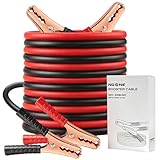
- UNIVERSAL FITMENTS :NOONE 10 FT car jumper cables support 200A peak current for jumping start 12/24V car battery. So NOONE booster cables are suitable for your vehicles with up to 3.0 L Gas Engines
- SUPERB PERFORMANCE :With rubber covered, NOONE battery booster cables can provide you insulated protection to prevent leakage current. Equipped with superb conductivity, our copper-clad aluminum cables conductors work well even in extreme temperatures(-40°F to 140°F)
- HIGH QUALITY CLIPS :Super strong bite, tight crimping and more conductive. Extra thick PVC sheath at the handle, can be fireproof flower, higher safety
- JUMPER CABLES KIT :The package includes a Jumper Cables, and is a quality choice for family cars
- THE BRAND NAME YOU CAN TRUST : Our NOONE automotive battery jumper cables provide a 2-year products service. If you encounter any problems, please do not hesitate to contact us via Email
| Observation | What it may indicate | Best next step |
|---|---|---|
| Engine cranks more slowly than usual | Low battery capacity, low charge, poor connections, or a starting-system problem | Test the battery and inspect the terminals and charging system |
| Battery or charging warning light | A charging-system fault or battery-related electrical problem | Arrange diagnosis promptly rather than assuming a battery replacement will fix it |
| Headlights dim at idle | Low charging output, weak battery, poor connections, or an electrical fault | Have battery and alternator output checked |
| Vehicle repeatedly goes dead after a few days | Parasitic drain, failed control module, charging fault, or worn-out battery | Request professional diagnosis of the drain and charging system |
| No warning symptoms, but battery is several years old | Age-related loss of reserve capacity that may not yet be noticeable | Test the battery before a long trip or seasonal temperature change |
Repeatedly replacing a battery without finding the cause can waste money. As Consumer Reports lead technician Michael Crossen explains, The battery might be at the end of its life, or there could be something broken, like a failed control module that’s drawing electricity, and your mechanic will need to find the cause.
Read the full Consumer Reports battery-maintenance guidance for its discussion of testing, charging, and electrical drains.
When should you test or replace a car battery?
Test an aging battery before a long trip, before leaving the vehicle parked for an extended period, and whenever starting performance changes. Replacing a battery solely because it reaches three years is not mandatory, but a three-year-old battery deserves more frequent testing because failure becomes more plausible as the battery ages.
| Source or situation | Testing guidance | How to use it |
|---|---|---|
| AAA | Test annually after the battery reaches its third year | A simple baseline for an aging battery |
| Consumer Reports, warmer climates | Annual load testing after age two | Use a more cautious schedule where heat accelerates wear |
| Consumer Reports, colder climates | Annual load testing after age four | Use the longer threshold only as climate-based guidance |
| Consumer Reports maintenance guidance | Test at least twice a year | Useful for drivers who want more frequent checks or whose vehicle has demanding use |
| Before a long journey | Test regardless of whether the battery still starts the vehicle normally | Reduce the risk of discovering a weak battery away from home |
The recommendations differ because they emphasize different risk tolerances and conditions. According to AAA’s battery guidance, annual testing after year three is appropriate; Consumer Reports provides climate-dependent load-test guidance and separately recommends testing at least twice yearly. A test result, charging-system check, and inspection of the terminals are more useful than age alone.
A handheld 12V battery tester can help identify a weak battery, but a tester cannot diagnose every alternator problem, parasitic drain, failed control module, wiring fault, or intermittent electrical issue. Professional diagnosis is the right next step when a battery repeatedly dies or the charging warning light appears.
PC Slower Than It Used to Be?
A free scan shows the junk files, broken settings and background clutter dragging Windows down - then fixes them in one click.Free scan · Windows 10 & 11Outdated Drivers Are Slowing You Down
One free scan finds every outdated or missing driver and matches the right update for your exact hardware.Free scan · exact hardware matchCan a trickle charger extend car battery life?
A properly selected automatic charger or maintainer can help extend service life when a vehicle sits for long periods or is driven mostly on short trips. A maintainer prevents avoidable discharge by keeping the battery charged; a maintainer does not repair failed cells, severe sulfation, physical damage, or an underlying charging-system fault.
For a stored vehicle, a 12V car battery charger and maintainer is most useful when it supports the battery’s chemistry and includes automatic charging control or overcharge protection. Verify the charger’s voltage, battery-type setting, connection instructions, and ventilation requirements before use. Consumer Reports specifically recommends built-in circuitry to prevent overcharging.
Do not use a maintainer as a reason to ignore a battery that is already failing. If the battery loses charge quickly after being maintained, or the vehicle goes dead while connected correctly, investigate the battery, charging system, and parasitic draw.
What is the difference between a flooded battery and an AGM battery?
Flooded lead-acid batteries are the traditional choice for many standard vehicles, while AGM batteries are designed for applications that require greater resistance to repeated discharge and recharge or higher electrical demand. AGM batteries are generally maintenance-free and more spill-resistant, but AGM is not automatically the correct or best choice for every vehicle.
Rank #3

- Strong And Safe Clamps: The TOPDC Jumper Cables booster cable has four giant alligator clamps with strong jagged teeth and springs for excellent grip force. The jaws are strong and make connections easy. And the High Peak Jumper Cables has insulating rubber material to prevent electric shock and protect the safety of users. The clamps are engineered with reinforced structure and well-designed jaws that provide a firm, secure grip on both top-post and side-terminal batteries, ensuring long-lasting durability and ease of use.
- 20 Feet Jumper Cables: The TOPDC 20 Feet Jumper Cables has an extremely long usage distance, which is suitable for use with SUVs, full-size cars, mid-size cars, and compact cars. The Jumper Cables adopts insulating material to prevent rust, corrosion so effective insulation. The 20 Feet Jumper Cables are suitable for various car models and are powerful helper in emergency situations. Made from high-quality Copper Clad Aluminum (CCA), the thick-gauge cables offer excellent conductivity and maintain flexibility even in extreme cold, providing reliable performance when you need it most.
- UL-Listed & qualified quality: The TOPDC Jumper Cables surface is made with premium PVC which is resistant to freezing, cracking & folding and won’t tangle. Each jumper clamp has undergone rigorous testing and successfully passed UL certification, which is exhibiting excellent performance under extreme temperature conditions (-40 °F to 140 °F). The thick vinyl coating is built to resist wear, prevent tearing, and protect the internal wire from exposure, enhancing safety and durability over time.
- Convenient storage and carrying: The TOPDC Jumper Cables will give a Carry Bag. When you need to use Jumper Cables, you can always carry it in your bag. When you don't need to use Jumper Cables, you can pack it in a bag and store it in any place. Convenient storage and carrying are truly essential items at home. The included 600D Oxford fabric storage bag is tough, spacious, and features a smooth zipper for easy access—perfect for neatly organizing cables and accessories without the hassle.
- Quality Assurance: TOPDC provides a 5-year quality guarantee and full after-sales support, reflecting our commitment to excellence and customer satisfaction. Every product undergoes strict quality inspection to ensure superior performance, consistent reliability, and long-lasting durability. The included clearly labeled step-by-step guide makes operation simple even for first-time users. With robust design, dependable construction, and a focus on user experience, TOPDC jumper cables are built to deliver confidence in any emergency situation—whether at home, on the road, or in extreme weather conditions.
| Characteristic | Flooded lead-acid | AGM |
|---|---|---|
| Typical role | Traditional battery for many standard vehicles | Higher-demand, repeated-cycle, and some stop-start applications |
| Maintenance | Generally maintenance-free in modern automotive applications, but design varies | Generally maintenance-free |
| Spill resistance | Lower than AGM | More spill-resistant |
| Discharge and recharge tolerance | Suitable when specified by the vehicle manufacturer | Better suited to some repeated discharge/recharge demands |
| Cost | Reference point | Consumer Reports reported 40 to 100 percent more than highly rated conventional batteries in 2026 |
| Interchangeability | Not universally interchangeable with AGM | Not universally interchangeable with flooded batteries |
According to Consumer Reports’ 2026 buying guide, AGM batteries can cost 40 to 100 percent more than highly rated conventional batteries. The correct decision is not “AGM is better”; the correct decision is to follow the vehicle manufacturer’s specification and confirm that the charging system is compatible.
Some vehicles use enhanced flooded batteries (EFB) or another manufacturer-specified design, particularly vehicles with stop-start systems. Do not substitute a different chemistry based only on physical fit.
What car battery do you need?
The correct replacement depends on the vehicle manufacturer’s specification, the battery type, physical group size, terminal configuration, hold-down arrangement, and required cold-cranking amps (CCA) or amp-hour (Ah) rating.
AAA states, You must consider the battery type, physical size, terminal configuration, and cold cranking amps (CCA) or amp-hour (Ah) rating to ensure you get a car battery that properly fits and functions for your make and model vehicle.
Check the owner’s manual, the label on the existing battery, and a reliable vehicle-application guide before buying.
- Battery type: Match flooded lead-acid, AGM, EFB, or another specified type.
- Group size and dimensions: The battery must fit the tray and allow the hold-down to secure it.
- Terminal layout: Positive and negative terminals must be in the correct locations for the vehicle’s cables.
- CCA or Ah rating: Meet the manufacturer’s minimum requirement. AAA says a higher CCA battery can work if it fits properly, but a lower-than-recommended CCA or Ah rating should not be installed.
- Freshness and warranty: Compare the battery’s manufacturing date, warranty terms, and installation or recycling support where relevant.
A vehicle-specific replacement car battery is a better starting point than choosing a battery by price or advertised CCA alone. The product must fit the vehicle electrically and physically.
Independent reader supportYour contribution helps us test, update, and keep practical guides available for everyone.Should you use a jump starter, battery tester, or maintainer?
These tools solve different problems: a jump starter provides emergency starting power, a tester checks battery condition, and a maintainer helps prevent discharge during storage.
| Tool | Useful for | Not a substitute for |
|---|---|---|
| 12V battery maintainer | Keeping a parked or short-trip vehicle charged | Replacing a worn battery or repairing a charging fault |
| Portable 12V jump starter | Emergency backup when the battery cannot start the engine | Battery testing, charging-system diagnosis, or lifespan extension |
| 12V automotive battery tester | Checking battery voltage or available starting capacity, depending on the tester | Complete diagnosis of parasitic drains, alternators, control modules, or wiring |
| Terminal cleaning brush and corrosion protectant | Maintaining clean, tight battery connections | Repairing internal battery failure or a defective cable |
Consumer Reports describes a rechargeable jump starter as a practical backup and notes protection against incorrect connections on suitable products. A jump starter can get a vehicle moving, but repeated reliance on one is a reason to test the battery and charging system.
Can AAA test or replace a car battery?
AAA says members in most areas can request battery service that may include diagnostic testing and, when needed, installation of a new battery on the spot. Availability, pricing, membership requirements, battery selection, and service terms vary by region and by local AAA club, so confirm details before relying on the service.
Quick wins for a faster PC:
Clear out junk files and repair common Windows errorsFree Scan →Scan for outdated or missing drivers - takes under a minuteDriver Scan →Repair Windows errors before they cause bigger problemsFix Now →Rank #4

- Strong, Secure Clamps: Four insulated, serrated clamps give jumper cables a firm grip on top-post and side-terminal batteries.
- 12-Foot Copper-Clad Aluminum Jumper Cables: Flexible cables provide reliable conductivity and extended reach for cars, SUVs, and trucks.
- Reliable Quality: Jumper cables feature UL-listed clamps and a durable PVC jacket that stays flexible from -40°F to 140°F.
- Convenient Storage: Jumper cables include a durable 600D Oxford fabric carry bag with a smooth zipper for neat organization.
- Quality Assurance: TOPDC jumper cables include a 2-year guarantee, full after-sales support, and a clear step-by-step guide.
Professional roadside service is particularly useful when a driver cannot safely remove a battery, lacks the tools to test charging output, or needs help distinguishing a weak battery from another electrical fault. A local repair shop or automotive parts retailer may also provide testing, installation, vehicle-specific selection, warranty support, and recycling services.
How can you make a car battery last longer?
No maintenance routine guarantees a particular lifespan, but the following steps reduce avoidable stress on a conventional 12-volt battery.
- Secure the battery: Check that the hold-down hardware is present and tight enough to prevent excessive vibration.
- Keep connections clean and tight: Inspect the cable terminals for corrosion and address loose connections.
- Test by age and use: Begin regular testing as the battery becomes several years old, and test before long trips.
- Reduce unnecessary short-trip use: Combine errands where practical so the alternator has more opportunity to restore the energy used during starting.
- Maintain a stored vehicle: Use a compatible automatic maintainer when the vehicle sits, following the charger and vehicle instructions.
- Investigate repeated discharge: Have a technician check for parasitic drain, a failed control module, charging-system faults, or wiring problems instead of repeatedly installing batteries.
- Replace by specification: Choose the correct type, group size, terminal layout, and CCA or Ah rating rather than selecting solely by price.
The clearest answer to “how often should I replace my car battery?” is to plan around three to five years, then use testing, climate, symptoms, and vehicle history to decide. A healthy test result can justify continued use; a weak result before a trip can justify preventive replacement even if the battery has not yet reached five years.
Frequently Asked Questions
How many years should a car battery last?
Most conventional 12-volt car batteries last about three to five years. Hot climates, short trips, vibration, deep discharges, storage, and charging-system faults can shorten the lifespan, while cooler conditions and regular use may allow a battery to last longer.
Do these 3 things before closing this tab:
1Repair Windows errors before they cause bigger problems2Scan for outdated or missing drivers - takes under a minute3Clear out junk files and repair common Windows errorsShould I replace my battery after three years?
A car battery does not have to be replaced automatically at three years, but AAA recommends annual testing once the battery reaches its third year. Replace the battery when testing shows inadequate capacity, symptoms appear, or a technician finds that the battery is the cause of repeated discharge.
Can a trickle charger extend car battery life?
A trickle charger or automatic 12V maintainer can help prevent avoidable discharge when a vehicle sits or is driven mostly on short trips. A maintainer cannot repair failed cells, severe sulfation, physical damage, or a charging-system problem.
Why does my car battery keep dying?
A car battery that repeatedly dies after only a few days may be worn out, but the cause could also be a parasitic electrical drain, failed control module, charging-system fault, or wiring problem. Professional diagnosis is preferable to repeatedly replacing the battery.
The Bottom Line
Plan on replacing a conventional 12-volt car battery around the three-to-five-year mark, but do not treat that range as a deadline. Hot climates, short trips, storage, vibration, deep discharge, and electrical faults can shorten battery life. Test an aging battery, diagnose repeated drain, and match any replacement to the vehicle manufacturer’s exact specification.
Quick Recap
Product prices and availability are accurate as of the date/time indicated and are subject to change. Any price and availability information displayed on Amazon at the time of purchase will apply.




