Free tools Windows power users keep installed
One-click scans. No signup required.
IndyCar drivers prepare for the Indianapolis 500 by learning the Speedway at speed, working with engineers to make the car manageable in traffic, and practicing with other cars—not by relying on a single qualifying-speed run. Rookie drivers also have to complete INDYCAR’s formal orientation phases before they can qualify. The available official material does not establish one standard workout or nutrition plan for all drivers.
How do IndyCar drivers prepare for the Indianapolis 500?
Most of the preparation readers can see happens at Indianapolis Motor Speedway. Drivers use practice to learn how their cars respond on the 2.5-mile oval, while engineers adjust the setup for the conditions the team expects to face. That work includes solo running, race trim, qualifying trim, and laps with other cars.

The scale varies by session and driver. During the 2025 Indianapolis 500 test week, rookie Robert Shwartzman completed 262 laps, while Kyle Kirkwood described working on no-tow speed, race and qualifying trim, and running in traffic. Those are examples from that test, not a required lap count for every driver.
A 2017 INDYCAR report described the next-to-last practice as the closest opportunity to simulate the race: all 33 cars took part and completed 2,705 laps combined. It is a historical example, but it shows why preparation includes running in a pack rather than focusing only on a car’s solo pace. INDYCAR’s 2017 practice report covered the session.
Why are qualifying and race setups different?
Qualifying rewards maximum speed in relatively clean air. Racing demands a car that remains predictable when it follows another car. In traffic, turbulent airflow reduces the front wing’s help in turning, so the driver may have to work harder to place and rotate the car through a corner.
INDYCAR engineer Brad Goldberg summarized the race challenge this way: “The biggest thing in the race is traffic.” As he explained, “The difference is, is effectively how the air is and where it is on the car.” The team is balancing aerodynamic help with drag: downforce can help a car turn, but drag costs speed, and a following car cannot count on the same clean-air behavior as a solo qualifying run. Goldberg’s INDYCAR interview explains the trade-off.
Rank #2
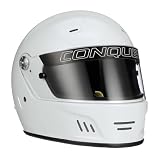
- Lightweight fiberglass composite shell construction
- Fire retardant padded interior and airflow venting for comfort
- Protective, soft carry bag included
- 3mm Anti-scratch, flame resistant shield with tear off posts
- Snell SA2025 Certified IMPORTANT: This is an auto racing helmet certified to Snell SA2025 standards and is not intended for motorcycle road use or FMVSS 218 compliance.
Qualifying also asks for a different kind of confidence. Goldberg said, “At that moment, you got to understand the driver is putting 100 percent of their trust into the engineer.” The driver must commit to a high-speed run based on the setup and information developed with the team; the race setup, by contrast, has to work amid changing air and close competition.
How do drivers practice racing in traffic?
They run with other cars and learn how their car behaves in the turbulent air and close quarters that define the race. That practice helps drivers and engineers identify whether the car can follow, turn, and give its driver opportunities to pass. It also gives drivers a chance to learn from teammates and experienced competitors.
PC Slower Than It Used to Be?
A free scan shows the junk files, broken settings and background clutter dragging Windows down - then fixes them in one click.Free scan · Windows 10 & 11Crashes, No Sound, or Screen Glitches?
Random freezes, missing sound and display glitches usually trace back to one bad driver. Find and replace yours safely.Free scan · under a minuteRank #3

- SAFETY DESIGN: Dirt Bike helmet featuring a cute panda design with clear protective visor and DOT safety standard certification and meeting FMVSS218
- COMPLETE SET: Includes matching racing gloves with secure grip and protective padding for enhanced control and hand protection
- COMFORT FIT: Padded interior lining provides superior comfort during wear while ensuring proper cushioning and stability
- VISIBILITY FEATURES: Clear visor shield offers excellent visibility and protection from wind, dust, and debris while riding
- PRACTICAL DETAILS: Easy-to-use quick-release buckle system for simple securing and removal, with adequate ventilation for comfortable wear
Alexander Rossi’s account of his rookie 2016 season offers one example, not a universal current team schedule. He said Andretti made a point of practicing group running for at least an hour a day. When he struggled to pass and felt uncomfortable in traffic, he sought advice from teammate Townsend Bell. Rossi recalled Bell telling him: “It’s not supposed to feel right, it’s supposed to be primal. None of us are comfortable, you just have to accept it and deal with it.” INDYCAR reported Rossi’s account.
Independent reader supportYour contribution helps us test, update, and keep practical guides available for everyone.What is Indy 500 Rookie Orientation?
Rookie Orientation is a regulated, progressive on-track program for drivers who need to demonstrate readiness for the Indianapolis oval. Under the 2026 INDYCAR rulebook, the program consists of 40 laps across three phases; the laps do not have to be consecutive. INDYCAR assesses car control, placement, and interaction with other cars.
Rank #4

- Snell SA2025 Certified, made of Fiber Reinforce Plastic(GFRP) composite shell, Double D-ring equipped, more lightweight, and higher safety.
- Compatible with HANS/HNR M6 Threaded Inserts(not included), convenient for you to install Head&Neck Support devices to protect your head and neck from getting hurt when participating in auto racing sports.
- 40 MM sunshade film on the top of the visor helps to reduce giddiness and dizziness caused by the sun/light while doing car racing acclivities.
- High-density Expanded Polystyrene (EPS) fire retardant inner pads enhance comfort and safety when it happens to an accident.
- Tear-off posts button on the visor allows installing tear-off posts on the visor so to ensure a clear view according to the racer’s needs.
- A rookie must complete at least two phases to be eligible for practice when event practice begins, unless INDYCAR waives the requirement.
- The driver must complete the final phase before making a qualifying attempt.
- Refresher testing can also apply to a driver who has not participated in an oval event since the previous Indianapolis 500.
The rulebook also requires current clearance acceptable to INDYCAR attesting to a driver’s physical and psychological fitness. Those provisions do not prescribe a public, universal exercise routine.
Does every driver follow the same fitness or diet plan?
No standard workout, diet, sleep, or heat-preparation plan is established by the official material described here. The rules require fitness clearance, but that is not the same as publishing a common conditioning program. It would be misleading to present one routine as the way every IndyCar driver prepares.
Why practice speed is not a race prediction
Practice is preparation, not a guarantee of Sunday performance. During the two-hour final practice on Carb Day before the 2026 race, all 33 drivers combined for 2,169 laps. Josef Newgarden led the session, then put the result in perspective: “But today is Friday. We’ve got to be good on Sunday.” INDYCAR’s 2026 Carb Day report records the session and his comment.
Quick Recap
Product prices and availability are accurate as of the date/time indicated and are subject to change. Any price and availability information displayed on Amazon at the time of purchase will apply.




