Do these 3 things before closing this tab:
1Repair Windows errors before they cause bigger problems2Fix the driver behind crashes, sound loss and screen glitches3Clear out junk files and repair common Windows errorsFor a U.S. Hyundai IONIQ 5 lease through Hyundai Motor Finance, your signed lease—not a general IONIQ 5 mileage figure—sets the allowed miles, excess-mile rate, and standards for damage charges. If you return the car over its allowance, the contract may charge for the additional miles. Damage beyond normal wear may also be billed after inspection. Hyundai’s U.S. lease-end guide offers useful preparation advice and example wear thresholds, but it does not replace your agreement or guarantee what your final inspection will accept.
Start with the terms in your own lease
There is no single mileage allowance or excess-mile price that applies to every Hyundai IONIQ 5 lease. The allowance and the cost of exceeding it are contractual terms. Check the signed agreement and any amendments for the annual mileage allowance, total mileage allowance, per-mile rate, how mileage is calculated, and any other terms that affect the final amount.
As an Amazon Associate I earn from qualifying purchases.
Do not assume that another IONIQ 5 lessee’s numbers—or an example found online—apply to your vehicle. A 2025 customer agreement copy reviewed for this topic shows 10,000 miles per year and a $0.20 charge per excess mile. Those are terms in that one agreement copy, not a published nationwide Hyundai rate or a default for current leases. The figure is useful as an illustration of how specific the contract can be, not as a quote for your lease.
The Tool Desk
Outbyte PC Repair FREEClear out junk files and repair common Windows errorsFree Scan →Outbyte Driver Updater FREEFix the driver behind crashes, sound loss and screen glitchesFind Drivers →Make sure you are reading the agreement for the correct country and product. This article’s main guidance concerns U.S. Hyundai Motor Finance lease-end materials. A U.S. motor-vehicle lease and a U.K. personal contract hire (PCH) or Contract Hire agreement are different products, with separate provider guidance and terms.
#1 Best Overall

- 1.Accurate and Efficient: Different colors on the bar represents different scopes, the red range on bar: 0 - 3/ 32; Yellow range on bar: 3/ 32 - 6/ 32; Green range on bar: 6/ 32 - 32/ 32, allowing you easy and fast to read and calibrated
- 2.Reusable:Tire tread gauge is made of sturdy material, reusable and long lasting, which is an efficient tool to moenitor tire tread levels, make driving safer
- 3.Convenient:Tire tread Depth gauge measures approx 3.35 x 1.06 inch, small size, also features a pocket clip for easy carrying, you can clip it on your pocket, ideal for quick and convenient getting and using
- 4.Simple to use :Place the black flat edge of the tire tread gauge on both sides of the tire tread, press down the color bar until it reaches the bottom of the tread groove, and read the depth measurement on the indicator bar.
- 5.Easy to read: There are 3 different color codes of areas on the bar that add simplicity and convenience, which show you a clear result of your tyre condition, really easy to read, giving you a fast and accurate measurement to tread depth, smart, high efficiency
How excess mileage is calculated
The basic calculation is:
Excess miles × the per-mile rate in your lease = potential excess-mile charge
Excess miles are the miles above the mileage allowance that applies under your contract. For example, if a lease allows a total of 30,000 miles and the vehicle records 31,200 miles at return, the simple difference is 1,200 excess miles. Multiply that difference by the rate in the agreement to estimate the mileage charge. This example explains the arithmetic only; it does not set an IONIQ 5 allowance or rate.
Your contract may define the allowance or calculation differently, including through annual limits, a total lease allowance, prorating, or other terms. Read the actual mileage clause rather than assuming that multiplying an annual number by the lease term always gives the final allowance. If the agreement is unclear about how mileage is measured or applied, ask the finance provider before the return date and keep its answer with your lease records.
PC Slower Than It Used to Be?
A free scan shows the junk files, broken settings and background clutter dragging Windows down - then fixes them in one click.Free scan · Windows 10 & 11Crashes, No Sound, or Screen Glitches?
Random freezes, missing sound and display glitches usually trace back to one bad driver. Find and replace yours safely.Free scan · under a minuteRank #2

- Accurate and precise tire tread depth readings in 1/32 inch increments (1/128 inch resolution)
- Durable dial type gauge with easy-to-read 32nds scale (max. tread depth 14/32 inch)
- Color coded scale shows true tire health - safe range (green), showing wear (yellow), or needs replacement (red)
- Calibrated to meet or exceed industry standards for precise accuracy of tire tread depth (+/- 0.25%)
- Rugged, convenient, and compact design for easy storage with included leather pouch
When checking your likely mileage, compare the vehicle’s current odometer reading with the agreement’s allowance and the time remaining. That gives you a practical estimate of whether you are on course to finish within the limit. It is not a substitute for the provider’s final mileage reading or contract calculation.
What wear charges cover
Wear charges address damage that the lessor determines is beyond normal wear under the lease and applicable rules. The amount may reflect the estimated cost to repair or replace an item. A reviewed copy of a U.S. lease agreement says the final bill can be based on an estimated repair cost whether or not the repair is actually made. That means the fact that you do not see a repair being performed does not, by itself, establish that no charge applies.
There is no universal checklist that guarantees every mark will be accepted. The U.S. Hyundai Motor Finance lease-end brochure gives example acceptable-wear thresholds, but your contract and the provider’s inspection determine how the return is assessed. Treat the brochure as a preparation guide, not as a promise that damage within a listed measurement will never be charged.
Rank #3

- 1. Accurately measures tire tread depth gauge, Calibrated from 0 to 1 inch in 1/32 inch
- 2. Color coded tire tread depth gauge clearly indicates the tire different phase by colors
- 3. Tire tread depth gauge of Red range on bar: 0-3/32; Yellow Range on bar: 3/32 - 6/32; 5. Green Range on bar: 6/32-32/32
- 4. Comes with a pocket clip, easy to carry a tire tread depth gauge
- 5. Tire tread depth gauge reads in 32nds Suitable for trucks, motorcycles, automobiles and any passenger vehicle
| Condition | Example threshold in Hyundai Motor Finance’s U.S. lease-end guide | How to use it |
|---|---|---|
| Scratches | Under 4 inches | Measure the mark; this is an example guide threshold, not a guarantee for every agreement. |
| Dings or dents | Under 4 inches | Compare the damage with the guide and check your own lease-end instructions. |
| Windshield cracks | Under 2 inches | Use the brochure’s threshold as a reference, not a substitute for formal inspection. |
| Tire tread | At least 1/8 inch from the lowest point | A tread-depth gauge can help you check the depth; it cannot determine the final charge or guarantee acceptance. |
| Window or paint chips | Under 1/2 inch | Measure and document the condition, then confirm how the return process treats it. |
The brochure’s measurements are from Hyundai Motor Finance’s U.S. lease-end guide, accessed in 2026. They should not be treated as rules for leases outside the United States, or as a replacement for the condition standards and procedures in your particular contract.
How to prepare before returning the IONIQ 5
Start early enough to understand the likely mileage and condition issues before the vehicle is turned in. Preparation helps you make an informed choice; it does not guarantee a lower bill or override the agreement.
- Read the return and mileage terms. Find the allowed mileage, excess-mile rate, calculation language, condition standards, return location requirements, and any instructions or deadlines. Check for amendments that changed the original terms.
- Record the current odometer reading. Compare it with the allowance that applies at this point in the contract. If projected mileage looks likely to exceed the limit, contact the provider promptly to ask whether your agreement permits an adjustment and what it would change.
- Inspect the vehicle in good light. Look over the body, glass, wheels, tires, and interior. Note each concern and take dated photographs so you have a record of the vehicle’s condition before turn-in. Use a ruler for marks and a tread-depth gauge if you want to check the brochure’s tire reference.
- Clean the vehicle and gather supplied equipment. Hyundai Motor Finance’s U.S. brochure recommends cleaning the car and ensuring originally supplied equipment is present. Check your contract and provider instructions for what must be returned; do not assume that every accessory or item is treated the same way under every lease.
- Ask about an estimate or inspection. The brochure says customers with remaining questions can contact a Lease-End Advisor about a complimentary pre-termination inspection. It also describes a self-inspection process. Ask the provider what is available for your account and how to arrange it.
- Compare repair options with the possible charge. If you are considering repairing a defect, get a quote and ask the lessor how the condition is likely to be treated. Compare the repair’s cost and quality with the potential contractual charge. A repair is not automatically cheaper, and the available guidance does not promise that repairing an item will prevent a charge.
- Follow the authorized return instructions. The U.S. brochure says the vehicle must be returned to an authorized Hyundai dealer. Confirm the applicable return arrangements with the provider, and keep records of the appointment, odometer, and vehicle condition.
Why a pre-return estimate is not the final bill
A self-inspection or complimentary pre-termination inspection can help identify possible issues before turn-in, but Hyundai Motor Finance describes its estimate as nonbinding. The brochure explains that “Final wear and use charges will be determined through a formal inspection after vehicle turn-in.” In other words, an earlier estimate is not a guarantee of the final assessment, and the formal post-return inspection is the stage that determines the wear-and-use charges.
Rank #4
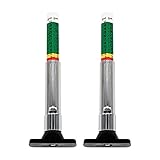
- Accurate measures tire tread depth gauge tool
- Calibrated from 0 to 1 inch in 1/ 32 inch
- Red range on bar: 0-3/32; Yellow Range on bar: 3/32 - 6/32; 5. Green Range on bar: 6/32-32/32
- Pocket-sized gauge, easy handy
- 2 pack
Use an estimate to make decisions, not to treat the return cost as settled. If an estimate identifies a concern, ask what condition was recorded and what options you have before return. Keep copies of inspection notes and photos alongside your lease documents so you can refer to the same condition history if you have a question about the final invoice.
Independent reader supportYour contribution helps us test, update, and keep practical guides available for everyone.Charges besides mileage and wear
Excess mileage and damage are not necessarily the only possible end-of-term amounts. Hyundai Motor Finance’s U.S. lease-end brochure lists a disposition fee, past-due payments, and other unpaid fees, taxes, tolls, or parking violations among potential invoice items. Which items apply, and their amounts, depend on your agreement and account.
What’s actually slowing this PC down?
Pick the symptom - the matching free tool is one click away.
Review your account and contract for outstanding obligations before return. If a final statement includes an item you do not recognize, compare it with the relevant lease clause and any return or inspection records. The brochure’s list is not a complete guarantee of what any individual invoice will contain.
Best Value

- 1. Accurately measures tire tread depth gauge tool, Calibrated from 0 to 1 inch in 1/32 inch
- 2. Color coded tire tread depth gauge tool clearly indicates the tire different phase by colors
- 3. Tire tread depth gauge of Red range on bar: 0-3/32; Yellow Range on bar: 3/32 - 6/32; 5. Green Range on bar: 6/32-32/32
- 4. Comes with a pocket clip, easy to carry a tire tread depth gauge tool
- 5. Tire tread depth gauge tool reads in 32nds Suitable for trucks, motorcycles, automobiles and any passenger vehicle
What if you expect to exceed the allowance?
For a U.S. lease, the first step is to ask Hyundai Motor Finance whether your specific agreement allows a mileage change and whether you are still within any deadline for requesting one. The materials reviewed here do not establish a standard U.S. mileage-change option, timing rule, or price. Do not assume that a change is available simply because another provider or country offers one.
Compare any permitted adjustment with the potential charge under your existing contract. A modification could change the amount you pay during the lease as well as the mileage terms, so ask for the revised terms in writing and compare the total cost—not just the monthly payment—with your projected overage. If no change is available, use the contract’s rate and your best mileage estimate to understand the possible exposure; the provider’s final calculation remains controlling.
U.K. mileage changes are a separate case
Hyundai Finance UK’s PCH guidance says the pence-per-mile rate is set at the outset and shown in the agreement. Hyundai Contract Hire UK says a customer may contact it after the first year to request a higher or lower mileage allowance, with the monthly payment adjusted to help avoid additional charges. Its end-of-contract guidance states that each mile above the allowance is charged at the contract’s per-mile rate.
Those are U.K.-specific provider terms and should not be applied to a U.S. Hyundai Motor Finance lease. The U.K. modification page gives parameters of 5,000 to 30,000 miles for annual mileage and 5,000 to 120,000 miles for total contract mileage, and says up to two mileage amendments are allowed. These limits are provider-page parameters; confirm current eligibility, timing, and terms directly with the U.K. provider before relying on them. The U.K. guidance also includes conditions on when amendments may be made.
Make the decision using your contract, not a rule of thumb
There are three different comparisons to make, and none has a universal cheapest answer:
- Keep the allowance or request a change: Compare the contractual excess-mile calculation with the revised payment and terms if your provider permits an adjustment. Availability and timing depend on the agreement and jurisdiction.
- Repair or return the damage as-is: Compare a repair quote and its quality with the possible contractual assessment. A repair may not cost less, and no general guarantee establishes that it prevents a charge.
- Use a self-check or seek an inspection: A self-assessment or pre-return estimate can help you spot concerns, while the formal post-turn-in inspection determines final wear-and-use charges under the U.S. brochure’s process.
For each decision, save the relevant contract clause, provider response, estimate, repair quote, and condition photos. That creates a clear record of what you relied on without treating a general guide or another lessee’s agreement as the terms of your lease.
Quick Recap
Product prices and availability are accurate as of the date/time indicated and are subject to change. Any price and availability information displayed on Amazon at the time of purchase will apply.
Recommended Free Tools




