Quick wins for a faster PC:
Clear out junk files and repair common Windows errorsFree Scan →Scan for outdated or missing drivers - takes under a minuteDriver Scan →Repair Windows errors before they cause bigger problemsFix Now →The Dodge Tomahawk never proved that it could travel at 420 mph—or even at 300 mph. Its famous top-speed figures were theoretical estimates and promotional claims, not the result of an independent speed test. Contemporary reports described a projected speed of more than 300 mph, while other Dodge-related descriptions suggested a figure approaching 400 mph. The often-repeated 420-mph number was never publicly validated.
The most accurate answer is that Dodge built a running concept and announced a tiny hand-built collector run, but it never developed the Tomahawk into a normal, street-legal production motorcycle. Its extraordinary engine, unusual four-wheel layout, extreme price, and lack of validated high-speed testing made it a spectacular design statement rather than a conventional vehicle.
As an Amazon Associate I earn from qualifying purchases.
The Dodge Tomahawk’s claimed speed versus its verified speed
There are two different answers to the question “How fast was the Dodge Tomahawk?” One is the number attached to the concept in publicity and media coverage. The other is the fastest speed the vehicle actually demonstrated.
Free tools Windows power users keep installed
One-click scans. No signup required.
| Measure | What can be said accurately |
|---|---|
| Contemporary projected speed | More than 300 mph |
| Other published Dodge-related estimates | Approaching 400 mph |
| Frequently repeated later figure | 420 mph, but unverified |
| Independent verified top speed | None publicly established |
| Reported known riding or internal-testing limit | Later accounts said nobody had exceeded 100 mph; this was not a certified top-speed test |
So the defensible conclusion is: Dodge claimed that the Tomahawk could theoretically exceed 300 mph and promoted figures approaching 400 mph, but no independent test established its actual top speed.
#1 Best Overall
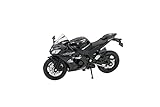
- 1:18 Scale Model Replica Kawasaki 2017 Ninja ZX-10RR Motorcycle
- Rotating rubber tires, Working kick stand, Adjustable handle bars and front wheel
- Made of die-cast metal with plastic parts
- 1:18 scale; Perfect addition to your diecast collection
- Not for children under 13 years old; Great for collecting
That distinction matters. Saying that the Tomahawk “went 420 mph” turns an estimate into a measured fact. It did not set a verified motorcycle speed record, and it should not be described as the fastest motorcycle ever built on the strength of its advertised figures alone.
Where did the 420-mph claim come from?
The Tomahawk debuted at the 2003 North American International Auto Show in Detroit. It was presented as a dramatic, Viper-powered, motorcycle-like vehicle, and its projected performance quickly became the main story. A contemporary Associated Press report described a projected top speed above 300 mph and noted that nobody had yet attempted to take the vehicle to that speed.
Other contemporary and later accounts used different figures. Some repeated a speed of more than 300 mph, others referred to nearly 400 mph, and 420 mph appeared in widely circulated secondary descriptions. The conflicting numbers are a sign that these were not the output of a standardized test program with one official result. They were estimates based on the vehicle’s power, gearing, and intended design.
The official specification information associated with the Tomahawk confirms its major mechanical figures, including an 8,300-cc Viper V10, approximately 507 horsepower, and 712 N·m of torque. It gives an estimated 0-to-100-km/h time of 2.5 seconds, but it does not provide a verified top-speed run.
Why the speed claim was technically difficult to prove
A powerful engine does not automatically produce a safe or achievable top speed. At extreme velocity, aerodynamic drag rises dramatically, and the vehicle must also cope with gearing, tire load, rolling resistance, cooling, braking, stability, and rider protection.
The Tomahawk’s exposed layout and motorcycle-style riding position made those challenges more serious than they would be in a conventional enclosed car. A rider would be exposed to the airflow, while the vehicle’s unusual four-wheel arrangement and leaning mechanism required stability behavior unlike that of either a typical motorcycle or a conventional automobile.
There was also no conventional high-speed production-bike validation program behind the headline number. A credible top-speed claim at 300 mph or beyond would normally require controlled testing, suitable tires, a prepared course, repeatable runs, instrumentation, braking data, and a demonstrated ability to keep the vehicle stable. None of that publicly established the Tomahawk’s advertised maximum.
PC Slower Than It Used to Be?
A free scan shows the junk files, broken settings and background clutter dragging Windows down - then fixes them in one click.Free scan · Windows 10 & 11Outdated Drivers Are Slowing You Down
One free scan finds every outdated or missing driver and matches the right update for your exact hardware.Free scan · exact hardware matchRank #2

- The prototype of the motorcycle model for Ducati V4 S:The prototype of this 1:12 motorcycle model for Ducati is the motorcycle for Ducati Panigale V4 S, a high-performance superbike renowned for its cutting-edge technology and track dominance.With its aggressive aerodynamic design, the 1:12 scale motorcycle for DUCATI Panigale V4 S stands as a benchmark in the liter-class superbike segment. This die-cast motorcycle model is the perfect collectible for motor enthusiasts and superbike fans alike.
- Perfect for desk decoration, office display, home shelves, or collector showcases. Also ideal as a photography prop or a highlight piece in motorcycle-themed collections.
- Perfect for desk decoration, office display, home shelves, or collector showcases. Also ideal as a photography prop or a highlight piece in motorcycle-themed collections.
- Designed for adult collectors, motorcycle enthusiasts, and model hobby lovers. Suitable for those who appreciate sport bike replicas and detailed craftsmanship.
- A great gift choice for birthdays, holidays, or special occasions. This mini motorcycle model delivers excitement, passion for speed, and a strong sense of collection value.
Motorcycle coverage at the time treated the claim skeptically for precisely this reason. The Tomahawk was an extreme engineering and design exercise, not an ordinary motorcycle that had been developed around a documented high-speed record attempt.
What exactly was the Dodge Tomahawk?
Calling the Tomahawk simply a motorcycle is convenient, but not completely precise. It was a single-seat, four-wheel, motorcycle-like concept vehicle powered by the Dodge Viper’s 8.3-liter V10.
It had two closely spaced front wheels and two closely spaced rear wheels. Its suspension and steering arrangement was designed to allow motorcycle-like leaning and countersteering, giving it the visual and dynamic language of a motorcycle while retaining four contact patches with the road.
Dodge itself presented the vehicle as an extreme design and engineering object—effectively a “rolling sculpture”—rather than as the first model in a conventional motorcycle range. Depending on context, “four-wheel motorcycle,” “motorcycle-like concept vehicle,” or “Viper-powered concept” is more accurate than treating it as an ordinary production bike.
Recommended Free Tools
Dodge Tomahawk specifications
| Specification | Reported figure or status |
|---|---|
| Debut | 2003 North American International Auto Show, Detroit |
| Engine | 8.3-liter (8,300-cc) Dodge Viper V10 |
| Power | Approximately 500 to 507 horsepower, depending on the source and rating convention |
| Torque | 712 N·m |
| Claimed acceleration | Approximately 0 to 100 km/h in 2.5 seconds; some U.S. coverage described this as an estimated 0-to-60-mph time |
| Claimed top speed | Above 300 mph, with other estimates approaching 400 mph and later accounts repeating 420 mph |
| Verified top speed | No publicly established independent result |
| Configuration | Single seat, four wheels, motorcycle-like leaning and countersteering |
The acceleration claim is also best treated as an estimate. The commonly cited 2.5-second figure is associated with 0-to-100 km/h in official model information, while some contemporary U.S. reporting used approximately 0-to-60 mph. Those are close but not identical test measures, so they should not be presented as interchangeable without qualification.
Was the Dodge Tomahawk ever actually made?
Yes—but only in a very limited sense. Dodge built the original running concept for the Detroit show. In October 2003, DaimlerChrysler also announced that hand-built reproductions would be offered through the Neiman Marcus Christmas Book.
The announced plan called for ten units at $555,000 each. Later accounts commonly report that approximately nine customer examples were sold, although the final production and sales count is less consistently documented than the original ten-unit announcement.
Rank #3
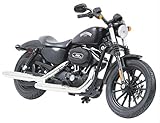
- 2014 Harley Davidson Sportster Iron 883 Motorcycle Model 1/12 by Maisto 32326
The accurate description is therefore: Dodge built the original and announced a ten-unit hand-built run; later reports generally say about nine customer examples were sold.
Do these 3 things before closing this tab:
1Scan for outdated or missing drivers - takes under a minute2Clear out junk files and repair common Windows errors3Fix the driver behind crashes, sound loss and screen glitchesThese were not regular showroom motorcycles. The reproductions were positioned as display-oriented automotive sculpture or collector objects, rather than as vehicles intended for ordinary road use. That is why both statements—“the Tomahawk was made” and “it was never made as a normal production motorcycle”—can be true.
Why was it never made as a normal production motorcycle?
1. It was a design and marketing statement
The Tomahawk’s purpose was to attract attention to Dodge’s performance identity and the Viper V10. Its impact came from being excessive and unexpected. It was a trade-show spectacle and branding exercise, not a carefully positioned product intended to support a motorcycle division.
That distinction explains why the vehicle could justify dramatic theoretical specifications without requiring the complete development program expected of a mass-produced motorcycle.
2. It was not an ordinary street-legal vehicle
The limited reproductions were marketed as display-oriented vehicles rather than normally certified, street-legal motorcycles. The four-wheel layout, exposed automotive engine, unconventional controls, and motorcycle-like leaning system would have created substantial regulatory and engineering complications.
What’s actually slowing this PC down?
Pick the symptom - the matching free tool is one click away.
Turning the concept into a legally saleable road vehicle would have required extensive work on emissions, lighting, braking, crash protection, tires, stability, controls, noise, and jurisdiction-specific vehicle classification. A show vehicle does not have to satisfy the same requirements as a mass-produced road vehicle.
3. Its headline performance was never validated
A genuine production vehicle needs repeatable evidence of acceleration, braking, handling, thermal performance, tire durability, stability, and safety. The Tomahawk’s 300-to-420-mph figures were never confirmed by a public independent test.
Rank #4

- 1:18 Scale Model Replica Motorcycle
- Detailed, Realistic Build & Paintjob
- Display in box or out!
- Perfect addition to your diecast collection
- Not for children under 13 years old
That missing validation is not a minor footnote. At such speeds, the difference between a computer estimate and a usable vehicle specification is enormous. Even the later report that nobody had exceeded 100 mph should not be rewritten as a formal certified 100-mph top speed; it is better understood as the reported upper limit of known riding or internal testing.
4. The business case was extremely narrow
The announced $555,000 price and hand-built construction made the Tomahawk a luxury collectible for a tiny audience. A conventional motorcycle program would have required dealerships, parts supply, service procedures, technician training, warranty support, regulatory certification, and a customer base willing to use the machine.
Those economics do not follow from a limited run of display objects. The Tomahawk could generate publicity and sell a few exceptional collectibles without making sense as a normal production line.
5. Its classification and riding experience were unusual
The Tomahawk looked like a motorcycle but had four wheels, a large car-derived engine, and a distinctive leaning system. That combination created questions about licensing, registration, safety standards, rider training, and customer expectations.
It was mechanically and legally unusual enough that it did not fit neatly into the established motorcycle market. That made it memorable—but also made it difficult to turn into a practical, scalable product.
Independent reader supportYour contribution helps us test, update, and keep practical guides available for everyone.The Tomahawk was not the same as the SRT Tomahawk in Gran Turismo
The physical Dodge Tomahawk is sometimes confused with the later SRT Tomahawk Vision Gran Turismo. The Vision Gran Turismo vehicle is a separate fictional digital concept created for the Gran Turismo game franchise. Its in-game performance cannot be used as evidence for what the physical 2003 Tomahawk could do.
For historical accuracy, keep the two vehicles separate: one was a real running concept with a tiny collector-oriented reproduction run; the other was a digital game vehicle.
Best Value

- Collectible quality True-to-scale detailed vehicle
- Die-cast metal body with plastic parts
- Officially licensed Harley Davidson product by Maisto International
- Highly-detailed die-cast precision model for collectible or play
- Detailed die-cast precision model
How to own a piece of the Tomahawk story
For most enthusiasts, the realistic way to own a representation of the Tomahawk is a small-scale model rather than one of the hand-built full-size examples. Hot Wheels produced a 1:64 casting of the Dodge Tomahawk in its First Editions line, and collector listings identify it as a recognizable physical representation of the concept.
Search for a Dodge Tomahawk die-cast model if you want a miniature collectible. It is important to check the current seller, condition, packaging, and price: the casting is a discontinued or secondary-market collectible, so availability and value can vary. It is a toy or display model, not a functioning Tomahawk and not a substitute for one of the rare full-size hand-built vehicles.
Frequently Asked Questions
Did the Dodge Tomahawk really go 420 mph?
No verified test established 420 mph. The figure was a theoretical or promotional estimate repeated in later accounts. Contemporary reporting more commonly described a projected speed above 300 mph, with other Dodge-related figures approaching 400 mph.
What was the Dodge Tomahawk’s real top speed?
There is no publicly established independent top-speed result. Later reporting said nobody had exceeded 100 mph, but that should not be treated as a formal certified maximum; it is evidence that the advertised extreme speed was never demonstrated.
How many Dodge Tomahawks were built?
Dodge built the original running concept and announced a ten-unit hand-built reproduction run at $555,000 each. Later reports generally say approximately nine customer examples were sold, although the final count is not documented consistently.
Was the Dodge Tomahawk street legal?
The reproductions were presented as display-oriented automotive sculpture rather than ordinary street-legal motorcycles. Their unusual four-wheel configuration, exposed V10, controls, and lack of normal road-validation work limited their use as conventional registered vehicles.
What engine did the Dodge Tomahawk use?
It used an 8.3-liter, or 8,300-cc, Dodge Viper V10. Official model information lists approximately 507 horsepower and 712 N·m of torque.
The Tool Desk
Outbyte Driver Updater FREEScan for outdated or missing drivers - takes under a minuteDriver Scan →Outbyte PC Repair FREERepair Windows errors before they cause bigger problemsFix Now →The Bottom Line
Bottom line: The Dodge Tomahawk was built, but not as a normal production motorcycle. Dodge produced a running concept and announced a tiny hand-built collector run, while its famous 300-plus-, nearly-400-, and 420-mph figures remained unverified estimates. The Tomahawk’s real achievement was turning a Viper V10, four-wheel motorcycle layout, and outrageous styling into one of the most memorable automotive concept vehicles of the 2000s—not proving a 420-mph motorcycle record.
Quick Recap
Product prices and availability are accurate as of the date/time indicated and are subject to change. Any price and availability information displayed on Amazon at the time of purchase will apply.




