Quick wins for a faster PC:
Scan for outdated or missing drivers - takes under a minuteDriver Scan →Repair Windows errors before they cause bigger problemsFix Now →Fix the driver behind crashes, sound loss and screen glitchesFind Drivers →Backmarker teams use race simulations to compare possible plans, prepare alternatives and decide when a gamble might be worth taking. The simulation is preparation, not a points machine: tyre behaviour, traffic, weather and safety-car timing can all break the assumptions behind a plan. Documented races show how lower-grid teams have tried divergent tyre strategies and neutralisation gambles—with mixed results. They do not establish that a particular simulation output directly caused a points finish.
What race simulations do for a team
Teams use historical data to build an initial view of pace, tyre life and possible pit-stop windows. Practice then adds weekend-specific evidence: long runs, including those in FP2, help teams assess race pace and degradation. Qualifying positions and observed performance feed into further simulations, and strategists prepare fallback plans with conditions that would prompt a change from Plan A. The aim is to work through options before the pressure of the race, so the pit wall and drivers have actionable plans rather than starting from scratch.
That process is not a single prediction of what will happen. Other cars make modelling harder: McLaren Head of Race Strategy Randeep Singh put it this way: “We can model a race really well, so long as the car is racing by itself – what makes race strategy difficult is other cars!” His comment appears in Formula 1’s 2020 guide to strategists.
The same guide describes strategy as extensive preparation rather than just rapid-fire decisions during a race. It quotes Ruth Buscombe, then Alfa Romeo senior strategy engineer: “Strategy is 98 per cent preparation, and not the high-speed chess you get to see on TV, which is – as with most jobs – the tip of the iceberg.” The article describes a strategist at the circuit backed by factory support, with team size affecting staffing; that is a 2020 account, not a definitive description of every team’s 2026 structure.
PC Slower Than It Used to Be?
A free scan shows the junk files, broken settings and background clutter dragging Windows down - then fixes them in one click.Free scan · Windows 10 & 11Outdated Drivers Are Slowing You Down
One free scan finds every outdated or missing driver and matches the right update for your exact hardware.Free scan · exact hardware match#1 Best Overall

- Developed through Collaborations with Professional Drivers. Built using expert insight to deliver real-world driving precision.
- Authentic F1 Racing Position. Co-developed with Formula 1 to deliver a professional-grade experience for every driver.
- All-round adjustability. Offers precise all-round adjustability enables a personalized fit for drivers of all ages, sizes and skill levels.
- Engineered for Stability. Built for racing performance, the frame is constructed to provide maximum stability
- Space-Saving Masterpiece. The Playseat Challenge DD – F1 adapts to your space without sacrificing performance.
Simulation also has an engineering role beyond race-day strategy. Haas says its Vehicle Science group develops in-house vehicle and tyre simulation tools, validates them through bench testing and correlates them against track data. Its Vehicle Performance & Science page describes pre-event and post-event simulation as well as trackside support. That establishes simulation capability, but it does not reveal which model output informed any particular race call.
When a strategy becomes a gamble
A plan is risky when it accepts a foreseeable cost in pursuit of a possible timing or track-position gain. A team might choose a tyre with difficult warm-up to stretch the opening stint, stay out while rivals stop, or select a plan whose advantage depends on a safety car arriving in a useful window. Such a choice can be rational if the expected conventional result is limited, but the evidence here does not quantify that trade-off as a general rule for backmarkers.
Rank #2
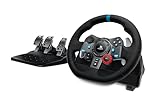
- Immersive Gaming Experience: Perfect for PlayStation 5, PS4 and PC gaming titles, the Driving Force simulates the feeling of driving a real car with precision steering and pressure-sensitive pedals
- Premium Control: The Driving Force feedback racing wheel provides a detailed simulation of driving a real car, with helical gearing delivering smooth, quiet steering and a hand-stitched leather cover
- Customizable Pedals: These pressure-sensitive nonlinear brake pedals provide a responsive, accurate braking feel on a sturdy base - with adjustable pedal faces for finer control
- 900-Degree Rotation: Lock-to-lock rotation of the Driving Force means you can turn the wheel around two and a half times, hand over hand on wide turns - just like a real F1 race car
- Up Your Game: Take your racing simulation to the next level with Driving Force accessories like the Driving Force Shifter or desk and rig mounts
Tyre choice illustrates why a long stint is not automatically a good stint. A harder tyre may last longer but lose time through lower pace or slow warm-up; a softer tyre can offer grip but may require an earlier stop. Traffic can erase the benefit of a tyre offset, while a safety car can change the cost of stopping depending on its timing, the tyre fitted and whether the driver should pit or stay out.
A 2021 Formula 1 strategy guide for Abu Dhabi gives a circuit- and allocation-specific example. It described mediums as flexible for the lower half of the grid, with some drivers potentially choosing softs for start grip. Starting on hards was an outlier: the guide noted warm-up difficulty and called it a gamble for drivers expected to start at the back or in midfield. A long first stint could set up a later switch to mediums; a well-timed safety car might help, while an early one could hurt, depending in part on available hard sets. Those details describe Abu Dhabi in 2021 and its tyre allocation, not a universal current strategy. See Formula 1’s Abu Dhabi strategy guide.
Rank #3

- Experience true high speed racing with our advanced f1 simulator and realistic racing physics
- Dominate a deep career mode, winning championship titles and unlocking new formula cars
- Master the extreme driving simulator with responsive controls on every dynamic racing circuit
- Utilize deep car customization to unlock and upgrade cars for ultimate speed performance
- Become a racing legend in this premier formula 1 car racing game with stunning 3D graphics
What documented lower-grid gambles show
At the 2017 British Grand Prix, teams tried different ways to make up ground or protect a result. The outcomes show both why teams consider alternatives and why a strategic advantage is not the same as a points finish.
| Team and approach | Reported outcome | What the example shows |
|---|---|---|
| Haas split its cars: Romain Grosjean tried two stops; Kevin Magnussen ran a long opening stint on softs followed by a shorter supersoft stint. | Formula 1’s race-day report judged Magnussen’s call the better one; he spent much of the race in the top ten. Haas finished 13th and 12th, with neither car scoring. | Two plans give a team different strategic options, but even the better call may not reach the points. |
| Williams planned a one-stop from 14th and 15th, hoping rivals’ tyre degradation would create a late advantage. | Rivals’ degradation did not develop as hoped. Felipe Massa finished 10th and scored a point; Lance Stroll lost time with damage. Technical chief Paddy Lowe said the one-stop had looked best from their starting positions. | A plan can be reasonable on its assumptions and still depend on tyre behaviour that does not materialise. |
| Sauber pitted Pascal Wehrlein twice under a safety car, limiting his time on the slower medium tyre to one lap. | The gamble did not pay off and he needed another stop later. | A neutralisation can make a stop look cheap, but the rest of the race can make the choice costly. |
These accounts are from Formula 1’s report on race day at the 2017 British Grand Prix. They document plans and results, not the simulations behind each call.
Rank #4

- Immersive Gaming Experience: Perfect for Xbox and PC gaming titles, the Driving Force simulates the feeling of driving a real car with precision steering and pressure-sensitive pedals
- Premium Control: The Driving Force feedback racing wheel provides a detailed simulation of driving a real car, with helical gearing delivering smooth, quiet steering and a hand-stitched leather cover
- Customizable Pedals: These pressure-sensitive nonlinear brake pedals provide a responsive, accurate braking feel on a sturdy base - with adjustable pedal faces for finer control
- 900-Degree Rotation: Lock-to-lock rotation of the Driving Force means you can turn the wheel around two and a half times, hand over hand on wide turns - just like a real F1 race car
- Up Your Game: Take your racing simulation to the next level with Driving Force accessories like the Driving Force Shifter or desk and rig mounts
How teams account for a safety-car window
A safety car can create an opportunity to stop with less time lost relative to the field, but the value depends on when it appears and the car’s current tyres and race position. A team has to weigh pitting against staying out, and consider how the choice affects the next stint—not just the immediate stop.
Haas driver Romain Grosjean described the moving calculation ahead of Spa in 2016: “The strategy depends on what lap the safety car comes out on, which tire we are on, and if we should come in or stay out.” Haas said its planned safety-car window was updated as tyre degradation and rivals’ positions became clearer. The comments appear in the team’s 2016 Belgian Grand Prix preview. They illustrate why a safety-car plan is a conditional branch, not a prediction that a safety car will arrive.
Best Value

- Frame & Shifter Mount Only: Includes racing frame + shifter mount. Note: Steering wheel, pedals, and shifter not included
- Ready to Race in Minutes: Designed for quick setup with minimal assembly, this foldable racing simulator cockpit lets you jump into a racing session without spending 30–60 minutes on complicated installation. Ideal for short play sessions after work or on weekends
- Built for Real Living Spaces: This folding racing cockpit with seat is designed for shared homes, apartments, and living rooms. Set it up when you want to race, fold it away when you’re done—keeping your space clean, open, and family-friendly
- Fully Adjustable for Different Drivers & Setups: Fine-tune pedal distance, shifter position (left or right), seat angle, and wheel tilt to match different drivers and seating preferences. All adjustments can be made without taking the cockpit apart, making this adjustable racing cockpit smooth and frustration-free for switching players or games
- Compatible with Most Popular Racing Wheels: This racing simulator cockpit with seat is designed to work with a wide range of racing wheels, including Logitech (G PRO, G29, G920, G923), Thrustmaster (T248, T300RS, T-GT), Fanatec (CSL DD, GT DD Pro, ClubSport DD/DD+), MOZA (R3, R5, R9, R12, R16, R21), and SIMAGIC (Alpha Mini, Alpha, Alpha U)—delivering an immersive racing experience in a setup that fits real homes and shared spaces
Why a model can lose its edge
- Tyre pace and life: Actual degradation or warm-up can differ from expectations. A tyre that lasts longer may still be too slow to deliver a net gain.
- Traffic and track position: A long stint can create a tyre offset, but a driver may emerge into traffic or remain stuck behind rivals. The modelling challenge from other cars is central, as Singh’s observation underscores.
- Neutralisation timing: A safety car’s value depends on its lap, the current tyre and whether a stop or staying out best serves the next phase of the race.
- Weather: A changing forecast can invalidate the baseline plan, which is why teams prepare alternative plans and triggers rather than treating one simulation as fixed.
- Two-car flexibility: Splitting cars across plans preserves more than one option for the team, but leaves each car with a different risk profile—as Haas’s 2017 British Grand Prix result illustrates.
What the evidence can—and cannot—say about points
The examples support a careful conclusion: simulations help teams prepare for uncertainty, and lower-grid teams have tried strategies that trade immediate pace or certainty for a possible later advantage. The evidence does not identify a 2026 backmarker whose simulation explicitly recommended a high-risk call that then produced a points finish. Nor does it provide a general success rate for risky strategies by backmarker teams. A single race can show what a team tried and how it ended; it cannot establish how often such calls work or prove that a simulation caused the result.
Quick Recap
Product prices and availability are accurate as of the date/time indicated and are subject to change. Any price and availability information displayed on Amazon at the time of purchase will apply.




