On a healthy engine, turning the crankshaft by hand is usually a controlled service task, but it can feel stiff because the pistons are compressing air. How difficult it is depends on the engine and how the crankshaft is accessed; there is no reliable universal force or effort estimate. If the crankshaft hits a sudden hard stop, or liquid in a cylinder is suspected, do not force it.
What does “cranking an engine by hand” mean?
It means rotating the crankshaft through the designated service point with the vehicle-specific tool—not turning the engine with the starter. The access point, tool fit, rotation direction, and any steps needed to isolate the engine vary by vehicle and engine.
A 2013 Triumph technical bulletin for specified Tiger 800 variants directs technicians to remove the spark plugs to reduce compression resistance, then turn the engine using the bolt at the end of the crankshaft. That is a model-specific procedure, not a universal method. Read the Triumph bulletin.
Why can a healthy engine feel stiff?
As the pistons move, they compress air in the cylinders. That compression creates resistance, so the crankshaft may take noticeable effort to turn, particularly as a piston approaches the compression part of its cycle. Removing the spark plugs can reduce this resistance, as the Triumph procedure illustrates, but whether and how to do that depends on the vehicle’s service instructions.
#1 Best Overall

- 【Application】Compatible for Chevy or Ford V8 engines.
- 【Note】Uses 1/2-in breaker bar or a 1-in socket to turn crankshaft.
- 【Easy to install】It is easy and convenient to install,effectively save your time.
- 【Material】The tool is made of high strength materials,it has the advantages of fine rigid structure,sturdy and reliable to use.
- 【After-sale Service】If you have any questions,We offer timely customer support to all buyers.
When is resistance a warning?
A gradual, changing resistance is different from a sudden solid stop. If the crankshaft will not turn or stops abruptly, do not apply more force to try to push through it. One possible cause is hydrostatic lock: liquid in a cylinder can prevent the piston from moving through its stroke. Forcing the engine—or using the starter in that condition—can cause severe damage.
Service procedures for a 1997 Dodge/Ram Neon and a 2008 Chrysler Sebring describe precautions for suspected hydrostatic lock, including disconnecting the negative battery cable, placing a shop towel around spark plugs during removal to catch possible pressurized fluid, and turning the crankshaft with a breaker bar and socket rather than the starter. These are procedures for those named vehicles, not a complete repair recipe for other engines. See the 1997 Neon procedure and the 2008 Sebring procedure.
Rank #2
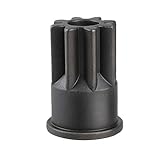
- Wide Applications: Specifically designed for use with Caterpillar (CAT) engine series including 3176, 3196, 3200, 3208, 3300, 3400, 3406, 3500, 3508, 3512, C9, C10, C12, C13, C15, and C16. Also compatible with Mack E-7, E-7 ETEC engines. Perfect for both EUI and MUI systems.
- Efficient Engine Rotation: The barring socket is expertly designed to mesh seamlessly with every flywheel tooth, making engine rotation effortless and saving you time and energy during repairs or maintenance.
- Premium-Grade Material: Crafted from high-quality 42CrMo steel, ensuring superior durability, excellent tolerance, and resistance to corrosion and rust, making it a reliable tool for long-term use.
- Precise Dimensions: Features 8 splines with a 1.725” (43.815mm) diameter and a 1/2" square drive, providing a precise fit for optimal performance during engine servicing.
- Direct Replacement: Replaces OEM part numbers J-38587-A, Caterpillar 9S9082, 0508477, and OTC6749, offering a cost-effective alternative with the same quality and reliability as the original tool.
How to approach a manual rotation safely
- Find the procedure for the exact vehicle and engine. Confirm the specified crankshaft access point, tool, socket fit, direction of rotation, and any required isolation steps. Do not assume another model’s procedure applies.
- Follow the manual’s preparation steps. If it calls for removing spark plugs or disconnecting a battery cable, use the specified steps and precautions. Do not remove plugs or disconnect components based on a procedure for a different vehicle.
- Turn the crankshaft only as directed. Use the correct tool at the designated point and apply controlled force. Do not use the starter as a substitute for hand rotation when a fluid lock is suspected.
- Stop at an abnormal hard stop. Do not force the crankshaft past it. If fluid lock or another fault is possible, use the vehicle-specific diagnostic procedure or have a qualified technician inspect the engine.
Why the exact service information matters
There is no single hand-effort figure or universal method established for modern engines. Even the correct access point and rotation direction are vehicle-specific. Ford’s online owner-manual notice says online information may differ from printed manuals and that specifications and design may change; check the current service information for the exact vehicle rather than relying on a generic instruction. Ford owner-manual information notice.
Quick Recap
Best Value
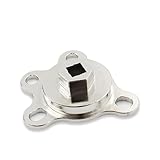
- 【Application】Compatible with Chevy Ford V8 engines.
- 【Note】Uses 1/2-in breaker bar or a 1-in socket to turn crankshaft.
- 【Easy to install】It is easy and convenient to install,effectively save your time.
- 【Durable Material】The tool is made of high strength materials,it has the advantages of fine rigid structure,sturdy and reliable to use.
- 【After-sale Service】If you have any questions, please feel free to contact us,We offer timely customer support to all buyers.
Rank #4

- Meterials:Alloy Steel
- Part Type:Repair Tool
- Interchange Part Number:JDE81-1,JDE81-4
- OEM no. Ref: JDG820 (UPDATE VERSION OF JDE81-1) with LOCKING PIN JDE81-4(METAL)
- For Rotate Engine Flywheel To Lock Engine At "TDC" To Check High Pressure Fuel Pump Timing.
Rank #3

- Versatile Applications - The Flywheel Turner tool is suitable for various repair scenarios, including automotive transmission replacement, engine maintenance, outboard motor servicing, torque converter and flexplate replacement, as well as timing chain and cover replacement. It can also be used to position the flywheel for inspection and installation
- Ergonomic Design - The user-friendly design ensures a secure grip on the flywheel without slipping, making it especially valuable for tasks like clutch replacements or engine rebuilds. Its adjustable feature accommodates various flywheel sizes, while the rubber-coated handle enhances grip and comfort during use. Additionally, the compact size allows for easy storage and transport, contributing to its overall ease of use
- Adjusting Engine Position - This tool aids in accurately positioning the engine, which is crucial for various tasks such as timing adjustments, checking cylinder pressure, or disassembling specific engine components. Proper alignment ensures optimal performance and reduces the risk of errors during repairs
- Rotating the Flywheel or Flexplate - The Flywheel Turner tool is specifically designed to engage with the teeth of the flywheel or flexplate, allowing you to manually rotate the component to the desired position. This facilitates precise installation or thorough inspection
- Assisting with Bolt Tightening or Loosening - The Flywheel Turner securely holds the flywheel or flexplate in place, preventing any unwanted rotation. This stability simplifies the process of removing or tightening bolts, making it significantly easier and safer for you to perform your work
Product prices and availability are accurate as of the date/time indicated and are subject to change. Any price and availability information displayed on Amazon at the time of purchase will apply.




