Quick wins for a faster PC:
Clear out junk files and repair common Windows errorsFree Scan →Fix the driver behind crashes, sound loss and screen glitchesFind Drivers →Battery-as-a-service (BaaS) can lower the amount a buyer pays upfront for an electric vehicle and, when it includes swapping, reduce the time some drivers spend replenishing energy. It does not make the battery free or automatically lower the vehicle’s total cost: customers still pay for battery access, while providers need compatible vehicles, available packs, well-placed stations and enough usage to justify the investment.
What battery-as-a-service means
BaaS is a group of commercial arrangements that separate the battery from the vehicle purchase. Depending on the provider, a customer might buy a vehicle without its battery and pay a recurring fee to use one, lease a pack, buy it separately or use another arrangement. The battery is still paid for; what changes is who owns or manages it and when the customer pays.
Some BaaS offers are linked to battery swapping. At a compatible station, a driver exchanges a depleted pack for a charged one rather than waiting for the vehicle to charge. A service may also offer access to battery upgrades. Those features are not universal: what is included depends on the provider, vehicle, contract and market. NIO’s China BaaS launch description, for example, described buying a car without its battery, paying monthly for a pack, and accessing power swapping and flexible battery upgrades. CATL’s December 2024 ecosystem announcement described leasing, subscription, outright purchase and buyback among its options.
Which EV challenges BaaS may address
High upfront vehicle cost
Leaving the battery out of the initial vehicle sale can reduce the price a buyer must pay at the start. It shifts battery expense into a subscription, lease or other payment stream rather than eliminating it. To judge affordability, compare the upfront reduction with payments over the time you expect to keep the vehicle, plus any swap, service, insurance or contract-exit charges.
Recommended Free Tools
#1 Best Overall

- Model: CR17450
- Voltage: 3.0V; Capacity: 2400mAh
- Type: Non-Rechargeable Lithium Battery
- Application: Used in water meter, meter, gas meter, PLC memory back-up power, public security alarm, instrumentation, automotive electronics equipment, emergency location, special testing electronic equipment and other fields
- Package List: 2 x CR17450 lithium battery
Historical launch prices illustrate the trade-off, not what a buyer should expect to pay today. When NIO announced BaaS in China in 2020, it described a RMB 70,000 reduction in the vehicle price and a 70 kWh battery subscription for RMB 980 per month. CATL’s December 2024 announcement gave initial China monthly rents of 599 yuan for a #25 LFP pack on unlimited mileage or 499 yuan on the family plan; for a #20 LFP pack, the announced rates were 469 yuan on unlimited mileage or 369 yuan on the family plan. These are company-announced terms tied to their respective launch contexts, not current cross-market quotes or a like-for-like price comparison.
Battery degradation, upgrades and resale uncertainty
When a provider owns or manages the battery, it may take on some responsibilities associated with the battery asset. NIO presented its service as addressing concerns about degradation, upgradeability and resale value. Those are company-stated aims, not proof that every subscriber avoids battery-related costs or residual-value risk.
Rank #2

- Please confirm compatibility using the fitment guide located in the product images**
- Avoid expensive dealer service charges and easily replace your key fob battery yourself - only takes a few minutes - no programming required
- Compatible with most Kia models including ✔ Sportage, ✔ Sorento (2003-22 only), ✔ Soul, ✔ Forte, ✔ Optima, ✔ K5, ✔ Rio (2005-24), ✔ Sedona, ✔ Niro, ✔ Seltos, ✔ Cadenza, ✔ Carnival, ✔ Stinger, ✔ EV6, ✔ Telluride (20-21 only), ✔ Spectra (02-09), ✔ Rondo, ✔ Amanti, ✔ Borrego, ✔ Soul EV, ✔ Niro EV, ✔ K7 ✔ K900
- NOT COMPATIBLE with ✘ Kia EV9, ✘ 2023-24 Kia Sorento, and ✘ 2022-24 Kia Telluride
- Includes (2) original premium CR2032 3V batteries. Does not include actual key fob
Before signing, establish who owns the pack, who pays for repair or replacement, how battery health is assessed, whether upgrades are available and what happens when the subscription ends. Check whether the agreement can transfer to a new owner and how it affects resale; a lower vehicle purchase price alone does not settle those questions.
Time vehicles spend replenishing energy
Swapping can return a compatible vehicle to service faster than waiting for its battery to charge. The advantage is most relevant when downtime has a high operating cost and vehicles use predictable routes or specifications. The IEA’s Global EV Outlook 2025 identifies truck swapping as a potential way to reduce charging wait times, particularly for identical trucks on well-defined routes. It also highlights the investment required for automated facilities and extra batteries. That fleet case should not be assumed to apply to every private car or region.
Free tools Windows power users keep installed
One-click scans. No signup required.
Rank #3
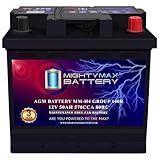
- Fast Starting Power: This 12V 50Ah 570 CCA delivers strong, steady starts is ready for any weather in any season.
- Made to Last: With its 80-minute Reserve Capacity supports longer run times and a longer overall battery lifespan.
- All Power, No Mess AGM Design: Sealed and spill-proof, the MM-H4 is built with high discharge output and deep discharge recovery to keep power steady when it counts.
- Strength That Starts on the Inside: The rugged construction resists shock, vibration, and harsh conditions, delivering reliable performance across a wide range of temperatures and tough environments.
- Tested Tough & Certified Safe: Mighty Max batteries are built in an ISO-certified facility and meet CE standards for quality, safety, and reliability
Battery use and asset management
A provider managing a pool of batteries may coordinate charging, swapping, upgrades and pack use across customers. CATL describes asset management and reuse as parts of its ecosystem. The potential benefit depends on operating execution, data, battery utilization and the provider’s financial health; describing an ecosystem or plan does not establish realized customer savings.
How BaaS compares with owning a battery
| Consideration | BaaS | Buying the battery |
|---|---|---|
| Upfront vehicle cost | Can be lower because the battery is excluded from the vehicle purchase. | Includes the battery in the purchase price. |
| Payments over time | Recurring or other contract payments may apply; fees and rules vary by provider. | No battery subscription is required, though charging and any applicable maintenance costs remain. |
| Battery responsibility | Ownership and responsibility for repair, replacement, degradation and upgrades depend on the agreement. | The owner holds the battery asset; warranty and repair terms depend on the vehicle and applicable coverage. |
| Swapping and upgrades | May be included when the offer and vehicle support them; not a universal BaaS feature. | Access depends on the vehicle and any compatible swap service; battery ownership by itself does not provide a swap network. |
| Resale or exit | Transfer, cancellation and end-of-contract terms matter and must be checked in the contract. | The battery is part of the vehicle being resold; its condition can affect the buyer’s assessment. |
There is no universal lower-cost choice. Compare the complete payment stream over your intended ownership period, the battery capacity and service obligations, any extra fees, and the contract’s transfer or exit rules.
Rank #4

- 12V 12AH BATTERY REPLACEMENT FOR EV RIDER S34-FD TRANSPORT - 2 PACK
What determines whether battery swapping works
A swap station is useful only to vehicles designed or adapted for that system, and a network must have charged packs available where and when drivers need them. The main practical constraints are:
- Compatibility: a station cannot serve an arbitrary electric vehicle simply because it is electric. The vehicle and pack must fit the system.
- Standards and interoperability: common pack dimensions and vehicle interfaces could expand the pool of vehicles that can use stations. The IEA says standardization and interoperability are needed to realize swapping’s benefits. CATL and NIO have announced work toward unified standards in China.
- Coverage and inventory: drivers need stations on useful routes and enough charged packs at the right times. Announced station targets are plans, not evidence of completed coverage.
- Capital and utilization: operators must fund stations, power connections, spare batteries and maintenance, then attract enough use to support those costs. Low EV adoption or fleet density can make that difficult.
- Contract and market conditions: recurring charges, mileage rules, service duties, insurance, financing, incentives and vehicle availability vary by provider and jurisdiction.
Deployment figures show why operating networks and future ambitions should be distinguished. The IEA reported that by the end of 2024 NIO had built more than 3,000 swap stations in China and 50 in Europe. Separately, CATL said in its December 2024 announcement that its ecosystem had nearly 100 partners and set out future station targets; the partner count is the company’s announcement, not an independent count of active commercial service partners, and targets are not confirmed completed stations.
Is BaaS practical outside China?
It may be practical where a specific provider serves a compatible vehicle, has dependable local station coverage and offers contract terms that suit the driver. But the available evidence is strongest for announced passenger-vehicle ecosystems in China and for the IEA’s discussion of fleet swapping internationally; it does not establish a mature, universal swap network or local availability for every market. Check current eligible models, nearby operating stations and the provider’s present contract before treating swapping as part of an ownership decision.
Quick Recap
How to decide if a BaaS offer fits
- Confirm eligibility. Verify that the exact vehicle and battery configuration can use the service in your market.
- Map actual use. Check operating station locations along your regular routes, rather than relying on a future network target. Consider whether a swap would save meaningful time compared with plug-in charging for your driving pattern.
- Calculate the full cost. Compare the vehicle’s lower purchase price, if any, with all battery payments and applicable fees over your expected ownership period. For a fleet, include station investment, spare-pack needs, utilization and charging alternatives.
- Read the battery terms. Identify the pack capacity, mileage rules, upgrade conditions, repair and replacement responsibility, insurance obligations and any service charges.
- Check the exit. Find out how cancellation, transfer to a buyer and vehicle resale work, including any charges or remaining obligations.
Product prices and availability are accurate as of the date/time indicated and are subject to change. Any price and availability information displayed on Amazon at the time of purchase will apply.




