Do these 3 things before closing this tab:
1Clear out junk files and repair common Windows errors2Fix the driver behind crashes, sound loss and screen glitches3Repair Windows errors before they cause bigger problemsThe JAS Tensei is a limited-run reinterpretation built on the first-generation Honda NSX platform—not a new Honda model or factory successor. JAS Motorsport publishes a 3.5-litre Judd V6, a manual gearbox, an all-carbon-fibre body and revised suspension for the Tensei. The original NSX, by contrast, was a Honda production car whose engine, equipment and character vary by year and trim. That makes the central distinction straightforward: established production car versus bespoke, re-engineered project.
What is the JAS Tensei, and is it a Honda NSX?
JAS Motorsport describes the Tensei as “built upon the platform of the 1990s Honda NSX.” It uses the first-generation NSX as its foundation, but JAS—not Honda—is developing it as a road-car project. JAS frames the car as a rebirth of the original NSX’s ideas, with Pininfarina-designed styling and motorsport-derived technical solutions. Those are project and manufacturer descriptions, not independent evaluations.
As an Amazon Associate I earn from qualifying purchases.
In practical terms, the Tensei is best understood as a bespoke restomod: an extensive reinterpretation of an existing car platform, rather than a factory-built NSX variant. The original NSX was sold by Honda in multiple years and configurations. The Tensei has its own announced powertrain, chassis hardware, materials and customization process.
Recommended Free Tools
That distinction matters when comparing identity and provenance. A Honda NSX carries the specifications and history of the particular production car in question. The Tensei uses the NSX platform as its starting point, but its stated engineering package and build process belong to JAS. It should not be described as a new-generation Honda or as a Honda-developed successor. For prospective buyers, the separate identities also mean that inquiries about the Tensei should go to JAS or its announced regional sales partners, rather than being treated as a routine Honda model purchase.
#1 Best Overall

- Package Dimensions: 36.0 cms (L) x 20.4 cms (W) x 6.4 cms (H)
- Product Type: Toy Figure
- Package Quantity: 1
- Country Of Origin: Philippines
How do the NSX and Tensei differ at a glance?
| Area | First-generation Honda NSX | JAS Tensei |
|---|---|---|
| Provenance | Honda production car; specifications vary by year, market and trim. | JAS Motorsport road-car project built on the 1990s NSX platform; not a Honda factory model. |
| Engine and transmission | Varies by version. Honda’s February 1997 Japanese-market release lists 2,977 cc and 3,179 cc engine specifications, and a new six-speed manual for 3.2-litre manual models. | JAS lists a 3.5-litre Judd Power V6 rated at 420 bhp and 350 Nm, paired with a manual transmission. |
| Body and styling | Original Honda production-car design and construction. | JAS describes an entirely carbon-fibre body and Pininfarina-designed styling. |
| Chassis hardware | Varies by model and trim; Honda documented distinct Type S and Type S-Zero specifications in 1997. | JAS lists KW coilovers with Dynamic Damping Control, bespoke control arms, revised suspension geometry and a hydraulic front-axle lift. |
| Customization | Factory trims and equipment depended on year and market. | JAS describes client configuration and lists equipment and finish options. |
| Availability | Available as a used production car; a specific example’s year, trim, condition and service history matter. | JAS announced a planned run of 35 cars and named sales channels, but that plan does not establish current allocations or delivered-car status. |
| Price and after-sales terms | Transaction price depends on the individual car and market; no current market price is established here. | JAS materials do not state confirmed pricing, warranty, delivery terms or running costs. |
The table captures the comparison that can be made from published information, rather than ranking the cars on results that have not been measured here. In particular, engine output figures alone do not establish acceleration or lap-time differences. Likewise, the Tensei’s carbon-fibre body does not, without a comparable weight figure, establish how much lighter it is than an NSX. The most useful starting point is therefore to compare a specific Honda’s year and specification with the exact Tensei build being offered.
How do the Tensei’s engine and transmission compare?
The original NSX varied by year and version
“Honda NSX” does not identify one universal powertrain. Honda’s February 6, 1997 Japanese-market press information announced a larger 3.2-litre engine for manual-transmission models and a new six-speed manual. Its specification table also lists 2,977 cc and 3,179 cc engines. The 3,179 cc figure applies to the manual-transmission 3.2-litre specification in that release; it should not be generalized to every NSX year, market or transmission.
Honda also described the Type S and Type S-Zero as distinct, more driver- or circuit-oriented versions. Those variants are part of the reason that a comparison should identify the particular NSX being considered rather than assume every car has the same engine, gearbox or equipment.
What’s actually slowing this PC down?
Pick the symptom - the matching free tool is one click away.
For an apples-to-apples discussion, establish the original car’s model year, market and transmission before comparing its engine with the Tensei’s. Honda’s 1997 release is useful evidence of variation, but it is one dated Japanese-market snapshot rather than a full specification guide for all NSXs. It confirms both the 3.0- and 3.2-litre engine specifications within that release; it does not make either engine representative of every car carrying the NSX name.
The Tensei has a published 3.5-litre Judd V6 specification
JAS lists a 3.5-litre Judd Power V6 producing 420 bhp and 350 Nm. Its published engine details include forged lightweight pistons, forged connecting rods, a billet crankshaft, six individual throttle bodies and an ECU with an 8,500 rpm limiter. JAS lists a manual transmission, twin-plate clutch and limited-slip differential.
The individual throttle bodies and high listed rev limit are notable features of the announced engine specification, while the forged components and billet crankshaft describe its construction. They help explain what JAS says distinguishes the package, but they are not substitutes for independent testing or a full technical comparison with a particular Honda engine. JAS also publishes a twin-plate clutch and limited-slip differential as part of the drivetrain description; the available information does not specify ratios, final-drive details or comparative shift times.
These are JAS’s published specifications, not results from independent instrumented testing. The available material does not establish acceleration, top speed, fuel economy or a measured performance advantage over a particular NSX. Nor does a published specification alone confirm that every planned car will be built identically.
What changes in the Tensei’s body, suspension and equipment?
Materials and exterior
JAS describes the Tensei’s body as entirely carbon fibre, with styling designed by Pininfarina. Its listed finish choices include exposed carbon or a body-colour carbon-look finish. These descriptions distinguish the project from an original production NSX, but no comparative body-weight or structural test figures are stated in the cited materials.
Rank #2

- 1 :32 Scale Model Car Size: 5.83x 2.56x 1.65 inch. Just the right size for little ones to grasp. It's Made of non-Toxic Water-Based Paint,So it Doesn’t Contain Formaldehyde and any Other HarmfulCute cars for kids ages 3-5.
- High quality toy car models:Toy car opening doors and engine compartment, the model car has movable parts, lights and hood open to see the motor.
- Function: Pull back model car, engine sound and light. Press the two wheels of the rear car to trigger the engine sound and lights, and open the door to trigger the lights of the front and rear lights. Place the car on the ground, hold down the car body and pull it back, the model car will drive forward.
- Car Toys for Kids:Exquisite Packaging,Interesting Functions,Solid Materials,Suitable for Christmas and Birthday Gifts.With a collection of souvenirs for friends and family. It can be displayed to increase beauty and appreciation.
- Material:toy car made of zinc alloy and excellent ABS material, rubber tiresit, is stronger and more resistant to fall than ordinary plastic. detailed interior and exterior trim.It's Made of non-Toxic Water-Based Paint,So it Doesn’t Contain Formaldehyde and any Other Harmful.
“All carbon fibre” describes JAS’s stated body material; it should not be read as a published whole-car weight or a claim that every surface must remain visibly exposed carbon. The listed body-colour carbon-look finish is an alternative appearance choice. Buyers interested in either presentation should ask the sales channel to identify the finish on the proposed build and clarify what is included in that configuration.
Suspension, steering and lift system
The published Tensei specification includes KW coilover suspension with Dynamic Damping Control, bespoke control arms, revised suspension geometry, an electro-hydraulic steering rack and a hydraulic front-axle lift. JAS also lists a limited-slip differential. Together, these details point to a substantial chassis re-engineering effort; they do not, by themselves, quantify ride quality, handling balance or lap-time gains.
The listed parts address more than one area of the car: suspension dampers and geometry, steering assistance, differential hardware and a system to raise the front axle. The presence of a lift system is a concrete feature to ask about when reviewing a build specification, but JAS’s published description does not state its operating limits or provide performance measurements. Similarly, “Dynamic Damping Control” is the name in the published equipment list; no independent assessment or detailed operating description is available in the cited material.
Quick wins for a faster PC:
Scan for outdated or missing drivers - takes under a minuteDriver Scan →Clear out junk files and repair common Windows errorsFree Scan →Fix the driver behind crashes, sound loss and screen glitchesFind Drivers →Wheels, tyres and optional equipment
JAS lists 19 × 9-inch front wheels with 245/35 R19 tyres and 20 × 10-inch rear wheels with 285/30 R20 tyres. The company lists carbon-ceramic brakes, forged magnesium wheels and tyre-pressure monitoring as optional equipment. Its materials also describe exposed-carbon and body-colour carbon-look finishes as choices. A buyer should confirm which items are included in a particular build rather than assume every listed component is standard.
The published front and rear wheel diameters differ, and the tyre sizes are also different front to rear. Those figures are useful identifiers for a proposed specification, not a basis for inferring grip, ride comfort or replacement costs: no tyre test, comparative measurement or running-cost study is presented here. Optional status is especially important here. A listing that mentions carbon-ceramic brakes or magnesium wheels does not establish that either is fitted to every Tensei.
How different were the original NSX’s performance-focused trims?
Honda’s 1997 Japanese-market release shows that the original NSX itself was not a single fixed recipe. Honda said the Type S was approximately 45 kg lighter than a power-steering coupe while retaining comfort equipment such as air conditioning. Honda’s wording was: “The Type S introduced this time boasts a weight reduction of some 45 kgs without having to sacrifice the comfort associated with air-conditioning and other items.” The comparison basis matters: this is Honda’s stated reduction against a power-steering coupe, not a weight difference against every NSX.
Honda described the Type S-Zero separately as more circuit-oriented, with comfort equipment deleted and further weight-saving measures. That historical example helps put the Tensei in context: Honda offered factory variants with different priorities, while JAS’s project takes a more bespoke approach with its own announced engineering and materials. The 1997 figures and equipment descriptions concern Honda’s Japanese-market release and do not describe every market or model year.
Windows Errors? Fix Them Before They Spread
Repair common Windows errors and clear accumulated junk for a smoother, more stable PC - no reinstall needed.Free scan · no reinstallOutdated Drivers Are Slowing You Down
One free scan finds every outdated or missing driver and matches the right update for your exact hardware.Free scan · exact hardware matchThe distinction between the Type S and Type S-Zero is also a reminder not to reduce “driver-focused” to a single specification. Honda’s account of the Type S emphasizes a stated weight reduction while retaining air conditioning and other comfort items; its Type S-Zero description instead emphasizes circuit use, deleted comfort equipment and additional weight-saving measures. They are factory variants documented by Honda, whereas the Tensei is a separate JAS project with a different announced hardware list. No directly comparable weight figure for the Tensei is presented here, so Honda’s 45 kg figure should not be used to claim a weight advantage for either car.
Rank #3
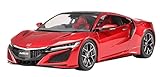
- The chassis employs the same frame as the real car, with authentic rendering suspension.
- Highly detailed V6 engine included.
- Features a realistic depiction of the cockpit interior with excellent detail such as door interior panels.
- Includes decals and stickers to recreate markings, plus window masking stickers.
- Metal transfers are used to capture mirror surfaces and emblems.
Is the later-generation NSX part of this comparison?
No, not unless the generation is clearly identified. The Tensei is based on the first-generation NSX platform. Honda’s 2015 announcement for the separate second-generation NSX described a twin-turbocharged 75-degree DOHC V6, a nine-speed dual-clutch transmission and a Sport Hybrid system with three electric motors. Honda called its development concept a “human-centered supercar.” That hybrid drivetrain is not the Tensei’s published manual configuration, and it should not be used as a description of the first-generation car.
This generation distinction is useful when a comparison or search result simply says “NSX.” The second-generation car’s hybrid system and dual-clutch transmission are not the basis for the Tensei, and they do not describe the 1990s platform named in JAS’s announcement. When comparing the Tensei with an NSX, specify first generation unless the discussion explicitly concerns Honda’s later model.
How many JAS Tensei cars will be made, and when is it available?
JAS announced a planned limited edition of 35 cars. That is a production plan, not confirmation that all 35 have been built, allocated or delivered. In an August 10, 2026 announcement, JAS said the public debut was scheduled for the Paris Motor Show, October 12–18, 2026. As of October 9, 2026, that event was still in the future, so it is accurate to describe it as scheduled rather than completed.
JAS’s June 2026 announcement described a public launch in the second half of 2026 and named Graham Rahal Performance as the official United States sales and customer-service partner and Pfaff Reserve as its Canadian partner. The official Tensei site lists SPS Automotive Hong Kong for Asia and says JAS manages European sales. These are announced channels; contact the relevant partner or JAS for current availability and allocation status.
The planned run makes scarcity part of the project’s positioning, but the number alone cannot answer whether a build slot remains available. An announced 35-car edition is not an inventory report, delivery record or statement that each car has already been assigned. Availability is therefore a live question for JAS or the regional partner, especially because the published debut date and launch plans are not confirmation of the status of a specific order.
How do you buy or configure a Tensei?
JAS says it will support each client through configuration, specification and build. That supports a bespoke purchase process, but the available official information does not establish a complete ordering sequence, deposit, contract terms or delivery schedule. For a concrete inquiry, use the official sales channel listed for your region and request written confirmation of the specification and commercial terms.
- Identify the responsible sales channel. The announced partners are Graham Rahal Performance for the United States, Pfaff Reserve for Canada and SPS Automotive Hong Kong for Asia; JAS says it manages European sales.
- Ask whether an allocation is actually available. The 35-car figure is an announced plan, not a live inventory count or guarantee of an open build slot.
- Request a build specification. Clarify which engine and chassis details are fixed, which finishes and components are optional, and what is included in the quoted configuration.
- Get the commercial terms in writing. Confirm price, deposit and payment milestones, expected delivery timing, warranty, service arrangements and any region-specific import or registration requirements before committing.
Because JAS describes a client-supported configuration and build process, it is sensible to treat the written build sheet as central to the conversation. Ask the sales partner to distinguish standard equipment from options, including carbon-ceramic brakes, forged magnesium wheels and tyre-pressure monitoring, and to identify the selected carbon finish. The purpose is not to assume that every detail can be changed, but to establish which choices are available for the proposed car and what is actually covered by the quoted terms.
It is equally important to separate confirmed information from open questions. The official materials establish regional sales channels and a stated client-support process, but they do not set out a published deposit, payment timetable, warranty, delivery date or maintenance plan. Buyers should request those details directly and in writing rather than rely on the limited-run announcement as evidence of a particular order’s timing or terms.
Rank #4

- Crafted from durable materials such as 100% die - cast metal and premium rubber tires
- Our high - end casting method allows for feature rich details, such as an opening hood, doors , detailed interior, and trunk
- Scale is 1:24
- Collect them all
- Suitable for ages 8+
What is known about Tensei pricing, warranty and ownership costs?
The official materials do not disclose a confirmed transaction price, warranty, delivery terms or running costs. No reliable total-ownership-cost comparison with an NSX can therefore be made from those materials, and assigning an estimated price would be speculation. Ask JAS or the relevant regional partner for current written terms, including what after-sales support applies to the exact build.
For a first-generation NSX, ownership decisions are tied to the individual production car: model year, trim, market specification, condition and service history all matter. For a Tensei, the purchase is an announced, highly limited bespoke build, so its actual allocation, specification and after-sales terms require direct confirmation. Neither distinction establishes which car will cost less to own; no verified running-cost study is available here.
For an NSX, that means the nameplate alone is not enough to assess a car being offered for sale. The exact variant and market specification should be identified, and the vehicle’s condition and service history reviewed. No current NSX transaction prices are established in this comparison, so a price discussion needs fresh, region-specific evidence about the particular car rather than a generic figure.
The Tool Desk
Outbyte PC Repair FREERepair Windows errors before they cause bigger problemsFix Now →Outbyte Driver Updater FREEScan for outdated or missing drivers - takes under a minuteDriver Scan →For a Tensei, buyers face a different information gap: published technical highlights are available, but the sources do not confirm the transaction price, warranty, delivery status or long-term running costs. Asking about maintenance arrangements, parts support and the scope of after-sales coverage is reasonable, but answers should be treated as unknown until confirmed by JAS or the relevant partner. The fact that JAS names a customer-service partner in the United States does not itself specify a warranty or maintenance program.
Independent reader supportYour contribution helps us test, update, and keep practical guides available for everyone.Which one makes more sense for a buyer?
Choose an original NSX when the production-car experience matters
An original NSX is the relevant choice for someone seeking Honda’s own first-generation car and willing to assess a specific used example on its merits. The meaningful comparison begins with the exact year, transmission, trim, market and condition—not with a generic NSX specification. The 1997 Type S and Type S-Zero show how much equipment and emphasis could differ even within the original range.
The production-car route also makes the individual vehicle the focus of due diligence. A buyer needs to distinguish the engine and equipment fitted to the chosen year and trim, rather than assuming that the 1997 Japanese-market details apply to another NSX. A specific car’s provenance and service history are central to the purchase, and this comparison does not substitute for a vehicle-specific inspection or valuation.
Consider the Tensei when bespoke re-engineering is the point
The Tensei is aimed at a different kind of buyer: one interested in an NSX-platform car with JAS’s published Judd V6, manual drivetrain, carbon-fibre body, revised suspension and configuration process. Its appeal rests on a project-specific combination of engineering and scarcity, not on being a new Honda model. Its published figures remain manufacturer specifications rather than independently verified performance results.
The bespoke route also means a buyer should focus on what the actual build includes and what support accompanies it. Published specifications provide a useful baseline—engine, transmission, suspension, steering, wheels and listed options—but do not establish final configuration, delivery timing or ownership costs. For a project planned at 35 cars, confirming availability is a necessary first step, not a conclusion that a car can be ordered immediately.
Best Value
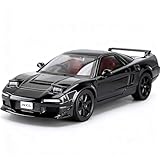
- 1 :32 Scale Model Car Size: 5.83x 2.56x 1.65 inch. Just the right size for little ones to grasp. It's Made of non-Toxic Water-Based Paint,So it Doesn’t Contain Formaldehyde and any Other HarmfulCute cars for kids ages 3-5.
- High quality toy car models:Toy car opening doors and engine compartment, the model car has movable parts, lights and hood open to see the motor.
- Function: Pull back model car, engine sound and light. Press the two wheels of the rear car to trigger the engine sound and lights, and open the door to trigger the lights of the front and rear lights. Place the car on the ground, hold down the car body and pull it back, the model car will drive forward.
- Car Toys for Kids:Exquisite Packaging,Interesting Functions,Solid Materials,Suitable for Christmas and Birthday Gifts.With a collection of souvenirs for friends and family. It can be displayed to increase beauty and appreciation.
- Material:toy car made of zinc alloy and excellent ABS material, rubber tiresit, is stronger and more resistant to fall than ordinary plastic. detailed interior and exterior trim.It's Made of non-Toxic Water-Based Paint,So it Doesn’t Contain Formaldehyde and any Other Harmful.
Compare evidence, not imagined performance or value
There is no established head-to-head test, measured acceleration comparison, fuel-economy comparison or verified cost-of-ownership study in the cited material. The defensible comparison is therefore about provenance, published hardware, customization and purchase uncertainty—not a claim that one is faster, cheaper or objectively better. A Tensei inquiry should establish availability and commercial terms; an NSX purchase should be evaluated as a particular used car with its own history.
For readers trying to make a shortlist, the decisive questions are practical: do you want Honda’s production car or JAS’s reinterpretation; which exact NSX year and trim would be the reference point; is a Tensei allocation available; and what written terms apply to its specification, delivery and support? The available evidence answers the first two in broad terms and identifies official Tensei sales channels, but leaves current price, warranty, timing and ownership costs to be confirmed.
Frequently Asked Questions
Is the JAS Tensei an official Honda NSX?
No. JAS describes it as built on the 1990s Honda NSX platform, but it is JAS Motorsport’s road-car project, not a Honda factory model or successor.
Free tools Windows power users keep installed
One-click scans. No signup required.
What engine and gearbox does the JAS Tensei use?
JAS publishes a 3.5-litre Judd Power V6 rated at 420 bhp and 350 Nm, with six individual throttle bodies and an 8,500 rpm limiter. The listed drivetrain includes a manual transmission, twin-plate clutch and limited-slip differential. These are manufacturer specifications, not independently tested results.
How many Tensei cars are planned, and is one available to order?
JAS announced a planned run of 35 cars. That plan does not confirm current allocations, completed builds or deliveries. Contact JAS or the announced regional sales partner to check present availability.
What does the Tensei cost, and what warranty or running costs should buyers expect?
The official materials do not state confirmed pricing, warranty, delivery terms or running costs. Buyers should request current written information from JAS or the relevant sales partner; an estimate would be speculative.
How do you configure or buy a Tensei?
JAS says it will support clients through configuration, specification and build. Its announced channels are Graham Rahal Performance in the United States, Pfaff Reserve in Canada and SPS Automotive Hong Kong in Asia; JAS manages European sales. Confirm the allocation, options, price, delivery timing and after-sales terms in writing.
Is the second-generation hybrid NSX the basis for the Tensei?
No. The Tensei is based on the first-generation NSX platform. Honda’s second-generation NSX, announced in 2015, had a twin-turbo V6, nine-speed dual-clutch transmission and three-motor Sport Hybrid system—different from the Tensei’s published manual drivetrain.
The Bottom Line
The first-generation Honda NSX is an established production car whose specification and condition depend on the individual example. The JAS Tensei is a limited-run, bespoke reinterpretation with a published 3.5-litre Judd V6, manual drivetrain, carbon-fibre body and revised chassis hardware. JAS planned 35 cars, but current allocations, pricing, delivery terms, warranty and running costs remain unconfirmed in the sources consulted. Compare a specific NSX with a confirmed Tensei build sheet, and verify the commercial and after-sales terms directly before deciding.
Quick Recap
Product prices and availability are accurate as of the date/time indicated and are subject to change. Any price and availability information displayed on Amazon at the time of purchase will apply.




