The Tool Desk
Outbyte PC Repair FREERepair Windows errors before they cause bigger problemsFix Now →Outbyte Driver Updater FREEFix the driver behind crashes, sound loss and screen glitchesFind Drivers →The Honda Legend, Mazda Sentia/929 and Infiniti Q45 each offered engineering choices that made them credible alternatives to the Lexus LS 400—but the available specifications do not establish that any of them, let alone five cars, out-engineered the Lexus overall. The more useful comparison is by system: the Q45 brought a larger V8 and optional hydraulic active suspension; Mazda paired a driver-focused brief with four-wheel steering; and Honda combined a longitudinal front-midship V6, double-wishbone suspension and safety equipment. These are not a uniform same-year test set, so “out-engineered” makes sense only when the comparison names the feature being judged.
Why the “five flagships” claim needs qualification
The evidence supports three Japanese luxury-sedan candidates: the Honda Legend, Mazda Sentia (sold as the 929 in export markets) and Infiniti Q45. It does not establish a definitive five-car roster or a period-relative test proving that five cars surpassed the LS 400. Rather than invent two additional entries, this comparison focuses on those documented models and treats “out-engineered” as a claim about particular design decisions—not an all-around verdict.
The figures below come from manufacturer releases and heritage histories, not one comparable road test. They refer to different dates, markets, trims and forms of measurement. In particular, the Honda figures are from a Japanese-market 1990 release, Nissan’s Q45 figures are from a 1991 heritage-vehicle specification, and Toyota’s LS 400 figures are representative-grade specifications. Read them as evidence of what each maker built and claimed, not as a controlled ranking.
How the LS 400 set the benchmark
Toyota announced the LS 400 in January 1989. It went on sale in North America in September, followed by the Japanese-market Celsior in October. Toyota’s representative specification lists the 3,968 cc 1UZ-FE DOHC V8 at 260 PS net at 5,400 rpm. The car used double-wishbone suspension at all four wheels; A and B grades had coil springs, while C grade had electronically controlled air suspension. B grade also featured Piezo TEMS.
#1 Best Overall

- Authentic Replica: This Matchbox die-cast vehicle faithfully recreates the iconic 1994 Lexus LS 400 luxury sedan, capturing the elegant design and sophisticated styling of this classic Japanese luxury automobile in detailed miniature form
- Quality Construction: Manufactured in Thailand with durable die-cast metal body and precision engineering, ensuring long-lasting play value and collectible quality that withstands repeated handling and display
- Perfect Scale: Designed in classic Matchbox scale, this model vehicle features accurate proportions and realistic details that make it ideal for both imaginative play scenarios and display in any die-cast collection
- Collectible Appeal: A must-have addition for automotive enthusiasts and Matchbox collectors, representing a significant model from Lexus's flagship luxury sedan line during the mid-1990s era
- Versatile Play: Suitable for creative play, educational purposes about automotive history, or as a decorative piece, this non-riding toy vehicle offers entertainment value for children and collectors alike
Toyota’s engineering account emphasizes reducing noise and vibration at their sources to improve ride comfort. It describes the LS 400’s quality and finish as setting a new benchmark. That combination—V8 power, carefully managed refinement and trim-dependent suspension technology—is the standard against which the challengers are best understood. Toyota’s LS 400/Celsior history and representative specifications.
Infiniti Q45: a larger V8 and optional active suspension
Nissan positioned the Q45 as the flagship of the Infiniti premium brand when it launched in the United States in November 1989; it also went on sale in Japan. Its “Japan Original” approach included grilleless styling and a cloisonné emblem, distinguishing it from more conventional luxury-car cues.
Powertrain and chassis
Nissan’s 1991 heritage specification for the G50 Q45 lists a 4,494 cc DOHC V8 producing 206 kW (280 PS) at 6,000 rpm and 400 Nm at 4,000 rpm. It also lists independent multilink suspension at both ends. Those figures give the Q45 a larger-displacement engine and a higher stated output than the representative LS 400 figures above, but the ratings are drawn from different manufacturer records and are not a same-condition test comparison.
Rank #2
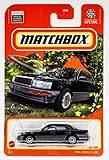
- COLLECTIBLE SERIES: Part of the 1994 Matchbox lineup, numbered 26 out of 100 in the collection series
- AUTHENTIC DESIGN: Precision-crafted miniature replica of the luxurious Lexus LS 400 in sleek black finish
- SCALE DETAILS: Expertly reproduced at 1:64 scale with authentic body styling and proportions
- DISPLAY QUALITY: Die-cast metal construction with detailed exterior features and classic Matchbox craftsmanship
- VEHICLE SPECS: Features rolling wheels, black paint scheme, and distinctive Lexus LS 400 luxury sedan body style
What the active suspension claim means
Nissan says the Q45’s Selection Package offered the world’s first hydraulic active suspension. That makes the system an option-package distinction, not a feature to assume on every Q45. It is a strong engineering point for the Nissan, but by itself does not establish better ride, handling or reliability than the LS 400’s grade-dependent air suspension and Piezo TEMS. Nissan’s Infiniti Q45 G50 heritage specifications.
Free tools Windows power users keep installed
One-click scans. No signup required.
Honda Legend: front-midship packaging, suspension and safety
Honda’s 24 October 1990 Japanese-market release describes a 3.2-liter V6 mounted longitudinally in a front-midship layout. Honda rated it at 215 PS at 5,500 rpm and 30.5 kg-m at 4,500 rpm. The release also highlights new double-wishbone suspension at all four wheels and a lightweight, high-rigidity body.
Safety equipment and market context
The same release lists a driver airbag, belt pretensioners and ABS, with a passenger airbag and traction control available according to grade. Equipment therefore depended on trim; the release should not be read as saying every car had every listed feature. These are meaningful engineering and safety talking points, but Honda’s announcement is a manufacturer account, not an independent assessment of performance against the LS 400.
Rank #3
![Matchbox 1994 Lexus LS 400 [Green], 1:64 Scale Diecast Toy Vehicle](https://m.media-amazon.com/images/I/51MePb+BkCL._SL160_.jpg)
- 1994 Lexus LS 400 in a Luxurious Green Finish!
- Number 36/125 in the Overall Series!
- 1:64 Scale Diecast Toy Car
“Legend” also spans generations and markets, including the Acura-badged version in North America. Honda’s 1996 model-change release describes a development aim of bringing a driver’s expectations into agreement with what the car feels like, alongside refinement and luxury. It is a later statement of philosophy, not a specification for the 1990 car. Honda’s 24 October 1990 Legend release and Honda’s 14 February 1996 Legend model-change release.
Mazda Sentia/929: a flagship designed around the driver
Mazda’s 1991 Sentia was a flagship in its passenger-car range. Mazda’s model-history page characterizes its intent this way: “What separated the Sentia from other premium sedans on the market was that it was a driver’s car, not a chauffeured limousine.” That is Mazda’s retrospective description, rather than an independent comparison with rival sedans.
Multilink suspension and four-wheel steering
Mazda’s corporate history identifies the Sentia as the 929 in export markets and records a 3.0-liter V6, four-wheel multilink suspension and speed-sensitive four-wheel steering. Mazda describes the engineering aim as balancing ride comfort with steering stability through the engine and high-performance suspension. The combination makes the Sentia especially relevant if “out-engineered” means pursuing a driver-focused chassis concept rather than matching the Lexus’s approach to refinement.
Rank #4

- Product size: 6.3*2.4*1.8 inches Weight: 0.5 pounds Outer packaging: exquisite color translucent packaging box.
- Material: Die-cast car model, made of zinc alloy, with plastic parts, rubber tires, detailed interior and exterior decoration.
- Function: Press the two wheels of the front car to trigger the sound of the engine and lights. The interior details are realistic. Put the car on the flat ground, press the body and pull it back, and the car will move forward. (Back pull function)
- This LS500H 1/32 car model pull back car is very suitable for children to play with. The paint is exquisite and feels good, and it is heavy to hold. It is also very suitable for car model enthusiasts as a decoration.
- Accessories and collections: This product is very suitable for static accessories and can be used as an accessory next to a computer. For those who are passionate about collecting model car models, this is a great art collection.
The cited history does not provide a directly comparable Sentia output figure or a controlled ride-and-handling result against the LS 400. Its case is therefore strongest as a distinctive chassis and product brief, not as a proven overall win. Mazda’s first-generation Sentia model history and Mazda’s 1990–1999 corporate history.
At a glance: what the documented specifications show
| Model and evidence context | Engine figures | Suspension or steering | Notable qualification |
|---|---|---|---|
| Honda Legend, Japanese-market release, 24 October 1990 | 3.2-liter V6; 215 PS at 5,500 rpm; 30.5 kg-m at 4,500 rpm (Honda) | Four-wheel double-wishbone suspension | Passenger airbag and traction control were grade-dependent; figures are Honda’s release specifications. |
| Mazda Sentia/929, 1990–1999 corporate-history entry | 3.0-liter V6; output not stated in the cited Mazda history | Four-wheel multilink suspension; speed-sensitive four-wheel steering | Mazda’s driver-focused characterization is retrospective; no like-for-like test result is stated. |
| Infiniti Q45 G50, Nissan 1991 heritage specification | 4,494 cc DOHC V8; 206 kW (280 PS) at 6,000 rpm; 400 Nm at 4,000 rpm (Nissan) | Independent multilink front and rear; hydraulic active suspension offered with Selection Package | Active suspension was package-specific; figures are from Nissan’s heritage vehicle specification. |
| Lexus LS 400/Celsior, Toyota representative-grade specification | 3,968 cc 1UZ-FE DOHC V8; 260 PS net at 5,400 rpm (Toyota) | Four-wheel double-wishbone; coil springs on A/B grades, electronically controlled air suspension on C grade; Piezo TEMS on B grade | Toyota’s representative specifications distinguish equipment by grade; LS 400 and Celsior market launches differed. |
Which car makes the strongest case?
It depends on what “out-engineered” is meant to measure. On the documented engine figures, the Q45’s listed 4.5-liter V8 is the most direct counterpoint to the LS 400’s 4.0-liter V8, though the source specifications are not a common test. For steering and chassis concept, Mazda’s speed-sensitive four-wheel steering is a notable differentiator. The Legend’s front-midship V6 layout, double-wishbone suspension and listed safety equipment make its case in packaging and systems.
For refinement and benchmark-setting, Toyota’s own account gives the LS 400 a clear engineering rationale: noise and vibration control, sophisticated suspension choices by grade, and a deliberate focus on finish. The cited records document competing strengths, but they do not establish a single winner across comfort, handling, safety, performance and quality.
Do these 3 things before closing this tab:
1Clear out junk files and repair common Windows errors2Scan for outdated or missing drivers - takes under a minute3Repair Windows errors before they cause bigger problemsBest Value

- High-quality materials: Made from zinc alloy, the metal parts are electroplated and polished for a stylish, durable finish that resists fading.
- Fashionable appearance: The zinc-coated iron part of the keychain has a shiny finish, matches your keys while allowing 360-degree rotation.
- Wise Gift: Perfect for occasions like birthdays and Father's Day, suitable for car, motorcycle, and house keys.
- Wide Applications: This premium keychain ring can be used for your house keys, keychains, car keys, key finders, pendants, pet collars, wallet charms, etc.
- After-sales service: Contact us if you have any questions.
What “out-engineered” can—and cannot—mean here
These flagships show that Japanese luxury engineering in the period did not follow one formula. Infiniti emphasized a large V8 and offered hydraulic active suspension; Mazda pursued a driver-oriented brief with four-wheel steering; Honda paired its front-midship layout with double-wishbone suspension and safety equipment. Lexus made refinement and build quality central to its benchmark claim.
Those differences support a focused argument that particular rivals had features the LS 400 did not share in the same form. They do not support a definitive five-car list or a universal claim that the rivals were better engineered overall. Establishing that would require comparable period tests or primary engineering evidence across the same criteria.
Quick Recap
Product prices and availability are accurate as of the date/time indicated and are subject to change. Any price and availability information displayed on Amazon at the time of purchase will apply.




