Quick wins for a faster PC:
Repair Windows errors before they cause bigger problemsFix Now →Fix the driver behind crashes, sound loss and screen glitchesFind Drivers →Clear out junk files and repair common Windows errorsFree Scan →Hertz says its digital vehicle inspection system compares vehicle images from pickup and return; it does not, by itself, determine that every mark is billable. Some renters have reported disputed damage claims and substantial fees, but those accounts do not establish how often claims are wrong or how common the charges are. Whether a specific scratch is chargeable depends on Hertz’s published guidance, the rental agreement, applicable law, and the evidence for that rental.
What Hertz’s AI damage scanner does
Hertz calls its process Digital Vehicle Inspection (DVI). At participating locations, a vehicle may be scanned on exit and return through a drive-through system or a mobile device. Hertz says it compares the pickup and return scans, identifies new damage, and may send the renter a link by email or text with images from both inspections and any newly identified damage. The report is typically produced within minutes, according to Hertz’s damage support page.
Hertz announced its partnership with UVeye on April 16, 2025, describing camera systems and machine-learning algorithms that inspect vehicle bodywork, glass, tires, and undercarriage. The company said Atlanta’s Hartsfield-Jackson airport was the first equipped location and that installations would roll out across major U.S. airports. That announcement is a dated rollout snapshot, not a current list of locations. CBS News reported on August 26, 2025 that Hertz was then using the system at 10 U.S. airports; that, too, is a dated figure rather than a current location count.
Hertz has described digital inspection as more precise and transparent than the former manual process. Its April 16, 2025 announcement quoted EVP of Technical Operations Mike Moore saying the partnership would bring “efficiency and greater accuracy to our maintenance process.” That statement concerns the company’s stated goal; it is not an independent performance assessment of damage claims.
#1 Best Overall
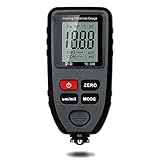
- Auto-Detection for Steel and Aluminum Coatings:This Coating Thickness Gauge utilizes advanced dual technology to automatically recognize ferrous and non-ferrous substrates, making it easy to measure coating thickness on both steel and aluminum without any guesswork
- Ideal for automotive paint inspection, powder coating checks, and metal surface finishing. Commonly used on used cars, anodized aluminum, bathroom fittings, bike frames, stadium seats, lockers, appliances, and more. (Note: Designed for metallic surfaces only.)
- A Must-Have for Used Car Buyers:Don't let hidden repairs catch you off guard. This tool lets you check the paint thickness on each car panel, helping you spot any previous accidents or repairs before buying a used vehicle
- Save Money on Used Car Purchases:When buying used cars, this paint thickness gauge helps you identify potential issues by ensuring the paint thickness is consistent across all panels. Great for detecting accident repairs and verifying if the car has been in a heavy crash
- Important Note: Please note that this gauge is specifically designed to measure coating thickness on metal substrates. It cannot be used on non-metallic materials such as plastic, fiberglass, or wood.
What counts as damage on a Hertz rental car?
Hertz’s support page says it will not charge for “Ordinary Wear,” including limited sand pitting and paint transfer or scuffs that do not break the paint surface. The page labels its damage-threshold material “REV 7.2025.” Its examples of potentially billable damage include:
- A single body scratch that cannot be covered by a typical 2-by-3.5-inch credit card, or multiple scratches at least one inch long whose combined area exceeds 2 by 3.5 inches.
- A single dent greater than one inch in diameter, or multiple dents on a panel.
- Any detachment or penetration to sheet metal or plastic panels, regardless of size.
- Windshield cracks or chips; cracks or severe chips in other glass, mirrors, or light covers; missing or loose parts; and specified tire or undercarriage damage.
Hertz describes these as illustrative examples, not a complete list. The dimensions are Hertz’s published guidance, not a universal legal rule. Whether a mark meets the policy depends on the full rental terms, the evidence, and applicable law. Hertz’s support page states, “We won’t charge you for Ordinary Wear.”
Rank #2

- HIGH ACCURACY COATING THICKNESS MEASUREMENT – Digital paint thickness gauge for metal surfaces with 0.1 μm (0.01 mils) resolution and ±(3%+2 μm) accuracy, helping detect repainting, repairs, and uneven coating thickness during used car inspection, detailing work, and professional quality control. Suitable for checking doors, hood, roof, fenders, and other painted metal panels where accurate coating evaluation is required.
- EASY & FAST OPERATION — FACTORY CALIBRATED – Factory calibrated and ready to use right after installing batteries. Large backlit LCD with clear readings and simple buttons make this coating thickness meter easy for professionals and first-time users. Ideal for pre-purchase vehicle checks, car dealership inspections, trade-in evaluation, and mobile appraisers who need quick and convenient measurements without complicated setup.
- AUTOMATIC Fe / NFe SUBSTRATE DETECTION – Automatically detects Fe (steel/iron) and NFe (aluminum/copper) and selects the correct measuring method. Ideal for modern vehicles with mixed body materials and accurate results without manual switching. This helps users inspect steel doors, aluminum hoods, and other metal body parts with the correct measurement principle applied automatically.
- WIDE MEASURING RANGE FOR AUTOMOTIVE & INDUSTRIAL USE – Measuring range 0–1500 μm (0–59.1 mils) covers factory paint, repainting layers, and thicker coatings. Suitable for car body panels and industrial coated metal parts. Whether checking original automotive paint thickness or verifying thicker coating applications on metal components, the gauge provides a practical working range for many inspection scenarios.
- DUAL TECHNOLOGY: MAGNETIC INDUCTION + EDDY CURRENT – Uses magnetic induction for ferrous metals and eddy current technology for non-ferrous metals, providing stable, repeatable measurements across steel, iron, aluminum, and copper substrates. This dual-technology design allows one device to cover common automotive body metals without requiring separate meters or manual probe replacement.
Why the scanner has drawn complaints
On August 26, 2025, CBS News reported that renter Adam Foley said Hertz notified him after an Atlanta rental that the car had two small dents. Foley said he was billed $80 for damage and a $190 processing fee, and described the total as $350. Hertz later told CBS it had waived Foley’s damage costs. This is one renter’s account and company response, not a finding about the validity of every charge.
CBS also reported Hertz’s statement that more than 97% of over 675,000 rentals scanned showed no billable damage. That is a company-reported share of scans with no billable damage, as reported by CBS News in 2025; it is not an independent audit or a measure of scanner accuracy.
What’s actually slowing this PC down?
Pick the symptom - the matching free tool is one click away.
Rank #3
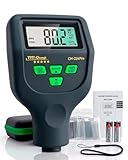
- AUTOMOTIVE PAINT THICKNESS GAUGE – CM-224PRO Designed for measuring coating thickness across vehicle panels during structured professional evaluation. Compare readings on doors, hood, roof and body panels to assess coating consistency and identify thickness variations that may indicate refinishing or prior repair. Suitable for dealerships and inspection professionals.
- 0–59.1 MILS RANGE WITH 0.01 MILS (0.1 µM) RESOLUTION – PROFESSIONAL CONSISTENCY Measures coatings from 0–59.1 mils (0–1500 µm) with stable resolution of 0.01 mils (0.1 µm), supporting consistent and repeatable comparison between factory coating and refinished surfaces during professional inspections.
- FE NFE AND ZINC AUTO DETECTION – AUTOMATIC SUBSTRATE RECOGNITION Automatically identifies steel (Fe), aluminum (NFe) and galvanized surfaces (Zn), supporting inspection of modern vehicles built with mixed body materials without manual switching or mode selection.
- PROFESSIONAL PROBE DESIGN – STABLE AND REPEATABLE CONTACT Engineered probe construction supports consistent surface engagement and repeatable readings during multi-point inspection routines in professional workshop environments.
- FAST PANEL-TO-PANEL MEASUREMENT FLOW – EFFICIENT FULL VEHICLE SCANNING Optimized for efficient professional workflow: place the probe vertically, read the value and continue across panels during dealership and workshop-based inspections.
In an August 27, 2025 press release reproducing a letter to Hertz, Senator Richard Blumenthal cited other reported cases: one customer allegedly faced a $195 charge for a dent with an $80 repair estimate, and another allegedly faced $440 for a minor scuff. The letter questioned fees, appeals, human review, claim outcomes, accuracy, and plans for expansion. Those examples are allegations, not adjudicated findings.
A House committee announcement on August 20, 2025 likewise described an inquiry and concerns, including reports that Hertz issued assessments without human review. The announcement was not a final finding or a performance audit. The available accounts document consumer disputes and official scrutiny; they do not establish the frequency of incorrect claims, the system’s independent accuracy, or comprehensive claim and appeal outcomes.
Rank #4

- 【Auto-ID Dual Tech & Material Note】This paint depth gauge automatically identifies Fe/NFe substrates without manual switching. The device is specifically designed for metal substrates and is not suitable for plastic, carbon fiber, or wood. It is ideal for detecting heavy paint on car bodies, boat hulls, and industrial steel structures to ensure accurate readings.
- 【High Precision & Wide Range】Equipped with a wear-resistant probe, this coating thickness gauge delivers lab-grade stability across a 0-78.7 mils (0-2000μm) range. It features high resolution of 0.004 mil / 0.1μm for 0-3.9 mils (0-99.9μm) and 0.04 mil / 1μm for 3.9-78.7 mils (100-2000μm), accurately detecting minute changes in powder coatings or anodized layers. With a measurement accuracy of ≤ ±(3% H+ 2μm / 0.079mil), it ensures reliable results for professional tasks, from measuring paint on curved bumpers (min radius 5mm/197mils) to verifying films on machinery.
- 【Single/Continuous Scan Mode】This paint meter offers more than just single scans by displaying real-time statistics (Avg, Max, Min) of the last 10 measurements in continuous scanning mode. Users can quickly identify uneven spraying on hoods or thickness variations in industrial furniture powder coatings through statistical data. This method reflects overall process quality better than single-point measurements.
- 【Data Storage & USB Output】This digital thickness gauge features a "Data Hold" function to lock readings after measuring in deep engine bays or narrow gaps. It is equipped with a Type-C interface that supports exporting 30 sets of stored data to a PC for generating professional inspection reports. This capability is perfect for creating check reports for used car sales or quality control logs.
- 【Smart Calibration & Ergonomics】This mil thickness gauge comes with Fe/NFe calibration foils and substrates for zero-point and thickness calibration before work. Operators must ensure no dust, wrinkles, or irregularities exist between the thickness standard sheet and the substrate during use. Pressing the OK key allows users to clear historical calibration records easily.
What to do if Hertz says it found damage after you returned the car
- Get the inspection evidence. Open the report link Hertz sent by email or text and save the pickup and return images. If you did not receive a link or cannot access it, ask Hertz for the complete inspection report and the images used to identify the alleged damage.
- Compare the two sets of images. Check whether the alleged mark is visible in the pickup images, whether the return image clearly shows it, and whether the location and appearance match the claim. Keep copies of your own pickup and return photos, if you took them.
- Check the stated damage threshold. Compare the description and images with Hertz’s Ordinary Wear guidance and its examples of billable damage. Do not assume a mark is automatically excluded or chargeable based on size alone: the published examples are not exhaustive, and the contract and local law matter.
- Review the paperwork and itemized amounts. Read the signed rental agreement and ask Hertz to explain each amount, including any processing fee, repair estimate, or other charge. Compare the dates and vehicle details with your rental documents.
- Ask how to request human review. If the evidence or assessment is unclear, ask Hertz how to contest the claim and speak with a person who can review it. The 2025 Senate letter raised questions about appeal access and human review; it does not establish Hertz’s current appeal rules or the outcome of those inquiries.
- Check possible coverage. Review your personal auto policy and credit-card rental coverage for relevant terms, exclusions, limits, deductibles, and reporting requirements. Hertz describes its Loss Damage Waiver (LDW) as a contractual waiver, not insurance; its effect is subject to conditions. Policies and card benefits vary, so no one option is best for every renter.
What is known—and not established—about accuracy
The available sources describe Hertz’s process and publish examples of its damage thresholds, alongside individual renter accounts, company statements, and questions raised by officials in 2025. They do not provide an independent validation of scanner accuracy, a current deployment list, or a comprehensive account of claim outcomes and appeals. Hertz’s reported “more than 97%” figure describes rentals scanned that showed no billable damage; it does not say how often the system correctly identifies damage when damage is present.
Hertz told CBS News: “With digital vehicle inspections, we’re introducing much-needed precision, objectivity, and transparency to the process — giving our customers greater confidence that they won’t be charged for damage that didn’t occur during their rental, and a more efficient resolution process when damage does occur,” the statement reads. The statement reflects Hertz’s position, not an independent finding about the system.
Quick Recap
Best Value

- (*^_^*) [Record Various Data] It can record the average value, maximum value, minimum value, dif at the same time, and supports up to 50 data for statistics, making the numerical data you measure more accurate and convenient. If the auto power off function is on and there is no for 3 minutes, the instrument will automatically shut down to save battery power.
- (*^_^*) [Multifunctional] Thickness gauges are used to measure the thickness of metal coatings and other coatings such as paint/enamel/chrome on steel, paint and anodized coatings on aluminum/copper. Automatic detection of substrate properties. It has small size and high precision battery level indicator. It also has automatic shutdown function, used for FE/NFE.
- (*^_^*) [Precision Integrated Probe] It is important to check the car paint to make sure the paint thickness is about the same on each panel and to determine if the car is in good condition with a car paint inspection thickness gauge when you buy the car. The instrument adopts the principles of electromagnetic induction (F probe) and eddy current effect (N probe) to automatically detect the properties of the substrate.
- (*^_^*) [What Can Be Read and Detect Paint Depth] The large LCD display of the paint depth gauge shows the metal type, operating mode, quantity, battery status and the reading in µm, mm or mils. The thickness gauge has a measurement range of 0-2000um, an accuracy of ±(3%+1um), and a resolution of 0um-999um (1um).
- (*^_^*) [Widely Uses] It is used to non-destructively measure the thickness of coatings and paints. It is an essential equipment for material surface treatment, widely used in manufacturing, metal processing industry, chemical industry, commodity inspection and other fields, and can also work stably in laboratories, workshops and outdoors. Suitable for automotive paints, powder coatings, anodized aluminum, bathroom accessories, bicycle frames, stadium seating, outdoor sheds, furniture, swings, c
Product prices and availability are accurate as of the date/time indicated and are subject to change. Any price and availability information displayed on Amazon at the time of purchase will apply.




