Do these 3 things before closing this tab:
1Repair Windows errors before they cause bigger problems2Fix the driver behind crashes, sound loss and screen glitches3Clear out junk files and repair common Windows errorsGeneral Motors and LG Energy Solution are developing lithium manganese-rich (LMR) prismatic battery cells for future GM electric trucks and full-size SUVs. Ultium Cells expects pre-production in late 2027 and U.S. commercial production in 2028, with GM’s Spring Hill, Tennessee site planned for the manufacturing upgrade.
What GM and LG announced
The companies are extending their 14-year battery partnership to commercialize LMR prismatic cells through Ultium Cells, their joint venture. GM’s May 13, 2025 announcement identified the chemistry and intended vehicle applications. A September 29, 2026 update named Spring Hill, Tennessee, as the planned U.S. LMR production site.
| # | Preview | Product | Price | |
|---|---|---|---|---|
| 1 |
|
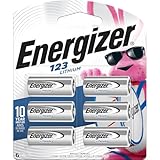
Energizer 123 Lithium Batteries (6 Pack), 3V Photo Batteries | $13.00 | Buy on Amazon |
| 2 |

|
DELL 3HWPP 15.2V 68Wh 4-Cell Notebook Rechargeable Battery For DELL Latitude... | $69.99 | Buy on Amazon |
As an Amazon Associate I earn from qualifying purchases.
LG Energy Solution expects to build pre-production cells at one of its facilities in late 2027. Ultium Cells’ U.S. commercial production is planned for 2028, subject to construction, equipment installation and validation. Spring Hill upgrades are expected to finish in 2028 and are projected to add 500 jobs to the site’s current workforce of about 1,200.
Quick wins for a faster PC:
Scan for outdated or missing drivers - takes under a minuteDriver Scan →Repair Windows errors before they cause bigger problemsFix Now →What an LMR battery is
LMR stands for lithium manganese-rich cathode chemistry. GM says its design uses approximately 35% nickel and 65% manganese, with virtually no cobalt. GM contrasts that with a typical high-nickel cathode containing roughly 85% nickel, 10% manganese and 5% cobalt.
#1 Best Overall
- 6 pack of Energizer 123 Lithium Batteries
- Energizer 123 lithium battery provides serious power for your high tech devices
- Ideal batteries for cameras, flashlights and smart home devices
- Powerful photo batteries last up to 10 years in storage
- Energizer 123 lithium photo battery replaces 5018LC, CR123, CR123A, CR17345 and EL123
The strategy is to substitute more abundant, generally less expensive manganese for costly nickel and cobalt while retaining enough energy storage for large vehicles. The cell remains a lithium-ion battery; LMR describes the cathode’s material balance, not a separate battery category.
Why GM is pursuing LMR for trucks and SUVs
Energy density at a cost benchmarked against LFP
GM reports that its LMR cells deliver 33% higher energy density than LFP at comparable cost. LFP is the company’s stated cost and energy-density benchmark in this comparison. GM is also targeting more than 400 miles of electric-truck range, but that is a development target rather than a certified production-vehicle figure.
Less reliance on nickel and cobalt
Using more manganese could reduce exposure to the cost and supply volatility associated with higher nickel and cobalt content. The practical benefit depends on final material prices, manufacturing yield and the amount of battery capacity each vehicle requires; GM has not published a final pack price.
Free tools Windows power users keep installed
One-click scans. No signup required.
Fewer parts in the battery pack
LMR cells will use a prismatic form factor: flat, rectangular cells enclosed in rigid cases. GM says this approach can reduce intermediate modules and structural components. Its stated design targets are 75% fewer battery-module components and 50% fewer total pack components. Those percentages are GM engineering claims for the planned architecture, not an independently audited production comparison.
LMR compared with LFP and high-nickel cells
| Aspect | GM/LG LMR plan | LFP | Typical high-nickel cell |
|---|---|---|---|
| Cathode composition | About 35% nickel, 65% manganese and virtually no cobalt, according to GM | Iron-phosphate chemistry; a comparable percentage breakdown is not stated in the cited GM material | About 85% nickel, 10% manganese and 5% cobalt, described by GM as typical |
| Energy density and cost | GM claims 33% higher energy density than LFP at comparable cost | GM’s benchmark for the LMR cost and energy-density claim | Current high-nickel cells remain GM’s range benchmark; no numeric LMR-to-high-nickel comparison is stated |
| Range objective | More than 400 miles targeted for an electric truck | Not stated for this program | Used as the existing range reference by GM |
| Expected lifespan | GM says engineering changes can bring lifespan in line with current high-nickel cells; independent vehicle durability data is not provided | Not stated in the cited announcements | GM’s comparison benchmark for lifespan |
| Packaging | Prismatic cells; GM claims 75% fewer module components and 50% fewer total pack components | Not stated for this GM program | Not stated for this GM program |
| Production timing | LG pre-production expected late 2027; U.S. commercial production planned for 2028 | Not stated | Existing GM technology, with no changeover date specified |
How GM says it addressed LMR’s historic weaknesses
GM acknowledges that earlier manganese-rich designs were associated with shorter life and voltage attenuation, meaning usable voltage could decline as cells aged. The company says its engineers used dopants, protective coatings, particle engineering and manufacturing-process changes to improve stability.
GM reported that by the end of 2024 it had coated about one ton of LMR cathode material, tested hundreds of large-format prismatic cells, evaluated 18 prototype varieties and worked with three cell dimensions. The testing was described as equivalent to 1.4 million miles of EV driving. LG Energy Solution said it held more than 200 LMR-related patents, counted as IP5 patent applications as of December 31, 2024.
Rank #2
- ➤ [ Battery Information ]: 4-Cell Rechargeable ,Best OEM Quality , Voltage &Capacity :15.2V 68Wh
- ➤ [ Warranty ]: Full Refund within 60 days , Replacement freely within 12 months
- ➤ [ Compatible Model ]: Repalcement for Dell Latitude 14 5401 5410 5411 Series, Latitude 15 5501 5510 5511 Series, Precision 3541 3550 3551 Series, Inspiron 17 7706 2-in-1 Series,Inspiron 17 7000 (7500) 2-in-1 black , Inspiron 17 7000 (7506) 2-in-1 Black Edition Series (NOT fit for Dell Inspiron 17 7000 (7500) 2-in-1 Silver Edition/NOT fit for Dell Inspiron 17 7000 (7506) 2-in-1 Silver Edition ) , Note : Dell Inspiron 17 7000 (7500) 2-in-1 Silver and Dell Inspiron 17 7000 (7506) 2-in-1 Silver use JK6Y6 or H5CKD .
- ➤ [ Certified Security ]: 100% Brand New from Manufacturer. Overcharge and Overdischarge Circuit Protection;Over-temperature and Short-circuit Protection; Up to 500 recharge cycles over the life of the battery
- ➤ [ SANISI Concept ]: Product Quality and Service must be perfect ! We will let every customer feel satisfied . ➤ [ Package Contents ]: 1 pcs Brand New OEM battery
These figures demonstrate development activity, not a guarantee for a production vehicle. GM’s statement that the cells can match current high-nickel-cell lifespan is a company testing and forward-looking claim. The announcements do not provide independent fleet data, final warranty terms or real-world degradation results.
The Tool Desk
Outbyte PC Repair FREEClear out junk files and repair common Windows errorsFree Scan →Outbyte Driver Updater FREEFix the driver behind crashes, sound loss and screen glitchesFind Drivers →When will GM LMR batteries be available?
- Late 2027: LG Energy Solution is expected to begin pre-production at an LG facility.
- 2028: Ultium Cells plans U.S. commercial production.
- September 2026 site plan: GM expects Spring Hill, Tennessee, construction and facility upgrades to be completed in 2028, with 500 projected additional jobs.
“Commercial production” does not necessarily mean an LMR-equipped vehicle will be available at every dealer immediately. Automakers still have to complete vehicle integration, regulatory certification, software calibration, safety validation and launch scheduling.
Which GM vehicles will use LMR cells?
GM has identified future electric trucks and full-size SUVs as the intended applications. It has not announced specific production model names, trim levels, battery capacities or launch markets for LMR-equipped vehicles. The more than 400-mile figure is a targeted electric-truck range, not a confirmed rating for a named model.
Can you buy an LMR replacement battery now?
No consumer LMR replacement battery or retail LMR-powered GM vehicle is documented in the announcements available for this program. Existing GM EVs use their current battery systems, and a replacement pack must match the vehicle’s voltage, dimensions, cooling system, software and crash structure. An LMR cell cannot be treated as a drop-in substitute for an existing pack simply because its chemistry is similar.
What remains unconfirmed
- Final vehicle models, launch dates and markets
- Production-cell dimensions, pack capacities and charging specifications
- EPA-certified range and energy-consumption figures
- Pack pricing, vehicle pricing and warranty coverage
- Independent, real-world durability and degradation results
- Whether the 2028 production schedule will change as validation proceeds
For now, LMR is a future GM battery program rather than a battery consumers can order or replace today. Its appeal is the combination GM is targeting: manganese-rich materials, high energy density relative to LFP at a comparable stated cost, simplified prismatic packs and truck range above 400 miles. Whether those targets translate into cheaper, longer-range production vehicles will depend on final validation and manufacturing results.
Quick Recap
Product prices and availability are accurate as of the date/time indicated and are subject to change. Any price and availability information displayed on Amazon at the time of purchase will apply.




