Do these 3 things before closing this tab:
1Fix the driver behind crashes, sound loss and screen glitches2Clear out junk files and repair common Windows errors3Scan for outdated or missing drivers - takes under a minuteNo—not always. Gas-powered cars still have meaningful advantages over electric vehicles, especially for drivers who make frequent long trips, tow heavy loads, live without home charging, travel through rural areas, or need the lowest possible purchase price. But those are use-case advantages, not proof that gasoline power is universally better or will remain superior forever.
The fair comparison depends on what you value most: quick refueling, predictable range, purchase cost, emissions, maintenance, quietness, home-charging convenience, or uninterrupted use. Here are 10 reasons a gasoline car may be the better choice today, followed by the situations where an EV is the stronger option.
As an Amazon Associate I earn from qualifying purchases.
The word always is where the argument falls apart
A gasoline car and an EV solve the same transportation problem in different ways. A gas car stores energy in a portable liquid fuel that can be replenished quickly almost anywhere. An EV stores energy in a large battery that is usually cheapest and easiest to refill while parked at home, but can require more planning on long trips.
Free tools Windows power users keep installed
One-click scans. No signup required.
That means the best drivetrain is mission-specific. A suburban commuter with a garage and a predictable 35-mile daily drive may find an EV exceptionally convenient. A renter who parks on the street and regularly drives hundreds of miles through rural areas may reasonably prefer gasoline. Neither conclusion requires an ideological argument.
#1 Best Overall

- DESIGNED TO EXCEED EXPECTATIONS: Red Line complete SI-1 fuel system cleaner treatment for cleaning and preventing corrosion in fuel systems
- PERFORM AND PROTECT: Fuel additive cleans injectors, carburetors, valve and combustion chamber deposits with a powerful, concentrated blend of high-temp and low-temp detergents
- EFFICIENT FUEL BURN: Gas treatment that enhances gasoline stability, while reducing the build up of gum and varnish formation
- EASY TO USE: Use one bottle per tank for most effective treatment, additive cleans nearly 100% efficiency in one treatment
- 15 Ounce (2 Pack)
For many drivers, these are the strongest reasons to choose gas.
1. Gasoline refueling is usually faster and more universally available
Filling a gasoline tank generally takes only a few minutes. The process is familiar, and in the United States gasoline stations are distributed across interstate routes, suburbs, small towns, and many remote areas. A driver can usually refuel without checking whether a particular pump is compatible with the vehicle, whether another driver is using it, or whether the station has reduced output.
EV charging times vary substantially by charger, vehicle, battery temperature, state of charge, and the vehicle’s maximum charging rate. U.S. Department of Transportation guidance describes Level 1 charging as potentially taking 40 to 50 hours or more to reach 80 percent, Level 2 charging as commonly taking about 4 to 10 hours, and DC fast charging as taking roughly 20 minutes to one hour. Those are broad planning ranges, not guarantees: some newer vehicles and high-power chargers can be faster, while cold batteries, a crowded site, or a vehicle with a lower charge limit can make a stop longer.
Quick wins for a faster PC:
Scan for outdated or missing drivers - takes under a minuteDriver Scan →Repair Windows errors before they cause bigger problemsFix Now →Fix the driver behind crashes, sound loss and screen glitchesFind Drivers →For someone who cannot charge overnight, the distinction is practical. A gasoline car turns a nearly empty tank into a full one during a brief stop. An EV may require a longer stop or a change in plans, particularly when the driver needs a large amount of energy rather than a small top-up.
Where this advantage matters most
- Drivers who make several long trips every month.
- People who do not have reliable access to workplace or home charging.
- Emergency travelers who may need to change routes without advance planning.
- Households that share one vehicle and cannot leave it parked while charging.
2. Long-distance route planning is simpler with gasoline
Gasoline ownership normally requires finding a station and allowing enough fuel to reach it. EV route planning can be straightforward on major corridors, but it involves more variables: charger location, connector compatibility, charging speed, station availability, payment methods, battery reserve, elevation, weather, traffic, and the time needed to charge.
The problem is not that every EV trip is difficult. It is that the consequences of a poor assumption can be greater. Passing a gas station may mean stopping a few minutes later. Passing an EV charger may mean adding a substantial detour or waiting for an available connector.
Rural travel makes this difference more pronounced. Federal transportation guidance notes that rural charging can be harder and more expensive to deploy where electrical capacity, broadband, cellular service, or charger utilization is limited. Charging infrastructure is expanding, but a map that shows a charger does not always tell you whether it is working, accessible at the time you arrive, suitable for a trailer, or powerful enough for a quick stop.
A gas-powered car therefore remains attractive to drivers who routinely travel through remote areas or who want to preserve maximum flexibility when an itinerary changes.
3. Gasoline cars can be easier to live with for frequent towing
Towing adds weight and aerodynamic drag, so every vehicle consumes more energy while pulling a trailer. An EV can have excellent low-speed torque and strong towing performance, but the increase in energy use can materially reduce its effective range. A trip that is comfortable without a trailer may require multiple charging stops with one.
Charging infrastructure can create a second problem. Many fast-charging sites are designed around ordinary parking spaces, not vehicles with trailers attached. The driver may have to disconnect the trailer, find a pull-through charger, or maneuver in a crowded lot. DOT rural-planning guidance specifically identifies trailer users as a reason charging sites may need pull-through parking.
Rank #2

- Revitalize Your Engine: Gumout Multi-System Tune-Up is your ultimate fuel treatment gasoline solution, effortlessly cleaning GDI injectors, carburetors, and more for peak performance and fuel economy
- Ultimate Engine Protection: Our advanced carburetor cleaner fuel additive prevents future carbon buildup, ensuring your engine runs smoothly. Perfect for gas, diesel, or ethanol engines, from cars to lawn mowers
- Comprehensive Care: As a powerful fuel tank cleaner, Gumout cleans and conditions fuel systems, fighting ethanol and water corrosion while stabilizing fuel to reduce emissions and maximize engine life
- Versatile Application: Add this gas treatment for car engines directly to the gas tank, crankcase, or via induction. Whether you're cleaning a carburetor or stabilizing gas, Gumout Multi-System Tune-Up has you covered
- Maximize Performance: Achieve the best fuel economy and reduced emissions with our gas cleaner for cars. The premium PEA formula acts as a catalytic converter cleaner, carburetor cleaner, and gas stabilizer, all in one
Gasoline does not eliminate the effects of towing. Fuel economy also falls, and a heavy trailer affects handling, braking, and vehicle wear regardless of drivetrain. The difference is operational: gasoline stations are generally easier to reach with a trailer, and refueling normally takes less time.
If towing is occasional, an EV may still work well. If it is a central part of your work or recreation, compare real-world towing range, payload, hitch limits, charging access, and the layout of the routes you actually use—not just the vehicle’s advertised range.
4. Cold weather can reduce EV range and increase charging needs
Extreme temperatures affect all vehicles, but they can be especially noticeable in an EV because the battery must supply energy for both propulsion and cabin heating. NHTSA warns that extreme temperatures can affect EV battery performance and lifespan, while thermal-management systems consume some of the battery’s energy.
In cold weather, an EV may use energy to warm the battery and passenger compartment. The result can be less usable range, slower charging until the battery reaches a suitable temperature, or more frequent charging stops. Preconditioning while the vehicle is plugged in can reduce some of the penalty, but it requires planning and access to a charger.
Gasoline vehicles are not immune to winter problems. Cold starts, thicker fluids, lower tire pressure, winter fuel formulations, and cabin heating can reduce fuel economy. However, a gas car’s refueling time is generally unchanged by cold, and the energy for cabin heat does not come from a traction battery in the same way.
This is a conditional advantage, not a claim that EVs cannot work in winter. Drivers in cold regions should examine winter range tests, available battery preconditioning, heat-pump equipment, charging access, and the distance between reliable chargers.
5. Gas is more convenient when you cannot charge at home
Home charging is one of the biggest reasons EV ownership can feel easy. An owner can plug in after arriving home and start the next day with a full or nearly full battery, often without making a separate fueling trip. The International Energy Agency identifies home charging as the preferred option when it is available.
That convenience is not equally available to everyone. Renters, apartment residents, people who park on the street, and households without dedicated electrical capacity may depend on public chargers. Public charging can involve extra driving, waiting, payment systems, access restrictions, and prices that vary by network and location.
A gasoline car can be the more convenient choice for a driver who has no dependable place to charge overnight. This is especially true if the alternative is regularly visiting a public charger for ordinary commuting rather than using one only on a road trip.
What’s actually slowing this PC down?
Pick the symptom - the matching free tool is one click away.
Before buying an EV, answer four practical questions:
Rank #3

- Specially formulated to remove carbon deposits from engines with over 75,000 miles
- Cleans fuel injectors, intake valves, and ports to restore performance and fuel economy
- Prevents future carbon build-up and reduces emissions
- Oxygen sensor safe and safe for use in turbocharged and supercharged vehicles
- Will not void OEM/manufacturer's warranty
- Where will the vehicle spend most nights?
- Can it be plugged in there safely and legally?
- How many miles can your normal charging arrangement add overnight?
- What is the backup plan when the home charger is unavailable?
If those answers are uncertain, gasoline may offer a simpler daily routine. A plug-in hybrid can also be worth considering, but it is a separate compromise rather than a direct gasoline-versus-EV answer.
6. A gasoline car may have the lower upfront price
Even when an EV costs less to operate, its purchase price can be the more important number for a budget-constrained buyer. DOE cost analysis continues to identify battery cost as a major driver of EV vehicle cost. EV prices, incentives, tax rules, and model availability vary by market, so there is no universal price gap.
Still, buyers comparing ordinary new or used vehicles may find a wider selection of lower-priced gasoline cars. A lower sticker price can mean a smaller loan, a lower required down payment, easier approval, or less financial risk if the buyer cannot capture an incentive.
The Tool Desk
Outbyte Driver Updater FREEFix the driver behind crashes, sound loss and screen glitchesFind Drivers →Outbyte PC Repair FREEClear out junk files and repair common Windows errorsFree Scan →The right comparison is not simply the advertised price. Include financing, incentives that you actually qualify for, insurance, expected fuel or electricity costs, maintenance, depreciation, charging equipment, and the length of time you plan to keep the vehicle. An EV may recover some of its higher purchase price through lower energy and maintenance costs, but that recovery depends on local fuel and electricity prices and on how much you drive.
For a buyer whose first priority is affordable transportation today, a reliable gasoline car can be the rational choice even if an EV has a lower long-term operating cost.
7. The environmental comparison depends on the electricity and the time horizon
An EV has no tailpipe emissions while driving, but that does not mean its total environmental impact is zero. Lifecycle analysis includes raw-material extraction, vehicle and battery manufacturing, electricity generation, charging losses, and end-of-life processes. A gasoline vehicle also has upstream impacts from fuel extraction, refining, transportation, and combustion.
DOE and the Alternative Fuels Data Center explain that the size of an EV’s lifecycle advantage depends on the electricity source and other production factors. AFDC says all-electric vehicles typically have a lifecycle emissions advantage over comparable gasoline vehicles, particularly in regions with relatively low-polluting electricity.
Crashes, No Sound, or Screen Glitches?
Random freezes, missing sound and display glitches usually trace back to one bad driver. Find and replace yours safely.Free scan · under a minutePC Slower Than It Used to Be?
A free scan shows the junk files, broken settings and background clutter dragging Windows down - then fixes them in one click.Free scan · Windows 10 & 11That is an important counterweight to the claim that gas cars are always better. On a cleaner grid, an EV will generally have a stronger emissions case. On a highly carbon-intensive grid, the advantage may be smaller and may take longer to offset the manufacturing impact, but that does not establish that gasoline cars are universally cleaner.
Geography also matters at the market level. The IEA reports that electric-car sales exceeded 20 million globally in 2025, representing approximately one-quarter of new-car sales worldwide, while the U.S. share remained below 10 percent. A technology that is a mainstream choice in one market may still be a specialized choice in another because electricity generation, incentives, charging infrastructure, and vehicle availability differ.
If reducing emissions is your primary goal, compare the local electricity mix and the specific vehicle rather than relying on a slogan. If purchase affordability or refueling convenience comes first, gasoline may still fit your priorities better.
Rank #4
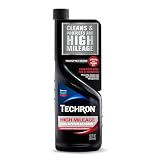
- Restore power and performance - Restores lost power and performance by removing gum, varnish, and other fuel system deposits.
- Maximize fuel economy - Keeps engines clean, and protects from deposits that rob engine efficiency and reduce fuel economy.
- Protect the fuel system and fuel gauge sensor from various types of corrosion - Multiple corrosion inhibitors protect metal components (both ferrous components like iron and steel, and non-ferrous components like copper and silver) from the damaging effects of corrosion.
- Vehicles with higher mileage accumulation can suffer from the effects of age - including carbon build-up and corrosion in the fuel system. Techron High Mileage Fuel System Cleaner helps keep your engine humming, no matter how many roads your vehicle has traveled.
- Techron High Mileage Fuel System Cleaner is fully compatible and protective in all commercially available ethanol blends (E10, E85, etc).
8. Battery damage creates specialized safety and recovery requirements
High-voltage batteries are engineered with multiple safety systems, but severe physical damage, flooding, or internal failure can create hazards that require specialized procedures. NHTSA warns that a damaged EV or high-voltage battery can release toxic or flammable gases immediately or after a delay and can present a fire risk.
Recommended Free Tools
That can affect what happens after a crash or flood. A damaged EV may need specialized towing, storage away from structures, monitoring, and trained technicians. Owners should follow the vehicle maker’s emergency instructions and should not attempt to open, repair, or bypass a high-voltage battery.
This does not prove that gasoline cars are categorically safer. Gasoline, oil, and conventional 12-volt electrical systems also create serious fire and recovery hazards. The practical difference is that gasoline vehicles are familiar to more roadside responders and repair facilities, while EV incidents can require additional training and equipment.
There is also an important distinction between an EV’s high-voltage traction battery and its ordinary 12-volt accessory battery. NHTSA states that the high-voltage battery cannot be jump-started, although the 12-volt battery often can be serviced according to the vehicle’s instructions. Never treat a portable starter as a way to energize an EV’s high-voltage system.
For gasoline-car owners who travel remotely, an optional portable car jump starter can help with certain 12-volt battery situations. Choose a unit rated for your vehicle, keep it charged, follow the vehicle and device manuals, and do not use it as a substitute for professional help after a collision, flood, fuel-system problem, or damaged wiring.
9. Gasoline cars have a larger familiar repair ecosystem
Most independent repair shops, parts stores, towing operators, and experienced owners are familiar with conventional gasoline systems. Common maintenance and repairs—such as oil service, belts, spark plugs, exhaust components, cooling systems, and 12-volt batteries—have an established supply chain and a broad base of technicians.
NHTSA advises that EV high-voltage systems should be serviced by trained technicians using specialized equipment. That can make an EV repair more dependent on an appropriately equipped dealer or specialist, particularly after high-voltage damage or a fault outside routine maintenance.
Gasoline’s repair advantage has an important limitation: gasoline powertrains contain more moving parts and fluids, and they require maintenance that an EV largely avoids. EVs generally need less scheduled maintenance, no routine engine-oil changes, fewer fluid services, and less brake wear because regenerative braking does much of the deceleration.
So the trade-off is not simply gas equals easy and EV equals difficult. Gas can be easier to diagnose and repair in more places; EVs can be less demanding during normal ownership. Consider the service coverage near your home, the age of the vehicle, warranty terms, and whether you are comfortable using a brand-specific repair network.
An optional gas-car ownership toolkit
Drivers who prefer to handle basic checks themselves may also consider an optional OBD2 scanner. It can read certain diagnostic trouble codes and provide useful information, but consumer scanners do not diagnose every fault, repair a problem, or make it safe to work around an EV’s high-voltage components. Use a scanner only as an aid, and rely on a qualified technician for airbag, braking, fuel, high-voltage, and other safety-critical systems.
For long rural trips or winter travel, a basic car emergency roadside kit can complement—not replace—sound tires, adequate fuel, a charged phone, weather planning, and roadside assistance. A kit should be selected for the climate and routes you drive, and its contents should be checked periodically.
10. Gasoline can better fit drivers who prioritize uninterrupted use
The previous nine points lead to a broader advantage: gasoline cars can be easier to keep moving when a driver travels unpredictably. A gas car can usually take a quick detour for fuel, change its route, tow a trailer into a conventional station, and continue without spending significant time parked.
This matters to certain occupations and lifestyles: mobile workers, rural residents, frequent interstate travelers, families taking spontaneous trips, and anyone who cannot risk a long charging stop. For these drivers, charging downtime is not merely an inconvenience; it can affect work, appointments, deliveries, or safety.
Best Value

- DESIGNED TO EXCEED EXPECTATIONS: Red Line complete SI-1 fuel system cleaner is a premium fuel additive, providing an effective fuel treatment solution to clean and prevent corrosion in fuel systems.
- PERFORM AND PROTECT: Fuel additive cleans injectors, carburetors, valve and combustion chamber deposits with a powerful, concentrated blend of high-temp and low-temp detergents
- EFFICIENT FUEL BURN: A gas treatment that enhances gasoline stability, while reducing the build up of gum and varnish formation, leading to smoother operation and increased power output.
- EASY TO USE: Use one bottle of Redline Fuel System Cleaner per tank for most effective treatment, additive cleans nearly 100% efficiency in one treatment
- ENAHNCED ENGINE EFFCIENCY: Experience improved fuel economy and engine performance with Red Line 60103 SI-1 Complete Fuel System Cleaner, as it effectively removes deposits, for enhanced exhaust system function
But this is a current use-case advantage, not a permanent technical verdict. Charging networks are expanding, high-power systems are improving, and newer EVs are adopting faster-charging battery platforms. The IEA also emphasizes that adequate infrastructure deployment remains essential. A route that favors gasoline today may become much easier in the future.
Independent reader supportYour contribution helps us test, update, and keep practical guides available for everyone.Where electric cars clearly win
A balanced comparison has to acknowledge the situations in which an EV is the better tool.
- Lower routine maintenance: EVs have fewer moving parts, use little or no engine oil, and usually experience less brake wear because of regenerative braking.
- Convenient home energy: With suitable home charging, an owner can replenish the vehicle while it is parked rather than making regular fuel stops.
- Potentially lower operating cost: Electricity can cost less than gasoline per mile in some regions, and maintenance needs are often lower. The result varies with local energy prices, public-charging rates, vehicle efficiency, and annual mileage.
- Quiet operation: EVs produce much less powertrain noise at low and moderate speeds, which can make commuting more relaxing.
- Immediate low-speed response: Electric motors deliver strong instant torque, a useful characteristic for city driving, merging, and some towing applications.
- Tailpipe emissions: EVs produce no tailpipe emissions while driving. Their lifecycle emissions are not zero, but they typically compare favorably with similar gasoline cars, especially on cleaner grids.
- Improving battery durability: Geotab’s 2024 analysis of approximately 5,000 vehicles reported average battery degradation of 1.8 percent per year. That is a private telematics analysis, not a guarantee for every model, climate, charging pattern, or battery chemistry.
These benefits are strongest when the vehicle can charge at home, daily mileage is predictable, and the owner plans to keep the car long enough to benefit from lower operating costs. They are less decisive when public charging is the only option or when the vehicle must regularly tow long distances.
How to choose: a use-case decision rule
Do not choose based only on the drivetrain label. Start with your routine and rank the factors that would cause the most disruption if they went wrong.
Do these 3 things before closing this tab:
1Fix the driver behind crashes, sound loss and screen glitches2Repair Windows errors before they cause bigger problems3Scan for outdated or missing drivers - takes under a minute| What dominates your driving? | Likely better fit | Why |
|---|---|---|
| Frequent rural travel or unpredictable long trips | Gasoline | More mature refueling coverage and shorter stops reduce route-planning risk. |
| Regular towing over long distances | Usually gasoline | Fueling with a trailer is generally simpler, and towing may sharply reduce EV range. |
| Apartment or street parking with no dependable charging | Gasoline | Daily use does not depend on finding a public charger. |
| Low upfront budget | Often gasoline | There may be more affordable new and used choices, even after considering EV incentives. |
| Predictable commuting and overnight home charging | Often EV | Charging can happen while parked, with less routine maintenance. |
| High annual mileage with favorable electricity prices | Often EV | Lower energy and maintenance costs may offset a higher purchase price over time. |
| Strong emissions-reduction priority | Usually EV | Lifecycle emissions are typically lower, especially where electricity is relatively clean. |
| Cold-weather ownership | Depends | EV winter-range loss must be planned for, while gasoline loses efficiency but refuels quickly. |
A practical pre-purchase test
- Map your worst normal trip, not your average commute. Check the longest route, winter conditions, trailer use, and likely detours.
- Confirm charging or fueling access. For an EV, verify the actual parking and electrical arrangement. For gasoline, verify station availability on remote routes.
- Price the complete ownership case. Include financing, incentives, insurance, energy, maintenance, tires, charging equipment, and expected resale value.
- Test the inconvenience you would actually face. An EV should be evaluated with the charging routine you can truly use, not an ideal charger you may never have access to.
- Compare vehicle-specific evidence. Look at winter range, towing range, charging curves, warranty coverage, service locations, and battery or powertrain history for the exact model.
What the evidence does—and does not—support
The evidence supports a nuanced conclusion. Gasoline cars have real advantages in refueling speed, route flexibility, towing convenience, cold-weather usability, home-charging independence, purchase price, repair familiarity, and uninterrupted long-distance use.
The evidence does not support claims that EV batteries routinely fail after a few years, that EVs are always more expensive to own, that EVs are universally worse in cold weather, that gasoline cars are always safer, or that EVs have no lifecycle emissions. EVs generally need less scheduled maintenance, can cost less to operate, and usually have a lifecycle emissions advantage over comparable gasoline vehicles, although the size of that advantage varies.
The most defensible version of the headline is therefore this: gas-powered cars can be better for drivers whose priorities are fast refueling, remote travel, towing, low upfront cost, or freedom from home charging. That is a useful buying insight. It is not a prediction that gasoline will always be the superior technology for every driver or every market.
Evidence note: The claims and figures discussed here are based on guidance and analyses from the U.S. Department of Transportation, NHTSA, the U.S. Department of Energy and Alternative Fuels Data Center, the International Energy Agency, and Geotab. Charging availability, vehicle pricing, incentives, and electricity emissions vary by location and change over time.
Frequently Asked Questions
Are electric cars better than gas cars for long road trips?
It depends on the route and the vehicle. Gasoline is usually simpler for remote or unpredictable travel because refueling is fast and widely available. An EV can work well on routes with reliable fast chargers, especially when the driver can charge at home between trips.
Can you jump-start an electric car?
An EV’s high-voltage traction battery cannot be jump-started like a gasoline car. Many EVs do have a separate 12-volt battery that may be serviceable according to the owner’s manual, but the procedure varies. Do not connect a portable starter to the high-voltage system or attempt high-voltage repairs yourself.
Do EV batteries need to be replaced after a few years?
There is no general rule that EV batteries fail after a few years. Battery life varies by model, chemistry, climate, mileage, charging behavior, and thermal management. Geotab’s 2024 analysis of about 5,000 vehicles found average degradation of 1.8 percent annually, but that result is not a guarantee for every vehicle.
Are gasoline cars cheaper to own than electric cars?
Not necessarily. Gasoline cars may cost less to buy, while EVs often require less scheduled maintenance and can use less expensive energy. Compare the full ownership cost for your location, including purchase price, financing, incentives, electricity or fuel, public charging, maintenance, insurance, and depreciation.
The Bottom Line
Bottom line: Gas-powered cars are still the better choice for many drivers—particularly those who tow, travel remotely, lack home charging, face a tight purchase budget, or cannot tolerate charging downtime. EVs are often better for predictable daily driving with overnight charging, low routine maintenance, lower operating costs, and emissions reduction. Choose the drivetrain that fits your actual trips rather than treating either one as universally superior.
Quick Recap
Product prices and availability are accurate as of the date/time indicated and are subject to change. Any price and availability information displayed on Amazon at the time of purchase will apply.




