Short answer: Blue Dot Motorworks is not turning ordinary gasoline cars into long-range electric vehicles. The Seattle startup is developing a bolt-on plug-in hybrid retrofit that adds electric propulsion, battery power and regenerative braking while keeping the original gasoline engine.
That could let an older pickup, SUV or fleet vehicle handle routine trips on electricity and retain gasoline range for towing and longer journeys. But as of August 2026, Blue Dot still appears to be moving from prototype development toward beta pilots—not selling a broadly available consumer product with a confirmed retail price.

A retrofit, not a full EV conversion
There are three different ideas often blurred together under “gas-car conversion.”
- Full EV conversion: The combustion drivetrain is removed or disabled and replaced with battery-electric propulsion.
- Traditional hybrid retrofit: Electric assistance is added, but the vehicle may not support substantial engine-off driving or external charging.
- Blue Dot’s approach: A separate electric drive system and rechargeable battery are added while the original gasoline drivetrain remains. That makes it a retrofit plug-in hybrid.
Blue Dot calls its system the Retrofit Hybrid System, or RHS. The pitch is practical rather than purely ideological: reuse a vehicle that is already on the road, reduce gasoline consumption on short trips, and avoid replacing it immediately with a new EV.
The company describes its architecture as vehicle-agnostic and intended for third-party installation. That is a design goal, not proof that every gas car is compatible. A production compatibility list, vehicle-specific installation documentation, certification status and payload data are not publicly established in the material available as of August 2026.
How Blue Dot’s Narwhal and Humpback systems work
| System | Target vehicles | Electric drive arrangement | Battery placement |
|---|---|---|---|
| Narwhal | Vehicles with solid rear axles, especially pickups | An electric motor drive unit is added to the driveshaft to propel the rear wheels | Cargo area, pickup bed or potentially a trailer-hitch structure |
| Humpback | Most other light-duty cars and SUVs | Electric power is delivered directly to the rear wheels | Trunk or hitch-mounted structure, according to the company’s reported design |
Both concepts retain the vehicle’s gasoline engine for longer trips or situations requiring sustained power. Blue Dot says the systems include electronic engagement and disengagement while driving, dashboard controls or a display, regenerative braking and external charging.
The company’s stated specifications include 30 to 45 miles of electric range, up to 200 horsepower, lithium-iron-phosphate (LFP) batteries and J1772 Level 2 charging. It also says a 110-volt charger is provided. These are company-stated or target specifications—not guaranteed results for every vehicle or confirmed production specifications.
Blue Dot lists optional features including generator mode, electric cabin heat, suspension compensation and electric accessories such as power-steering or brake-pump support. Some options may not be available at launch.
Quick wins for a faster PC:
Fix the driver behind crashes, sound loss and screen glitchesFind Drivers →Repair Windows errors before they cause bigger problemsFix Now →What the prototype drive showed
In an August 2025 GeekWire report, founder and CEO Tom Gurski demonstrated a working prototype based on a 2001 Jeep Cherokee.
The Jeep drove electrically, showing that the basic concept can work in an existing vehicle. But the experience was not comparable to driving a modern factory EV. GeekWire described the prototype as louder and rattlier, partly because of the Jeep’s age. A transmission-related feature was also expected to change in the final product.
Rank #2

- Formula Auto Parts meets and exceeds Original Manufacturer Parts
- Made from high-quality materials which maximizes performance
- Resists abrasion and corrosion - Ensures lasting durability
- We strongly suggest comparing the posted picture to the unit(s) that needs to be replaced
- R66027 / HID116
That distinction matters. A functioning prototype demonstrates technical feasibility; it does not establish production reliability, crash performance, warranty support, noise refinement, range consistency or compatibility across hundreds of vehicle models.
How far can it drive electrically?
Blue Dot claims an electric range of 30 to 45 miles and maximum output of up to 200 horsepower. Actual performance would depend on the battery configuration and the donor vehicle’s:
- Weight and aerodynamics
- Speed, terrain and weather
- Tires and mechanical condition
- Payload or towing load
- Heating and air-conditioning use
- Driving style
Forty-five miles should therefore be treated as the upper end of a company target, not a universal promise. Cold weather, high speeds, hills and added cargo can reduce electric range. When the battery is depleted, the retained gasoline drivetrain is intended to keep the vehicle usable, but the exact production behavior—automatic switching, driver-selected modes, reserve power and fault handling—still needs to be confirmed.
The 2025 prototype reportedly displayed battery status, gave audible and visual low-charge warnings, and allowed the driver to select electric or gasoline operation. Those observations describe the prototype and should not automatically be treated as final production behavior.
What would a Blue Dot conversion cost?
GeekWire reported a projected kit price of $6,000 to $9,000, depending on the vehicle, plus approximately $500 to $1,000 for installation. Those figures were reported in August 2025 and should not be presented as Blue Dot’s current retail price in 2026.
Blue Dot’s current public pages do not show a consumer checkout, vehicle-specific quote tool, retail catalog or confirmed production inventory. Its company information says it is working to close the gap between prototype and product, raising a seed round and seeking beta-unit pilot customers.
What’s actually slowing this PC down?
Pick the symptom - the matching free tool is one click away.
Rank #3
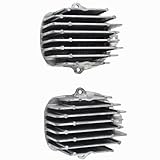
- Compatible With For Benz For S350 Bluetec/D 4-Matic For S500 Plug-In For Hybrid/E Xenon Ballast Headlight Control Unit Module A2229069104 A2229069204 Headlight Module(Right)
- 1 Pack OEM Designed Factory Direct Replacement HID Ballast Control Module Unit; Replacement ballast is not OEM but is completely plug and play and a direct replacement for your factory unit.
- Before placing an order, please confirm that your original ballast and connector exactly match the one shown in the picture. Some manufacturers may change the ballast type when the product is updated or the production date changes.
- Please note that the most common cause of failure is water in the headlights. If your headlights have water in them and the ballast has failed as a result, you may need to replace the headlights, as the replacement ballast may fail again.
- If you have any questions about our products, please feel free to leave us a message. We will try our best to give you a satisfactory answer within 24 hours!
The company or its founder has discussed a three- or four-year payback for inefficient vehicles. That is a claim based on assumptions, not a guaranteed result. A realistic calculation is:
Annual operating savings = gasoline displaced × gasoline price − electricity used × electricity price − added annual maintenance and financing costs.
For example, a high-mileage pickup that normally consumes substantial gasoline, travels a predictable daily route and charges regularly could displace enough fuel to make the retrofit interesting. An efficient compact car driven only a few thousand miles per year may save too little to recover even the reported target price.
Any calculation should also include the donor vehicle’s value, installation downtime, insurance changes, inspection fees, financing, tire and suspension wear, battery degradation, lost cargo capacity and eventual battery replacement. A retrofit does not eliminate the cost of owning and maintaining the underlying car.
Do these 3 things before closing this tab:
1Scan for outdated or missing drivers - takes under a minute2Clear out junk files and repair common Windows errors3Fix the driver behind crashes, sound loss and screen glitchesWhere the climate argument is strongest—and weakest
Blue Dot’s strongest environmental argument is vehicle reuse. Keeping a mechanically sound vehicle in service may avoid the manufacturing impacts of prematurely replacing it with another vehicle. The system is also designed to reduce gasoline use and tailpipe emissions during electric driving.
That does not automatically make every conversion a climate win. A credible lifecycle comparison would need to account for:
Rank #4
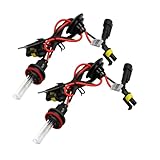
- High Quality Material: This automobile bulb is made of high-quality quartz tube material, which has excellent high-temperature resistance and can maintain a stable structure during long periods of illumination. At the same time, the quartz tube has strong impact resistance and can withstand minor vibrations, providing reliable protection for the long-term use of the lamp bulb.
- Wide Application: It is suitable for most vehicles on the market, such as sedans, SUVs, vans, trucks, SUVs, MPVs, etc., with a wide range of applications. The long wire length is 15.94 inches, and the short wire length is 7.87 inches. The reasonable wire length design allows it to easily adapt to the installation positions of different vehicle models, effectively meeting the lighting replacement needs of various vehicles.
- Easy Installation: The installation process is simple and convenient, featuring a plug-and-play design that requires no tools or vehicle modifications. Simply align the product with the original bulb's installation method and insert it into the socket to complete the installation. Even beginners to quickly master it and easily replace the bulb.
- Function: This product is bright at night, with its light helping you to clearly identify objects in the dark, providing a wider field of vision while driving, effectively enhancing night-time driving safety, and adding peace of mind to every night-time journey, making it a reliable companion for your vehicle.
- Practical Packaging: The package contains two car bulbs, which are sufficient for everyday use. The light source has a long service life of up to 3,000 hours, maintaining excellent lighting performance for a long period of time and providing continuous and stable lighting support for driving. The power is 35W, current is 3.5A, voltage is 12V.
- Manufacturing the retrofit battery, motor, electronics and mounting hardware
- The electricity source used for charging
- How many gasoline miles are actually displaced
- Extra energy consumed by the retrofit’s added weight
- Battery durability, replacement and recycling
- The condition and remaining life of the donor vehicle
- The manufacturing emissions of a replacement EV or hybrid
The case is most persuasive when the existing vehicle is structurally sound, would otherwise remain on the road for years, uses a lot of gasoline, travels many miles within the electric range and can be charged from relatively low-carbon electricity. It is less persuasive if the vehicle is near the end of its useful life, rarely driven or mechanically unsafe.
Which vehicles might be suitable?
Blue Dot’s two architectures suggest a broad potential market, but “works with many vehicles” is not the same as “works with any gas car.” Before considering a retrofit, an owner or fleet should verify:
Free tools Windows power users keep installed
One-click scans. No signup required.
- Drive layout and rear suspension type
- Available trunk, bed, cargo or hitch space
- Added battery and motor weight
- Remaining payload and towing capacity
- Brake, suspension, tire and drivetrain ratings
- Ground clearance and structural mounting points
- Electrical and electronic compatibility
- Frame, body, engine and transmission condition
A durable, inefficient pickup with a predictable route may be a better candidate than a rusty SUV or a fuel-efficient commuter car. The vehicle must have enough remaining service life to justify adding a new propulsion system.
Who is Blue Dot targeting first?
The early customer is more likely to be a fleet operator than an individual consumer. GeekWire reported plans for approximately 10 to 12 prototype kits and pilot discussions involving a school and college in British Columbia, as well as Skanska and Seattle Public Utilities. The reported plan included six-month testing and a refund-or-removal arrangement if participating organizations were dissatisfied. Those were plans reported in 2025; their completion and results should not be assumed without current confirmation.
Potential early applications include:
- Municipal, utility and school fleets
- Construction and worksite pickups
- Delivery and service vehicles with repeatable routes
- Organizations that need towing or long-distance flexibility
- Fleets that cannot replace vehicles quickly because of capital constraints
Fleets can also measure fuel use, charging behavior, downtime and maintenance across multiple vehicles—data that individual owners may struggle to collect.
Independent reader supportYour contribution helps us test, update, and keep practical guides available for everyone.Safety, legality and service remain open questions
A retrofit involving a high-voltage battery and a new drive unit must be evaluated as more than an efficiency accessory. Important questions include:
The Tool Desk
Outbyte Driver Updater FREEScan for outdated or missing drivers - takes under a minuteDriver Scan →Outbyte PC Repair FREERepair Windows errors before they cause bigger problemsFix Now →Best Value
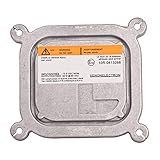
- Interchange Part Number: A0141A0080
- Enhanced Visibility: Improves night driving safety with better light output.
- Durable Construction: Made to withstand harsh conditions for long-lasting performance.
- Easy Installation: Simplifies the upgrade or replacement process with a plug-and-play design.
- Warranty & Compatibility Support: Includes a 1-year warranty. Direct-fit aftermarket replacement for hassle-free installation. Please confirm vehicle compatibility before purchase, or contact us with your VIN for assistance.
- Has the system undergone crash and battery-protection testing?
- How are thermal runaway and high-voltage faults managed?
- Does added weight change braking, suspension or handling performance?
- What are the revised payload and towing ratings?
- How does the retrofit interact with the vehicle’s electronic systems?
- What inspection, registration and emissions rules apply?
- Will insurers cover the modified vehicle, and at what premium?
- Who performs repairs, and what happens when the battery or electronics need replacement?
- What warranty applies to the kit, installation and original drivetrain?
Blue Dot says the design is intended for third-party installation in about a day. That is a stated design objective, not proof that any mechanic can install it or that the conversion is approved everywhere. Requirements vary by state, province, vehicle and use.
Important trade-offs
| Potential advantage | Potential drawback |
|---|---|
| Lower battery size and weight than a full EV | Much shorter electric range and continued gasoline emissions |
| Retained gasoline range for long trips | Continued engine maintenance and drivetrain complexity |
| Reuse of an existing vehicle | Added mass, mechanical stress and possible efficiency loss |
| Potentially less expensive than buying a new EV | No confirmed 2026 consumer price or broad availability |
| Could preserve towing flexibility | Battery placement may reduce payload, cargo or hitch capacity |
| Third-party installation model | Installer quality and local service availability may vary |
Who should consider it?
Blue Dot’s concept is worth watching if you own or operate a mechanically sound, fuel-hungry vehicle; drive enough miles to displace meaningful gasoline; have dependable charging; and need the flexibility of an engine for occasional long trips or heavy work.
It is a poor fit for someone who wants zero tailpipe emissions, has no reliable charging access, drives too little to recover the cost, owns a vehicle with serious rust or drivetrain problems, or expects factory-level crash certification, integration and resale support before those details are documented.
Can you buy one today?
There is no verified evidence in the current public material of a general consumer ordering process, confirmed retail inventory or a complete production compatibility list. The practical next step for an interested fleet is a pilot or direct inquiry through Blue Dot’s technology page or company page—not a normal online purchase.
Blue Dot’s Wefunder page is an investment campaign, not a way to buy or reserve a conversion kit. Seattle’s Peace Vans Electric is a materially different option: it performs specialized full-electric conversions for air-cooled Volkswagen vehicles, rather than offering a retained-engine plug-in hybrid system for ordinary cars and trucks.
Bottom line
Blue Dot Motorworks is developing an intriguing middle path between keeping a gasoline vehicle unchanged and replacing it with a new EV. Its Narwhal and Humpback systems could make electric driving available for daily routes while preserving gasoline range for demanding work.
But the idea remains early-stage. The company-stated 30–45-mile range and up-to-200-horsepower output are targets, the $6,000–$9,000 kit figure is a 2025 reported estimate, and broad consumer availability, model-by-model compatibility, certification, insurance, warranty coverage and independent lifecycle results are not yet established. For now, Blue Dot looks more credible as a fleet-pilot and vehicle-reuse strategy than as a conversion consumers can order off the shelf.
Quick Recap
Product prices and availability are accurate as of the date/time indicated and are subject to change. Any price and availability information displayed on Amazon at the time of purchase will apply.




