Ford EcoBoost is a family of engines, not a single engine. It includes turbocharged three-cylinder, four-cylinder, and V6 designs from roughly 1.0L through 3.5L, with later 3.0L applications as well. The right oil, fuel, horsepower figure, service interval, replacement part, and reliability assessment depend on the exact vehicle, model year, engine, market, and build date.
This guide explains what EcoBoost technology does, how the engine sizes differ, what Ford and NHTSA documents actually say about several known issues, and how to diagnose or shop for one without generalizing a problem from one application to the entire family.
As an Amazon Associate I earn from qualifying purchases.
Ford EcoBoost is not one engine. It is a family of turbocharged gasoline engines that has included three-cylinder, inline-four, and V6 designs ranging from 1.0L to 3.5L, plus later 3.0L applications. The correct oil, horsepower rating, fuel recommendation, service interval, parts, and known issue depend on the exact vehicle, model year, engine, calibration, market, and build date.
That distinction matters more than the EcoBoost badge itself. A documented problem on a particular 1.5L or 2.0L application does not prove that every EcoBoost engine has the same defect, and a part listed for one Ford cannot safely be assumed to fit another. Identify the vehicle by VIN before buying parts or following a repair procedure.
#1 Best Overall

- Part number: AA5Z-6714-A
- Oem equivalent part number: AA5Z 6714 A
- Included components: Ford Parts AA5Z-6714-A Oil Filter
- Package Dimensions: 8.128 L x 10.922 H x 8.128 W (centimeters)
Quick answer: EcoBoost combines exhaust-driven turbocharging, direct fuel injection, and variable camshaft timing to produce the output Ford seeks from a larger engine with less displacement. The technology can deliver strong performance and useful efficiency, but it does not create one universal maintenance schedule or reliability profile. Use the vehicle-specific Ford owner manual, maintenance schedule, recall search, and service information for every recommendation.
What EcoBoost means
Ford uses the EcoBoost name for an engineering approach rather than a single mechanical design. The core combination is:
- Turbocharging: A turbocharger uses energy in the exhaust stream to compress incoming air and force more air into the engine. More available air allows the engine to burn more fuel when the calibration calls for it, increasing potential torque and power from a given displacement.
- Direct fuel injection: Fuel is delivered directly into the combustion chamber rather than upstream in the intake port. This gives the engine management system precise control over fuel delivery and combustion conditions.
- Variable camshaft timing: The engine adjusts valve timing according to engine speed and load. That can help balance low-speed response, high-load output, emissions, and efficiency.
Ford presents those technologies as a way to obtain the output of a larger conventional engine from a smaller engine while improving efficiency and emissions. Those are design goals and engineering characteristics, not a guarantee that every EcoBoost vehicle will outperform every naturally aspirated vehicle in every driving situation. Vehicle weight, gearing, turbo size, calibration, traction, driving style, and fuel all affect the result.
EcoBoost engine sizes: why the badge is not enough
EcoBoost applications have varied by generation, vehicle platform, turbocharger arrangement, fuel system, transmission, emissions equipment, cooling system, and software calibration. Even two engines with the same displacement may have different output figures, service parts, and repair procedures.
| Broad group | Where it has appeared | What you must not assume |
|---|---|---|
| Small three-cylinder applications | Global-market compact cars and crossovers | Do not assume a three-cylinder oil capacity, spark plug, or service schedule from one market applies to another. |
| 1.5L and 1.6L four-cylinder applications | Multiple Ford cars and crossovers | Different generations and vehicles can have different calibrations, parts, and documented service concerns. |
| 2.0L and 2.3L four-cylinder applications | Cars, crossovers, performance vehicles, and the Mustang | Displacement alone does not identify horsepower, fuel requirements, oil specification, or known issue coverage. |
| 2.7L, 3.0L, and 3.5L V6 applications | Trucks, SUVs, performance models, and Lincoln vehicles | A V6 EcoBoost in one truck or SUV is not automatically mechanically identical to a V6 in another vehicle. |
This is a family overview, not a compatibility chart. Before choosing a filter, plug, coolant, oil, manual, or replacement assembly, record the model year, vehicle name, engine displacement, engine code where applicable, and VIN. The build date can also matter when checking a production-bounded service action.
Current example: the 2026 U.S. Mustang EcoBoost
The current U.S.-market 2026 Ford Mustang EcoBoost shows why specifications must be reported in context. Ford rates its 2.3L EcoBoost at 315 horsepower and 350 lb-ft of torque when using 93-octane fuel. Those figures belong to that Mustang application and fuel condition. They are not the output of every 2.3L EcoBoost engine, nor of every EcoBoost vehicle.
The example also illustrates why fuel language needs care. Premium fuel may be required, recommended, or associated with a published performance figure depending on the vehicle and calibration. It is not correct to say that every EcoBoost vehicle requires premium fuel without checking that vehicle’s manual and fuel-door or owner-manual guidance.
Quick wins for a faster PC:
Scan for outdated or missing drivers - takes under a minuteDriver Scan →Clear out junk files and repair common Windows errorsFree Scan →Rank #2

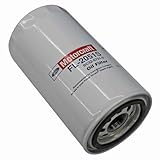
- Spin-On Lube Filter
- Highly durable and reliable
- High particle size retention
- Increased dirt-holding capacity
Maintenance: use the exact vehicle manual
There is no EcoBoost-wide oil viscosity, oil capacity, filter number, spark-plug number, coolant specification, or oil-change interval. Ford directs owners to the applicable owner manual and maintenance schedule because requirements vary by vehicle. Newer vehicles may use Ford’s Intelligent Oil-Life Monitor, but the vehicle manual remains the controlling source for the complete schedule, operating conditions, and severe-duty provisions.
Ford’s vehicle-specific manual lookup can be used by entering the VIN, model year, and model. Ford also identifies physical owner manuals available through suppliers. If you need deeper repair procedures rather than routine operating information, compare a vehicle-specific Ford EcoBoost repair manual only after matching it to the VIN, year, model, engine, and market.
Verify these details before servicing an EcoBoost
- Vehicle identity: Confirm the model year, exact vehicle name, engine displacement, and engine code when relevant.
- VIN and market: Use the VIN-specific manual and recall information. A similar-looking vehicle sold in another market may have different specifications.
- Oil viscosity and Ford specification: Follow both the required viscosity and the Ford performance specification. A generic statement such as use synthetic oil or use 5W-30 is not enough unless it matches the manual.
- Oil capacity: Check the capacity with a filter change and without a filter change. Do not fill by assuming that all engines of the same displacement hold the same amount.
- Filter and spark plugs: Match the part number to the application. Ford’s owner-manual material warns against treating one generic filter recommendation as universal; a Motorcraft filter appropriate for one EcoBoost vehicle may not be the correct filter for another.
- Fuel: Check the required grade and whether a higher octane is required, recommended, or used for a specific published performance rating.
- Interval and operating conditions: Follow the listed interval, severe-duty rules, and Intelligent Oil-Life Monitor instructions where equipped. The monitor does not replace the rest of the maintenance schedule.
For routine service, a Motorcraft oil filter for your EcoBoost can be a sensible starting point only after the application has been verified. The same rule applies to Ford-approved EcoBoost engine oil: the label and viscosity must match the vehicle’s specified Ford requirement, not merely the EcoBoost name.
What not to do
- Do not buy a universal EcoBoost oil-change kit without checking capacity, viscosity, specification, and filter fitment.
- Do not select spark plugs by displacement alone.
- Do not treat an oil-life percentage as permission to ignore time-based, mileage-based, or other scheduled maintenance.
- Do not open a pressurized cooling system while the engine is hot.
- Do not continue driving simply because the vehicle still runs when it has an overheating warning, oil-pressure warning, severe misfire, or major loss of power.
Documented EcoBoost issues, separated by application
Reliability discussions often become misleading because they combine technical service bulletins, special service messages, safety recalls, NHTSA investigations, and owner anecdotes as though they were the same evidence. They are not.
- Technical service bulletin (TSB): A manufacturer service document describing a condition and procedure for specified vehicles. It is not automatically a recall and does not mean every engine has the condition.
- Special service message (SSM): Application-specific service guidance for a diagnostic or repair condition. It likewise does not establish that the entire engine family is defective.
- Safety recall: A formal action covering vehicles identified by the manufacturer or regulator as having a safety-related defect. Applicability is determined by VIN or the defined vehicle population.
- NHTSA investigation: A regulatory investigation into reported or suspected issues. An investigation is not itself a finding that every engine is defective or that every vehicle requires a recall repair.
- Owner reports: Useful signals that may identify patterns, but anecdotes do not define the affected population or the required repair.
2.0L coolant intrusion: TSB 19-2346
Ford TSB 19-2346 covers specified 2015–2018 Edge and 2017–2019 Escape, Fusion, MKC, and MKZ vehicles equipped with the 2.0L EcoBoost. The documented symptoms include low coolant, white exhaust smoke, rough running, and possible diagnostic trouble codes.
For the vehicles and criteria covered by the bulletin, Ford attributes the condition to coolant intrusion into the cylinders. The stated diagnostic and repair procedure can include long-block replacement when the bulletin’s criteria are met. This does not mean every 2.0L EcoBoost, every Ford vehicle, or every vehicle in those model years has coolant intrusion. The bulletin’s vehicle, engine, symptom, and diagnostic boundaries matter.
1.5L coolant consumption and intrusion: SSM 48106
Ford SSM 48106 addresses specified 2014–2019 Fusion and 2017–2019 Escape vehicles with the 1.5L EcoBoost that exhibit coolant consumption and white exhaust smoke. Its documented diagnostic path includes a cooling-system pressure test and borescope inspection. When intrusion is confirmed under the stated procedure, the SSM directs short-block replacement.
That is a specific service message for a defined vehicle population and symptom pattern. It should not be generalized to every 1.5L EcoBoost application, particularly when the engine generation and vehicle platform differ.
The Tool Desk
Outbyte Driver Updater FREEScan for outdated or missing drivers - takes under a minuteDriver Scan →Outbyte PC Repair FREERepair Windows errors before they cause bigger problemsFix Now →Later 1.5L Escape coolant-temperature message: SSM 54114
SSM 54114 is a separate issue from the older coolant-intrusion reports. It covers certain 2023–2025 Escape 1.5L EcoBoost vehicles built on or before September 16, 2024 that show a coolant-over-temperature warning and related diagnostic codes.
Rank #3
- Leading Manufacturer Of High-Quality Products
- International Renown For Our Diverse Range Of Award-Winning Products
- Fully Equipped With State-Of-The-Art Technology, Efficient filter media offers increased dirt-collecting capability and ability to capture more engine-harming particles
- All Products Have Been Designed With The Professional In Mind
- Constantly Modernizing Our Powerful Devices To Meet The Demands Of The Modern User
Ford attributes the potential condition to a blockage near a cylinder-head-temperature sensor port and provides a flushing and evaluation procedure. This is an application- and build-date-bounded service message. It should not be merged with SSM 48106 or used as evidence that all 1.5L engines share one coolant failure.
2.7L and 3.0L Nano EcoBoost intake-valve issue
NHTSA opened investigation EA23002 after reports involving loss of motive power and alleged valvetrain failure in certain 2.7L and 3.0L EcoBoost-equipped vehicles. Ford’s chronology for Recall 24S55 describes fractured intake valves in certain 2021 and 2022 Ford and Lincoln vehicles, including cases involving catastrophic engine damage. The chronology records a production-material change after October 31, 2021.
Do not infer recall coverage from the 2.7L or 3.0L displacement alone. Check the VIN for open recalls and follow the official recall instructions for the exact vehicle. A vehicle with the same engine size may fall outside the affected population, while a vehicle within the defined population needs the official remedy rather than a generic internet diagnosis.
Recommended Free Tools
Symptoms that deserve prompt attention
These symptoms are diagnostic triggers, not proof of a particular failed part:
- Coolant level falling without an obvious external leak.
- White exhaust smoke or persistent sweet-smelling exhaust.
- Rough running, repeated misfires, or a flashing malfunction indicator lamp.
- An overheating warning or repeated temperature-related fault codes.
- Sudden loss of power or an engine that will not restart.
- Unusual turbocharger, timing-system, valvetrain, or bottom-end noise.
- An oil-pressure warning or signs of oil and coolant contamination.
Stop driving and arrange diagnosis when the engine is overheating, the oil-pressure warning is illuminated, the malfunction light is flashing with a severe misfire, the vehicle loses motive power, or a serious mechanical noise develops. Continuing to drive can turn a diagnostic problem into additional engine or emissions-system damage, and an overheating or low-oil-pressure condition can become unsafe.
A sensible EcoBoost diagnostic workflow
- Record the application: Write down the VIN, model year, vehicle, engine displacement, mileage, and build date if available.
- Capture the warning: Record every dashboard message, warning light, temperature change, smoke event, noise, and driving condition. Note whether the malfunction indicator lamp is steady or flashing.
- Retrieve codes: Use an appropriate scan tool to retrieve diagnostic trouble codes and preserve the results before clearing anything. An OBD-II scanner for Ford EcoBoost can help with this first triage step, but it cannot identify every failed component or replace the factory diagnostic procedure.
- Check fluids safely: Check oil and coolant levels only as instructed by the owner manual. Never remove a hot cooling-system cap.
- Inspect for external evidence: Look for coolant or oil leaks, visible smoke, fluid contamination, damaged wiring, and other obvious clues. The absence of an external leak does not prove an internal leak.
- Check official records: Search the VIN for open recalls and review Ford service information for the exact vehicle, engine, model year, and build period.
- Follow the applicable procedure: Depending on the application, the correct next step may be a cooling-system pressure test, code-specific testing, borescope inspection, cooling-system flush, or evaluation of valvetrain and internal engine components.
- Escalate when necessary: Stop DIY diagnosis and use a qualified technician when the problem involves overheating, low oil pressure, loss of motive power, suspected coolant intrusion, internal contamination, or possible valvetrain failure.
The important point is that a code reader is a starting tool, not a verdict. Ford’s documented procedures show that similar symptoms can lead to different tests and repairs on different EcoBoost applications.
How to evaluate a used EcoBoost vehicle
Do not ask only whether EcoBoost engines are reliable. Ask which EcoBoost engine is installed, which vehicle contains it, which model year and build period apply, how it was maintained, and whether relevant recalls or service actions were completed.
Free tools Windows power users keep installed
One-click scans. No signup required.
Rank #4

- ENGINEERED FOR SYNTHETIC OILS: Superior filtration for severe conditions; Designed to handle the demands of synthetic motor oils in extreme driving conditions like towing, stop-and-go traffic, and long highway runs
- ADVANCED FILTRATION EFFICIENCY: Next-gen synthetic-blended media with natural fibers eliminates the need for wire backing. 99% effIcient at 23 microns (based on 51515XP)
- EXTENDED PERFORMANCE: Outperforms OE standards with up to 20,000-mile change intervals—ideal for synthetic oil users
- EASY, PRECISE FIT: Engineered for a perfect fit in your vehicle, WIX XP filters enable quick, hassle-free installation—ideal for both DIY enthusiasts and professional mechanics
- COMPATIBILITY NOTE: Verify vehicle fitment by entering vehicle information in the part finder stripe to ensure this is the correct filter for your vehicle
Used-vehicle checklist
- Identify the engine by VIN: Confirm the engine displacement and application rather than relying on the seller’s description or the badge.
- Review maintenance records: Look for consistent oil changes using the correct Ford specification, evidence of scheduled maintenance, and documentation of cooling-system or engine work.
- Check current fluid condition and levels: Look for unexplained coolant loss, signs of contamination, or an oil-pressure concern. Do not interpret a clean engine bay as proof that no internal issue exists.
- Scan before purchase: Check for current, pending, or recently cleared diagnostic trouble codes and investigate any warning light rather than accepting a seller’s explanation without verification.
- Check recalls by VIN: A recall listed for a particular engine family does not establish coverage for every vehicle with that displacement. Confirm the individual VIN and whether the remedy was completed.
- Inspect for symptoms: Pay attention to rough running, white exhaust smoke, coolant-temperature warnings, unexplained low coolant, unusual mechanical noise, or sudden power concerns during a proper inspection.
- Arrange an independent pre-purchase inspection: This is particularly important for a high-mileage, modified, performance, turbocharged, or expensive vehicle. Ask the technician to use the application-specific service information.
- Price the risk honestly: A documented service history and completed recall work are positives, but they do not make every engine identical. Conversely, a known bulletin does not mean every vehicle will experience the condition.
Which information and tools are worth buying?
The most useful purchase is not a generic product labeled for EcoBoost. It is information or equipment matched to the actual vehicle.
Vehicle-specific manuals
Start with Ford’s owner manual and maintenance schedule using the VIN, model year, and model. For advanced DIY work, a model-specific repair or service reference can add procedures, diagrams, and specifications. Verify coverage before buying: one manual should not be assumed to cover every EcoBoost engine or every market. A repair manual also should supplement, not override, an applicable Ford recall, TSB, SSM, or factory procedure.
Maintenance parts
Motorcraft identifies itself as Ford’s official parts brand and offers engine oil, filters, spark plugs, and other replacement products. That makes Motorcraft a relevant category for routine maintenance, but brand familiarity does not eliminate the need to verify fitment. Match the oil, filter, plugs, coolant, and any other part to the VIN or exact application and the owner manual’s specification.
Diagnostic equipment
An OBD-II code reader can be useful for retrieving codes before visiting a shop or for monitoring a vehicle during a non-urgent issue. A more capable scan tool may provide additional manufacturer-specific data, but no scan tool alone proves that a particular component has failed. Cooling-system pressure testing, borescope inspection, compression or leak-down testing, and internal engine diagnosis require the correct equipment, procedure, and safety controls.
Crashes, No Sound, or Screen Glitches?
Random freezes, missing sound and display glitches usually trace back to one bad driver. Find and replace yours safely.Free scan · under a minuteWindows Errors? Fix Them Before They Spread
Repair common Windows errors and clear accumulated junk for a smoother, more stable PC - no reinstall needed.Free scan · no reinstallFinal perspective on EcoBoost reliability
The evidence supports a mixed, application-specific conclusion. EcoBoost technology offers the potential for strong performance and useful efficiency from relatively small engines. At the same time, Ford and NHTSA records document specific service concerns affecting defined engine-and-vehicle combinations, including the coolant-related conditions and intake-valve issue described above.
Blanket praise is unsupported, but blanket condemnation is equally inaccurate. The practical rule is simple: identify the application first, then evaluate its maintenance requirements, recall status, service history, and symptoms. Never turn one TSB, SSM, investigation, or owner story into a verdict about every Ford EcoBoost engine.
Application-specific references discussed in this guide include Ford TSB 19-2346, SSM 48106, SSM 54114, Ford Recall 24S55, and NHTSA investigation EA23002. Coverage and repair instructions should be confirmed against the current official record for the vehicle VIN.
Best Value

- Package Dimensions: 8.128 cms (L) x 8.128 cms (W) x 8.128 cms (H)
- Product Type: Oil Filter
- Package Quantity: 1
- Country Of Origin: United States
Frequently Asked Questions
Are all Ford EcoBoost engines the same?
No. EcoBoost is a family name covering different three-cylinder, four-cylinder, and V6 engines. Even engines with the same displacement can differ by generation, vehicle, calibration, market, parts, and service requirements.
What oil does a Ford EcoBoost engine use?
There is no universal EcoBoost oil. Confirm the exact viscosity, Ford performance specification, capacity, filter requirement, and change interval in the owner manual for the vehicle’s VIN, model year, engine, and market.
Does a Ford EcoBoost TSB mean my engine has a recall?
No. A TSB or SSM is service guidance for a defined vehicle and condition; it is not automatically a safety recall. Recall coverage must be checked by VIN, and a bulletin does not mean every engine has the described problem.
Does every EcoBoost require premium fuel?
Not necessarily. Some applications specify regular fuel, while others require or recommend premium fuel or publish their highest performance rating with premium. Check the vehicle manual and fuel guidance. For example, the 2026 U.S. Mustang EcoBoost’s published 315-horsepower and 350-lb-ft figures are specified on 93-octane fuel.
Can an OBD-II scanner diagnose an EcoBoost problem?
A scanner can retrieve diagnostic trouble codes and help with initial triage, but it cannot by itself identify the exact failed component. Ford procedures may require pressure testing, a borescope inspection, flushing, or other application-specific tests.
Do these 3 things before closing this tab:
1Repair Windows errors before they cause bigger problems2Fix the driver behind crashes, sound loss and screen glitches3Clear out junk files and repair common Windows errorsThe Bottom Line
Bottom line: EcoBoost is a broad Ford engine family, not a single reliability story or maintenance specification. Verify the VIN, engine, model year, build period, oil and parts requirements, and recall status before servicing or buying one. Treat documented issues as vehicle-specific evidence, and stop driving when overheating, low oil pressure, severe misfire, loss of power, or suspected internal engine damage is present.
Quick Recap
Product prices and availability are accurate as of the date/time indicated and are subject to change. Any price and availability information displayed on Amazon at the time of purchase will apply.




