What’s actually slowing this PC down?
Pick the symptom - the matching free tool is one click away.
The Chevrolet Camaro IROC-Z was a street-performance version of the third-generation Camaro, produced from 1985 through 1990. It combined a 5.0- or 5.7-liter V8 with a lowered, upgraded suspension, distinctive ground effects, special wheels, fog lamps, graphics, and other appearance equipment. It was inspired by the International Race of Champions, but it was not a race car, homologation special, or mechanically identical replica of the competition cars.
The most important advice for buyers is simple: do not authenticate an IROC-Z from its decals or body kit alone. Third-generation Camaros are commonly modified, rebadged, and assembled from parts from different model years. VIN information, factory option codes, drivetrain details, body equipment, structural condition, and documentation matter far more than exterior graphics.
As an Amazon Associate I earn from qualifying purchases.
IROC-Z at a glance
| Model years | What the IROC-Z represented | Notable developments |
|---|---|---|
| 1985–1987 | Performance and appearance package associated with the Z28 | 5.0-liter V8 choices; fuel-injected versions; upgraded suspension and IROC styling |
| 1987 | Major powertrain milestone | 5.7-liter L98 Tuned Port Injection V8 became available with the 700R4 automatic |
| 1988 | Standalone top Camaro model | The Z28 name disappeared; Chevrolet listed the IROC-Z as a distinct coupe model |
| 1989 | Late third-generation development | Engine output depended heavily on the exact TPI, axle, exhaust, and emissions combination |
| 1990 | Final IROC-Z model year | 5.7-liter TPI reached a reported 245-horsepower factory rating; 1LE performance equipment was available |
| 1991 and later | No longer an original IROC-Z | Chevrolet reinstated the Z28 name for the range-topping Camaro |
What exactly was the Camaro IROC-Z?
“IROC” referred to the International Race of Champions, a racing series that used identically prepared cars. Chevrolet used that name for a street Camaro with racing-inspired styling and chassis equipment. The production car was not a direct mechanical version of the purpose-built IROC racing cars.
The Tool Desk
Outbyte Driver Updater FREEFix the driver behind crashes, sound loss and screen glitchesFind Drivers →Outbyte PC Repair FREEClear out junk files and repair common Windows errorsFree Scan →That distinction matters. Calling an IROC-Z a “race car” or “homologation special” overstates what Chevrolet sold. Its significance is that Chevrolet applied a recognizable performance identity to a mass-produced street Camaro at a time when the third-generation F-body was rebuilding the model’s performance reputation.
#1 Best Overall

- 【4 Pcs Diecast Cars Set】Four different diecast car models have different types of bodies and colors, including sports cars/trucks/sedans/racing cars, all measuring 4.9 × 2 × 1.4 inches. The standard 1:36 ratio, open doors, and bright color combinations faithfully capture the eternal aesthetics while reflecting vibrant the vitality of racing sports!
- 【Race Real Experience】Our 1:36 alloy model car adopts a double door mode, allowing kids to better observe the internal structural details of the race car toys, and incorporates high-quality elastic tires,these diecast cars high-performance wheels provide enhanced traction, allowing smooth operation across multiple surfaces including hard floors and textured fabrics.
- 【Double Packaging Box Design】There are 4 independent mini boxes in the box for easy storage and sharing. All boxes are neatly placed in a decorative gift collection box, which is perfect for giving a complete set of gifts or dividing into smaller packages for multiple children.
- 【Pull Back Cars Toy】Push car without batteries!Our car models can withstand wear and tear during daily play, and the surface paint can last for a long time without fading or peeling off Featuring a classic sports car exterior design and die cast cars that have been tested for shock absorption and pressure resistance.It is very durable. Accompany kids for long time activities.
- 【Ideal Gift For Kids 3 4 5 6 7 Year】Our 4pack car toys perfectly combines the joyful interaction of multiplayer games with the immersive experience of single player games. Not only does it have a precise and beautiful gift box, but it is also a birthday gift and Christmas gifts for son and grandson.
The IROC-Z appeared during the 1982–1992 third-generation Camaro generation. That generation introduced a more modern, angular design, a hatchback body style, and electronic fuel injection within the Camaro range. The IROC-Z added a more aggressive chassis and appearance package to that platform rather than creating a separate, purpose-built vehicle.
What made an IROC-Z different?
The package was more than a set of decals, but the engine was only part of the story. The IROC-Z’s character came from the combination of its V8 options, ride-and-handling equipment, wheels and tires, and body treatment.
Chassis and suspension equipment
- Lowered ride height compared with ordinary Camaro configurations.
- Specially valved Delco-Bilstein shocks.
- Larger-diameter anti-roll bars.
- A steering and frame brace commonly called the “Wonder Bar.”
- Performance-oriented wheels and tires, including optional 16-inch wheels and P245/50 VR16 tires in the 1988 equipment documentation.
These changes were intended to give the car a more serious handling setup than a basic Camaro. They also create useful inspection clues today: a supposedly original car should be checked for the correct suspension components, brace, wheels, tires, and evidence of later modifications.
Exterior and interior equipment
Typical IROC-Z equipment included distinctive ground effects, a rear spoiler, halogen fog lamps, sport mirrors, special badging or decals, performance wheels, and a leather-wrapped steering wheel. Chevrolet’s 1988 vehicle-information kit specifically lists a gauge package with tachometer, halogen fog lamps, sport mirrors, rear spoiler, ride-and-handling suspension, a stowaway spare tire, leather-wrapped steering wheel, and 15-inch aluminum wheels with a wheel-locking package. Optional 16-inch aluminum wheels and P245/50 VR16 tires were also listed.
Equipment varied by model year and option combination. A car can look “right” while still having the wrong wheels, graphics, engine, transmission, or suspension for its claimed year. Conversely, a car with replacement decals is not necessarily fraudulent; restoration parts are common on cars that have been repainted or repaired. The question is whether the entire car agrees with its claimed identity.
IROC-Z engines and transmissions by year
There is no single horsepower figure that applies to every Camaro IROC-Z. The engine, fuel system, transmission, axle, emissions equipment, exhaust configuration, and model year all affect the published rating. A seller who describes every IROC-Z as a 350-horsepower car is almost certainly simplifying—or confusing the car with a modified example.
| Year | Factory powertrain picture | What to verify |
|---|---|---|
| 1985 | 5.0-liter V8 choices, including carbureted and Tuned Port Injection configurations depending on equipment and transmission | Fuel system, transmission, and original option combination |
| 1986 | Evolutionary 5.0-liter IROC-Z configurations | Whether the engine and equipment match the specific car and documentation |
| 1987 | 5.7-liter, 350-cubic-inch L98 Tuned Port Injection V8 became available; the factory combination used the 700R4 four-speed automatic | L98 engine identity, automatic transmission, axle, cooling, and emissions equipment |
| 1988 | LO3 5.0-liter EFI V8 standard; LB9 5.0-liter TPI optional; B2L 5.7-liter TPI optional | RPO codes and required supporting equipment for the B2L |
| 1989 | Ratings varied among TPI configurations and equipment combinations | Performance axle, dual-catalytic-converter equipment, production timing, and exact engine |
| 1990 | 5.7-liter TPI factory rating reported at 245 horsepower; 1LE performance package available | Whether the car actually has 1LE equipment rather than aftermarket upgrades |
The 1985 5.0-liter cars
The 1985 IROC-Z launched with 5.0-liter V8 choices. Depending on equipment and transmission, buyers could encounter carbureted or Tuned Port Injection configurations. This first-year status gives the 1985 model historical importance, but it does not automatically make every first-year car more desirable than a later example.
Free tools Windows power users keep installed
One-click scans. No signup required.
The 1987 L98 350
The major mechanical development for 1987 was the availability of the Corvette-derived 5.7-liter, 350-cubic-inch L98 Tuned Port Injection V8. In the IROC-Z, it was paired with the 700R4 four-speed automatic. This combination is among the most sought-after factory IROC-Z configurations, but the engine badge alone is not enough proof. Check the engine, transmission, factory codes, rear axle, brakes, oil cooling, and emissions hardware together.
The Camaro convertible also returned to the lineup for 1987. Factory ordering rules limited which body-style and drivetrain combinations could be paired, so a convertible advertised as a rare factory L98 IROC-Z deserves especially careful documentation review.
The 1988 engine lineup and RPO details
1988 is the clearest year for discussing the IROC-Z as a standalone model. Chevrolet’s official vehicle-information documentation lists the LO3 5.0-liter EFI V8 as standard, the LB9 5.0-liter TPI V8 as an option, and the B2L 5.7-liter TPI V8 as a higher-cost option.
The B2L was not simply an engine swap on the order sheet. The documentation states that it required the MXO four-speed automatic, G80 axle, J65 brakes, KC4 oil cooler, and QDZ tires. The MM5 five-speed manual was unavailable with the B2L. Therefore, a claimed 1988 factory 350/manual combination should be treated as a major authenticity question unless the seller can provide unusually strong evidence.
Quick wins for a faster PC:
Repair Windows errors before they cause bigger problemsFix Now →Fix the driver behind crashes, sound loss and screen glitchesFind Drivers →1989 and 1990 output
Published 1989 output figures depend on the exact TPI configuration and related equipment. Some combinations, particularly those with a performance axle and dual-catalytic-converter equipment, received different ratings. Avoid quoting a single “1989 IROC-Z horsepower” number without identifying the engine and option set.
For 1990, secondary technical references report a 245-horsepower factory rating for the 5.7-liter TPI version. That is the highest factory-rated output associated with the IROC-Z name, but it applies to the 5.7-liter configuration—not to every 1990 IROC-Z.
What changed from 1985 through 1990?
1985: the debut
The 1985 IROC-Z introduced Chevrolet’s racing-inspired street-performance formula on the third-generation Camaro. It was associated with the Z28 and combined 5.0-liter V8 choices with upgraded ride-and-handling equipment, ground effects, special graphics, fog lamps, and unique wheels.
1986: an evolutionary year
The 1986 car was visually and mechanically evolutionary. Technical references identify base-coat/clear-coat paint as standard equipment and note the availability of a 140-mph speedometer on some cars. Because equipment combinations varied, those details should be confirmed on the individual vehicle rather than assumed from its year.
Do these 3 things before closing this tab:
1Scan for outdated or missing drivers - takes under a minute2Clear out junk files and repair common Windows errors3Fix the driver behind crashes, sound loss and screen glitchesRank #2

- Doors Open
- Pullback Action
- Die Cast Metal Body
- PULL BACK ACTION WITH FREE ROLLING WHEELS
1987: the desirable 350 arrives
The L98 5.7-liter TPI V8 became available with the 700R4 automatic, creating the powertrain combination that many enthusiasts associate most strongly with the IROC-Z. The convertible also returned to the Camaro lineup, although not every engine and body-style combination could be ordered together.
1988: the IROC-Z becomes a distinct model
Chevrolet dropped the Z28 name from the lineup for 1988 and listed the IROC-Z as its own coupe model. This is an important historical and buying distinction: 1985–1987 cars are generally discussed as IROC-Z versions associated with the Z28, while 1988 is the first year in which Chevrolet’s official vehicle information clearly treats the IROC-Z as a standalone top model.
1989: late-run equipment variations
The exterior changed little from 1988, but the engine and exhaust combinations affected published output. When evaluating a 1989 car, confirm the exact TPI setup, axle, catalytic-converter arrangement, and production details instead of relying on a generic specification sheet.
1990: the final IROC-Z
The IROC-Z continued into the shortened 1990 model year. The 5.7-liter TPI version carried the reported 245-horsepower factory rating, and the 1LE performance package made some cars substantially more interesting to collectors and drivers.
Reported 1LE equipment included four-wheel disc brakes, larger front rotors, aluminum calipers, an aluminum driveshaft, revised anti-roll bars, an engine-oil cooler, and fuel-tank baffling. A car with some of those parts is not automatically a factory 1LE; factory option documentation and the complete equipment combination are essential.
1991: similar Camaro, different identity
Chevrolet ended the IROC association and reinstated the Z28 name for 1991. A 1991 Camaro may have similar bodywork, wheels, or aftermarket IROC-Z badges, but it should not be represented as an original IROC-Z solely because it resembles a late third-generation example.
Which IROC-Z year is best?
There is no universally best year. The right choice depends on whether you value first-year significance, the L98 engine, standalone-model status, late-run refinement, or performance-package rarity.
- Choose 1985 for first-year significance and the beginning of the IROC-branded street-car period.
- Choose 1987 if the L98 350/TPI and 700R4 combination is the priority.
- Choose 1988 if you want the first standalone IROC-Z model year and a particularly clear official specification record.
- Choose 1989 for a late third-generation car with desirable TPI and equipment combinations, provided the exact specification is documented.
- Choose 1990 if the highest reported factory-rated output or a documented 1LE car matters most.
For most buyers, condition outweighs the year. Rust-free structure, original sheet metal, a correct drivetrain, good documentation, and competent repairs are more valuable than a neglected L98 car with the wrong parts. A well-kept 305 TPI IROC-Z can be a much better ownership proposition than a heavily modified or corroded 350 car.
Recommended Free Tools
How to authenticate an IROC-Z
Authentication should be treated as a whole-car investigation. The VIN establishes the vehicle’s basic identity and model year, but it does not by itself prove that every performance option currently on the car was installed at the factory.
- Record the VIN and model year. Confirm that the title, registration, seller’s description, and vehicle agree. Be cautious with cars described only as “IROC clones,” “IROC-style,” or “Z28/IROC.”
- Photograph the factory option information. Compare the factory RPO or option-code information with the claimed engine, transmission, axle, brake, oil-cooler, wheel, and tire package. Do not accept a seller’s handwritten option list as equivalent documentation.
- Verify the drivetrain. Inspect the engine casting and identification markings, intake and injection system, transmission, rear axle, emissions hardware, and date-coded parts where originality is important. A swapped L98 can be desirable as a modified car without being a factory L98 example.
- Compare the body equipment with the year. Check the ground effects, spoiler, fog lamps, sport mirrors, wheels, wheel-center details, graphics, and interior equipment. The parts should make sense together rather than forming a collection of pieces from several years.
- Look for repainting and replacement graphics. New paint, reproduction decals, replacement emblems, and aftermarket wheels are not automatic disqualifiers, but they affect originality and value. Record what is original, restored, replaced, or modified.
- Inspect date-coded and supporting parts. Where a high-level restoration or factory specification matters, supporting parts can reveal whether an engine, transmission, suspension, or body component was installed later.
YearOne, OER, and other third-generation F-body specialists offer year-specific IROC-Z decal and emblem restoration parts. They are useful for a correct restoration, but the catalogs themselves are another reason not to identify a car from graphics alone: applications and placement details must be matched to the exact model year.
What to inspect before buying one
Many third-generation Camaros have lived through decades of daily use, modifications, weather exposure, and inexpensive repairs. A clean-looking car can still have serious structural or mechanical problems underneath.
Structure and corrosion
- Floor pans and surrounding structure.
- Front and rear subframes.
- Rocker areas and lower body seams.
- Hatch opening and weather-seal channels.
- Suspension mounting points.
- Areas hidden by ground effects or fresh undercoating.
Ground effects can conceal corrosion or previous impact repairs. Inspect behind and beneath the exterior pieces rather than judging only the visible paint.
Outdated Drivers Are Slowing You Down
One free scan finds every outdated or missing driver and matches the right update for your exact hardware.Free scan · exact hardware matchPC Slower Than It Used to Be?
A free scan shows the junk files, broken settings and background clutter dragging Windows down - then fixes them in one click.Free scan · Windows 10 & 11Seals, glass, and water intrusion
Check T-top seals if equipped, hatch seals, door weatherstripping, carpet, the spare-tire area, and the lower edges of the interior for signs of water entry. Water damage can affect the floor, wiring, gauges, and electrical accessories even when the exterior appears presentable.
Engine and fuel system
Confirm whether the car has its claimed carbureted, EFI, or TPI system. Look for non-factory wiring, fuel-line alterations, missing emissions equipment, overheating evidence, oil leaks, and poor-quality engine-swap work. On a TPI car, a professional should verify fuel pressure, ignition operation, sensor and wiring condition, and compression as appropriate.
For a DIY pre-purchase check, an automotive multimeter, fuel pressure tester, and compression tester can help evaluate the electrical, fuel-injection, and engine systems. These are diagnostic categories rather than proof of originality, and test results should supplement—not replace—a professional inspection.
Transmission, axle, and brakes
Verify that the transmission matches the claimed combination, especially on cars advertised with an L98 or B2L engine. Inspect the rear axle identification, driveshaft, leaks, shifting behavior, brake hardware, lines, hoses, and evidence of later upgrades. A car may have excellent aftermarket brakes or a replacement transmission, but those changes should be disclosed when factory authenticity affects the price.
Rank #3
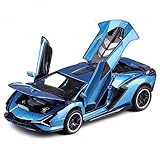
- Material:This model car is made of zinc alloy body,rubber tires and plastic parts.With Detailed interior and exterior trim, It is very sturdy.Car gets multiple processing, grinding sharp corners to prevent cuts child.
- Sound and light:Car doors,hood and trunk can be opened, accompanied with lights&sounds.Press the car body and open the doors can trigger the lights and real sounds.
- Pull back Cars:Place the car on the ground,just pull it back ,the model car will drive forward.Your kids can use it to play a chasing game with their friends.
- Size:Lamborghini Sian FKP37 is 1 /32 scale,Approx.6.3 * 2.7 * 1.6 inches.The size is similar with adult hands.It is very suitable for little boys and girls to grip.
- Gift:Fine workmanship,exquisite box with a display base,ideal birthday gift and holiday gift for kids boys and men who like collect model car.
Suspension and wheels
Check the Delco-Bilstein shocks or replacements, anti-roll bars, steering/frame brace, bushings, ball joints, tie-rod ends, ride height, wheel condition, and tire size. Modified lowering springs, incorrect wheels, and worn bushings can change the car’s behavior and may indicate that the original chassis package has been removed.
Electrical and comfort equipment
Test the tachometer and other gauges, fog lamps, exterior lights, power windows and locks, mirrors, hatch release, air conditioning, heater, blower speeds, radio, warning lights, and charging system. Electrical faults are common ownership annoyances on older cars and can become expensive when previous repairs have added poor wiring or incompatible components.
Before purchase, obtain a professional inspection that includes the structure, drivetrain, suspension, brakes, electrical system, and evidence of accident repair. No specification sheet can substitute for examining the individual car.
Independent reader supportYour contribution helps us test, update, and keep practical guides available for everyone.Restoring and maintaining an IROC-Z
The safest restoration strategy is to document the car before replacing anything. Photograph labels, decals, wiring, brackets, hose routing, wheel markings, suspension pieces, and engine details. Preserve removed parts until you know whether they are incorrect, repairable, or evidence of the car’s original configuration.
A 1982-1992 Camaro repair manual is a practical starting point for maintenance and diagnosis. The Haynes coverage is for the broader 1982–1992 Camaro range rather than exclusively for the IROC-Z, but it includes routine service, carbureted and fuel-injected fuel systems, engine electrical systems, manual and automatic transmissions, brakes, suspension, steering, wiring diagrams, and body work. IROC-specific option details still require factory documentation and model-year references.
Use restoration catalogs carefully. Decal kits, emblems, wheel-center graphics, weatherstripping, suspension components, brake parts, and trim may be available, but “fits a third-generation Camaro” does not necessarily mean “correct for this IROC-Z year.” Verify model-year application, color, placement, wheel design, and whether the part is original-style or an aftermarket performance replacement.
IROC-Z value and collectibility
The IROC-Z has moved from an often-disposable 1980s performance car to a recognized collectible, but the market is not uniform. Values vary substantially with model year, mileage, engine and transmission, factory equipment, condition, originality, rust history, documentation, and geography.
There is no responsible single current price for “a Camaro IROC-Z.” A low-mileage, documented L98 or 1LE car and a modified, rusty 305 car may share the same badges while occupying entirely different market segments. Even within one model year, condition grades can produce very different valuations.
Hagerty’s IROC-Z valuation material illustrates this approach by separating values by engine configuration and condition grade and by showing recent auction transactions. Treat any figure as dated market information, not a permanent price guide. Before buying, selling, or insuring a car, obtain an IROC-Z valuation based on the exact year, specification, condition, location, and originality.
The model’s market position has strengthened relative to some comparable C4 Corvettes, but that does not make every IROC-Z a guaranteed investment. A sound car with credible documentation is the better collectible; a badly modified car may remain expensive to put right even if its model name is desirable.
Common IROC-Z mistakes and myths
- “Every IROC-Z is a 350.”
- No. The model used several 5.0-liter configurations, and the L98 5.7-liter V8 became available in 1987. A 305 TPI car can be authentic.
- “The decals prove it is real.”
- No. Graphics, emblems, spoilers, ground effects, wheels, and even engines can be replaced or transferred between cars.
- “An IROC-Z was a race homologation special.”
- No. It was a modified street Camaro inspired by the International Race of Champions, not a production copy of the competition cars.
- “All 1990 IROC-Zs made 245 horsepower.”
- No. The reported 245-horsepower rating applies to the 5.7-liter TPI version. Engine and equipment combinations determine the applicable rating.
- “A 1991 Camaro with IROC badges is an IROC-Z.”
- No. Chevrolet returned the range-topping Camaro to the Z28 name in 1991 after the IROC association ended.
- “A rare option is valuable even if the rest of the car is wrong.”
- Factory documentation, structural condition, drivetrain correctness, originality, and repair quality all matter. One desirable component does not authenticate the entire vehicle.
Frequently Asked Questions
Is the Camaro IROC-Z the same as a Z28?
From 1985 through 1987, the IROC-Z was associated primarily with the Z28 and functioned as a performance and appearance package. In 1988, Chevrolet removed the Z28 name from the lineup and listed the IROC-Z as a distinct coupe model. The IROC-Z association ended after 1990, and the Z28 name returned for 1991.
Which IROC-Z year is the most desirable?
There is no universal answer. Collectors may favor 1985 for first-year significance, 1987 for the L98 350/TPI option, 1988 for standalone-model status, or 1990 for the reported 245-horsepower 5.7-liter rating and available 1LE equipment. In practice, condition, originality, rust history, documentation, and drivetrain correctness usually matter more than the year alone.
Do these 3 things before closing this tab:
1Scan for outdated or missing drivers - takes under a minute2Repair Windows errors before they cause bigger problems3Fix the driver behind crashes, sound loss and screen glitchesHow can I tell whether an IROC-Z is factory original?
Start with the VIN and model year, then inspect factory option or RPO information, engine and transmission identification, axle and brake equipment, wheels, suspension, body features, graphics, and date-coded parts. Decals and ground effects alone are not proof because third-generation Camaros are frequently modified or rebadged.
Did every IROC-Z have the L98 350?
No. The IROC-Z used several 5.0-liter V8 configurations. The 5.7-liter L98 Tuned Port Injection V8 became available in 1987 and was paired with the 700R4 automatic. In 1988, the B2L 5.7-liter TPI option required specific supporting equipment and was not available with the MM5 five-speed manual.
Is a 1991 Camaro an IROC-Z?
Not as an original factory IROC-Z. Chevrolet reinstated the Z28 name for 1991 after dropping the IROC package. A 1991 car can resemble a late IROC-Z or carry aftermarket IROC badges, but appearance does not change its factory identity.
The Bottom Line
The Camaro IROC-Z is collectible because it represents Chevrolet’s most recognizable street-performance interpretation of the third-generation F-body—not because every example is a race car or a 350-powered investment. Buy the complete, documented car: verify the year and factory options, inspect the structure and drivetrain, and treat graphics and swapped parts as clues rather than proof.
Quick Recap
Product prices and availability are accurate as of the date/time indicated and are subject to change. Any price and availability information displayed on Amazon at the time of purchase will apply.




