What’s actually slowing this PC down?
Pick the symptom - the matching free tool is one click away.
Toyota is not simply bringing back an unchanged gasoline engine. It is developing a new family of compact inline-four engines designed from the start to work with electric motors, batteries, hybrid systems, plug-in hybrids, and potentially lower-carbon fuels. The family currently consists of a naturally aspirated 1.5-liter, a turbocharged 1.5-liter, and a turbocharged 2.0-liter.
The technology is real: Toyota has put the 2.0-liter G20E development engine in the mid-engine GR Yaris M Concept and tested it in Japan’s Super Taikyu endurance-racing series. But as of August 10, 2026, Toyota has not confirmed a production vehicle, final horsepower or torque figures, pricing, U.S. availability, or a launch date. Reports about a 2027 arrival, 400–600 horsepower, or confirmed future Celica and MR2 applications remain unverified.
Toyota’s next-generation engines in one sentence
The central idea behind Toyota’s publicly branded ENGINE ReBORN program is to redesign the combustion engine around electrification rather than asking the engine to do everything by itself. An electric motor can provide launch torque, fill in acceleration gaps, and handle some driving electrically, allowing the engine to be smaller, lower, and optimized for the operating conditions where it is most efficient.
That makes this a powertrain strategy, not an argument that a conventional gasoline car is about to replace a battery-electric vehicle. Toyota’s own announcement describes the engines as being developed for electrified vehicles and for compatibility with fuels such as e-fuels, biofuels, and liquid hydrogen. The company is pursuing multiple propulsion paths at the same time, including battery-electric vehicles, hybrids, plug-in hybrids, fuel cells, and combustion engines using alternative fuels.
PC Slower Than It Used to Be?
A free scan shows the junk files, broken settings and background clutter dragging Windows down - then fixes them in one click.Free scan · Windows 10 & 11Outdated Drivers Are Slowing You Down
One free scan finds every outdated or missing driver and matches the right update for your exact hardware.Free scan · exact hardware match#1 Best Overall

- Pullback Action: Experience realistic racing with the pullback action feature.
- Opening Doors: Explore the intricate interior details with the opening door feature.
- 1:38 Scale: Enjoy a detailed 1:38 scale die-cast model (approx. 5 inches long).
- Authentic Design: Modeled after the iconic 1967 Ford Shelby Mustang GT500.
- Display Piece: A must-have collectible for car enthusiasts and model collectors.
Toyota’s original technical overview is available in its 2025 Integrated Report, while the joint engine announcement from Toyota, Subaru, and Mazda is available here.
The three engines Toyota has disclosed
| Engine | Induction | Intended role | Toyota’s disclosed comparison | Current status |
|---|---|---|---|---|
| 1.5-liter inline-four | Naturally aspirated | Compact, efficient hybrid and electrified applications | 10% lower volume and 10% lower height than Toyota’s current 1.5-liter three-cylinder reference; Toyota expects 12% better fuel economy in sedan-class vehicles | Development engine; no production model announced |
| 1.5-liter inline-four | Turbocharged | Applications currently served by larger naturally aspirated engines | Intended to cover the performance territory of Toyota’s 2.5-liter naturally aspirated engine while reducing volume by 20% and height by 15% | Development engine; final output and applications unknown |
| 2.0-liter inline-four | Turbocharged | Higher-output applications, including potential truck and sports-car use | 10% lower volume and 10% lower height than Toyota’s current 2.4-liter turbo reference, with substantially higher output targeted | The G20E version is being raced in the GR Yaris M Concept; road-production status remains unconfirmed |
These are Toyota’s development targets and reference comparisons, not independent test results or final production specifications. Toyota has not published the complete technical data needed for a conventional engine-to-engine comparison, including compression ratios, bore and stroke, turbocharger configuration, injection system, thermal-efficiency percentage, transmission pairings, or final emissions certification.
What ENGINE ReBORN is—and what it is not
The name ENGINE ReBORN describes Toyota’s renewed combustion-engine development effort. The family is centered on inline-four engines, but the broader May 2024 collaboration also includes Subaru and Mazda. It is not one shared engine:
- Toyota is developing inline-four engines.
- Subaru is developing a horizontally opposed engine.
- Mazda is developing a rotary engine.
The three companies are cooperating around electrification, carbon neutrality, and alternative fuels while retaining their own architectures and engineering identities. The announcement is therefore better understood as a coordinated development direction than as a single joint powertrain that will appear unchanged in all three brands.
Recommended Free Tools
The project’s public origin dates to Akio Toyoda’s January 12, 2024 Tokyo Auto Salon statement. Toyoda argued that engines remain relevant to customers, motorsports, manufacturing, supply chains, and regions where a complete transition to battery-electric vehicles will take longer. His broader point was that carbon emissions—not the physical existence of an engine alone—are the problem Toyota wants to address.
That strategic message should not be mistaken for a promise to preserve conventional gasoline cars unchanged. Toyota’s proposed response is to make the engine smaller and more efficient, use it with electric assistance, and develop compatibility with fuels that could have lower lifecycle carbon emissions.
How these engines differ from today’s Dynamic Force units
For Toyota shoppers, the most useful comparison is not simply displacement. The new engines are being designed around a different system-level requirement.
| Area | Current reference point | ENGINE ReBORN direction |
|---|---|---|
| Compact engine reference | Toyota cites a current 1.5-liter three-cylinder | A 1.5-liter four-cylinder intended to be lower and smaller in overall package volume |
| Performance downsizing | A 2.5-liter naturally aspirated engine is the comparison for the new 1.5-liter turbo | Electric assistance and turbocharging are intended to provide comparable application-level performance from less displacement |
| Higher-output reference | Toyota cites a current 2.4-liter turbo | A smaller 2.0-liter turbo targeting substantially higher output |
| Design priority | Conventional engine requirements remain a major sizing constraint | The engine is sized and controlled as part of a hybrid or PHEV powertrain |
| Public status | Current engines are production hardware | The new engines are development hardware and have not been assigned to a confirmed production model |
In other words, Toyota is not announcing a routine replacement of every existing Dynamic Force engine with a smaller unit. It has disclosed selected comparisons and a new design philosophy, but not a complete replacement map for the current lineup. There is also not enough public information to say that every ENGINE ReBORN component is unrelated to Toyota’s existing technology or that the entire Dynamic Force family will disappear.
Why would Toyota use four cylinders for a new 1.5-liter?
Toyota’s current compact 1.5-liter reference engine uses three cylinders. It might seem that adding a fourth cylinder would automatically make an engine larger, but Toyota’s claim is more specific: the new four-cylinder layout can be designed with a lower overall height and a smaller total package.
The reason is the relationship between cylinder dimensions, stroke, combustion-chamber shape, and the arrangement of the engine’s major components. A four-cylinder engine can use shorter individual cylinders or a different block and head layout to achieve the desired displacement while reducing height. It does not mean that four cylinders are universally smaller than three. It means Toyota believes this particular design can deliver a more useful package for future vehicles.
A lower engine can enable a lower hood, which may improve aerodynamic performance and give designers more freedom around the front of a hybrid or PHEV. Lower aerodynamic drag reduces the power required to maintain highway speed. The compact package may also help with battery placement, motor integration, passenger space, transverse or longitudinal installation, and vehicle center of gravity.
The additional cylinder may also provide smoother operation than a small three-cylinder, although Toyota’s published explanation emphasizes packaging and vehicle integration rather than presenting cylinder count as a universal refinement advantage.
The key technical idea: let the motor do what the engine no longer needs to do
A conventional engine must be sized to handle a wide range of conditions on its own: starting from rest, climbing a hill, accelerating onto a highway, towing, maintaining speed, and responding instantly to a driver’s request. That means it is often used outside its most efficient operating range.
A hybrid or PHEV changes the assignment:
- The electric motor supplies launch torque. Electric motors can deliver strong torque from very low speed, reducing the need for a large engine to provide immediate response.
- The motor fills transient gaps. During a sudden acceleration request, electric assistance can respond while the turbocharger builds boost or while the engine moves toward a more efficient operating point.
- The engine can run in a narrower efficient zone. The control system can choose when to start the engine, how hard to load it, and when to let the battery and motor handle the demand.
- The engine can be smaller. Peak requirements are shared by the electric system rather than handled entirely by displacement.
- The vehicle can be shaped around the smaller package. A lower hood and better aerodynamics can reduce energy demand beyond what the engine achieves in isolation.
Toyota says its engineers want to use the electric motor’s behavior as an input to engine control. The company has described calculating combustion conditions in individual cylinders and coordinating fuel injection with the amount of motor assistance. That is a more active relationship between the engine and motor than simply placing an electric motor beside an otherwise conventional engine.
This distinction matters when interpreting Toyota’s fuel-economy claims. The company’s projected 12% improvement for the naturally aspirated 1.5-liter is framed around sedan-class vehicle use. It is not a claim that the bare engine is independently 12% more efficient in every test, nor is it an EPA rating.
Rank #2

- Boy's model toy car: The body is made of alloy material, with exquisite paint craftsmanship and good durability.
- Realistic alloy model car: The 1:32 interior decoration is realistic, with six doors that can be opened. The steering wheel and seats have simulated designs.
- Toy car with lights and music: Opening the car door can light up the lights and simulate the sound of an engine starting. It's a toy car that boys like.
- Companion to Decoration and Cake Decorations: It plays a great decorative role on display cabinets at home and is a great decoration for boys' birthday cake parties.
- Gift selection for toy cars for boys aged 3-12: This gift is suitable for children aged 3 and above and is a collectible for car enthusiasts.
The 1.5-liter naturally aspirated engine
The naturally aspirated 1.5-liter is likely to be the efficiency-focused member of the family. Toyota says it could be 10% smaller in volume and 10% lower in height than its current 1.5-liter three-cylinder reference engine. In a sedan-class application, Toyota expects the engine and its surrounding powertrain strategy to deliver 12% better fuel economy.
Its likely relevance is compact cars, efficient hybrids, and vehicles where packaging and fuel economy matter more than extreme output. Because the engine is naturally aspirated, it avoids some of the hardware and thermal demands associated with turbocharging. However, its final performance cannot be inferred from displacement alone, and Toyota has not disclosed horsepower, torque, compression ratio, or the size of the electric motor that would assist it.
The most important caveat is that the 12% number depends on the vehicle and powertrain around the engine. A hybrid with a suitable motor, battery, transmission, control software, body shape, tire choice, and calibration could realize a different result from a heavier crossover or a non-hybrid installation.
The 1.5-liter turbocharged engine
The turbocharged 1.5-liter is intended to make smaller displacement compatible with applications that currently rely on a larger naturally aspirated engine. Toyota says it is being developed to cover the performance territory of its 2.5-liter naturally aspirated engine, while reducing engine volume by 20% and height by 15%.
Turbocharging allows the smaller engine to draw in more air and produce more power when needed. Hybrid assistance can then provide low-speed response and help manage the periods when a small turbo engine would otherwise feel less responsive. This combination could suit hybrid crossovers, sedans, and other vehicles that need more torque than the naturally aspirated 1.5-liter is designed to provide.
Quick wins for a faster PC:
Fix the driver behind crashes, sound loss and screen glitchesFind Drivers →Repair Windows errors before they cause bigger problemsFix Now →Scan for outdated or missing drivers - takes under a minuteDriver Scan →But performance territory is not the same as a confirmed output number. Toyota has not released final horsepower or torque figures, nor has it stated exactly which models will use the engine. A smaller turbo engine producing the output of a larger naturally aspirated engine may also face higher cylinder pressures, temperatures, and mechanical loads. Cooling, oil control, emissions equipment, durability, and warranty performance will be just as important as the size reduction.
The 2.0-liter turbo and the G20E race engine
The 2.0-liter turbocharged engine is the most visible and most thoroughly demonstrated member of the family. Toyota says it is being developed to be 10% smaller in volume and 10% lower in height than its current 2.4-liter turbo reference while producing substantially more output.
Toyota identifies the race-development version as the G20E. The engine has been installed in the GR Yaris M Concept, a mid-engine, four-wheel-drive development vehicle, and used in Japan’s Super Taikyu endurance-racing series. Toyota’s announcement about the concept and race program is available here.
The G20E matters because it is not merely a static concept-engine display. Track testing exposes problems that a presentation model cannot: sustained thermal load, cooling capacity, airflow through the engine bay, oil control, packaging, vibration, calibration, and durability. Toyota Times has reported that engineers continued reducing the engine’s size and refining airflow, combustion, computer-aided engineering, output, and reliability during development. A later Toyota Times development retrospective published in July 2026 confirmed that the project remained under development.
That is strong evidence of serious engineering progress, but it is not proof of production readiness. A race engine can use different calibration, cooling, emissions equipment, service intervals, fuel, and component tolerances from a road engine. Toyota has not announced that the G20E will enter a production GR Yaris, GR Corolla, Celica, MR2, Lexus IS, RAV4, or any other named model.
Why the GR Yaris M Concept does not confirm a new MR2 or Celica
The mid-engine layout of the GR Yaris M Concept has naturally encouraged speculation about a future mid-engine Toyota sports car, especially an MR2 successor. The compact 2.0-liter engine would also be relevant to sports-car packaging, and Toyota has said the 2.0-liter is intended for applications ranging from trucks and heavy-duty vehicles to sports cars.
Those facts establish technical possibility, not a product commitment. Toyota has not publicly confirmed a production MR2, Celica, or any other sports car using the engine in the sources cited here. The GR Yaris M Concept is best understood as a development and competition vehicle being used to mature the powertrain and vehicle concept.
Fuel strategy: gasoline, e-fuels, biofuels, and hydrogen
Gasoline
The 1.5-liter and 2.0-liter ENGINE ReBORN engines are primarily presented as gasoline-oriented combustion engines for hybridized vehicles. If they burn conventional gasoline, they still produce fossil-carbon dioxide at the tailpipe. Better efficiency can reduce fuel consumption and CO₂ per mile, but it does not make gasoline combustion carbon-neutral.
The Tool Desk
Outbyte Driver Updater FREEScan for outdated or missing drivers - takes under a minuteDriver Scan →Outbyte PC Repair FREEClear out junk files and repair common Windows errorsFree Scan →E-fuels and biofuels
Toyota says the new engines are being developed with compatibility with alternative fuels in mind, including e-fuels and biofuels. An e-fuel can be synthesized using hydrogen and captured carbon dioxide. Biofuels can be made from biological feedstocks. Their climate benefits depend on how they are produced, how much energy is used, what feedstock is selected, and what happens across the full lifecycle.
Compatibility also does not mean every version of every engine will run on every fuel from launch. Toyota has disclosed a fuel-flexibility objective, not a complete production-fuel matrix, certification list, or retail-fuel availability plan.
Rank #3
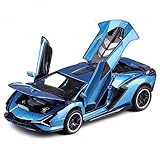
- Material:This model car is made of zinc alloy body,rubber tires and plastic parts.With Detailed interior and exterior trim, It is very sturdy.Car gets multiple processing, grinding sharp corners to prevent cuts child.
- Sound and light:Car doors,hood and trunk can be opened, accompanied with lights&sounds.Press the car body and open the doors can trigger the lights and real sounds.
- Pull back Cars:Place the car on the ground,just pull it back ,the model car will drive forward.Your kids can use it to play a chasing game with their friends.
- Size:Lamborghini Sian FKP37 is 1 /32 scale,Approx.6.3 * 2.7 * 1.6 inches.The size is similar with adult hands.It is very suitable for little boys and girls to grip.
- Gift:Fine workmanship,exquisite box with a display base,ideal birthday gift and holiday gift for kids boys and men who like collect model car.
Hydrogen combustion
Hydrogen combustion belongs to Toyota’s broader carbon-neutral-fuel strategy, but it should not be confused with the gasoline-oriented 1.5-liter and 2.0-liter ENGINE ReBORN family. A hydrogen internal-combustion engine burns hydrogen directly in modified combustion hardware. It does not convert hydrogen electrochemically like a fuel cell.
At the point of use, hydrogen combustion produces almost no carbon dioxide because the fuel contains no carbon. Toyota has nevertheless acknowledged that combustion in air can produce nitrogen oxides. The U.S. Department of Energy explains that high-temperature combustion can create NOx even when hydrogen is the fuel. Toyota has used catalysts and other measures to control trace NOx in its testing.
Free tools Windows power users keep installed
One-click scans. No signup required.
Hydrogen’s total environmental result also depends on production. Hydrogen made with fossil energy can have substantial upstream emissions, while low-carbon hydrogen requires appropriate electricity or other low-carbon production methods. Storage and distribution are additional challenges: hydrogen requires bulky high-pressure or cryogenic equipment, and public fueling infrastructure remains scarce compared with gasoline and battery charging.
Toyota’s liquid-hydrogen racing program is a separate proof point
Toyota continues to develop hydrogen combustion through racing, including a liquid-hydrogen GR Corolla program. In June 2026, Toyota reported using a superconducting liquid-hydrogen pump, increasing liquid-hydrogen tank capacity from 220 liters to as much as 300 liters, and developing direct automatic-transmission technology. Those details are covered in Toyota’s June 2026 announcement.
This demonstrates ongoing work on hydrogen combustion, but it does not establish a consumer hydrogen-combustion car. It also does not prove that the G20E or either 1.5-liter engine has been demonstrated in production form on hydrogen. The hydrogen race program and ENGINE ReBORN share Toyota’s multi-pathway carbon-neutrality strategy, not necessarily a common engine, fuel system, or product timetable.
What Toyota has actually verified
- The core Toyota designs are inline-four engines.
- The family includes a naturally aspirated 1.5-liter, a turbocharged 1.5-liter, and a turbocharged 2.0-liter.
- Toyota is designing them for hybrid and plug-in-hybrid integration.
- Toyota says the engines may support e-fuels, biofuels, and liquid hydrogen.
- Toyota has published dimensional comparisons with current 1.5-liter three-cylinder, 2.5-liter naturally aspirated, and 2.4-liter turbo reference engines.
- Toyota expects a 12% sedan-class fuel-economy improvement from the naturally aspirated 1.5-liter application, but this is a development expectation rather than an independently verified rating.
- The G20E 2.0-liter turbo has been installed in the GR Yaris M Concept and raced in Super Taikyu.
- The G20E was still being refined through late 2025 and July 2026.
What Toyota has not verified
No production launch has been confirmed. Toyota has not publicly announced the following for the new road-engine family:
- Final horsepower or torque figures
- Compression ratios, bore, or stroke
- Turbocharger supplier or configuration
- Fuel-injection specifications
- Final thermal-efficiency percentage
- Transmission pairings
- Battery size or hybrid-system specifications
- Production plants, volumes, or costs
- A named production vehicle
- U.S. market availability
- Retail pricing
- A confirmed 2027 or 2028 sales date
- Production applications for the Celica, MR2, Corolla, RAV4, Lexus IS, GR Corolla, or any other model
Some Japanese automotive coverage has used provisional labels such as X15 and X20. Those labels should not be treated as confirmed production engine names unless Toyota officially adopts them. Toyota’s global materials identify the engines by displacement and architecture, while the 2.0-liter race-development engine is identified as G20E. Car Watch’s coverage is useful context for the provisional labels and performance discussion, but its reported figures are not final Toyota production specifications.
When will Toyota’s new engines reach production?
There is no verified public production date as of August 10, 2026. A 2027 arrival is often repeated in secondary reporting, sometimes in connection with future European emissions requirements, but Toyota has not made a production-launch commitment in the official materials cited here.
The G20E’s racing activity shows that Toyota has moved from concept presentation to real-vehicle testing. It does not tell us when the engine will pass road-car emissions certification, meet warranty durability targets, satisfy noise and fuel-economy rules, reach a viable cost, or be ready for mass production. The 1.5-liter engines have an even less specific public timetable.
Development timeline
| Date | What happened |
|---|---|
| January 12, 2024 | Akio Toyoda describes Toyota’s renewed engine-development project at Tokyo Auto Salon. |
| May 28, 2024 | Toyota, Subaru, and Mazda announce next-generation combustion engines designed for electrification and carbon neutrality. |
| June 4, 2024 | Toyota Times details the 1.5-liter naturally aspirated, 1.5-liter turbocharged, and 2.0-liter turbocharged concepts under the ENGINE ReBORN idea. |
| 2024 | Toyota’s Integrated Report publishes the main dimensional and fuel-economy targets and explains the hybrid-motor control concept. |
| January 2025 | Toyota unveils the GR Yaris M Concept with the developing G20E 2.0-liter turbo engine. |
| Late 2025 | The GR Yaris M Concept begins Super Taikyu development and testing. |
| December 2025 | Toyota Times reports continued G20E work on size, airflow, output, combustion, and reliability. |
| June 5–6, 2026 | Toyota races a liquid-hydrogen GR Corolla with a superconducting liquid-hydrogen pump and other updated hardware. |
| July 7, 2026 | Toyota publishes a three-year development retrospective on the GR Yaris M Concept, confirming continued development rather than a completed production engine. |
| August 10, 2026 | No Toyota-confirmed production vehicle, final specifications, pricing, or launch date is publicly verified. |
Why the program could matter
1. More freedom in vehicle packaging
A smaller, lower engine could permit lower hood lines, more aerodynamic bodywork, additional battery or passenger space, and greater freedom in transverse or longitudinal installation. These benefits matter particularly in hybrids and PHEVs, where the engine must coexist with electric motors, power electronics, and a battery pack.
Do these 3 things before closing this tab:
1Fix the driver behind crashes, sound loss and screen glitches2Clear out junk files and repair common Windows errors3Scan for outdated or missing drivers - takes under a minute2. Better vehicle-level efficiency
The biggest potential gain may come from the complete powertrain. If the motor handles low-speed torque and the battery absorbs some transient demand, the combustion engine can spend more time at efficient speed and load combinations. Better aerodynamics enabled by a lower hood can reduce energy use as well.
That does not mean a small engine automatically beats a battery-electric powertrain in energy efficiency. It means Toyota is trying to improve the efficiency of a hybrid or PHEV system by optimizing every part of the vehicle around the electric motor and battery.
3. Performance without simply increasing displacement
The G20E shows that Toyota is considering the new engine family for more than economy cars. The company has described the 2.0-liter as relevant to applications from trucks and heavy-duty vehicles to sports cars. Turbocharging, hybrid assistance, and compact dimensions could allow performance applications that benefit from a smaller engine bay or a lower center of gravity.
4. Continued industrial capability
Toyota has linked the program to manufacturing expertise, suppliers, motorsports, jobs, and regions that remain dependent on engine production. That is an industrial and economic argument, not evidence that combustion engines are inherently cleaner than BEVs. Independent coverage from the Associated Press also placed Toyota’s announcement in the context of hybrids, green fuels, and uncertainty about the pace of the global EV transition.
What could limit Toyota’s plan?
Smaller does not necessarily mean cheaper
Reducing block volume may save space and material, but a modern turbocharged engine integrated with a hybrid system still needs sophisticated controls, emissions equipment, cooling, sensors, high-voltage components, and software. The total vehicle powertrain could be more complex and expensive than a conventional engine installation.
Rank #4

- Doors Open
- Pullback Action
- Die Cast Metal Body
- PULL BACK ACTION WITH FREE ROLLING WHEELS
Downsizing can increase thermal and mechanical stress
A small turbocharged engine producing the output of a larger engine generally works harder per unit of displacement. That can increase cylinder pressure and heat load. Toyota will need to demonstrate long-term durability, cooling performance, oil control, and emissions stability in ordinary road use—not just in a race or controlled development test.
Alternative fuel compatibility is not the same as fuel availability
An engine capable of using an e-fuel, biofuel, or hydrogen has limited climate value if that fuel is unavailable, unaffordable, or produced with high emissions. Lifecycle results depend on the fuel supply chain, not only on what exits the tailpipe.
The system depends on effective hybridization
The new engines are being designed around electric assistance. Their strongest benefits may not appear in a conventional vehicle without an appropriately sized motor, battery, and control system. A hybrid engine cannot be judged fairly by comparing its displacement with that of an engine in a non-hybrid car.
PC Slower Than It Used to Be?
A free scan shows the junk files, broken settings and background clutter dragging Windows down - then fixes them in one click.Free scan · Windows 10 & 11Outdated Drivers Are Slowing You Down
One free scan finds every outdated or missing driver and matches the right update for your exact hardware.Free scan · exact hardware matchCertification remains unresolved
Toyota has discussed stricter future emissions regulations as a design consideration, but the development engines have not been publicly certified for every market or future regulatory regime. Noise, evaporative emissions, cold starts, real-world driving, durability, serviceability, crash packaging, and cost all remain production hurdles.
Is this Toyota’s alternative to battery-electric vehicles?
Only in a limited sense. A hybrid or plug-in hybrid can address use cases where charging access, long-distance travel, towing, climate, price, or local infrastructure make a BEV less convenient. A compact engine can serve as an onboard energy source while the electric motor handles much of the driving.
But a gasoline hybrid still burns fossil fuel and produces tailpipe CO₂. A plug-in hybrid’s climate performance depends heavily on how often it is charged and how far it travels using electricity. A BEV has no combustion tailpipe emissions and generally has a simpler propulsion system, although its overall environmental impact still depends on battery production and electricity generation.
Toyota’s position is therefore a multi-pathway strategy rather than a rejection of BEVs. The company says the new engines are meant to work with electrification. The most accurate description is an attempt to make combustion useful within an increasingly electric vehicle architecture.
Free tools Windows power users keep installed
One-click scans. No signup required.
Five headlines that need qualification
- “Toyota is abandoning EVs.” The engine program is explicitly designed for hybrid and PHEV integration, and Toyota continues to describe a range of propulsion technologies.
- “The new 2.0-liter makes 400 or 600 horsepower.” Toyota’s official materials cited here do not provide final horsepower or torque figures. Race and secondary-reporting numbers should not be presented as road-car specifications.
- “The engine arrives in 2027.” That is a reported estimate, not a Toyota-confirmed production date.
- “The GR Yaris M proves a new MR2 or Celica is coming.” The prototype proves Toyota is testing the engine in a real mid-engine vehicle. It does not confirm a production sports car or model assignment.
- “Hydrogen combustion produces only water.” Hydrogen combustion avoids fossil-carbon CO₂ at the point of use, but combustion in air can produce NOx. It is also different from a hydrogen fuel-cell powertrain.
The bottom line on Toyota’s next-generation engines
Toyota’s next-generation combustion engines are real, technically ambitious development projects—not vaporware and not yet finished products. The 1.5-liter naturally aspirated, 1.5-liter turbocharged, and 2.0-liter turbocharged inline-fours are being designed around hybridization, electric motor assistance, compact packaging, and potential alternative fuels.
The G20E’s installation and endurance-racing work provide the clearest evidence that Toyota is testing hardware in demanding conditions. The program’s significance is less about an unconfirmed horsepower headline than about changing what a combustion engine is expected to do: instead of supplying every ounce of vehicle performance alone, it can operate as one part of a smaller, more electric powertrain.
Whether that becomes a compelling alternative to BEVs will depend on production cost, real-world fuel economy, emissions compliance, durability, battery sizing, charging access, and the availability of genuinely low-carbon fuels. Until Toyota names a production vehicle and publishes final specifications, the correct verdict is promising development technology, not an imminent showroom engine.
Sources
- Toyota, Subaru, and Mazda announce next-generation engine development
- Toyota Integrated Report 2025
- Toyota Times: The Engine ReBORN
- Toyota G20E GR Yaris M Concept race debut
- Toyota Times: G20E development details
- Toyota liquid-hydrogen GR Corolla development
Frequently Asked Questions
Are Toyota’s new 1.5-liter and 2.0-liter engines gasoline or hydrogen engines?
The ENGINE ReBORN family is primarily a gasoline-oriented family of inline-four engines designed for hybrids and plug-in hybrids. Toyota’s hydrogen-combustion race engines are a related but separate program. Toyota has said the new engines are being developed with possible compatibility with e-fuels, biofuels, and liquid hydrogen, but it has not said that every version will use every fuel.
What is the G20E engine?
G20E is Toyota’s designation for the developing 2.0-liter turbocharged engine used in the mid-engine GR Yaris M Concept. Toyota has tested it in Japan’s Super Taikyu endurance-racing series. It remains development hardware, not a confirmed production road engine.
Are Toyota’s new engines coming in 2027?
Toyota has not confirmed a production launch date. A 2027 date appears in secondary reporting and should be treated as an estimate unless Toyota assigns the engine to a production vehicle and announces timing.
Will the new engine power a Toyota Celica or MR2?
Toyota has not confirmed a Celica, MR2, GR Corolla, Lexus IS, RAV4, or any other production model for the engine family. The GR Yaris M Concept demonstrates development work in a mid-engine vehicle but is not proof of a production sports-car program.
Does hydrogen combustion produce zero emissions?
Hydrogen combustion produces almost no carbon dioxide at the point of use because hydrogen contains no carbon, but burning hydrogen in air can produce nitrogen oxides. Hydrogen production, storage, and transportation also affect its total environmental impact.
What’s actually slowing this PC down?
Pick the symptom - the matching free tool is one click away.
The Bottom Line
Toyota’s next-generation engines are genuine development technology, but they are not yet confirmed production powertrains. Their important innovation is the attempt to redesign compact combustion engines around electric assistance, hybrid packaging, and potentially lower-carbon fuels. The G20E’s racing program shows meaningful progress, while the absence of final specifications, model assignments, pricing, and a launch date means buyers should treat horsepower and 2027-production claims as speculation.
Quick Recap
Product prices and availability are accurate as of the date/time indicated and are subject to change. Any price and availability information displayed on Amazon at the time of purchase will apply.