By representative 0–60 mph acceleration, the five Dodge Viper generations rank from the early RT/10 to the fifth-generation Viper coupe and GTS. The comparison is editorial, not a controlled test: the available figures mix an estimate with magazine instrumented tests of different model years, trims and body styles. Top speed is a separate measure, and trim can change that ranking.
How the ranking works
This list ranks generations by representative 0–60 mph times, using the cited example for each generation rather than claiming every Viper within a generation performed identically. A lower time means quicker acceleration. Horsepower, engine size and top speed add context, but they do not decide the order.
The sources do not provide one controlled test series spanning all five generations. The early-generation figure below is an estimate in an SEC-hosted offering document; the later acceleration figures are MotorTrend instrumented results. Differences in tires, body style, trim and test conditions limit direct comparisons.
Dodge Viper generations, slowest to fastest
| Rank | Generation and representative version | Representative 0–60 mph | Engine and output context | What the figure means |
|---|---|---|---|---|
| 1 | First generation, 1992–1995 RT/10 | 4.5 seconds | 8.0-liter V10; 400 hp | Estimated for a 1994 RT/10 in the SEC-hosted offering document. |
| 2 | Second generation, 1996–2002 RT/10 or GTS | 4.0 seconds for a tested 1997 RT/10; tested 1999 GTS results range from 4.0 to 4.1 seconds | 8.0-liter V10; MotorTrend describes a mid-year increase to 410 hp in 1996 | MotorTrend test results vary by year and body style; a tested 2000 RT/10 convertible recorded 4.3 seconds. |
| 3 | Third generation, 2003–2006 SRT-10 | 3.9 seconds for a tested 2003 convertible; tested 2006 coupe results range from 3.9 to 4.0 seconds | 8.3-liter V10; 500 hp and 525 lb-ft | MotorTrend test results, with the cited convertible and coupe examples not directly equivalent. |
| 4 | Fourth generation, 2008–2010 SRT-10 coupe | 3.7 seconds for a tested 2008 coupe | 8.4-liter V10; 600 hp and 560 lb-ft | MotorTrend instrumented result for the coupe. Its tested 2008 ACR recorded 3.6 seconds, so the quicker ACR is not used as the standard-coupe representative. |
| 5 | Fifth generation, 2013–2017 Viper coupe/GTS | 3.5 seconds for a tested 2013 coupe; 3.4 seconds for a tested 2013 GTS | 640 hp and 600 lb-ft at launch; output rose to 645 hp from 2015, according to MotorTrend | MotorTrend instrumented results for two 2013 body/trim examples; the GTS is the quickest representative figure listed here. |
1. First generation: 1992–1995 RT/10
The first-generation RT/10 is slowest in this acceleration comparison. The SEC-hosted 1994 specification table gives the 8.0-liter V10 400 hp and estimates 0–60 mph in 4.5 seconds. That is a specific 1994 example, not a measured generation-wide average.
Quick wins for a faster PC:
Repair Windows errors before they cause bigger problemsFix Now →Scan for outdated or missing drivers - takes under a minuteDriver Scan →Clear out junk files and repair common Windows errorsFree Scan →#1 Best Overall

- Opening hood, doors, and trunk
- Exterior styling directly from the movie
- Detailed interior and real rubber tires
- Made of quality die-cast metal
- Collect them all
2. Second generation: 1996–2002 RT/10 and GTS
The second generation introduced the GTS coupe, alongside the RT/10 roadster. MotorTrend’s tested 1997 RT/10 reached 60 mph in 4.0 seconds, while its 1999 GTS results range from 4.0 to 4.1 seconds. A tested 2000 RT/10 convertible took 4.3 seconds, illustrating why one result cannot stand for every configuration.
3. Third generation: 2003–2006 SRT-10
The SRT-10 moved to an 8.3-liter V10 rated at 500 hp and 525 lb-ft. MotorTrend recorded 3.9 seconds to 60 mph for a tested 2003 convertible. Its listed 2006 coupe tests range from 3.9 to 4.0 seconds, placing this generation ahead of the earlier examples but close to the next generation’s standard coupe.
Rank #2
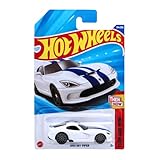
- Hot Wheels 2013 SRT Viper (JBB15) - Then and Now Series 6/10, Short Card Edition
- 1:64 Scale Dodge Viper
- White lacquer with striking blue stripes
- Officially Licensed Dodge Product
- Authentic proportions, sporty wheels and powerful design
4. Fourth generation: 2008–2010 SRT-10
The 8.4-liter V10 produced 600 hp and 560 lb-ft. MotorTrend’s tested 2008 coupe ran 0–60 mph in 3.7 seconds. The tested 2008 ACR did it in 3.6 seconds, but the ACR is a distinct trim; keeping it separate makes the generation-to-generation representative comparison clearer.
5. Fifth generation: 2013–2017 Viper
At launch, the fifth-generation Viper made 640 hp and 600 lb-ft; MotorTrend reports 645 hp from 2015. Its tested 2013 coupe reached 60 mph in 3.5 seconds, and its tested GTS in 3.4 seconds. The GTS is the quickest cited representative, but this is not proof that every fifth-generation Viper will beat every earlier car in every condition.
Recommended Free Tools
Rank #3

- Metal model with plastic parts
- Movable elements: mask and door
- Officially licensed model
- Perfect detailing
- Ideal for model collectors
Top speed is a different ranking
Acceleration and maximum speed are not interchangeable. SRT/FCA Canada’s 2014 overview claims a 206 mph top speed for the SRT Viper, and describes acceleration in the low-three-second range. The 2017 ACR document submitted to NHTSA lists variant-specific top speeds from 177 to 206 mph across its SRT, GTS, TA, TA 2.0, ACR and ACR Extreme Aero columns. Those are manufacturer values for listed configurations, not one universal fifth-generation top speed.
The spread also shows why “fastest Viper” needs a metric and a trim. ACR aerodynamic equipment can materially affect maximum speed; the fastest 0–60 example does not automatically have the highest top speed.
Rank #4

- Material: The Dodge Viper supercar model car is made of a combination of zinc alloy, plastic parts and rubber tyres, making the body both lightweight and sturdy, with strong impact resistance and delicate details, making it easier to play with the car model;
- Pull Back Function: The rear wheels of the Dodge Viper Supercar toy car have a pull back function. Just gently press the body, pull the car back a certain distance, after releasing, the toy car will automatically drive forward. Product size: 6.1*2.6*1.7 inches;
- Sound and Light Function: Dodge die-cast toy model car just need to press the rear wheels or open the front door to trigger the lights and engine sound, the back of the alloy large tail shape more perfectly restore the real car real sense of simulation of the front wheels steering left and right for a more realistic sense;
- Open Door Design: The bonnet, left and right doors, boot of the Dodge Viper supercar model car can be opened, the interior and exterior decorations are very realistic, restoring the texture of the real car, very suitable for car model enthusiasts to collect;
- Perfect Decoration: Our die-cast car models are very sturdy and well made, perfect for gifting to car enthusiasts, children or anyone who likes to use car models as toys or collectibles;
What changed across the five generations
The Viper’s power rose substantially over its production life: from 400 hp in the cited 1994 RT/10 example to 640 hp at fifth-generation launch, then 645 hp from 2015, according to MotorTrend. Displacement also grew from 8.0 liters in the early cars to 8.3 liters in the third generation and 8.4 liters in the fourth. The history is not a simple horsepower-only explanation, however: body style, trim and test variation matter when comparing acceleration results.
Dodge’s current Viper page identifies the Viper and Viper SRT as spanning 1991–2017 and says the model was discontinued in 2017. Production ended after five generations and 25 years; the SEC-hosted offering document states that 31,947 Vipers were built. Generation model-year ranges used here follow MotorTrend’s history, with gaps between some production eras.
What’s actually slowing this PC down?
Pick the symptom - the matching free tool is one click away.
Quick Recap
Best Value

- Original Viper in highly detailed plastic pieces molded in white, transparent red and clear
- The model brings detail to life with brakes, suspension, side exhaust and detailed V-10 engine
- Chrome plated parts and soft black tires
- Waterslide decals with authentic factory stock detailing decals
- Requires model glue and paint (not included)
Sources
- MotorTrend: Dodge Viper history, generations and model context
- MotorTrend: instrumented Viper test results
- SEC-hosted offering document: production total and 1994 RT/10 specifications
- SRT/FCA Canada: 2014 Viper overview and manufacturer claims
- 2017 Dodge Viper ACR variant performance table submitted to NHTSA
- Dodge: Viper status and owner resources
Product prices and availability are accurate as of the date/time indicated and are subject to change. Any price and availability information displayed on Amazon at the time of purchase will apply.




