The Tool Desk
Outbyte PC Repair FREERepair Windows errors before they cause bigger problemsFix Now →Outbyte Driver Updater FREEScan for outdated or missing drivers - takes under a minuteDriver Scan →BEVs and ICEVs differ first in energy conversion: a battery-electric vehicle stores electricity and drives electric motors, while an internal-combustion vehicle burns gasoline or diesel in an engine. That difference determines the charging or refueling routine, much of the maintenance schedule, and the type of emissions produced—but it does not make one drivetrain universally better.
Short answer: A battery-electric vehicle (BEV) stores electricity in a traction battery and uses electric motors; an internal-combustion-engine vehicle (ICEV) burns gasoline or diesel in an engine. That fundamental difference affects how each vehicle is fueled, maintained, driven, and evaluated for emissions—but neither drivetrain is automatically the right choice for every driver.
As an Amazon Associate I earn from qualifying purchases.
The practical question is not simply whether an EV is “better” than an ICEV. It is whether you have dependable charging, how far and where you drive, what you can spend, how much maintenance you tolerate, and which environmental trade-offs matter to you. This comparison focuses on BEVs versus conventional ICEVs. “EV” is often used loosely, so plug-in hybrids and conventional hybrids are explained separately below.
BEV, EV, PHEV, HEV, and ICEV: What do the terms mean?
In consumer advertising, “EV” can refer to more than one type of vehicle:
#1 Best Overall

- Flex Level 1 EV Charger - The EVDANCE Level 1 electric car charger is compatible with J1772 electric vehicles and plug-in hybrid vehicles (North American Standard). *Tesla requires a SAE J1772 adapter.
- Convenient to Use - This charger has both NEMA 6-20 plug for 16A 240V charging (3.68kW, 10-12 mi/h) and a NEMA 6-20 to 5-15 plug adapter for 12A 120V charging (1.44kW, 2-5 mi/h). The included bag makes it easier to carry on the go. It also has a 25ft cable length, you can use it flexibly from anywhere in the garage or driveway.
- Check Your Outlet Type -This charger works with standard 120V NEMA 5-15/5-20 outlets (2-5 mph charging speed) and 240V NEMA 6-20 outlets (10-12 mph) . It's not compatible with NEMA 6-15/10-30/14-30/14-50/6-50 outlets – you'll need a NEMA 14-50/14-30/10-30/6-50 to 6-20 adapter (sold separately) to connect.
- Compatible EV Models -This EV charger works with most major electric vehicles, including Ford, Chevrolet, Hyundai, Audi, Nissan Ariya, Rivian R1S, Kia, and others. However, it's not compatible with Mini Cooper Electric Hardtop,Toyota Prus Prime/Z4X/RAV4Prime, Porsche Taycan Base/4S/Turbo/Turbo S or Tesla models (Tesla requires a J1772 to Tesla Adapter, sold separately). For a full list of compatible models, check out the Full Compatibility List on our product page.
- Indication Displays - LED display that can tell you the status as well as indicate errors while charging your electric vehicle.
- BEV (battery-electric vehicle): Runs entirely on electricity stored in a traction battery. It has no gasoline engine and must be recharged by plugging in.
- PHEV (plug-in hybrid electric vehicle): Has a larger battery that can be charged from an external power source, plus a gasoline or diesel engine. It can use electricity, liquid fuel, or both.
- HEV (hybrid electric vehicle): Combines an engine and electric motor but is not normally plugged in. Its battery is replenished through regenerative braking and the engine.
- ICEV (internal-combustion-engine vehicle): Uses an engine that burns gasoline or diesel to produce mechanical power. In this article, “ICEV” generally means a conventional non-plug-in vehicle rather than a hybrid.
When people contrast an “EV” with a gasoline car, they usually mean a BEV versus an ICEV. A PHEV is a compromise between those two categories, not a pure example of either one.
The core difference: how each vehicle converts energy into motion
How an ICEV works
A gasoline engine mixes fuel and air, then ignites the mixture with a spark. In a diesel engine, the high temperature created by compressing air ignites the fuel. The resulting combustion pressure pushes pistons, which turn a crankshaft. Gears and other drivetrain components then transmit that mechanical power to the wheels.
This system requires an engine, fuel system, cooling system, exhaust system, transmission, lubrication system, and emissions-control equipment. The exact design varies by vehicle, but combustion creates heat, exhaust gases, and many moving parts that require ongoing service.
How a BEV works
A BEV stores energy in a high-voltage traction battery. Power electronics regulate the electricity flowing from the battery to one or more electric motors. The motors turn the wheels through a comparatively simple electric drivetrain. When the driver slows down, regenerative braking can recover some kinetic energy and return it to the battery.
A BEV therefore has no combustion cycle and no engine exhaust system. It still has conventional vehicle systems—including suspension, steering, tires, climate control, and low-voltage electronics—but it does not need the engine-related hardware found in an ICEV.
The drivetrain alone does not determine a vehicle’s ride comfort, cargo capacity, towing rating, handling, or crash performance. Those are model-specific characteristics that must be assessed separately.
BEV versus ICEV at a glance
| Decision factor | BEV | ICEV |
|---|---|---|
| Primary energy source | Electricity stored in a traction battery | Gasoline or diesel burned in an engine |
| Tailpipe emissions | None during electric operation | Present during fuel combustion |
| Energy replenishment | Plug in while parked or use public charging | Refuel with liquid fuel at a station |
| Home infrastructure | May require access to an outlet, 240-volt circuit, or installed charger | Normally requires no home fueling installation |
| Routine powertrain maintenance | Generally lower | Generally higher because of engine, fluids, exhaust, and combustion components |
| Long-trip planning | Requires attention to practical range, route, connector, and charging availability | Usually simpler where fuel stations are widespread |
| Lifecycle emissions | Includes battery and electricity production; modeled U.S. comparisons can be lower than comparable gasoline vehicles | Includes vehicle production, fuel production, and tailpipe operation |
| Battery considerations | Capacity degradation, thermal management, warranty terms, and high-voltage safety | Usually a conventional 12-volt battery rather than a traction battery |
Charging versus refueling
This is often the biggest lifestyle difference. An ICEV usually replenishes its energy during a short stop at a gasoline or diesel station. A BEV can often gain energy while it is parked at home, at work, while shopping, or at a public charging location.
Free tools Windows power users keep installed
One-click scans. No signup required.
The trade-off is that charging takes longer than liquid-fuel refueling, and the driver must have access to compatible equipment. Most EV owners charge at home, but that assumption does not work equally well for everyone. A homeowner with a garage and suitable electrical service may find overnight charging easy. An apartment resident without an assigned outlet may depend on workplace or public charging. A driver with a short commute may manage well with a standard household outlet, while a high-mileage driver may consider Level 2 charging essential.
Charging levels in the United States
| Charging type | Typical setup | DOE planning estimate | Best fit |
|---|---|---|---|
| Level 1 | Standard 120-volt outlet and portable cordset | About 2–5 miles of range per hour | Low daily mileage, overnight charging, or drivers who do not need rapid replenishment |
| Level 2 | 240-volt outlet or hardwired home equipment | About 10–30 miles of range per hour | Higher daily mileage and drivers who want faster overnight charging |
| DC fast charging | High-power public charging equipment | Roughly 100–200 or more miles in 30 minutes under suitable conditions | Road trips and situations requiring a quick public recharge |
These are planning ranges, not guarantees. Actual charging speed depends on the vehicle’s maximum charging capability, the station’s output, battery state of charge, battery temperature, and other conditions. Charging generally slows as the battery approaches full, so a short stop will not always add a fixed number of miles.
What to check before buying home charging equipment
A portable EV charger—more precisely, a Level 1 portable cordset—can use a suitable 120-volt outlet. Before buying one, verify the plug style, amperage, cable length, connector, vehicle compatibility, and whether the outlet and circuit are appropriate for the intended continuous load. A standard outlet is not automatically suitable merely because it accepts the plug.
A Level 2 EV charger can add range more quickly, but it normally needs a 240-volt outlet or hardwired installation. Check the home’s electrical capacity, panel, circuit rating, outlet type, local permitting requirements, and the vehicle’s onboard AC-charging limit. A Level 2 unit cannot safely be installed on an incompatible circuit, and purchasing the highest-rated charger does not guarantee that the vehicle will charge at that rate.
If a home installation is being considered, arrange a licensed EV charger installation or electrical assessment rather than treating the work as a generic plug-in accessory. Installation cost and feasibility can materially change the financial case for a BEV.
Rank #2

- ✅【Fast and Efficient Charging】 The eTimxon level 2 EV charger is equipped with NEMA 6-20 Plug, supports 240V, 16A, 3.84kW output current, approximately 4x faster than 8A level 1 ev chargers, shorten the electric vehicle charging time,so you can quickly get back on the road. Perfect for those early morning commutes, last-minute errands, or spontaneous weekend getaways—your car will be charged and ready to go when you are.
- ✅【Charge anywhere & anytime】Designed for maximum flexibility, eTimxon Level 1 & 2 EV charger features both NEMA 5-15 and 6-20 plug compatibility. Whether you're charging in your garage, at a friend's house, or at a roadside motel. NEMA 6-20 plug for Level 2 ev charging (240V, 16A, 3.84kW) and a NEMA 5-15 adapter for Level 1 ev charging (120V, 12A, 1.44kW) NOTE: In compliance with North American electrical safety standards, when use NEMA 5-15 Plug, you need to adjust the Current to 12A by manual to protecting both your vehicle and your home’s electrical system
- ✅【Dual-Level Charging】This portable J1772 ev charger offers true dual-level compatibility. For Level 2 fast charging (240V), it comes with a fixed NEMA 6-20 plug which must be used with a dedicated NEMA 6-20 outlet. For Level 1 charging (120V), it includes a NEMA 5-15 adapter that plugs into a standard 3-prong household outlet (NEMA 5-15 receptacle).Before You Order: Please verify you have the correct outlet
- ✅【Before Make Order】 1. This Mobile charging cable includes a fixed NEMA 6-20 plug and a NEMA 5-15 adapter. You must have access to the corresponding outlet type for the charger to work. Please confirm your outlet type before purchasing 2. You can set the current and delay time before plug in the charger into your car . 3. For an 87kWh battery pack, using the NEMA 6-20 plug (240V, Level 2) delivers a full charge in approximately 22.4 hours, while using the NEMA 5-15 adapter (120V, Level 1) takes over 60 hours for a full charge. Actual charging speed depends on your vehicle and circuit
- ✅【Multiple protection】 When the charging temperature exceeds 158°F, our EV charging station will activate the protection function and reduce the charging power. If the temperature remains too high, charging will be temporarily suspended. once the temperature back to normal, charging will automatically resume. perfect to protect your device and car at any time.
Connectors are not interchangeable by default
Connector terminology varies by charging level and vehicle. SAE J1772 is used for many Level 1 and Level 2 connections. Public DC fast-charging connections include CCS, CHAdeMO, and NACS. The correct choice depends on the vehicle’s charge port and the charging station.
Before purchasing an EV charging adapter, identify both ends of the connection, the charging type, the vehicle’s permitted use of adapters, and the network’s requirements. An adapter that works for AC charging may not work for DC fast charging, and a physical fit does not by itself establish electrical or software compatibility.
When public charging is the practical solution
Drivers without dependable home charging may still be able to own a BEV, but they should investigate the actual local options before buying. Review the locations of Level 2 and DC fast chargers along regular routes, connector availability, station reliability, payment methods, pricing, idle fees if applicable, and whether the vehicle can use the network.
Outdated Drivers Are Slowing You Down
One free scan finds every outdated or missing driver and matches the right update for your exact hardware.Free scan · exact hardware matchWindows Errors? Fix Them Before They Spread
Repair common Windows errors and clear accumulated junk for a smoother, more stable PC - no reinstall needed.Free scan · no reinstallA public EV charging network or charging app can be useful for apartment dwellers and road-trippers, but coverage, prices, membership terms, app requirements, and connector policies change. Verify those details for your area and vehicle at the time of purchase rather than relying on a general claim that public charging is widely available.
Efficiency and energy cost: separate the questions
BEVs are commonly described using electricity consumption and MPGe, while ICEVs are usually compared using miles per gallon. MPGe puts different energy sources on a common label; it does not mean that an EV consumes gasoline or that its operating cost will equal a simple gasoline-MPG comparison.
A useful comparison separates three questions:
- How much energy does the vehicle use? Compare the EV’s electricity consumption with the ICEV’s fuel economy for the same distance.
- What does that energy cost locally? Use your residential, workplace, and public-charging electricity rates, along with local gasoline or diesel prices.
- What is the total ownership cost? Include purchase price, financing, insurance, taxes, registration, maintenance, tires, charging installation, fuel or electricity, and eventual resale or battery-related considerations.
Home electricity may be relatively inexpensive in one utility territory and less so in another. Time-of-use rates can make the charging time important. Frequent DC fast charging can have a different price than home charging. An ICEV’s fuel cost likewise depends on local fuel prices and its real-world fuel economy.
For a defensible model-to-model comparison, use the vehicles’ EPA labels and calculate energy costs using your own annual mileage and local rates. Do not promise that every BEV costs less to operate without stating those assumptions.
Do these 3 things before closing this tab:
1Repair Windows errors before they cause bigger problems2Scan for outdated or missing drivers - takes under a minute3Clear out junk files and repair common Windows errorsMaintenance: BEVs usually need less powertrain service, not no service
The maintenance advantage is one of the clearest practical differences. According to the U.S. Department of Energy, all-electric vehicles generally require less maintenance because their battery, motor, and associated electronics need little or no regular maintenance, they use fewer fluids such as engine oil, regenerative braking can reduce brake wear, and they have fewer moving parts than conventional engines.
BEV owners still need to maintain:
- Tires, wheel alignment, and tire pressure;
- Suspension and steering components;
- Windshield washer fluid and cabin air filters;
- Climate-control systems;
- Wipers, lights, 12-volt systems, and other ordinary vehicle equipment;
- Inspections and any maintenance listed by the manufacturer;
- Battery thermal-management components or coolant, where the vehicle’s design requires them.
ICEVs have all of those ordinary maintenance needs plus engine oil and filters, combustion-related components, exhaust and emissions equipment, engine cooling systems, transmissions, and other mechanical parts. Exact service schedules and costs vary significantly by model and driving conditions, so there is no universal dollar saving that applies to every BEV.
Lower powertrain maintenance also does not make tires irrelevant. A tire retailer or tire replacement service remains a legitimate ownership consideration for either drivetrain; tire wear depends on the vehicle, tire, alignment, driving style, load, and road conditions.
Battery life, degradation, and replacement risk
The traction battery is a major BEV component, so its durability should be part of the buying decision. Modern battery packs are designed for extended service, but all batteries eventually age. Capacity can decline over time, reducing the amount of energy the pack stores and potentially reducing practical range.
Rank #3

- 【Efficient Charging】VDLPOWERVP level 2/level 1 EV charger is equipped with NEMA 6-20 Plug(220V/240V), it offers 16A current and up 3.5kW output. Two charging options, low current charging can effectively reduce battery wear and prolong service life. Choosing to connect the conversion line for charging can realize a full day's commute mileage in one night.
- 【Level 1 & Level 2 EV Charger Adapter】This portable ev charger is equipped with NEMA 6-20 plug (Level 2, 240V, 16A) and NEMA 5-15 adapter (Level 1, 110V, 12A), you can connect our electric vehicle chargers to a standard household socket or a dedicated industrial socket, use it flexibly from anywhere in the garage or driveway.
- 【Intelligent Charging-Durable and Safe】The intelligent chip design of its control box can keep monitoring the charging status at any time, provides multiple safety protections such as lightning protection and leakage protection. This electric vehicle charger is made of premuim and sturdy materials and is FCC certified. EV Control box is IP65 waterproof and dustproof.
- 【Easy Charging and Indication Displays】Just connect to the outlet and the car, the ev charger can work properly. LED indicators that can tell you the status as well as indicate errors while charging your electric vehicle. It can help you get the charging station status information quickly.
- 【Portable Design】The ev charger has a 20ft charge cable, which is long enough for you to charge without getting tangled.The appropriate cord length and weight allow you to easily put it in the trunk of an electric car whether you are visiting friends or renting a vacation house.
Battery life depends on the vehicle’s chemistry and pack design, charging behavior, temperature exposure, mileage, and other vehicle-specific factors. Many manufacturers offer battery warranties commonly described as eight years or 100,000 miles, but the coverage may include conditions, capacity thresholds, transfer rules, and regional differences. Read the warranty for the specific vehicle rather than assuming every BEV has identical protection.
There is no honest universal battery-replacement date or replacement price. The outcome depends on the pack, labor, warranty status, vehicle age, damage, available parts, and market conditions. It is also inaccurate to say that every EV battery will need replacement during the owner’s period of use.
Temperature affects performance as well as durability. Thermal-management systems consume some energy, and cold or hot conditions can reduce available range or charging performance. Speed, payload, terrain, cabin heating and cooling, battery age, and charging conditions also influence real-world range. Treat the published range as a standardized comparison figure, not a promise for every trip.
Emissions and environmental impact
Tailpipe emissions
BEVs have zero tailpipe emissions because they do not burn fuel onboard. ICEVs produce exhaust emissions during fuel combustion, although modern emissions-control systems have substantially reduced regulated pollutants compared with older vehicles.
What’s actually slowing this PC down?
Pick the symptom - the matching free tool is one click away.
Zero tailpipe emissions does not mean zero emissions across the entire system. A BEV’s electricity may be generated by sources that produce emissions, and both vehicle types have manufacturing, raw-material, transportation, and end-of-life impacts.
Lifecycle greenhouse-gas emissions
Lifecycle analysis considers more than the exhaust pipe. It can include raw-material extraction, fuel or electricity production, vehicle and battery manufacturing, use over the vehicle’s life, and end-of-life treatment.
A 2024 U.S. Department of Energy summary of an Argonne/GREET analysis estimated that a 2024 small electric SUV with a 300-mile range produced 52% fewer lifecycle greenhouse-gas emissions than a comparable gasoline vehicle under that analysis’s assumptions. Those assumptions included the 2022 U.S. average electricity mix, battery-production emissions, electricity-production emissions, and lifetime travel of 183,363 miles.
That figure is useful evidence, not a guarantee for every EV. Results vary with battery size, vehicle size, manufacturing assumptions, electricity mix, lifetime mileage, and the comparison vehicle. A compact BEV compared with a compact gasoline sedan is a different analysis from a large electric pickup compared with a small, highly efficient ICEV. EPA vehicle information and beyond-tailpipe tools can help estimate the electricity-related portion for a particular location.
Recommended Free Tools
Safety: compare vehicles by model, then understand EV-specific precautions
Drivetrain type should not replace model-specific safety research. Use the National Highway Traffic Safety Administration’s vehicle-specific crash and rollover information and compare the exact model year and configuration where possible.
BEVs do introduce high-voltage battery considerations after severe crashes, flooding, or fire. A damaged high-voltage battery or exposed electrical component should be treated as energized. Physical damage can create an immediate or delayed fire risk or release toxic gases, and a flooded vehicle can present a high-voltage shock hazard.
Rank #4
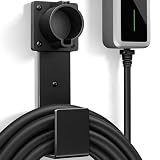
- Fit J1772 Connector: Designed to securely hold standard J1772 charging connectors, keeping them stable, properly positioned, and protected when not in use.
- Heavy-Duty Construction: Made from solid stainless steel for strong load-bearing support, rust resistance, and long-lasting durability.
- Cable Protection: The integrated hook design supports and organizes the charging cable, preventing tangles and reducing bending or strain over time.
- Keep Garage Tidy: Provides a dedicated storage solution for your EV charger, keeping the plug and cable off the floor while maintaining a clean and organized charging area.
- Easy Installation: Comes with all necessary mounting screws for quick and secure wall installation, suitable for garage walls, studs, or other solid surfaces.
Do not attempt to repair a damaged high-voltage battery yourself. Follow the manufacturer’s emergency and towing instructions, contact emergency services when appropriate, and make sure towing, storage, and repair providers understand the vehicle’s high-voltage procedures. These precautions concern unusual damage scenarios; they do not mean that normal BEV operation is inherently unsafe.
Which is better for different drivers?
A BEV may be the better fit if:
- You have dependable home or workplace charging.
- Your daily driving is predictable and comfortably within the vehicle’s practical range.
- You value lower routine powertrain maintenance and quiet electric operation.
- Your local electricity rates and charging habits produce acceptable operating costs.
- Zero tailpipe emissions and potentially lower lifecycle emissions are important priorities.
An ICEV may be the better fit if:
- You lack reliable home or workplace charging.
- You frequently take long trips and prioritize quick, familiar liquid-fuel refueling.
- Your towing, payload, cold-weather, rural-travel, or work needs are better met by a particular ICEV model.
- You want the broadest existing fueling network and do not want to plan around charging stops.
- Your budget or local vehicle inventory favors an ICEV after comparing the complete ownership cost.
A PHEV may make sense as a compromise if:
- You can charge for routine trips but want gasoline capability for longer journeys.
- You accept the additional complexity of carrying both an electric drivetrain and an engine.
- You will actually plug it in regularly. If it is rarely charged, much of its potential fuel and emissions benefit may not be realized.
A PHEV’s emissions depend partly on the electricity source and how often it operates in all-electric mode, so do not evaluate it solely by its maximum advertised electric range.
A practical buying checklist
- Record your real use: Estimate normal daily miles, weekly mileage, road trips, towing, passenger loads, and winter or summer conditions.
- Audit charging access: Identify a usable home outlet, workplace charging, nearby public chargers, and backup options. Apartment renters should confirm permission, parking assignment, and installation responsibility.
- Compare the complete energy routine: Include the time and inconvenience of charging, not only the price per mile.
- Calculate local ownership cost: Use the exact models, annual mileage, electricity and fuel prices, installation cost, insurance, taxes, maintenance, tires, financing, and expected ownership period.
- Check the vehicle-specific details: Confirm usable range, cold-weather behavior, towing rating, cargo space, charge-port standard, AC and DC charging limits, warranty terms, and service availability.
- Review safety data: Check the exact vehicle’s crash ratings and learn the manufacturer’s towing and emergency procedures.
- Verify current information before signing: Incentives, fuel prices, utility rates, public-charging coverage, connector policies, product prices, warranties, and safety ratings can change.
Bottom line
A BEV replaces the engine-and-fuel-station routine with a battery-and-charging routine. It generally offers lower routine powertrain maintenance and zero tailpipe emissions, while requiring more attention to charging access, trip planning, battery performance, and high-voltage safety after serious damage. An ICEV offers familiar liquid-fuel refueling and often simpler long-distance logistics, but it has more combustion-related maintenance and produces tailpipe emissions.
For most buyers, charging access and use pattern should be the first screening questions. Once those fit, compare the exact vehicles using local energy prices, full ownership costs, safety ratings, and the emissions assumptions that matter to you.
Frequently Asked Questions
Is every EV a fully electric vehicle?
No. EV can refer to a BEV, PHEV, or sometimes an HEV in consumer writing. A BEV runs only on electricity, a PHEV has both a plug-in battery and an engine, and a conventional HEV is not normally plugged in.
Are EVs completely emission-free?
A BEV has zero tailpipe emissions, but its full lifecycle includes electricity generation, battery and vehicle manufacturing, raw-material extraction, and end-of-life impacts. The overall result depends on the vehicle, battery size, electricity mix, and lifetime mileage.
Quick wins for a faster PC:
Scan for outdated or missing drivers - takes under a minuteDriver Scan →Clear out junk files and repair common Windows errorsFree Scan →Fix the driver behind crashes, sound loss and screen glitchesFind Drivers →Do I need a Level 2 charger to own a BEV?
It depends on mileage and charging access. Level 1 may be adequate for low daily mileage, while higher-mileage drivers may prefer Level 2. Public DC fast charging is useful for longer trips but should not be assumed to cost or perform like home charging.
Are electric cars maintenance-free?
No. BEVs still need tires, suspension and steering service, cabin filters, climate-system attention, inspections, and other manufacturer-specified maintenance. They generally need less powertrain maintenance because they have no engine oil changes and fewer combustion-related components.
How long will an EV battery last, and how much does replacement cost?
No universal replacement cost or ownership timeline is reliable. Battery durability depends on chemistry, design, use, temperature, mileage, warranty coverage, parts availability, and labor. Check the exact vehicle’s battery warranty and capacity terms.
The Bottom Line
Choose the drivetrain that matches your routine: a BEV is most convenient when you can charge reliably and drive within its practical range; an ICEV remains attractive when fast refueling, frequent long trips, towing, or limited charging access dominate. Compare specific models and local costs rather than assuming one technology always wins.
Recommended Free Tools
Quick Recap
Product prices and availability are accurate as of the date/time indicated and are subject to change. Any price and availability information displayed on Amazon at the time of purchase will apply.




