An electric motorcycle’s advertised range is a result from a particular test or riding scenario, not a promise that every rider will travel that far. Your actual distance depends on how fast you ride, how often you accelerate, the route’s hills, temperature, carried load, tire pressure, battery condition and other factors. The most useful estimate starts with the exact model’s range claim, checks what conditions produced it, then uses energy consumption from representative rides on your own routes. Keep a reserve; no universal percentage reliably converts a test figure into every rider’s real-world range.
What an electric motorcycle range claim tells you
A published range is meaningful only alongside its test method and conditions. It is an estimate generated under a defined procedure, not an individual-trip guarantee. Two manufacturers’ headline numbers may not be directly comparable if they refer to different test cycles, markets or riding scenarios.
As an Amazon Associate I earn from qualifying purchases.
ISO 23280:2022 sets out a motor-dynamometer test method for evaluating energy performance in electric motorcycles and mopeds. The standard’s abstract says: “This method provides estimates of specific energy consumption and range of an electric moped or motorcycle to which the traction motor system is intended to be applied.” It applies to two-wheeled motorcycles and mopeds and was published on May 11, 2022. Read the ISO 23280:2022 abstract.
Another standard you may see is SAE J2982_202210, a recommended practice for riding-range tests on on-highway electric motorcycles. Its scope includes range estimates for urban stop-and-go riding and for urban commuting that includes freeway operation. SAE revised it on October 13, 2022. The standard record describes test scope; it does not provide a universal consumer formula for translating a claimed range into a personal trip distance. See the SAE J2982_202210 scope.
#1 Best Overall

- PRO ACCURACY - mechanic recommended, performance tested, & calibrated accurate to professional ANSI 2A standards - with dual pressure sensors certified to ±0.50% FS (0.50 PSI), offering reliable readings up to 100 PSI w/ precise readout resolution of 0.10 PSI - so you can now maintain your tires with a shop-grade mechanic trusted tool
- STRONG & RUGGED - feels solid in the hand & built to last from 100% solid brass & steel parts shielded by our shock-resistant gear-style protective guard to protect against drops & impact. Features ultra soft & strong 10" fully rotational, leak-proof HybridFlex air hose w/ 360 swivel angled air chuck that can be swapped out w/ any 1/4" NPT chuck
- ADVANCED ENGINEERING - all readings lock-on to the display until the "ON" button is pressed once to reset to zero. Features built-in air bleeder valve that bleeds pressure in real time without needing to reset the display - ideal for cars, trucks, motorcycles, bikes, RV & trailers, spare tires, and much more
- SMART DISPLAY - features high-resolution digital 2.5 inch LCD display screen w/ battery life indicator & bright LED backlight for high visibility in the dark. Gauge is programmed to auto shut-off after 150 seconds of inactivity to save battery (2x AAA batteries included)
- 100% Lifetime Warranty by JACO - serving the automotive industry for 35+ years. Enjoy longer-lasting tires, improved fuel economy, and superior vehicle performance & handling with properly inflated tires.
WMTC is another test label a buyer may encounter. Maeving says the RM2’s “up to 80 miles” claim is verified by WMTC and describes that cycle as comprising urban, rural and motorway phases in equal measure. The manufacturer also says its tested rider weights were 75–110 kg. Those details describe Maeving’s claim and testing; they are not a benchmark that can be transferred to another electric motorcycle. The manufacturer says actual distance varies with use and conditions. Read Maeving’s range guidance.
“Up to” deserves particular attention: it signals a best-case or test-based ceiling, not a distance every rider should expect on every route. Before comparing numbers, identify the exact model and market, the stated test cycle, whether the claim is explicitly conditional, and whether the manufacturer explains a particular riding scenario. If those details are absent, the headline number provides less basis for predicting your commute.
Why your real-world distance changes
Range is shaped by the energy the motorcycle uses over a route and the energy available from its battery. Conditions that make the bike use more energy per mile—or reduce the battery’s available capacity—can shorten the distance. The effects interact: a fast, hilly ride in cold weather with extra luggage is not simply one isolated “highway” or “winter” case.
Speed and acceleration
Speed and riding style are often the first conditions to compare with a range claim. Maeving says high speeds and aggressive acceleration can drain its batteries faster than slow-moving city travel. A steady pace and repeated bursts of acceleration are different demands even if the trip covers the same distance.
Look at how much of your route involves sustained fast riding, not just the route label. A commute described as “mostly city” may still include a long, fast section; a route with frequent stops may also involve brisk acceleration between them. The test cycle or manufacturer scenario is useful only to the extent that its pace and riding pattern resemble yours. Maeving’s guidance is specific to its own motorcycle, so treat it as an example of the factor, not a numerical prediction for every model.
Rank #2

- 90 degree head for those difficult to access valve stems.
- High quality all metal construction.
- 5-50psi (50-300kPa) readout.
- Made by Counteract Balancing Beads.
- Packaged individually. Custom red head with black anodized body with Counteract engraving.
Hills and the route profile
Climbing hills can increase battery drain. Maeving identifies hilly terrain as a factor that can reduce its range. For an estimate, consider the actual elevation changes and the direction of travel rather than treating every mile as equivalent. A route with sustained climbs may differ from a flatter route of the same distance; a round trip may also have a different energy pattern from the outbound leg alone.
SAE’s test scope distinguishes urban commuting that may include freeway operation, a reminder that a measured range depends on the riding pattern represented by the test. It does not establish a specific penalty for hills or freeway miles. Use the motorcycle maker’s scenario guidance or your own measured rides to estimate those effects rather than adding an unsupported fixed reduction.
What’s actually slowing this PC down?
Pick the symptom - the matching free tool is one click away.
Weather and temperature
Temperature can change real-world EV performance. The U.S. Environmental Protection Agency lists cold temperatures among factors that can affect the range seen outside its basic laboratory test procedure. An Electric Motion manual also lists weather and extreme temperatures among range considerations. Neither source establishes a single cold-weather percentage that applies to every motorcycle and set of conditions.
For a winter commute, use observations from rides in similar temperatures if available, and avoid assuming that a warm-weather test figure will carry over unchanged. Do not apply an unverified “winter discount” as though it were a model-specific measurement. If the manufacturer provides temperature guidance for your motorcycle, use that information; otherwise, build conservatism into the trip plan and collect representative data.
Rider, passenger and luggage
The weight the motorcycle carries matters to the estimate. Maeving notes rider weight in its range guidance, and an Electric Motion manual lists total carried load as a factor. Consider the actual configuration for the trip: rider alone, passenger, luggage, or some combination. A claimed figure measured under different load conditions may not describe your use.
Rank #3

- PROCESS LEVEL ACCURACY: Each ETENWOLF’s digital tire pressure gauge is calibrated manually to ANSI B40.7 Grade 2A(plus-minus 1 PSI).Presta valve adapter not included, if used for bicycles, it must be purchased separately
- ACCURACY IN EXTREME PRESSURE RANGE: Whether tire pressure is below 12 PSI or above 140 PSI, ETENWOLF’s digital tire gauge is accurate as well
- ACCURACY IN EXTREME WEATHER: Built-in AI chip with thermal compensation inside, ETENWOLF’s tire gauge works normally even in extreme cold or hot weather(-4°F-130°F/-20°C-54°C)
- PRESSURE RANGE 3-200 PSI : ETENWOLF’s digital tire pressure gauge can measure pressure of all types of vehicles
- REPLACEABLE AAA BATTERIES: Batteries are easy to replace and helps to extend the tire pressure gauge’s life span, with LED light to illuminate dark areas for easy tire pressure reading
Do not infer a precise range change per kilogram from those general statements; the cited sources do not quantify one. Instead, compare like with like when possible: a ride with the same passenger or luggage load is more informative for planning than a solo ride that differs in several other ways.
Do these 3 things before closing this tab:
1Scan for outdated or missing drivers - takes under a minute2Repair Windows errors before they cause bigger problems3Fix the driver behind crashes, sound loss and screen glitchesTire pressure and battery condition
An Electric Motion manual names tire pressure and battery age or capacity condition among factors that can affect range. Check tire pressure against the specific motorcycle’s manual, not a generic target, and follow the maker’s battery-care instructions. The manual does not quantify a range gain from any single maintenance action, so correct pressure is sensible upkeep rather than a guaranteed mileage increase.
Battery condition also matters when comparing a new-bike figure with an older motorcycle’s current performance. A battery’s age or capacity condition may mean the energy available for a ride differs from what it was when new. If the motorcycle provides a reliable measure of energy use or battery state, record it over time. That can help distinguish a recurring pattern from the conditions of one unusual trip.
Regenerative braking and stop patterns
The Electric Motion manual includes the number of regenerative braking events among factors associated with range. Regeneration recovers some energy during deceleration, but that does not justify assuming that more braking always produces a fixed range increase. The net result depends on the route and the motorcycle; the cited manual gives no universal amount.
When comparing rides, note whether the route involved frequent slowing and deceleration, long uninterrupted stretches, or a different pattern of stops. Keep those observations alongside speed and terrain instead of trying to assign an unsupported benefit to regeneration alone.
Rank #4
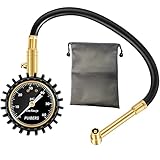
- 1. Reliable Air Pressure Gauge for Tires, full gear precision movement with bronze bourdon tube, no battery required, durable brass construction, accuracy meets ANSI Grade B40.1 Standards, more accurate and reliable than digital tire pressure gauge, maintains good performance for many years.
- 2. Legiable Luminous Dial, glow in the dark, clear display, easy to read even in very low light conditions; Patented design flexible hose and professional 90 degree right angle chuck design, very suitable for motorcycles, car, bike measurement.
- 3. Metric range design, range to 60 psi, meet your reading needs. 60 PSI Right Angle Chuck air gauge tire pressure is perfect for your motorcycle, bike, car, dirt bike, SUV, etc. for Scharder valves.
- 4. Heavy Duty Strong Structure Ensures Its Long Service Life,accurate pressure holding and quick pressure relief function; Larger button is conformed to ergonomic design which makes it more comfortable to press. An ideal gift for Father's Day or Christmas.
- 5. PUIBERS has professional car tire pressure gauge design. After continuous testing, more perfect tire pressure gauge for cars is designed. The quality can be guaranteed and the life-long friendly customer support. Buy with confidence, save a fortune with improved gas mileage, and enjoy a smoother and safer driving experience.
How to estimate range for your own route
The strongest personal estimate combines the exact motorcycle’s published claim with measured energy use from rides that resemble your real trips. A single ride is a useful observation, not a universal answer. The following process keeps the test basis, route conditions and reserve visible rather than hiding them inside a guessed conversion factor.
- Identify the exact motorcycle and claim. Record the model, market, range wording and test basis. Note whether the manufacturer names WMTC, SAE, another cycle, or gives only an “up to” figure. Do not compare bare headline numbers as if they necessarily came from equivalent procedures. ISO and SAE describe test methods and scopes, while manufacturer guidance may tie a claim to a specific model or scenario. ISO 23280:2022, SAE J2982_202210.
- Describe the route you need to cover. Note total distance, sustained fast-road sections, typical pace, hills, expected temperature, rider and luggage load, and riding style. For a round trip, consider the complete trip rather than assuming the return leg will exactly undo the outbound energy use.
- Match that route to the maker’s guidance. Look for the conditions behind the range figure or model-specific advice. If your trip has substantially more high-speed riding, hills, cold weather or carried load than the described scenario, treat the headline as a less direct guide. Maeving, for example, says higher speed and hilly terrain can lower its RM2’s achievable range relative to slow city travel; that is its model-specific guidance, not a general conversion rule. Maeving range guidance.
- Measure a representative ride. On a route similar to the one you plan to ride, record distance and the battery energy used, using the motorcycle’s display or another reliable measurement. Record the relevant conditions too. Repeat the observation on more than one representative ride, particularly if your trips vary by season, speed or load.
- Calculate an energy-based estimate. If usable battery energy is known and expressed in the same units as the measured consumption, divide usable energy by energy used per unit distance. In symbols: estimated distance = usable battery energy ÷ observed energy per distance. For example, if a rider measures energy consumption as E units per mile and has B usable units available for the planned portion of the battery, the arithmetic estimate is B ÷ E miles. This is a transparent calculation, not a standardized motorcycle conversion formula.
- Use the dashboard’s state-of-charge display carefully. If energy in matching units is unavailable but the bike reports battery percentage, you can compare distance traveled with the percentage used on representative rides. That gives an observed distance-per-percentage relationship for those conditions, not a universal property of the battery. Do not assume that a percentage-based estimate transfers to a different route or battery condition without checking it against further rides.
- Plan below the estimate. Choose a conservative result from representative rides and leave a reserve for conditions that could be less favorable than the test ride. The sources identify factors that can reduce range but do not prescribe one reserve percentage for every motorcycle, route and rider. Set the reserve according to your route, uncertainty and access to charging rather than applying a universal number.
For an estimate to be useful, keep the units and comparison consistent. If consumption is recorded in energy per mile, use battery energy in the same unit system; if you use kilometers, calculate consumption per kilometer. Do not mix a test-cycle headline, a dashboard percentage and a measured energy figure as if they were interchangeable. If the bike’s display reports only a range prediction, treat it as an estimate rather than a direct measurement of the energy your route will consume.
How to compare electric motorcycles for your use
When choosing between motorcycles, compare the evidence behind each range claim before comparing the numbers. The useful question is not simply which bike has the larger maximum figure; it is whether your ordinary route fits the motorcycle’s likely range with a sensible reserve under plausible conditions.
| What to compare | Why it matters | What to record |
|---|---|---|
| Exact model and market | Specifications and claims may be specific to a model or market. | Model name, market, and the source of the claim. |
| Claim wording and test cycle | A test-based estimate is conditional; different cycles do not automatically make headline values equivalent. | “Up to” wording, named cycle, and any stated scenario or test details. |
| Usable battery energy | Energy available for the trip is the basis for an energy-consumption estimate. | Usable energy if stated by the manufacturer; otherwise note that it is not established in the information you have. |
| Closest riding scenario | A representative scenario is more informative than a maximum claim detached from your route. | Expected pace, fast-road share, stop pattern, and manufacturer guidance. |
| Route and weather fit | Hills and temperature can make your use differ from a test or advertised scenario. | Route profile and the temperatures in which you expect to ride. |
| Load and battery condition | Rider, passenger, luggage and battery condition affect how closely a published figure applies. | Typical trip load and whether the battery is new or has an established usage history. |
| Observed consumption | Representative rides offer a more personal estimate than an unsupported test-to-road discount. | Distance, energy or state-of-charge change, and conditions for each ride. |
Use this comparison to test your everyday round trip, not just a best-case outing. If your route is faster, hillier, colder or more heavily loaded than the scenario behind the claim, look for model-specific guidance or collect representative measurements before relying on the maximum figure. A larger advertised number alone does not establish a better fit for a fast or hilly commute.
Quick wins for a faster PC:
Repair Windows errors before they cause bigger problemsFix Now →Scan for outdated or missing drivers - takes under a minuteDriver Scan →Clear out junk files and repair common Windows errorsFree Scan →Why there is no universal range haircut
It is tempting to subtract the same percentage from every advertised figure to make it “real world.” The available motorcycle sources do not support that shortcut. The effect of speed, hills, temperature, load, tire pressure and battery state depends on the specific motorcycle and trip conditions, and no motorcycle-wide real-world average or universal test-to-road conversion is established here.
Best Value
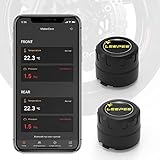
- New upgrade Designed: The LEEPEE TPMS 5.0 provides you with a faster, more accurate and more stable APP wireless connection to monitor the condition of your motorcycle tires in real-time. Only applicable to IOS and Android systems mobile phone, APP name“motorcare” (Not applicable to bicycles)
- Multiple Alert Modes: Tire Pressure Monitoring System monitors your tire condition in real time. Provide a variety of alarm conditions for your car, high and low-pressure alarm, air leakage alarm, high and low-temperature alarm, battery level alarm
- Intelligent Operation: Instantly activates or deactivates for peace of mind. The sensor enters sleep mode after 10 minutes of vehicle inactivity, conserving energy. It reawakens upon vibration and updates in real-time through the APP
- All-Weather Protection: The LEEPEE TPMS features a rugged, waterproof and dustproof construction. Withstanding extreme temperatures, it guards you year-round, accompanying you on all your mountainous and aquatic adventures
- Protection from Tire Pressure Mishaps: Abnormal tire issues can lead to serious incidents. Low pressure degrades riding quality and speeds up tire wear. Cornering risks increase, making rollovers more likely
The EPA’s commonly cited 0.7 adjustment factor should not be repurposed as an electric motorcycle rule. The EPA explains that its EV range testing uses a laboratory dynamometer and accounts for factors such as cold temperatures, high speed and aggressive driving; its page says the most common approach in its procedure uses a 0.7 factor, while other approaches are allowed. That discussion concerns U.S. cars and light trucks, not a universal motorcycle adjustment. Read the EPA’s explanation of fuel-economy and EV range testing.
For a motorcycle, replace a generic discount with the closest available evidence: a model-specific scenario, consumption measured on a representative route, and a reserve suited to the uncertainty in your trip. If a seller or specification gives no test basis or scenario, treat that missing context as uncertainty rather than silently assuming a conversion.
Common estimation mistakes
- Comparing maximum claims without the test basis. A headline number does not reveal whether two motorcycles were assessed under comparable procedures or scenarios.
- Treating a laboratory or test-cycle figure as a trip guarantee. Test methods estimate performance under defined conditions; they cannot represent every rider, route or weather pattern.
- Calling a route “city” or “highway” and stopping there. Pace, acceleration, fast-road share, hills and stop pattern all help determine how closely the trip matches a tested scenario.
- Applying a car-derived adjustment to a motorcycle. The EPA’s 0.7 factor is part of a U.S. car and light-truck procedure, not a motorcycle-wide rule.
- Turning one ride into a guaranteed range. A single measurement reflects that ride’s conditions. Repeat it across the conditions that matter to your use.
- Assuming more regeneration guarantees more distance. The Electric Motion manual identifies regenerative braking events as a factor but supplies no fixed range benefit.
- Ignoring the actual trip load or battery condition. A solo ride on a newer battery may not represent a trip with a passenger, luggage or an older battery.
- Planning to use every estimated mile. Any estimate includes uncertainty. Keep a reserve that reflects the route and the consequences of arriving with less range than expected.
What to do when a ride uses more range than expected
First compare the ride with the conditions used to form your estimate. Check whether the pace was higher, acceleration more frequent, the route hillier, the temperature lower, the load heavier or the battery in a different condition. These factors are identified in manufacturer guidance and manuals, but the sources do not assign a universal numerical penalty to each one.
Recommended Free Tools
Next, check the motorcycle’s tire pressure against its manual and review battery-care guidance. Record distance, energy use or battery percentage alongside the conditions, then compare the result with other rides on a similar route. If an unexpectedly high consumption pattern persists under comparable conditions, the riding log gives you a clearer basis for discussing the issue with the manufacturer or a qualified service provider than a one-off range prediction does.
If you are planning a trip before you have enough observations, use the most comparable manufacturer information available, avoid treating an “up to” claim as a guaranteed distance, and choose a route plan that does not depend on exhausting the battery. The more consequential a missed charging opportunity would be, the more conservative your estimate should be.
Quick Recap
Product prices and availability are accurate as of the date/time indicated and are subject to change. Any price and availability information displayed on Amazon at the time of purchase will apply.




