Free tools Windows power users keep installed
One-click scans. No signup required.
An electric dirt bike can deliver hours of off-road riding, but you need to plan around battery charge time; a gas bike can be refueled quickly, but its engine and fuel system add service needs. Neither powertrain is automatically cheaper to own. The right choice depends on how long you ride between chances to recharge or refuel, what service your exact model requires, and local purchase and energy costs.
For a current electric example, KTM estimates two to three hours of typical enduro riding for its 2027 FREERIDE E. Its supplied 660 W charger takes eight hours for a full charge, while an optional 3.3 kW charger is described as reducing that to about 1.5 hours. Those are manufacturer figures for one model, not a guaranteed distance or a direct comparison with a gas bike.
As an Amazon Associate I earn from qualifying purchases.
Range means different things on electric and gas dirt bikes
When comparing electric dirt bike vs. gas dirt bike range, start with the ride you actually want to do—not a battery capacity or fuel-tank number. Electric manufacturers may describe riding time; gas-bike specifications commonly give tank volume. Neither figure alone tells you how far the bike will travel on your trails.
What’s actually slowing this PC down?
Pick the symptom - the matching free tool is one click away.
Electric range is affected by the ride and the rider
KTM lists a 5.5 kWh battery for the 2027 FREERIDE E and estimates two to three hours of typical enduro riding. That is a riding-time estimate, not a distance figure. Speed, terrain, pace, and riding style affect the amount of energy a ride uses, so the estimate should not be treated as a promise that every rider will get the same session length. KTM calls the model low maintenance and describes it as quiet and easy to service; those are manufacturer descriptions, not independent test findings. KTM’s North America product information gives the battery and typical riding-time estimate.
#1 Best Overall

- High-Performance Motor: Inspired by true motocross, the IN10 electric dirt bike’s 2600W peak mid-drive motor crushes hills and trails with ease. This torque-packed beast conquers slopes up to 30° and rockets to 40 mph the moment you twist the throttle. Adventure is calling—ready to own the dirt?
- Ultimate Battery Safety: The IN10 e dirt bike features an advanced BMS system that safeguards every charge and every ride. Its removable, long-range battery delivers up to 53 miles of range—powering extended adventures with confidence and ease.
- Premium Full Suspension: Rear nitrogen shock delivers faster response, smoother comfort, and long-lasting durability. Paired with a 220mm-travel front hydraulic fork, the IN10 ebike maintains stable, consistent damping—even through long, demanding rides.
- Reliable Stop System: IN10 electric bike’s braking setup pairs advanced EABS with hydraulic disc brakes for powerful, precise stopping. Even on dusty or muddy terrain, it delivers stronger braking force and smoother control—keeping every ride confident and steady.
- Note: Before riding, please ensure that the brakes/wheels and other devices of the IN10 ebike are installed correctly. Before purchasing, check the local legal age or license requirements to ensure legal use. Teens should operate the bike only under adult supervision and must follow all local safety regulations.
Stark Future says the VARG may provide up to six hours of trail riding, depending on rider ability and track conditions. That is a separate manufacturer claim for another bike, not a result from a shared test protocol. It cannot establish that the VARG will last twice as long as the FREERIDE E: the claims describe different products and conditions. Stark Future’s VARG product page gives the conditional estimate.
To make a useful comparison, look for ride time or distance for the exact model under conditions resembling your own. If the manufacturer gives only hours, think in terms of your typical session length. A short local loop with a charging opportunity between sessions presents a different range problem from a remote ride with no charging access.
A gas tank’s capacity is not a range claim
KTM’s 2024 Enduro Range Press Kit lists 8.5 L tanks for its four-stroke models and 9 L tanks for its two-stroke models. Those capacities apply to that model family and year; they do not establish how far a rider can travel. Distance also depends on fuel consumption and riding conditions, and the cited specifications do not supply a matching consumption figure. Do not convert those tank volumes into hours or kilometres without model-specific consumption data. KTM’s 2024 Enduro range information identifies the capacities.
Quick wins for a faster PC:
Clear out junk files and repair common Windows errorsFree Scan →Scan for outdated or missing drivers - takes under a minuteDriver Scan →Repair Windows errors before they cause bigger problemsFix Now →A fair comparison keeps the important conditions as close as possible: bike class, terrain, pace, and time spent riding. Compare a claimed electric session with your expected gas-bike session, but do not treat a published estimate for one model as a measured head-to-head result. The available manufacturer figures do not establish a universal range winner.
Charging time is the central electric-bike planning trade-off
Electric riding replaces fuel stops with charging decisions. On the 2027 FREERIDE E, KTM’s United States technical specifications list the supplied charger at 660 W, with 360 minutes to reach 80% and 480 minutes to reach 100%. KTM’s 2026 press information says an optional 3.3 kW charger can charge the battery fully in about 1.5 hours. These are model-specific manufacturer figures; the faster charger is optional, not the supplied unit. Check the exact model’s current specifications and charger availability before planning around the shorter time.
Rank #2

- 3500W Peak Power & 220Nm Torque** - Unleashes rapid acceleration and conquers 35° off-road climbs with ease. Reaches 38-46mph top speed in seconds, delivering dirt bike-level performance for adult thrill-seekers.
- 53-Mile Range & 48V 23Ah Battery** - High-capacity lithium battery supports continuous trail riding. Fast 6-hour full charge gets you back on the road overnight. Battery management system prevents overheat, overcharge, and short circuits.
- Nitrogen-Filled Technology** - Prevents hydraulic oil from forming bubbles (cavitation) under high temperatures or continuous jolts, ensuring shock absorption performance remains unaffected after 5 hours of high-intensity off-road driving.Compared to conventional hydraulic dampers, it maintains 90% of performance during continuous use, preventing loss of control due to shock failure.
- Dual Hydraulic Disc Brakes & Steel Frame** - Large front and rear brake discs deliver consistent stopping power in mud, water, and sand. Reinforced steel frame supports up to 265 lbs while maintaining agile handling.
- TUV Certified & 1-Year Warranty** - Meets strict safety standards for electric bicycles. Easy assemble with tools included. US-based customer support and replacement parts available nationwide.
The practical question is not simply whether a bike can be charged, but whether the charge time fits the way you ride. Consider the interval between sessions, whether a charging point will be available where you park, and whether the bike’s published charging arrangement suits that location. If your ride plan depends on an optional charger, include that equipment in the purchase and logistics decision rather than assuming it comes with the bike.
Map your riding day before choosing
- Write down your normal session. Record how many hours you ride before returning to a place where you could refuel or recharge. Use your own riding pattern rather than the longest advertised claim.
- Identify the turnaround point. For an electric bike, determine whether a compatible charging opportunity exists there and how much time you can wait. For a gas bike, identify where refueling is practical.
- Compare the specific bike’s published figures. Check the model year, battery or tank specification, charger supplied, optional charging equipment, and conditions attached to any claimed riding time.
- Plan for the gap between rides. If the next session begins before the electric bike can recharge under your setup, decide whether a different charger, a longer break, or a different bike better fits the day. Do not assume a quick-charge claim applies to the supplied charger.
- Allow for uncertainty. Manufacturer estimates are not a guarantee for your terrain, pace, or riding style. Avoid scheduling a remote ride around the last possible portion of a range claim.
This planning is especially important when comparing a battery estimate with a gas bike. A gas bike can be replenished rather than waiting for a battery recharge, but how convenient that is depends on access to fuel and the ride location. Neither option removes the need to plan energy supply.
Maintenance: fewer engine tasks does not mean no maintenance
An electric dirt bike avoids routine combustion-engine and fuel-system service. That can reduce the number of powertrain systems requiring attention, but the motorcycle still has wear items and mechanical components to maintain. Tires, chain and sprockets, brakes, bearings, and suspension need care on either type of bike.
A gas dirt bike adds engine-related work and fuel-system service. KTM’s conventional Enduro materials discuss air-filter and combustion-engine design, but they do not provide a complete, comparable service schedule for every model. Service intervals vary with model and use. The owner’s manual for the exact model and year—not a generic electric-versus-gas rule—is the source to use for scheduled work.
What the powertrain changes
| Area | Electric dirt bike | Gas dirt bike |
|---|---|---|
| Combustion engine and fuel system | Avoids routine combustion-engine and fuel-system service. | Adds engine-related and fuel-system maintenance. |
| Shared motorcycle wear | Tires, chain and sprockets, brakes, bearings, and suspension still need care. | Tires, chain and sprockets, brakes, bearings, and suspension still need care. |
| Service schedule | Use the owner’s manual for the exact model and year; the schedule depends on the bike and use. | Use the owner’s manual for the exact model and year; the schedule depends on the bike and use. |
The table describes the difference in powertrain-related service, not a claim that every electric bike requires fewer total shop visits or costs less to maintain. A rider who uses either bike hard still needs to account for shared wear items, and the evidence available here does not establish a universal interval or bill for either type.
Rank #3
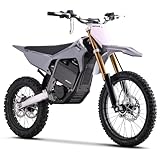
- High-Performance Electric Dirt Bike:Dominate any terrain with the explosive power of the 72V 8000W motor. This electric motorcycle rockets to a thrilling top speed of 56 MPH, delivering the adrenaline rush and performance that both teens and adults crave for true off-road adventures on mountains and beyond.
- Adaptable Control for 3 Level:Enjoy user-friendly operation with 3 adjustable speed modes(28/40/56 MPH), a vital-info LCD display, and key lock security. Designed for quick setup, this KOOZ motor bike arrives mostly assembled—get ready to hit the mountains and experience ultimate off-road freedom!
- Professional-Grade Suspension System:This electric dirt bike for adults lets you conquer rugged trails with confidence. The hydraulic inverted fork and dual shock absorb brutal impacts for smooth control(2 front hydraulic shocks, 1 rear damping shock), while the advanced hydraulic brakes offer unwavering stopping power, keeping you safe on unpredictable mountain and off-road terrain.
- Long-Range Rugged Build:Built tough for riders up. With aggressive 19"/16" knobby tires and a sturdy chain drive system, this electric motorcycle masters mud, dirt, and steep slopes. Go the distance with the high-capacity 72V35AH ternary lithium battery,ensuring your electric motorcycle adventure doesn't end prematurely.
- Ready for Adventure – Ride Responsibly:Your ultimate mountain off-road machine awaits. Always perform a pre-ride safety check. Teen riders must operate under adult supervision and comply with all local laws regarding age, licenses, and approved riding areas for electric dirt bikes.
Build a service comparison from the manuals
- Use the exact model and year. Locate the owner’s manual for each bike under consideration. Do not transfer an interval from a different engine, model family, or year.
- List scheduled tasks and timing. Copy each required task and its interval into a side-by-side checklist. Keep any conditions or usage qualifications attached to the interval.
- Add wear items separately. Include the tires, chain and sprockets, brakes, bearings, and suspension work you expect to pay for or perform. These remain relevant whichever powertrain you choose.
- Price the work locally. Ask a service provider for estimates against the actual manuals and your expected riding. Record parts and labor separately so you can update the comparison if your use changes.
- Keep a maintenance log. Record date, riding hours or use, work completed, parts, and invoice amount. Your own log is more useful for a future ownership decision than a generic claim that one powertrain is maintenance-free.
Do not infer a full maintenance schedule from a product page calling a bike “low maintenance.” For example, KTM uses that description for the 2027 FREERIDE E, but the exact manual remains necessary for service requirements. Conversely, the existence of engine maintenance on a gas bike does not by itself prove that it will have a higher total annual service bill; the actual schedule, labor, and use matter.
Outdated Drivers Are Slowing You Down
One free scan finds every outdated or missing driver and matches the right update for your exact hardware.Free scan · exact hardware matchPC Slower Than It Used to Be?
A free scan shows the junk files, broken settings and background clutter dragging Windows down - then fixes them in one click.Free scan · Windows 10 & 11How to compare riding and ownership costs
There is no established universal cost-per-ride or lifetime-cost figure that settles the electric-versus-gas question. A meaningful estimate needs local purchase prices, electricity and gasoline rates, service invoices, battery warranty or replacement terms, and annual riding hours. Without those buyer- and market-specific inputs, a savings percentage would be misleading.
Separate the costs instead of guessing at a total
Use a worksheet for each exact model. Keep one-time purchase costs apart from recurring costs and conditional future expenses. This makes it clear which assumptions drive the result and prevents a low energy cost from obscuring a large purchase-price or replacement-cost difference.
| Cost category | Electric bike | Gas bike |
|---|---|---|
| Purchase | Local price for the exact model and any charging equipment needed. | Local price for the exact model. |
| Energy per year | Electricity used for charging multiplied by the local electricity rate. | Fuel consumed multiplied by the local gasoline rate. |
| Scheduled service | Tasks and intervals from the exact owner’s manual, priced locally. | Tasks and intervals from the exact owner’s manual, priced locally. |
| Shared wear items | Tires, chain and sprockets, brakes, bearings, and suspension, based on expected use and local prices. | Tires, chain and sprockets, brakes, bearings, and suspension, based on expected use and local prices. |
| Battery or replacement exposure | Check warranty terms and obtain a model-specific replacement cost if available. | Record relevant model-specific replacement or repair costs from a dealer or service provider. |
The entries in this table are categories and calculation methods, not quoted prices. Actual purchase and service costs depend on the region, model, dealer, and rider. The available sources do not provide comparable local energy prices, a battery replacement quote, or matched ownership-cost totals.
Calculate cost per riding hour
Once you have real costs, choose a time horizon that matches how long you expect to keep the bike. For each powertrain, add the purchase cost, energy, scheduled service, shared wear items, and any relevant equipment or repair expenses during that period. Divide that total by the riding hours in the same period:
Rank #4

- Powerful 4000W Electric dirt bike for Unmatched Off-Road and Commuting Performance: Equipped with a 4000W peak power mid-mounted motor that delivers 230Nm of high torque, this electric dirt bike reaches a maximum speed of 45MPH, easily conquers 30 uphill slopes, and accelerates from 0 to 20MPH in just 1.5 seconds. It provides reliable power for off-road trail exploration, mountain riding, and desert adventures
- 48V 23Ah Removable UL-Certified Battery with 40-Mile Long Range Dirt bike: The 48V 23Ah removable lithium battery offers up to 40 miles of riding range on a single charge. You can simply twist the knob to open the seat and take out the battery for convenient charging anywhere, without moving the whole vehicle. UL-certified with a built-in BMS (Battery Management System), the battery ensures safe charging, stable discharge, and long service life
- All-Terrain Design with Premium Suspension System for Smooth Rides: Featuring 14-inch front and 12-inch rear all-terrain fat tires, this electric motorcycle provides superior grip and traction on dirt, sand, gravel, pavement, and other complex road conditions. Paired with an inverted hydraulic front shock absorber and a nitrogen-filled hydraulic rear shock absorber, it effectively absorbs bumps and vibrations, delivering a stable and comfortable riding experience even on rough off-road terrain
- Safe and Humanized Design for All-Day Riding Comfort: This electric moped is equipped with hydraulic disc brakes with red brake calipers for reliable and responsive stopping power, ensuring riding safety. It also comes with a reverse function for easy parking and maneuvering, a colorful LCD dashboard for real-time monitoring of speed and battery level, a shock-absorbing seat to reduce long-ride fatigue, and a full lighting system including front headlight and hazard warning lights
- Stylish Appearance with Wide Compatibility and Thoughtful Extras: Designed with a sleek solid black carbon fiber pattern appearance, this electric dirt bike combines rugged performance with modern style. Ebike has a 330lbs load capacity and is suitable for adult riders with a height of 5.4 inches to 6.5 inches, fitting most users. Each purchase comes with a phone holder and disc lock as gifts, adding extra convenience for your riding and anti-theft protection for your vehicle
Estimated cost per riding hour = total ownership costs over the chosen period ÷ riding hours over that period.
Keep the assumptions visible. If you ride more hours, fixed costs such as the purchase price are spread over more riding time, while energy and some maintenance expenses may also change with use. Do not treat a single-year estimate as a lifetime forecast, or assume costs recur at a fixed rate unless the service schedule or your invoices support that assumption.
- Set the comparison period. Use the same number of years and expected riding hours for both bikes.
- Gather actual local inputs. Record the quoted purchase price, local energy rates, manual-based service estimates, and prices for shared wear items.
- Check battery terms. For an electric model, review the specific warranty and obtain a replacement estimate rather than assuming either that the battery will need replacement soon or that it will never need replacing.
- Use your own usage estimate. Estimate annual riding hours and energy or fuel needs for your riding pattern. Do not substitute the tank volume for fuel consumption or a battery’s kWh figure for a range claim.
- Calculate each bike on the same basis. Apply the same period and riding-hour assumptions, then compare the resulting estimates and note which inputs are uncertain.
KTM Sportmotorcycle UK announced a £8,999 launch price for the 2027 FREERIDE E, with expected arrival at authorized dealers from late April 2026. That is a UK announcement, not a US price or a guarantee of the current retail price in any market. It also does not make a valid price comparison with a gas bike unless the buyer has a comparable local quote for a similar model. KTM’s UK announcement provides that launch-price context.
Which type fits your riding?
Choose based on the constraint that matters most in your riding, then verify it against the exact models you can buy and service. Range, charging, maintenance, and cost are connected: a bike that is inexpensive to run on energy may not suit a day with no charging opportunity, and a convenient fuel stop does not erase the gas bike’s engine-related service requirements.
Do these 3 things before closing this tab:
1Scan for outdated or missing drivers - takes under a minute2Clear out junk files and repair common Windows errors3Fix the driver behind crashes, sound loss and screen glitches- Consider electric if the model’s estimated riding time suits your sessions, you can charge between rides, and the maintenance profile and local ownership costs work for you.
- Consider gas if your ride plan depends on replenishing energy without waiting for a battery charge and you are prepared to maintain the engine and fuel system under the model’s schedule.
- Compare both directly if purchase price or ongoing cost is the deciding factor. Gather actual regional quotes and use annual riding hours; published product specifications do not resolve those personal costs.
Noise and access can also change the decision. KTM describes its 2027 FREERIDE E as quiet, but local riding access, noise rules, and street-legal status depend on the specific location and motorcycle. Check local requirements and the exact bike’s status rather than assuming that electric power makes an off-road motorcycle legal on public roads or welcome on every trail.
What the published examples do—and do not—show
The available examples are manufacturer specifications and claims across different model years and vehicle families. KTM’s gas-bike tank figures are for its 2024 Enduro range; the electric specifications and riding-time estimate are for its 2027 FREERIDE E. The VARG figure is another manufacturer’s conditional product claim. These sources are useful for understanding the questions to ask, but they do not establish a controlled comparison of range, maintenance bills, or lifetime ownership cost.
For a current decision, verify the specifications for the model year and market you are shopping, read the manual, and request local pricing. Treat performance estimates as conditional, not guarantees, and make the cost comparison with the way you actually ride. The central difference remains practical: an electric bike’s energy replenishment depends on charging access and wait time, while a gas bike’s powertrain adds engine-related service.
Quick Recap
Product prices and availability are accurate as of the date/time indicated and are subject to change. Any price and availability information displayed on Amazon at the time of purchase will apply.




