What’s actually slowing this PC down?
Pick the symptom - the matching free tool is one click away.
Short answer: The 2023 Dodge Challenger SRT Demon 170 is substantially different from the 2018 Demon and is genuinely quicker. Its 1,025-hp figure requires E85 or an appropriate high-ethanol blend, while Dodge’s 8.91-second quarter-mile claim depends on a prepared surface and the correct launch and tire setup.
The 2018 Demon remains the historically important original, with up to 840 hp and a 9.65-second quarter-mile claim. Choose the 170 for maximum drag-strip performance and final-Last-Call significance; choose the 2018 for the original-icon experience or a more sensible price. For ordinary cruising, neither is an obvious value winner.
At a glance: the 2023 car is substantially more than a 2018 Demon with a bigger supercharger
| Category | 2018 Challenger SRT Demon | 2023 Challenger SRT Demon 170 |
|---|---|---|
| Production context | Limited run of approximately 3,300 cars: about 3,000 for the United States and 300 for Canada. | Dodge planned approximately 3,300 cars for the United States and Canada. It was the seventh and final Last Call model. |
| Engine | Supercharged 6.2-liter HEMI V8. | Supercharged 6.2-liter high-output HEMI V8 with extensive hardware and calibration changes. |
| Published output | 808 hp on premium fuel, or up to 840 hp with the supplied race calibration and suitable 100-octane fuel. | 900 hp and 810 lb-ft on E10; 1,025 hp and 945 lb-ft on E85 or an appropriate high-ethanol blend. |
| Transmission | Reinforced eight-speed automatic; no manual transmission was offered. | Revised eight-speed automatic with TransBrake 2.0 and configurable launch-torque profiles. |
| Factory performance claim | 9.65 seconds at 140 mph in the quarter-mile. | 1.66 seconds to 60 mph and 8.91 seconds at 151.17 mph in the quarter-mile, with 2.004 g of launch acceleration. |
| Traction strategy | Drag Mode, torque reserve, line lock, a production-car transbrake, drag-focused suspension tuning, and specialized drag radials. | Further-optimized weight transfer, revised launch software and driveline components, TransBrake 2.0, and separate street-wheel/tire equipment. |
| Best use | The original factory drag-car statement and the historically important first modern Demon. | Maximum straight-line performance and the final, most powerful factory Challenger drag car. |
That summary answers the central question: the Demon 170 is genuinely different. Its advantage is not just a larger supercharger or a cosmetic package. Dodge changed the engine specification, fuel strategy, launch system, suspension calibration, driveline hardware, and tire approach to make the additional output usable.
The more difficult question is whether that additional capability is worth the premium. For a drag racer or collector who specifically wants the final Last Call car, the answer can be yes. For ordinary cruising, occasional highway use, or a buyer paying a large dealer markup, the 2018 Demon can be the more satisfying value—and a less extreme Challenger may make more practical sense than either.
#1 Best Overall

- Pullback Action: Experience realistic racing with the pullback action feature.
- Opening Doors: Explore the intricate interior details with the opening door feature.
- 1:38 Scale: Enjoy a detailed 1:38 scale die-cast model (approx. 5 inches long).
- Authentic Design: Modeled after the iconic 1967 Ford Shelby Mustang GT500.
- Display Piece: A must-have collectible for car enthusiasts and model collectors.
The 2018 Demon: why the original still matters
The 2018 Challenger SRT Demon was already a purpose-built, street-legal drag car rather than a regular Challenger with a high-output engine. It introduced a combination of features that made repeated hard launches possible in a production vehicle: a reinforced eight-speed automatic, a transbrake, torque reserve, line lock, a power chiller, Drag Mode, drag-oriented suspension tuning, weight-saving measures, and factory drag-radial equipment.
Its published output needs the same qualification that applies to the 170. On premium fuel, the 2018 Demon was rated at 808 hp. With the supplied race ECU calibration and 100-octane fuel, Dodge quoted 840 hp. Its headline quarter-mile claim was 9.65 seconds at 140 mph.
That number made the original Demon the benchmark car that established the name. It also explains why the 2018 car remains desirable even after the arrival of a much quicker successor. The original has the first-mover story, the shock factor of the initial launch, and the significance of being the car that turned a factory Challenger into a drag-strip headline.
The engine was heavily modified compared with the regular Hellcat specification. Contemporary technical coverage described approximately half of its parts as new. In other words, the 2018 Demon was already a serious engineering exercise; the 170 did not start with an ordinary, untouched Hellcat engine.
What the Demon 170 changed
1. More power, but only with the right fuel
The 2023 Demon 170 has two important published output figures:
- 900 hp and 810 lb-ft on E10 gasoline.
- 1,025 hp and 945 lb-ft on E85 or a sufficiently high-ethanol blend.
The 1,025-hp number is therefore not what every Demon 170 produces at every fuel pump. Ethanol provides charge cooling and greater resistance to knock, allowing the supercharged engine to sustain more aggressive output. The car uses ethanol detection, but the owner still has to pay attention to fuel quality: commercially available E85 can vary considerably in its actual ethanol content.
On a simple headline comparison, 1,025 hp is 185 hp more than the 2018 Demon’s 840-hp race-fuel rating. That is not a completely equal comparison because the fuel requirements differ. A more conservative comparison is the 170 on E10 versus the 2018 Demon on its 840-hp calibration: even then, the newer car’s published rating is 60 hp higher. Against the 2018 car’s 808-hp premium-fuel figure, the E10-rated 170 has a 92-hp advantage.
Rank #2

- 1:25 scale, skill level 2, paint & glue required
- 82 parts
- Molded in white, clear, transparent red, and some chrome-plated parts
- Black vinyl tires
- Metal axle
The important point is that the engine was not treated as a bolt-on supercharger upgrade. Dodge described extensive component changes, and contemporary technical reporting said the 170 engine shared only the camshaft with the preceding high-output specification. That should not be interpreted as meaning the engines have no common architecture: both remain supercharged 6.2-liter HEMI V8s. It does mean that calling the Demon 170 a 2018 Demon with a bigger blower seriously understates the development work.
Free tools Windows power users keep installed
One-click scans. No signup required.
2. TransBrake 2.0 and better launch management
The original Demon’s production-car transbrake, torque reserve, line lock, and Drag Mode calibration were central to its identity. They allowed the driver to build launch energy while managing the automatic transmission and rear tires in a way a conventional street car could not.
The Demon 170 adds TransBrake 2.0, including multiple launch-torque profiles intended to match the power delivery to track conditions. That is a meaningful change because the car’s problem is not merely making power. It is converting that power into forward motion without instantly overpowering the rear tires.
Revised launch calibration and optimized weight-transfer tuning work alongside the additional engine output. The result is a more sophisticated launch package rather than simply a more powerful engine attached to the old system. It still does not remove the need for a suitable surface, correct tire setup, appropriate tire pressure, and a driver who understands the launch procedure.
3. Chassis, driveline, and tire changes
Dodge further optimized the suspension for weight transfer and revised relevant driveline components for the 170’s greater output. The car also came with a street-wheel/tire package intended to provide better road manners than the standard drag-focused setup.
The Tool Desk
Outbyte Driver Updater FREEFix the driver behind crashes, sound loss and screen glitchesFind Drivers →Outbyte PC Repair FREERepair Windows errors before they cause bigger problemsFix Now →This gives the 170 a broader operating envelope than the original Demon, but the distinction matters: its best advertised numbers still depend on purpose-selected tires and a prepared drag surface. The street setup does not turn the car into a comfortable grand-tourer, nor does it make the drag setup unnecessary when the goal is the quickest possible elapsed time.
The 2018 Demon’s drag-radial-first philosophy is part of its personality. The 170 preserves that focus while adding more electronic and mechanical tools to control the extra power. That is why the newer car is an engineering progression, not merely a special-edition badge.
Rank #3

- Authentically licensed product from Chevy
- A true American muscle car, this 1969 Chevy Corvette Stingray has been brought to you in a 1:24 die - cast model
- Crafted from durable materials such as 100% die - cast metal and premium rubber tires
- Our high - end casting method allows for feature rich details, such as an opening hood, doors, detailed interior, and trunk
- This premium die - cast model is a must have for any Chevy collection
How much quicker is the Demon 170 in practice?
On paper, the difference is substantial:
| Measure | 2018 Demon | Demon 170 | Difference in the published figures |
|---|---|---|---|
| Quarter-mile elapsed time | 9.65 seconds | 8.91 seconds | 0.74 second quicker for the 170 |
| Quarter-mile trap speed | 140 mph | 151.17 mph | 11.17 mph higher for the 170 |
| 0–60 mph | No directly comparable figure is used here. | 1.66 seconds | The 170’s claim is extraordinarily quick, but the launch conditions matter. |
| Launch acceleration | Not specified in the supplied comparison data. | 2.004 g | A measure of the force involved in the optimized launch. |
The 8.91-second quarter-mile is Dodge’s NHRA-certified benchmark, achieved with the appropriate ethanol blend and on a prepared surface. It is a valid official performance claim, but it is not a guarantee that every stock Demon 170 will run 8.91 seconds at every track.
Independent testing illustrates the difference between a controlled manufacturer benchmark and a repeatable result under changing conditions. Hagerty reportedly recorded a 9.72-second run in a comparison test, while other testers have reported slower times when the surface, weather, fuel, tire condition, or launch settings were not equivalent to Dodge’s test.
That does not make the factory number false. It means elapsed time is highly sensitive to density altitude, track preparation, tire temperature and pressure, fuel composition, launch-torque selection, and driver procedure. The 170’s hardware advantage is real, but readers should not assume they will see exactly a 0.74-second improvement in every street encounter or amateur track session.
Is the Demon 170 worth the hype?
The case for buying the 170
- You want the quickest factory Challenger. The 170 moves beyond the original Demon’s nine-second benchmark and adds the hardware and software needed to manage its output.
- You can realistically use E85. The 1,025-hp rating depends on the appropriate high-ethanol fuel. If E85 is difficult to find where you live, the car’s headline specification will be less relevant to your ownership.
- You have drag-strip access. Prepared surfaces, proper tires, and safe launch practice are where the 170’s improvements matter most.
- You value the final-edition story. As the seventh and final Last Call model, the 170 carries a strong end-of-an-era narrative in addition to its performance.
- You want technical substance behind the limited production. The engine, launch system, calibration, suspension, driveline, and tire changes give the premium a more defensible basis than a mainly cosmetic special edition.
The case for staying with the 2018 Demon
- You care most about historical firsts. The original Demon created the modern factory-drag-car mythology and remains the car that first delivered the concept.
- You prefer the original’s character. The 2018 car’s drag-focused setup and 840-hp race calibration are still extreme by any normal road-car standard.
- You found a cleaner or more fairly priced example. Condition, mileage, provenance, title history, modifications, and service records matter more than the badge alone.
- You will mostly drive on public roads. Neither Demon is an obvious value winner for commuting, and the 170’s extra capability can be difficult to use legally or safely away from a track.
What the market says—and what it does not say
Hagerty-reported 2026 auction results cited in the research included 2018 Demon sales at $98,175 and $111,300, while Demon 170 examples sold for $125,475 and $143,850. Those results indicate a meaningful premium for the 170, but they are individual transactions rather than a guaranteed market floor or a complete appraisal.
Do not treat those figures as an automatic price guide for every car. Mileage, factory options, originality, condition, title history, documentation, location, auction audience, and modifications can materially change the result. A dealer’s asking price is not the same as a completed sale.
For a buyer weighing a collector-oriented purchase, Demon 170 valuation and collector-car insurance from a specialist such as Hagerty can be a useful place to begin a valuation or coverage discussion. Verify current eligibility, policy terms, agreed-value requirements, and pricing directly; a valuation resource is not a promise that the car will appreciate.
Ownership realities buyers should not overlook
Fuel is part of the performance specification
The 2018 Demon’s maximum rating was tied to a race calibration and 100-octane fuel. The 170’s maximum rating is tied to E85 or an appropriate high-ethanol blend. In both cases, the headline number requires more than simply filling the tank with ordinary premium.
Rank #4
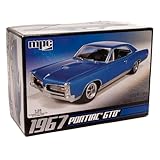
- V8 POWER: The model features a 400 cubic inch V8 engine, reflecting the muscle and power that defined the GTO's reputation.
- DETAILED SUSPENSION & EXHAUST: The kit incorporates separate rear suspension and exhaust detailing, adding to the realism of the model.
- BUCKET SEATS & CONSOLE: The model's interior features bucket seats and a floor shifter with a console, capturing the iconic look and feel of the GTO.
- OPTIONAL SUPERCHARGER: For those seeking more power, the kit offers an optional supercharger, allowing you to customize your model.
- CLEAR & COMPREHENSIVE INSTRUCTIONS: The included instructions are clear and user-friendly, making the kit accessible to modelers of different skill levels, from beginners to experienced hobbyists.
For the 170, ask where you will obtain suitable fuel before buying. The published E10 rating is 900 hp, and the car’s ethanol detection system helps account for variation, but fuel consistency remains an ownership consideration. A buyer who rarely visits a drag strip may spend much of the car’s life using the lower published fuel rating.
Tires and surface preparation determine what the car can do
Neither Demon can deliver its factory quarter-mile claim on demand regardless of conditions. The surface must provide enough traction, the tires must be appropriate and in good condition, and the launch settings must suit the track. Owners planning to reproduce the advertised numbers should budget for Demon 170 drag tires and track safety equipment, while confirming tire compatibility, pressure procedures, and track rules before making a pass.
The street-wheel/tire package makes the 170 more adaptable, but street tires and public roads are not substitutes for a prepared drag surface. A launch that is merely disappointing on a track can be dangerous on the street.
Recommended Free Tools
Check the service history and VIN
Stellantis issued a technical bulletin concerning spark-plug gap and misfire symptoms on 2023 Challenger vehicles equipped with the high-output 6.2-liter engine, including the Demon 170. A later 2025 bulletin addressed the affected population. This is a specific service issue, not proof of an engine-wide defect and not automatically the same thing as a safety recall.
Before purchase, have a Dodge dealer verify the vehicle identification number, applicable campaigns, completed repairs, and service records. Read the Demon 170 owner’s supplement and VIN-level service check rather than relying on a seller’s description of how the launch system or fuel strategy works. Pay particular attention to modified cars, undocumented tuning, non-factory fuel-system work, and repeated drag-strip use.
Independent reader supportYour contribution helps us test, update, and keep practical guides available for everyone.Which one should you buy?
| Buyer | Better choice | Why |
|---|---|---|
| Drag racer | Demon 170 | The additional power, TransBrake 2.0, launch profiles, suspension tuning, and driveline changes directly address elapsed time and traction. |
| Collector who values the original icon | 2018 Demon | It is the first modern Demon and the car that established the factory drag-car story. |
| Collector who wants the ultimate final edition | Demon 170 | The 1,025-hp E85 capability and seventh-and-final Last Call status provide the stronger final-production narrative. |
| Street-focused driver | Usually the 2018, if priced sensibly | The 170’s extra capability is harder to exploit on public roads, and neither car is a rational daily-driver purchase based solely on performance per dollar. |
| Status buyer | Demon 170, but only at a defensible price | It has the larger headline number and stronger final-edition story, but a large markup may be difficult to recover. |
| Hands-on enthusiast | Either, after inspection | Service history, fuel practices, tire setup, modifications, and condition should decide the purchase more than the model name alone. |
If ordinary cruising is the priority, a Hellcat, Redeye, or Super Stock may offer a more rational ownership proposition, although those cars are outside this comparison. The Demons make sense when the buyer specifically wants their drag-racing hardware, rarity, and cultural significance.
Bottom line
The 2018 Demon is the historically important original: an 840-hp race-fuel street-legal drag car that introduced the production transbrake and made the Demon name famous. The Demon 170 is the more capable machine by a clear margin. Its 1,025-hp E85 rating, 8.91-second factory quarter-mile claim, TransBrake 2.0, revised launch calibration, improved weight-transfer strategy, and upgraded high-output engine specification are substantive changes.
Quick wins for a faster PC:
Fix the driver behind crashes, sound loss and screen glitchesFind Drivers →Clear out junk files and repair common Windows errorsFree Scan →Scan for outdated or missing drivers - takes under a minuteDriver Scan →Best Value

- Revell Model Kit #14531, Skill Level 5, Contains 77-Parts, Recommended for ages 13 and up
- Detailed 440+6 V-8 engine, hood scoop that can be positioned open or closed
- Detailed interior with separate side panels and a front bench seat
- Molded in white and clear with chrome plated parts and black vinyl tires
- Illustrated assembly instructions. Requires paint and glue. (not included)
Buy the Demon 170 for maximum straight-line performance, final-Last-Call significance, and the complete technical package. Buy the 2018 Demon for the original-icon appeal or a potentially better value at the right price. Buy neither solely because someone calls it a guaranteed investment—or because the advertised 8.91-second run implies an effortless result on ordinary roads.
Frequently Asked Questions
Is the Demon 170 always making 1,025 horsepower?
No. Dodge’s published 1,025-hp rating requires E85 or a sufficiently high-ethanol blend. On E10 gasoline, the published rating is 900 hp. Commercial E85 can vary in ethanol content, and the car uses ethanol detection to account for fuel differences.
Is the Demon 170 just a 2018 Demon with a larger supercharger?
No. Both use a supercharged 6.2-liter HEMI V8, but the 170 received extensive engine, airflow, calibration, launch-system, suspension, driveline, and tire changes. Contemporary technical reporting described the 170 specification as sharing only the camshaft with its predecessor, although that does not mean the two engines have no common architecture.
Which car is faster, the 2018 Demon or Demon 170?
The Demon 170 is the quicker car. Dodge claimed 8.91 seconds at 151.17 mph for the 170 versus 9.65 seconds at 140 mph for the 2018 Demon. Those are controlled benchmark figures, not guaranteed results in every weather, fuel, tire, or track condition.
Crashes, No Sound, or Screen Glitches?
Random freezes, missing sound and display glitches usually trace back to one bad driver. Find and replace yours safely.Free scan · under a minutePC Slower Than It Used to Be?
A free scan shows the junk files, broken settings and background clutter dragging Windows down - then fixes them in one click.Free scan · Windows 10 & 11Will every stock Demon 170 run an 8.91-second quarter-mile?
No. The 8.91-second result was an NHRA-certified Dodge benchmark achieved with the appropriate ethanol blend and a prepared surface. Independent testing has produced slower times, including a reported 9.72-second run, because traction, density altitude, tires, fuel, settings, and driver procedure all affect elapsed time.
Is the Demon 170 a better investment than the original Demon?
Neither car should be treated as a guaranteed investment. Auction results show that clean Demon 170s can command a premium, but mileage, condition, provenance, modifications, title history, and market timing all affect value. A completed sale is more meaningful than an asking price, but even completed sales do not establish a guaranteed future return.
The Bottom Line
Verdict: The Demon 170 is worth the hype for a serious drag-racing user or collector who values the final Last Call car and can accept the E85, tire, surface, and service requirements. The 2018 Demon remains the better historical icon. For normal road use, the performance premium of the 170 is much harder to justify.
Quick Recap
Product prices and availability are accurate as of the date/time indicated and are subject to change. Any price and availability information displayed on Amazon at the time of purchase will apply.




