Do these 3 things before closing this tab:
1Scan for outdated or missing drivers - takes under a minute2Repair Windows errors before they cause bigger problems3Fix the driver behind crashes, sound loss and screen glitchesThe Dodge Challenger has three separate generations, not one continuous platform: the classic E-body Challenger ran from 1970 through 1974, a Mitsubishi-derived compact coupe used the name from 1978 through 1983, and the modern retro-styled muscle coupe ran from 2008 through 2023. Dodge says production ended on December 31, 2023, making 2023 the final Challenger model year.
That break in continuity is the key to understanding every Challenger year. A 1970 E-body, a 1980 Mitsubishi-based coupe, and a 2023 SRT model share a badge, but they do not share a common parts, platform, or restoration strategy.
As an Amazon Associate I earn from qualifying purchases.
The three Challenger generations at a glance
| Generation | Model years | What it was |
|---|---|---|
| First generation | 1970–1974 | Chrysler E-body pony car, offered as a hardtop and convertible and closely related to the Plymouth Barracuda |
| Second generation | 1978–1983 | Mitsubishi Galant Lambda/Sapporo-based compact coupe wearing the Challenger name |
| Third generation | 2008–2023 | Retro-styled modern muscle coupe with V6, HEMI V8, SRT, Hellcat, Demon, Redeye, Super Stock, and Last Call variants |
The model-year sequence is therefore: 1970, 1971, 1972, 1973, 1974; 1978, 1979, 1980, 1981, 1982, 1983; and every model year from 2008 through 2023. There was no Challenger model year from 1975 through 1977 or from 1984 through 2007. The nameplate returned for 2008 and ended after 2023.
Crashes, No Sound, or Screen Glitches?
Random freezes, missing sound and display glitches usually trace back to one bad driver. Find and replace yours safely.Free scan · under a minuteWindows Errors? Fix Them Before They Spread
Repair common Windows errors and clear accumulated junk for a smoother, more stable PC - no reinstall needed.Free scan · no reinstallThis three-generation history is why a parts catalog, repair manual, price guide, or buyer’s guide that simply says Challenger is not specific enough. The 1970–1974, 1978–1983, and 2008–2023 cars differ in platform, engineering origin, dimensions, drivetrains, service information, and restoration needs. A Challenger badge alone does not establish parts compatibility.
#1 Best Overall

- 1:18 Special Edition. Detailed die-cast precision model. Large - approx 9.5" replica.
- Die-cast metal body. Opening doors and engine compartment.
- Full functioning steering. Four-wheel suspension.
- Detailed chassis with separate exhaust system.
- Mounted on plastic stand.
First generation: 1970–1974
1970: the original E-body Challenger arrives
Dodge introduced the Challenger for the 1970 model year as its entry into the pony-car market. It was built on Chrysler’s E-body architecture and shared major components with the Plymouth Barracuda, but it was positioned as Dodge’s own performance coupe. The first-generation car was available as both a hardtop and a convertible, making it structurally and historically different from every Challenger that followed.
When collectors, restorers, or muscle-car historians refer to a classic Challenger, they normally mean this E-body generation—especially a well-documented R/T or HEMI example. That shorthand should not be applied to the later cars. A first-generation Challenger belongs to the 1970s muscle-car restoration world, not the modern muscle-car parts ecosystem.
1971–1972: continuing the classic-era story
The 1971 and 1972 model years remain part of the original E-body run. Trim names, engines, appearance equipment, and production details changed during the period, so a precise year-by-year specification should be checked against that model year’s factory brochure, build documentation, or service literature. It is risky to use a single modern summary as a definitive 1970–1974 trim and engine chart.
The Tool Desk
Outbyte Driver Updater FREEScan for outdated or missing drivers - takes under a minuteDriver Scan →Outbyte PC Repair FREEClear out junk files and repair common Windows errorsFree Scan →That caution matters when evaluating an original or restored car. Two first-generation Challengers can look similar while differing in factory equipment, body configuration, engine, transmission, or replacement parts. Confirm the vehicle identification number, fender tag or other documentation, build date, and current configuration before treating a car as a particular performance or rarity specification.
1973–1974: the closing years of the original run
1973 and 1974 were the final model years for the E-body Challenger. The market and regulatory environment were changing, and available trims and engines should not be assumed to have continued unchanged through the end of the generation. These are still genuine first-generation Challengers, but they require year-specific research just as the earlier cars do.
For restoration work, 1970–1974 Challenger restoration parts are organized by a supplier that covers body components, engine-bay items, interior pieces, and factory-style replacement parts. YEARONE also maintains a dedicated YEARONE E-body Challenger parts category covering 1970–1974 Barracuda and Challenger products, including licensed Mopar restoration items. Inventory and fitment can change, so treat any catalog listing as a starting point rather than proof that a component fits every E-body year or trim.
The practical rule is simple: do not mix a 1970–1974 restoration plan with information for the 1978–1983 or 2008–2023 cars. Original-style sheet metal, interior parts, engine-bay components, dimensions, suspension pieces, and restoration procedures must be researched within the E-body generation and, where necessary, the individual model year.
Second generation: 1978–1983
A new car wearing an old name
Dodge revived the Challenger name for 1978, but this was not an E-body successor. The second-generation Challenger was a rebadged Mitsubishi Galant Lambda/Sapporo-style compact coupe. Its platform, engineering origin, size, market role, and service requirements were fundamentally different from those of the original muscle-era car.
That makes 1978–1983 the most easily misunderstood generation in an all-years guide. The badge and two-door format connect it to the Challenger story, but the car should not be treated as a continuation of the 1970–1974 platform. It does not automatically share the original car’s drivetrain, body parts, dimensions, restoration methods, or enthusiast-market support.
1978, 1979, 1980, 1981, 1982, and 1983
All six model years belong to the same second-generation era. The correct way to research one is as a compact Mitsubishi-derived coupe first and a Challenger second. That approach is more useful than judging it against the expectations of an E-body collector. Owners and buyers should document the exact year, engine, transmission, market, and equipment before ordering components.
Service documentation is particularly important because parts may be listed under Challenger, Sapporo, Galant Lambda, or a broader Dodge/Plymouth/Chrysler application. Haynes lists Challenger and Plymouth Sapporo coverage for this period, along with broader RWD Dodge, Plymouth, and Chrysler six-cylinder and V8 coverage for selected 1971–1989 vehicles. Its listings are useful leads, but compatibility must be checked against the exact vehicle rather than inferred from a broad year range.
What’s actually slowing this PC down?
Pick the symptom - the matching free tool is one click away.
Rank #2
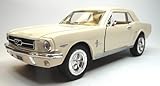
- Authentic 1:36 Scale: Meticulously crafted 1964 1/2 Ford Mustang model car with impressive 5-inch length.
- Realistic Details: Die-cast metal body with opening doors and eye-catching blue finish.
- Interactive Play: Engaging pull-back action for thrilling motion across smooth surfaces.
- Collectible Quality: Ideal for model car enthusiasts and collectors seeking miniature automotive replicas.
- Brand: KiNSMART, a trusted name in die-cast vehicle models and toys.
Third generation: 2008–2023
The modern Challenger began with the 2008 model year and brought the nameplate back as a large, retro-inspired muscle coupe. It became the longest-running Challenger era and developed from a relatively focused revival into a broad family of V6, HEMI V8, SRT, supercharged, drag-oriented, and heritage editions.
It is more accurate to describe this as a series of development phases than as one unchanged car. Styling remained recognizably related, but powertrains, electronics, chassis equipment, performance trims, and special editions evolved substantially between 2008 and 2023.
2008: the modern revival
The 2008 model year established the third-generation Challenger’s retro-muscle identity. It was a modern production car designed to recall the visual language of the classic Challenger rather than a mechanically continuous successor to the E-body. This distinction explains why a 2008 car can share design cues with a 1970 model while sharing no ordinary restoration-parts strategy with it.
2009: the lineup broadens
For 2009, Dodge broadened the modern range with V6 and 5.7-liter HEMI V8 applications beyond the initial high-performance launch configuration. Exact equipment, transmission availability, and trim combinations should be verified using the brochure for the specific market and model year; a later Challenger specification cannot be back-applied to 2009.
Quick wins for a faster PC:
Repair Windows errors before they cause bigger problemsFix Now →Scan for outdated or missing drivers - takes under a minuteDriver Scan →Clear out junk files and repair common Windows errorsFree Scan →The 2010s: expanding HEMI and SRT performance
During the 2010s, Dodge expanded the HEMI and SRT family and pushed the Challenger further into high-performance territory. The important story is not one universal specification but a widening hierarchy of engines, trims, chassis equipment, drivetrains, and limited-run performance versions.
The 2015 Hellcat milestone was a major inflection point. Dodge’s performance materials described the Hellcat as a 707-horsepower supercharged V8, a factory rating that helped reset expectations for an American muscle coupe. That is a manufacturer figure and should be presented as such unless independent testing is being discussed separately.
2018: Demon and the drag-focused direction
The 2018 Challenger SRT Demon made the drag-strip mission even more explicit. Later Redeye, Super Stock, and other high-output variants continued that performance escalation. Dodge used strong acceleration and production-car superlatives in its own descriptions; those claims should be attributed to Dodge rather than presented as independent test results.
2019–2022: high-output variants and heritage editions
The remaining pre-finale years continued the modern Challenger formula: familiar retro styling, multiple V6 and V8 choices, SRT and supercharged variants, drag-oriented equipment, and special editions that connected the modern car to Dodge’s heritage. The exact combination of engine, transmission, body configuration, performance hardware, safety equipment, and infotainment depends on the model year, trim, and market.
2023: the final Challenger model year
2023 was the final Challenger model year. Dodge’s 2023 technical materials show a broad range that included a 3.6-liter V6, 5.7-liter HEMI V8, 392 HEMI V8, and supercharged 6.2-liter Hellcat-family V8 variants. Eight-speed automatic configurations were available, along with selected manual-transmission applications. Equipment could include modern infotainment, safety systems, performance pages, launch-control functions, performance-oriented brakes, and chassis hardware, but availability varied by trim and market.
The linked 2023 Challenger brochure is regional material, so it should not be read as a universal specification sheet for every country. For a purchase, repair, or valuation decision, match the brochure and build information to the vehicle’s market, VIN, trim, and options.
The SRT Demon 170 finale
The SRT Demon 170 was Dodge’s seventh and final Last Call special edition. Dodge rated it at 1,025 horsepower and 945 pound-feet of torque and publicized additional production-car performance superlatives. Those figures and descriptions are Dodge’s claims; they should not be rewritten as independent test results. The Demon 170 is a 2023 finale variant, not a separate fourth Challenger generation.
Rank #3

- Doors Open
- Pullback Action
- Die Cast Metal Body
- PULL BACK ACTION WITH FREE ROLLING WHEELS
Last Call also included other heritage-focused editions, allowing Dodge to close the nameplate with a deliberate reference to its history. Even so, the final cars remain third-generation Challengers mechanically and historically.
When did Challenger production end?
Dodge says Challenger production ended on December 31, 2023. The clean distinction is that 2023 was the final Challenger model year, while December 31, 2023 was the stated production end date. Dodge’s current ownership page says the model is no longer in production and directs owners toward Mopar parts, Direct Connection performance resources, owner-manual information, and dealer service.
The next-generation Charger is the closest current Dodge performance successor, but it is not a fourth Challenger generation. Stellantis’ broader product transition moved away from the previous Challenger/Charger generation toward a new Charger lineup and an electrification strategy. Buyers looking for a new Dodge coupe should therefore research the Charger separately rather than assume that a 2024 or later vehicle is simply a new Challenger.
Independent reader supportYour contribution helps us test, update, and keep practical guides available for everyone.Parts, manuals, and maintenance by generation
There is no single parts strategy for every Challenger model year. Before buying a component or service book, identify these six details:
- Generation and model year
- Body style
- Engine
- Transmission
- Trim or performance package
- Original market and, where possible, VIN or build documentation
| Challenger years | Best research path | Main fitment warning |
|---|---|---|
| 1970–1974 | E-body restoration catalogs, factory documentation, and year-specific service literature | Do not assume every E-body part fits every year, body style, engine, or trim |
| 1978–1983 | Challenger/Sapporo and Mitsubishi-derived service documentation | The badge does not make it mechanically interchangeable with the E-body car |
| 2008–2023 | Year-specific owner and repair information, Mopar replacement parts, dealer service, and applicable Direct Connection resources | Modern electronics, engines, brakes, transmissions, and performance equipment vary considerably by year and trim |
Choosing a repair manual
A Dodge Challenger repair manual can be useful for routine maintenance and diagnosis, but the coverage range must match the vehicle. Haynes’ catalog shows multiple Challenger-related ranges, including coverage for portions of 1971–1989, 1978–1983, 2008–2018, and 2010–2022. Those ranges are not interchangeable: confirm the book’s exact model years, engine, transmission, and market before purchasing.
Restoring a first-generation car
For a 1970–1974 Challenger, use an E-body-focused catalog and verify whether the part is intended for a hardtop or convertible, a particular model year, or a particular engine and trim. Classic Industries and YEARONE are relevant starting points because they organize products specifically around the E-body Challenger and Barracuda family. Retailer inventory, product revisions, prices, and availability are volatile, so confirm the live listing and return or fitment policy before ordering.
Maintaining a modern Challenger
For 2008–2023 cars, Dodge points owners to Mopar Challenger parts, owner-manual resources, dealer service, and Direct Connection performance resources. Factory-backed does not mean universally compatible: a performance part may be limited to a specific engine, transmission, chassis package, model year, or market. Check the current catalog and application notes before assuming a part remains available or fits a particular Challenger.
Why the generation distinction matters when buying
- Classic muscle-car history: Focus on 1970–1974 E-body cars, documentation, originality, body condition, and restoration quality.
- Compact-coupe ownership: Treat 1978–1983 as a distinct Mitsubishi-derived vehicle and research its service literature accordingly.
- Modern performance: Compare 2008–2023 cars by year, engine, trim, transmission, chassis equipment, and service history rather than by appearance alone.
- Parts shopping: Never order from a listing that identifies only Dodge Challenger without confirming the year and application.
- Performance claims: Separate Dodge’s factory horsepower and acceleration claims from independent testing.
How to identify which Challenger you are looking at
- Check the model year first. A 1970–1974 car is first generation, a 1978–1983 car is second generation, and a 2008–2023 car is third generation.
- Look at the vehicle’s mission and architecture. The original is an E-body pony car; the second is a Mitsubishi-derived compact coupe; the third is a modern retro-styled muscle coupe.
- Confirm the body style and equipment. First-generation hardtops and convertibles require different restoration research. Modern performance equipment is also trim-specific.
- Use documentation before naming a rare version. An R/T, HEMI, Hellcat, Demon, Redeye, Super Stock, or Last Call designation should be supported by VIN, build records, window sticker, or other reliable documentation.
- Match every purchase to the application. Use the exact year, engine, transmission, body style, and trim when selecting parts or manuals.
Sources for further verification
The Challenger historical overview and the 1970 Challenger reference support the three-era timeline and E-body relationship. For current ownership guidance, production status, Mopar resources, and Direct Connection information, consult Dodge’s official Challenger ownership page. For the final model year, use the applicable factory brochure and market-specific documentation rather than assuming every 2023 feature was available everywhere.
Frequently Asked Questions
Is the 1978 Challenger the same kind of car as the 1970 Challenger?
No. The 1978–1983 Challenger was a Mitsubishi Galant Lambda/Sapporo-based compact coupe, not an E-body successor. Its platform, engineering, dimensions, drivetrain applications, and service information are different from the 1970–1974 car.
What was the final Dodge Challenger model year?
2023 was the final Challenger model year. Dodge states that production ended on December 31, 2023, and its ownership page says the Challenger is no longer in production.
Are Challenger parts interchangeable across all generations?
No. First-generation parts are E-body-specific, second-generation parts relate to the Mitsubishi-derived coupe, and third-generation parts depend on the modern car’s year, engine, trim, transmission, and market. Always verify exact application before ordering.
Was the Demon 170 a fourth-generation Challenger?
The SRT Demon 170 was a 2023 third-generation Challenger and Dodge’s seventh and final Last Call special edition. It was not a separate fourth generation.
The Bottom Line
The Dodge Challenger was not one uninterrupted design from 1970 to 2023. It was a 1970–1974 E-body pony car, a separate 1978–1983 Mitsubishi-derived compact coupe, and a 2008–2023 modern retro-styled muscle car. For buying, restoring, or repairing one, the model year and generation come before the badge: match parts, manuals, specifications, and performance claims to the exact vehicle.
Free tools Windows power users keep installed
One-click scans. No signup required.
Quick Recap
Product prices and availability are accurate as of the date/time indicated and are subject to change. Any price and availability information displayed on Amazon at the time of purchase will apply.




