Free tools Windows power users keep installed
One-click scans. No signup required.
Short answer: Don’t count on an automatic transmission conditioner to boost fuel economy or improve every vehicle’s performance. Lucas lists shifting, noise, shudder and seal-conditioning benefits for its Automatic Transmission Fluid Conditioner, but those are manufacturer claims, not independent test results—and its product page gives no quantified fuel-economy result. The available fuel-saving evidence concerns particular finished transmission fluids or a specified heavy-duty lubricant, not conditioners as a product class.
What is an automatic transmission conditioner?
A conditioner is a supplemental product added to transmission fluid. It is not the same thing as automatic transmission fluid (ATF), the finished lubricant formulated for a particular transmission, or the additive package blended into that finished fluid. Evidence about a low-viscosity ATF or a lubricant formulation does not establish that adding a separate conditioner will deliver the same result.
For a specific vehicle, the first question is not which conditioner sounds most promising; it is what fluid and service procedure the transmission requires. Automatic transmissions have different performance needs. Fuchs describes ATF as a balanced formulation of base oil, additives and viscosity modifiers, and says performance requires OEM-specific and industry-standard testing before long-term durability testing. Fuchs explains ATF selection and testing.
Do transmission conditioners improve fuel economy?
The reviewed evidence does not show that aftermarket conditioners improve fuel economy across modern cars or heavy-duty trucks. A technical paper published by SAE International in 2015 discusses fuel-saving potential from lower-viscosity ATFs with strong anti-shudder durability; its finding concerns fluid formulation, not a consumer conditioner. The paper’s abstract reports 1.5 times longer anti-shudder durability for its trial ATF than a commercial ATF. That is a formulation result, not a vehicle-level fuel-economy result for an additive. Read the SAE International paper abstract.
Quick wins for a faster PC:
Fix the driver behind crashes, sound loss and screen glitchesFind Drivers →Clear out junk files and repair common Windows errorsFree Scan →#1 Best Overall
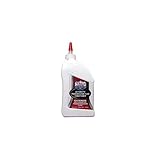
- Improves shifting
- Reduces noise and shudder
- Compatible with all ATF fluids, conventional and synthetic
- For use in new and older transmission
- Not recommended for CVT transmissions and transmission fluids
Manufacturers also make fuel-efficiency claims for specific finished fluids and heavy-duty lubricants. Those claims belong to their stated products and applications; they should not be transferred to conditioners.
Finished ATFs: claims depend on the product and application
Chevron describes Havoline Global Multi-Vehicle ATF as a synthetic-blend fluid for many modern automatic transmissions in passenger cars, SUVs, light-duty trucks and vans. Chevron says its low viscosity can reduce drag and improve fuel economy. That is a claim about this finished fluid, not an additive to pour into any ATF. Chevron advises: “Always confirm that the product selected is consistent with the original equipment manufacturer’s recommendation for the equipment operating conditions and customer’s maintenance practices.” See Chevron’s product information.
Rank #2

- Fit type: Universal Fit
- Reduces wear throughout the transmission and optimizes total transmission performance
- Prevents overheating, reducing elevated operating temperatures - Optimizes total transmission performance
- Eliminates clutch chatter and torque converter shudder; Softens and modifies harsh shifts making them quicker in duration
ENEOS describes ECO-ATF PLUS as a low-viscosity finished fluid covering listed specifications and claims fuel-efficiency, friction and shifting benefits. Those are manufacturer statements about that fluid; they do not demonstrate that a separate conditioner produces those effects. See ENEOS product information.
Heavy-duty trucks: check the transmission, not just the vehicle class
Eaton says its PS-386 synthetic transmission lubricant is intended for specified Eaton and Eaton Cummins manual and automated transmissions, including named Endurant, UltraShift PLUS, Fuller Advantage, FR and RT series. Eaton claims “Up to 1.5% improvement” in fuel economy for the product in the transmission context it describes. This is an Eaton claim for specified applications, not a conditioner result or a promise for every truck. PS-386 is not a universal heavy-duty transmission additive. Check Eaton’s PS-386 application information.
Rank #3

- BG ATC Plus enhances properties of both new and used automatic transmission fluid.
- It improves fluid oxidation stability, thereby prolonging fluid life and the life of the transmission.
- It prevents leaks by conditioning hardened seals-keeping them soft and pliable.
- BG ATC Plus helps control transmission shudder' retards formation of sludge and varnish deposits and prevents foaming.
What conditioner is available, and what does its maker claim?
Lucas Oil lists an Automatic Transmission Fluid Conditioner, product #10441, in a 20-ounce size. Lucas says it can improve shifting, reduce noise and shudder, condition seals, and extend fluid or transmission life. It also says the product is compatible with conventional and synthetic ATF. These are claims on the manufacturer’s page, not independently established outcomes. The page does not provide a quantified fuel-economy result. See Lucas Oil’s product page.
Lucas expressly does not recommend this conditioner for continuously variable transmissions (CVTs) or dual-clutch transmissions. Do not treat “compatible with conventional and synthetic ATF” as proof that it is appropriate for every transmission using those fluids. Check the vehicle’s owner’s manual and manufacturer guidance before adding any supplemental product.
Rank #4

- The Original Universal ATF Protectant that Eliminates ATF Confusion and the need to stock multiple ATF's - Dramatically reduces friction and wear on metal parts and internal components
- Will not alter the crucial sulfur balance in your transmission fluid, Prevents overheating, Will not harm yellow metals, Inhibits fluid oxidation and foaming
- Contains patented Synergol TMS Technology, a synthetic molecule that tightens the shift cycle without losing the friction modification at lockup, which eliminates shudder
- Extends fluid change intervals, Protects and restores seals for optimum performance, Conditions and restores seals and o-rings
- Does not contain any harmful components such as zinc (ZDDP)/ash, etc. , like other competing products, Frees stuck valves and keeps them free, Ensures proper shifts
Can I use a transmission additive in my car?
Only consider one after confirming that the vehicle manufacturer permits it and that the product is suitable for the exact transmission. A product’s broad compatibility language does not replace the required OEM fluid specification or an application-specific recommendation. For example, Chevron says to confirm the selected fluid against OEM recommendations, operating conditions and maintenance practices; Fuchs emphasizes the distinct performance needs of different automatic transmissions.
- Identify the transmission type and the required fluid specification in the owner’s manual or official service information.
- Check whether the proposed product is a finished ATF or a supplemental conditioner; they are not interchangeable.
- Check stated exclusions and the vehicle manufacturer’s guidance before adding anything.
- If the transmission is slipping, leaking or shuddering persistently, arrange diagnosis rather than assuming an additive will repair it. The cited product information does not establish that conditioners repair worn or failed components.
Is a transmission conditioner safe for a CVT or dual-clutch transmission?
For the cited Lucas conditioner, no: Lucas says it is not recommended for CVT or dual-clutch transmissions. This exclusion should not be generalized into a claim about every product, but neither should a conditioner be presumed safe for those transmissions. Use the exact fluid and service guidance specified for the vehicle; a product labeled for conventional or synthetic ATF is not automatically suitable for a CVT or dual-clutch unit.
Best Value

- Contains no solvents
- Lowers operating temperatures and stops foaming
- Can be added to existing fluid without draining any out
Will an additive fix transmission shudder?
There is no evidence in the cited sources that an aftermarket conditioner reliably fixes shudder. Lucas claims its product can reduce shudder, but that is a manufacturer statement, not an independent repair finding. Shudder can call for diagnosis; the sources do not show that a conditioner repairs a worn or failed component. Do not use an additive to postpone inspection of a persistent symptom.
What transmission fluid does my truck need?
Use the fluid specified for the truck’s particular transmission, not a product selected solely because it is marketed for trucks or heavy-duty use. Eaton’s PS-386, for example, is described for specified Eaton and Eaton Cummins transmissions, not every heavy-duty transmission. For an automatic transmission, verify the OEM specification and the fluid’s application coverage. For any candidate fluid, follow the equipment maker’s recommendations for operating conditions and maintenance practices.
Does a conditioner increase driver satisfaction?
No satisfaction rating or measured driver-satisfaction result is established by the cited sources. Without a defined survey or test, “overall driver satisfaction” is not a substantiated performance figure. The evidence supports describing the Lucas product’s maker-stated benefits, not promising a satisfaction improvement.
Quick Recap
Product prices and availability are accurate as of the date/time indicated and are subject to change. Any price and availability information displayed on Amazon at the time of purchase will apply.
Do these 3 things before closing this tab:
1Repair Windows errors before they cause bigger problems2Fix the driver behind crashes, sound loss and screen glitches3Clear out junk files and repair common Windows errors



