Correct motorcycle braking is controlled use of both brakes while keeping the motorcycle stable, your eyes up, and your intended path clear. For an ordinary stop, apply the front and rear brakes smoothly, downshift as speed falls, pull in the clutch before the motorcycle stops, and finish braking in a controlled position. For an emergency stop on a straight road, use both brakes together and build to the maximum pressure you can apply without locking either wheel.
Correct motorcycle braking is controlled use of both brakes while keeping the motorcycle stable, your eyes up, and your intended path clear. For an ordinary stop, apply the front and rear brakes smoothly, downshift as speed falls, pull in the clutch before the motorcycle stops, and finish braking in a controlled position. For an emergency stop on a straight road, use both brakes together and build to the maximum pressure you can apply without locking either wheel.
As an Amazon Associate I earn from qualifying purchases.
There is no universal “70/30” or other front-to-rear braking formula that works for every motorcycle or every surface. Weight transfer, tire condition, road grip, motorcycle design, load, slope, linked brakes, ABS, and rider input all change the result. The technique below is a general safety framework—not a replacement for your owner’s manual or supervised rider training.
What’s actually slowing this PC down?
Pick the symptom - the matching free tool is one click away.
Why motorcycle braking is a control skill
Braking is not simply a matter of pressing one lever or pedal as hard as possible. As the motorcycle slows, weight transfers toward the front wheel. The front tire can therefore contribute substantial stopping force, while the rear tire may become easier to lock. At the same time, abrupt control inputs can upset the motorcycle, especially when it is leaned, the road is slippery, or the rider is looking down at the hazard.
#1 Best Overall

- 【Fitment】Fit for Harley Davidson Motorcycle ▶ Electra Glide FLHT 2008-2020 ▶ Street Glide FLHX 2008-2020 ▶ Road Glide FLTR 2008-2020 ▶ Road King FLHR 2008-2020
- 【Fitment】 ▶ Street Rod VRSCR 2006-2007 ▶ Night Rod VRSCD 2006-2011 ▶ Tri Glide FLHTCUTG 2008-2013 2019-2020 ▶ V-Rod VRSC 2005-2017 ▶ Ultra Limited FLHTK 2014-2020
- 【Material & Feature】Sintered by copper and tin formula compound is designed to any poor condictions.1. Back side with black anti-noise shims, it is effectively to reduce shrill squeak. 2. Middle with copper plating base is good for dissipation.
- 【OEM#】42897-06 42897-08 41854-08 42850-06 FA409. 【Replacement OEM#】42897-06A 42850-06A
- 【Package & Service】3 Set Brake Pads. JAVIK offer 24 hours customer service and 1 year product service. Please feel free to message if you meet any problem.
Good braking begins before the emergency. Search well ahead, manage speed before hazards develop, keep an escape route where possible, and avoid following so closely that a normal stop becomes an emergency. More space gives you more choices: brake, swerve, or do both in separate, deliberate stages if conditions permit.
Normal stopping technique
Use the following sequence for a routine stop at a junction, stop sign, traffic light, or roadside location:
- Look ahead and choose a stopping point. Keep your head up and your eyes focused through the traffic scene rather than staring at the front wheel or the pavement immediately in front of you.
- Close the throttle smoothly. Let the motorcycle begin to slow without making an abrupt input.
- Apply both brakes progressively. Begin smoothly, then increase pressure as needed. Do not grab the front brake or stab at the rear pedal.
- Downshift as speed falls. Select a gear appropriate for the speed you will need after the stop or if you must move away again.
- Pull in the clutch before the motorcycle stops. This prevents the engine from stalling and leaves the motorcycle ready to move if the situation changes.
- Finish in a stable position. Keep the motorcycle upright where possible, stop under control, and place a foot down only when the motorcycle is nearly stopped.
Smooth does not mean weak or unnecessarily slow. A normal stop should be firm enough to control speed and traffic position, but progressive enough that the suspension remains settled and neither wheel locks.
Quick wins for a faster PC:
Fix the driver behind crashes, sound loss and screen glitchesFind Drivers →Clear out junk files and repair common Windows errorsFree Scan →Scan for outdated or missing drivers - takes under a minuteDriver Scan →How to make an emergency stop in a straight line
When an immediate stop is safer than swerving, the goal is maximum controlled deceleration while keeping both wheels rolling and the motorcycle stable.
- Look toward the open area ahead. Do not fixate on the object you are trying to avoid. Keep the motorcycle pointed in a controlled direction.
- Apply the front and rear brakes together. Do not rely on the rear brake alone. The front brake is a major part of effective stopping, but it must be applied progressively rather than grabbed abruptly.
- Increase pressure rapidly but smoothly. Build to the maximum controlled pressure available for the grip and conditions. The correct amount changes with the road, tires, motorcycle, and load.
- Keep the motorcycle as upright and straight as possible. A straight, upright motorcycle has more tire grip available for braking than a motorcycle simultaneously using grip to corner.
- Prevent or release wheel lock. If a wheel locks, reduce pressure on that brake enough to restore rotation, then reapply progressively. Keep looking ahead and maintain control of the motorcycle.
- Use the clutch according to your motorcycle’s instructions. Pulling it in can prevent a stall and lets you concentrate on braking. ABS-equipped motorcycles and some linked systems may specify a particular emergency-stop procedure in the owner’s manual.
The emergency-stop objective is not a memorized lever-to-pedal percentage. It is maximum controlled braking without locking either wheel. Practice is the only reliable way to learn how much pressure your particular motorcycle, tires, and road surface will tolerate.
Rank #2

- Designed for maximum stopping power and long usable life
- Stainless steel heat radiator plates for most motorcycles
- Unique double segment vented design keeps the pads cooler and prevents pad drag and overheat or fade
- Asbestos free
- Pad friction compound exceeds H friction rating when hot or cold
Front brake versus rear brake: avoid the percentage rule
Both brakes matter, and official rider-training guidance consistently supports using both. However, a fixed instruction such as “use 70 percent front and 30 percent rear” can be misleading.
The usable contribution from each tire changes as the motorcycle slows and weight transfers forward. It also changes when:
- the road is wet, loose, painted, metal, uneven, or contaminated;
- the motorcycle is going downhill or uphill;
- the motorcycle carries a passenger, luggage, or another load;
- tire pressure, tread, age, or condition differs from normal;
- the motorcycle has ABS, linked brakes, or another braking-system design;
- the motorcycle is leaned or the handlebars are not aligned with the stopping path; or
- the rider applies the controls abruptly or unevenly.
Use the front brake deliberately and progressively, not timidly and not with a sudden grab. Use the rear brake at the same time, adjusting pressure to the feedback from the motorcycle and the available grip. Rear-brake-only stopping generally gives up important stopping capability, particularly in a hard straight-line stop.
Brake before the turn whenever possible
The safest general sequence for a corner is:
- identify the curve and any hazard beyond it;
- reduce speed while the motorcycle is upright;
- select the appropriate gear;
- complete most braking and downshifting before turning; and
- enter at a speed that leaves room to adjust without abrupt inputs.
This is often called “slow, look, press, and roll”: slow before the turn, look through the intended path, press the handlebar to initiate the turn, and roll on the throttle smoothly once the path is clear. The exact cornering method varies by training system, but the central braking principle is consistent: do not carry unnecessary heavy braking into the curve.
What to do if braking in a curve is unavoidable
Traffic, an unexpected obstruction, a tightening bend, or a decreasing-radius corner may leave no time to finish braking before the turn. Do not panic or make a violent steering correction.
Rank #3

- Made using high pressure die cast alluminium platforms with bonded brake linings
- All shoes are radius ground and edge trimmed
- Features lead in and lead out chamfers at lining ends
- Original equipment style brake shoe springs included
- Use both brakes gradually and with less force than you could use on an upright motorcycle.
- Keep your eyes on the safest available path rather than staring at the hazard.
- Keep the motorcycle’s movements smooth and avoid sudden throttle, brake, or handlebar inputs.
- When road space and the hazard allow, reduce lean by bringing the motorcycle more upright and align the handlebars before making a harder stop.
Do not interpret “straighten first” as an automatic command. Straightening may be unsafe if it sends you into oncoming traffic, a guardrail, a pedestrian, or another obstacle. The available lane, surface grip, traffic, and collision risk determine whether you should continue along the curve, brake progressively, straighten, swerve, or combine those actions in a controlled way.
Do these 3 things before closing this tab:
1Repair Windows errors before they cause bigger problems2Scan for outdated or missing drivers - takes under a minute3Clear out junk files and repair common Windows errorsBrake or swerve? Choose a deliberate response
Braking is not always the best way to avoid an obstacle. If there is a clear escape path and insufficient stopping distance, a controlled swerve may provide the safer outcome. If there is no safe escape path or the motorcycle can stop before the hazard, braking may be preferable.
Use this simple decision framework:
- Search: identify the hazard, traffic around you, and any open path.
- Evaluate: decide whether stopping or changing path offers the lower risk.
- Execute: make one deliberate maneuver and keep the motorcycle under control.
When conditions allow, separate heavy braking from swerving. A motorcycle that is braking hard has less available tire grip for a sudden direction change, while a motorcycle that is turning has less grip available for maximum braking. In some emergencies, however, a rider may need to brake first and then swerve, or swerve and then brake. The priority is to avoid the hazard without exceeding the motorcycle’s available control.
ABS, linked brakes, and the owner’s manual
Anti-lock braking systems can help prevent a wheel from locking during hard braking, and motorcycle ABS has demonstrated safety value. ABS does not eliminate the need to use the controls correctly, maintain appropriate speed, inspect the motorcycle, or leave enough space. It also cannot overcome a surface with very little grip or guarantee that a crash is avoidable.
Braking-system behavior differs by motorcycle. Some motorcycles have linked or combined braking, while others have independent controls. The correct clutch procedure and the feel of ABS intervention may also differ. Read the owner’s manual before practicing emergency braking on an unfamiliar motorcycle.
Rank #4
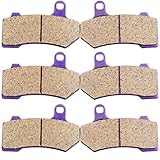
- Premium Brake Pads for Your Motorcycle or ATV: Brake Pads fit for 2008-2022 FLHR Road King FLHX Street Glide + 2008-2020 FLHTCU Ultra Classic Electra Glide & FLHRC Road King Classic & VRSCDX Night Rod, 2015-2022 Road Glide FLTRX Limited & FLHXS Street Glide Special & FLTRXS Road Glide Special + 2015-2021 FLHTK Electra Glide Ultra LTD & FLHTKL Electra Glide Ultra LTD Low, 2016-2020 FLTRU Road Glide Ultra + 2007-2020 VRSCDX Night Rod Special + 2009-2020 VRSCF V-Rod Muscle
- High Performance Braking: Our brake pads are made of carbon fiber materials and are designed to provide superior stopping power, ensuring you can quickly stop your motorcycle or ATV when you need to.
- Quiet and Durable: ECCPP brake pads are designed to be quiet and long-lasting, so you can enjoy a smooth and noise-free ride while also getting the most out of your investment
- Easy to Install: Installing our brake pads is a breeze, and can be done by anyone without the need for any special tools. We've designed our brake pads to fit perfectly onto your motorcycle or ATV, so you can get back on the road in no time
- Note: Please check the levers "title" or "products description" to for Make sure that this model type and model year work for your vehicle before ordering
Noise, vibration, or pulsing during severe braking does not automatically prove that a wheel has locked. ABS intervention and tire-surface interaction can produce noticeable feedback. Continue to look ahead, keep the motorcycle controlled, and follow the system-specific instructions for your motorcycle.
How to practice braking safely
Emergency braking should be learned in a controlled area—not in live traffic. A suitable practice area should have clean, reasonably level pavement, a long clear run-off area, no pedestrians or vehicles entering the path, and enough space to stop without pressure.
- Start with ordinary stops at low speed. Practice using both brakes smoothly and stopping without a stall.
- Learn the controls. Notice the lever travel, pedal feel, suspension movement, and how much pressure produces a firm stop.
- Increase speed gradually. Do not begin with maximum-speed emergency stops. Leave a large margin for error.
- Practice straight-line progressive braking. Apply both brakes, increase pressure, and learn how the motorcycle responds before approaching the limit of grip.
- Practice only emergency stops you can safely repeat. If the surface, space, motorcycle, or your confidence is unsuitable, stop the exercise.
- Learn corner and swerve responses separately. Build the skills progressively rather than improvising a combined high-risk maneuver.
A formal motorcycle safety course or other qualified hands-on rider training can provide controlled exercises and feedback on progressive braking, corner braking, stopping distance, emergency braking, and swerving. Requirements and course availability vary by country, state, and region, so verify the provider and local licensing rules rather than assuming one course is legally required everywhere.
Independent reader supportYour contribution helps us test, update, and keep practical guides available for everyone.Pre-ride brake checks
Braking technique cannot compensate for a defective or poorly maintained motorcycle. Before every ride, follow the manufacturer’s inspection procedure and check at least:
- front and rear brake operation;
- brake lever and pedal feel;
- tire condition and inflation pressure;
- brake-fluid level and visible leaks, where accessible;
- lights and other controls; and
- unusual noises, excessive lever travel, sponginess, vibration, or changes in braking performance.
Do not ride until a suspected brake fault has been assessed and repaired correctly. Brake pads, fluid, tools, and replacement parts must match the motorcycle’s exact year, make, model, and manufacturer specification; generic parts advice is not a safe substitute for that check.
Best Value
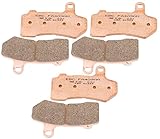
- Fits: Harley Davidson FLHX Street Glide 2008-2013, FLHX Street Glide 2014-2015, FLHXS Street Glide Special 2015
- Complete Double-H Sintered Brake Pad Change Kit includes 2 EBC FA409HH Front Brake Pads and 1 EBC FA409HH Rear Brake Pad
- Double-H Sintered Brake Pads deliver high performance and are well known as the EBC flagship sintered high-performance brake pad
- ECE R 90 brake safety approved and TUV tested, these ultra high friction HH rated brake pads remain a market leader above the rest as nothing else beats the performance of the Double-H Sintered Brake Pad
- Manufactured in the US in the state-of-the-art sintering plant in Ohio, Double-H Sintered Brake Pads perform well in all weather conditions be it dry or wet and have a high longevity lasting for many miles
Common braking mistakes
- Using only the rear brake: this can substantially reduce available stopping performance.
- Grabbing the front brake: an abrupt input can upset the motorcycle or lock the wheel, especially on a low-grip surface or without ABS.
- Staring at the obstacle: fixation can reduce awareness of an escape route and where the motorcycle is actually going.
- Waiting until the corner to slow down: late braking leaves less room for steering and surface changes.
- Relying on engine braking alone: engine braking can help manage speed, but it is not a substitute for both wheel brakes in an emergency.
- Assuming ABS makes technique irrelevant: ABS helps manage wheel lock; it does not create extra road space or unlimited grip.
- Practicing at the limit in traffic: skill development belongs in a controlled environment with sufficient run-off space.
The short version
For everyday stopping, keep your eyes up, use both brakes smoothly, downshift as speed falls, pull in the clutch before the final stop, and remain upright and controlled. For a straight-line emergency stop, apply both brakes together and progressively to the maximum pressure that avoids wheel lock. Brake and downshift before curves whenever possible; if braking while leaned is unavoidable, use gentler inputs and straighten only when doing so is actually safer. Maintain space, inspect the motorcycle, learn its specific braking system, and practice with qualified instruction.
Safety guidance in this article is based on general principles reflected in NHTSA motorcycle-safety and rider-training standards, Motorcycle Safety Foundation rider-training materials, and UK government motorcycle emergency-stop guidance. Regional rules and individual motorcycle procedures may differ.
PC Slower Than It Used to Be?
A free scan shows the junk files, broken settings and background clutter dragging Windows down - then fixes them in one click.Free scan · Windows 10 & 11Crashes, No Sound, or Screen Glitches?
Random freezes, missing sound and display glitches usually trace back to one bad driver. Find and replace yours safely.Free scan · under a minuteFrequently Asked Questions
What is the correct way to brake on a motorcycle?
Use both brakes together and progressively. For a routine stop, keep your eyes up, downshift as speed decreases, and pull in the clutch before stopping. For an emergency stop on a straight line, apply maximum controlled pressure without locking either wheel.
Should motorcycle braking always be 70 percent front and 30 percent rear?
No. A fixed ratio such as 70 percent front and 30 percent rear is not reliable for every motorcycle or surface. Weight transfer, tire grip, road conditions, load, motorcycle design, and ABS or linked-brake systems all affect the correct pressure balance.
How should you brake while turning on a motorcycle?
Complete most braking and downshifting before entering the turn. If braking in a curve is unavoidable, use both brakes gradually with less force than when upright, look through the safest path, and straighten the motorcycle only if doing so does not create a greater collision risk.
Does ABS change motorcycle braking technique?
ABS can help prevent wheel lock, but it does not eliminate stopping distance, poor road grip, or the need for correct inputs. Read the owner’s manual because ABS and linked-brake procedures differ between motorcycles.
Recommended Free Tools
The Bottom Line
Bottom line: The correct motorcycle braking technique is progressive use of both brakes, with the motorcycle and handlebars as straight and upright as conditions allow. Use smooth control inputs for normal stops, maximum controlled pressure for a straight-line emergency stop, and complete most braking before a turn. Your owner’s manual, controlled practice, and qualified hands-on training matter more than any memorized front-to-rear percentage.
Quick Recap
Product prices and availability are accurate as of the date/time indicated and are subject to change. Any price and availability information displayed on Amazon at the time of purchase will apply.




