Recommended Free Tools
The same transmission symptom can have several completely different causes. A flare between gears may come from low fluid, a control fault, a pressure problem, an engine misfire, or worn internal clutches. A delay going into Drive may be caused by drain-back after sitting—or by a serious hydraulic or mechanical failure. The useful diagnosis is therefore not “the transmission is bad,” but a documented process that connects the symptom to the operating conditions, codes, inspection results, and vehicle-specific tests.
Start by identifying the exact vehicle and transmission, recording when the problem occurs, checking for safety issues and recalls, inspecting for leaks or damaged wiring, verifying the correct fluid procedure, and scanning the transmission control system. Only then should you consider pressure testing, software updates, adaptive relearns, valve-body work, or internal repair.
As an Amazon Associate I earn from qualifying purchases.
This guide covers conventional automatics as well as the basic diagnostic principles that apply to many continuously variable transmissions (CVTs), dual-clutch transmissions (DCTs), and automated manuals. The parts, fluid, test procedures, and acceptable measurements vary substantially between vehicles. Use the owner’s manual and manufacturer service information for the exact model before opening a fill plug, checking fluid level, clearing codes, or performing a relearn.
Crashes, No Sound, or Screen Glitches?
Random freezes, missing sound and display glitches usually trace back to one bad driver. Find and replace yours safely.Free scan · under a minutePC Slower Than It Used to Be?
A free scan shows the junk files, broken settings and background clutter dragging Windows down - then fixes them in one click.Free scan · Windows 10 & 11Safety first: when not to keep driving
Stop driving and arrange assistance if the vehicle suddenly loses propulsion, will not reliably select Drive or Reverse, shifts unpredictably, leaks a large amount of fluid, emits smoke, overheats, makes rapidly worsening grinding noises, or creates a serious hazard in traffic. If the transmission is slipping badly, continued driving can turn a repairable problem into extensive internal damage.
#1 Best Overall

- 【Full Systems Automotive Diagnostic】 More than checking engine, ABS and SRS, OBDMATE OM970 obd2 scanner performs comprehensive diagnostics on all electric modules. It quickly scans and clears fault codes, turns off warning lights, reads live data, and features Auto-VIN technology.
- 【Live Datastream&4-in-1 Graph】 Easily view live sensor data such as RPM, fuel trims, ATF temperature, wheel speed sensor, battery voltage and so on. OM970 scan tool also supports 4-in-1 trend graphing. Spend just 3 minutes to check – and you'll know exactly what's going wrong, helping you avoid hundreds in dealership diagnostic fees.
- 【One-Click I/M Readiness&Full OBD2 Functions】 Press F1 to get an intuitive corloured form about whether your vehicle's emissions-related systems are operating properly. Help you get smog-check ready quickly. OM970 obd2 diagnostic tool supports all essential OBD2 functions you need. Plus, it features battery voltage test and DLC 16-PIN test.
- 【Straightforward Menus with Easy Navigation】 All functions are easy to understand without obscure decriptions. 3.5" Large screen delivers clear readings while keeping one-hand operation. The car diagnostic tool comes with a silicone protective case and a hard-shell carrying case, ensuring long-lived durability and drop resistance.
- 【Budget-Friendly, No Subscriptions, Free Software Updates】 Plug and play: no bluetooth pairing, monthly fees, Wi-Fi connection, or any other troublesome initial settings. OM970 obd2 scanner works out of the box with the latest software. Lifetime free upgrade.
Never work beneath a vehicle supported only by a hydraulic floor jack. Use properly rated stands, suitable lift points, wheel chocks, and the vehicle manufacturer’s safety instructions. A raised vehicle must be securely supported before you inspect anything underneath it.
First, identify what kind of “automatic” you have
“Automatic transmission” is often used as a general term, but the diagnostic clues differ by design:
- Conventional automatic: usually uses a torque converter, planetary gearsets, hydraulic circuits, solenoids, and clutch packs. Complaints often involve individual shifts, converter lockup, line pressure, or delayed engagement.
- CVT: changes the ratio through pulleys and a belt or chain rather than a fixed series of traditional gear changes. Engine speed changes, shudder, and ratio-control complaints must be interpreted using CVT-specific data and procedures.
- Dual-clutch transmission: uses one or more electronically controlled clutches. Launch shudder, clutch adaptation, actuator faults, and overheating can resemble conventional automatic problems but require different tests.
- Automated manual transmission: uses an automated clutch and gear-selection system. A delayed or harsh shift may involve the clutch actuator, clutch wear, hydraulic operation, or calibration rather than a conventional automatic valve body.
Record the year, make, model, engine, drivetrain, mileage, and transmission type. Two vehicles with the same model name may use different transmissions depending on engine, trim, market, or production date.
The Tool Desk
Outbyte PC Repair FREEClear out junk files and repair common Windows errorsFree Scan →Outbyte Driver Updater FREEScan for outdated or missing drivers - takes under a minuteDriver Scan →Common symptoms and what they can mean
| Symptom | Possible cause groups | Useful details to record | Urgency |
|---|---|---|---|
| Engine speed rises without matching acceleration; flare between shifts | Low or incorrect fluid, hydraulic-pressure loss, solenoid or valve-body fault, torque-converter problem, worn clutch pack, control fault, or engine power issue | Which shift, hot or cold, throttle position, hill or towing load, engine RPM, warning lamps, and codes | Prompt diagnosis; avoid hard acceleration |
| Pause before Drive or Reverse engages | Low fluid, leak, drain-back after sitting, incorrect pressure, sticking valve or solenoid, incomplete adapts, control fault, or internal wear | Time after selecting the gear, time parked, cold or hot condition, whether engagement ends in a slam | Professional inspection if severe, worsening, or followed by a bang |
| Harsh, jerking, or banging shift | Incorrect engine torque or idle, control-module default strategy, line-pressure issue, adaptive-learning problem, mounts, driveline backlash, valve-body fault, or internal wear | Exact shift, engine performance, speed, throttle, temperature, and whether it happens in both directions | Prompt diagnosis, especially with a warning light |
| Early, late, missing, or incorrect shifts | Sensor, wiring, range sensor, solenoid, low system voltage, software, TCM fault, limp mode, or mechanical damage | Commanded and actual gear, selector position, speed, throttle, temperature, and displayed messages | Do not continue driving if propulsion or gear selection is unreliable |
| Shudder or rumble-strip sensation | Torque-converter clutch operation, incorrect or degraded fluid, engine misfire, mounts, tires, axles, or other driveline components | Speed and throttle range, lockup conditions, road surface, engine load, and whether it occurs during acceleration or steady cruising | Schedule diagnosis; inspect sooner if worsening |
| Whine, hum, clunk, rattle, buzz, or grind | Transmission, differential, transfer case, axle, wheel bearing, mount, exhaust, engine accessory, or tire | Whether noise follows engine RPM, road speed, gear, steering, braking, temperature, or load | Grinding, metal debris, or loss of drive warrants prompt inspection |
| Leak, low fluid, burning smell, or overheating | Seal or pan leak, cooler line, incorrect service, low level, restricted cooling, overloading, or internal slip | Leak location, fluid source, temperature warning, recent service, towing, and fluid specification | Do not operate with a major leak or overheating |
This table is a triage aid, not a parts list. A symptom identifies a direction for testing; it does not prove that a transmission, torque converter, solenoid, or clutch pack must be replaced.
1. Slipping, flare, or RPM rising between gears
A slipping transmission may feel as if the engine races while the vehicle barely accelerates. A flare is often noticed when engine speed rises briefly during an upshift or downshift before the next gear takes hold. The sensation can occur in one shift, several gears, Reverse, or under specific loads.
Possible causes
- Low fluid caused by a leak or an incorrect level-check procedure
- Incorrect fluid specification or a fluid-service error
- Hydraulic-pressure loss from a leak, pump problem, valve-body issue, or worn component
- Sticking or electrically faulty solenoids
- Worn clutch packs or bands
- Torque-converter or converter-clutch problems
- Transmission-control, sensor, wiring, or calibration faults
- Engine misfire, loss of engine torque, or throttle-control problems that make the shift feel abnormal
Questions that narrow the diagnosis
- Does the RPM rise during one identifiable shift, such as 2–3, or in every gear?
- Does the problem occur only after the transmission is hot?
- Does it appear during towing, climbing, heavy throttle, or stop-and-go driving?
- Is there a transmission, check-engine, or temperature warning?
- Was the battery recently disconnected, the transmission serviced, or software updated?
- Does the engine have a misfire, hesitation, or loss of power at the same time?
Do not jump straight to “the transmission needs a rebuild.” The correct next step may be a leak inspection, a fluid-level check, a scan of the transmission module, an engine-performance check, or a vehicle-specific pressure test.
2. Delayed engagement into Drive or Reverse
Delayed engagement is the pause between selecting Drive or Reverse and the vehicle beginning to move. A brief, consistent response may be normal for some vehicles, but a new or increasing delay is a useful symptom—particularly if engagement eventually arrives with a harsh slam.
Potential causes
- Low fluid or a leak
- Fluid draining back after the vehicle sits overnight or for an extended period
- Incorrect fluid level, fluid specification, or service procedure
- Incorrect line pressure
- Sticking valves or malfunctioning solenoids
- Incomplete or incorrect adaptive learning
- Control-module default operation caused by a diagnostic trouble code
- Internal seal, clutch, pump, or other mechanical wear
Note how long the vehicle was parked, whether the delay occurs only on the first engagement of the day, whether it happens in both Drive and Reverse, and whether the delay changes when the transmission is hot.
Do not rev the engine repeatedly while waiting for Drive or Reverse. Raising engine speed to force engagement can increase the eventual shock load and worsen clutch or driveline damage. If engagement is severely delayed, absent, or followed by a violent slam, stop experimenting and arrange a professional diagnosis.
3. Harsh, jerking, or banging shifts
A harsh shift is not automatically a failed transmission. The transmission controller changes pressure and timing in response to engine torque, vehicle speed, throttle position, temperature, and learned values. A problem in any of those inputs can alter shift quality.
Possible causes include incorrect engine idle or torque output, an engine misfire, control-module default settings, incorrect line pressure, a sticking solenoid, a valve-body fault, incomplete adaptive learning, broken or deteriorated mounts, driveline backlash, or internal wear.
Free tools Windows power users keep installed
One-click scans. No signup required.
Start by identifying the exact event. “It shifts hard” is less useful than “after the vehicle is fully warm, the 2–3 upshift bangs at light throttle around 25 mph, but the same shift is normal during manual selection.” Record whether the event occurs during acceleration, coast-down, braking, or a change in selector position. Check engine operation at the same time: a misfire or loss of power can create vibration and erratic shifting that feels like a torque-converter or transmission fault.
4. Erratic, late, early, or missing shifts
Failure to upshift, failure to downshift, starting in the wrong gear, or shifting earlier or later than expected can result from either an electronic control problem or mechanical damage.
Common diagnostic directions
- Input- or output-speed sensor faults
- Range-selector sensor or shift-cable problems
- Damaged wiring, loose connectors, corrosion, or poor grounds
- Solenoid or valve-body faults
- Low battery voltage or charging-system problems
- Transmission-control-module faults
- Software or calibration issues
- Limp-home or default strategy triggered by a stored fault
- Low fluid, hydraulic problems, or internal mechanical damage
If the transmission is stuck in one gear, treat that as a control strategy or serious fault until proven otherwise. A scan can reveal useful information such as commanded gear, input and output speeds, transmission temperature, and adaptive values—but only if the tool supports that vehicle and module.
Rank #2

- 【Powerful Performance】: OBD2 scanner, featuring an 8-inch ultra-large display, the MUCAR 892BT runs on Android 10 with a robust 4-core processor, 4GB RAM, and 64GB storage. This ensures you get rapid and responsive diagnostics every time. Imagine quickly diagnosing issues on a busy workday with a tool that keeps up with your pace
- 【AI-assisted Diagnostic Tool】:Revolutionize your vehicle diagnostics with the MUCAR 892BT OBD2 Scanner, powered by cutting-edge AI technology. Its intelligent AI system instantly retrieves and analyzes fault codes, delivering precise, tailored solutions to streamline repairs. Engage the built-in AI chatbot for real-time troubleshooting support, making diagnostics faster and smarter. Ideal for DIYers and professionals, this scanner ensures accurate, efficient results across most vehicles.
- 【Full System Diagnostics】: OBD2 scanner diagnostic tool, the MUCAR 892BT provides full system bi-directional diagnostics for over 140+ car brands and 10,000+ models. Whether you're troubleshooting engine troubles or resolving warnings, this tool has you covered. It supports TPMS,A/F,TCM,SRS,EPB,SAS,BCM,ECM and other system diagnosis, ensuring you can tackle various issues effectively
- 【Bi-Directional Controls active testing】:Bi directional scan tool, experience OE-level auto scanning and active testing capabilities with full bi-directional controls. The MUCAR 892BT allows you to directly interact with vehicle actuators, enabling you to control critical functions such as headlights, oil pressure, wheel speed sensors, brakes, and mirror folding unfolding.
- 【35+ Services】: Car scanner diagnostic tool, with over 35+ Services, including advanced functions such as Oil Reset,ETS,GEAR,SAS,INJEC,BMS,Brake Reset, the MUCAR 892BT is designed for serious automotive professionals. Picture yourself effortlessly resetting the oil maintenance light after an oil change or quickly diagnosing a clutch issue during a customer's visit—this tool empowers you to perform essential services with confidence
If a warning lamp is flashing, the vehicle cannot maintain safe propulsion, or the transmission shifts unpredictably, drive only as necessary to reach a safe location. A tow is preferable to a risky road test.
5. Shudder, vibration, or a rumble-strip sensation
A shudder may feel like driving over closely spaced bumps, even on smooth pavement. It may occur during light acceleration or steady cruising when a conventional automatic applies the torque-converter clutch, but the sensation alone does not establish torque-converter failure.
Record the narrowest possible operating range: road speed, engine RPM, throttle position, transmission temperature, gear, and whether the sensation disappears when you accelerate, coast, or release the throttle. Also note whether it follows engine speed or road speed. A vehicle that shudders only during converter lockup is diagnosed differently from one that vibrates with engine RPM in every gear.
Check other systems before condemning the transmission. Engine misfire, tires, wheel imbalance, worn mounts, axles, driveshafts, differential components, and transfer-case problems can all produce vibration. If the engine is not running correctly, transmission diagnosis may be misleading until the engine fault is addressed.
6. Whining, humming, clunking, rattling, or grinding
Noise is one of the easiest transmission complaints to mislocate. A noise heard near the center of the vehicle may come from the transmission, differential, transfer case, driveshaft, axle, wheel bearing, exhaust, engine accessory, or a damaged mount.
What’s actually slowing this PC down?
Pick the symptom - the matching free tool is one click away.
Describe the sound in neutral terms—whine, hum, rattle, groan, clunk, buzz, slam, or grind—and document:
- Whether it changes with engine RPM or vehicle speed
- Whether it occurs in Park, Neutral, Drive, Reverse, or a particular gear
- Whether it changes during steering or braking
- Whether it appears only under acceleration, coast, or a specific load
- Whether the transmission is cold or hot
- Whether the noise began after an impact, fluid service, axle repair, or other work
Grinding, rapidly worsening noise, metal in the fluid, a new clunk accompanied by loss of drive, or a noise that appears with overheating requires prompt inspection. Continued operation can spread damage through the transmission or driveline.
7. Fluid leaks, low fluid, and overheated fluid
A fluid spot under the vehicle is a clue, not a diagnosis. Engine oil, coolant, power-steering fluid, brake fluid, fuel, gear oil, and automatic-transmission fluid can appear in different places and colors. A red or brown spot is not proof that the transmission is leaking.
Locate the source before adding anything
- Park on a safe, level surface and allow hot components to cool enough to inspect safely.
- Look above the lowest wet point. Fluid often runs along a pan, case, crossmember, cooler line, axle seal, or harness before dripping.
- Use clean cardboard under the vehicle to establish the drip location, but do not place any part of your body under an unsupported vehicle.
- Check for a damaged pan, loose or damaged line, wet axle seal, case seam, cooler connection, or fluid around the fill or level-check area.
- Identify the fluid using the service information or a qualified technician rather than relying only on color or smell.
Many newer transmissions have no conventional dipstick. Their level may be checked through a plug at a specified fluid temperature with the vehicle level and the engine running—or by another model-specific procedure. The correct level, temperature window, fill quantity, and fluid type are not interchangeable between vehicles.
Use the exact specification in the owner’s manual or manufacturer service information. Do not add universal fluid, stop-leak products, or additives unless the manufacturer explicitly permits them. Fluid color and odor can be useful observations, but they are not a complete assessment of fluid condition or internal wear.
A low level usually means fluid has leaked or the unit was serviced incorrectly. Continuing to operate with inadequate fluid can reduce lubrication and hydraulic pressure, increase heat, and accelerate damage.
Overheating clues
Possible clues include a temperature warning, burning odor, slipping that worsens as the vehicle warms, delayed engagement after heavy use, discolored fluid, or a vehicle that enters a protection strategy. Towing, steep grades, heavy loads, restricted cooling, low fluid, and internal slip can all increase heat. Do not assume that replacing fluid alone will correct an overheating cause.
Used-fluid disposal
In the United States, used transmission fluid is handled under used-oil disposal guidance. Collect it in a clean, leak-proof container and take it to an appropriate automotive-fluid collection or recycling facility. Never pour it onto soil, into a household drain, or into a storm sewer. Keep used fluid away from children, pets, flames, and food containers.
Do these 3 things before closing this tab:
1Clear out junk files and repair common Windows errors2Fix the driver behind crashes, sound loss and screen glitches3Repair Windows errors before they cause bigger problemsA reliable automatic-transmission diagnostic process
Step 1: Rule out immediate hazards
Before troubleshooting, decide whether the vehicle is safe to move. Arrange a tow or assistance if it has no engagement, a major leak, smoke, severe overheating, unpredictable shifting, sudden loss of propulsion, or a serious grinding noise. Do not turn a driveway test into a roadside breakdown.
Rank #3
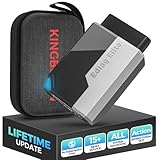
- OBD2 Bluetooth Scanner Lifetime Update: Ediag Elite offers revolutionary Advantage Lifetime Updates with unlimited access to the superior 15+ reset service, bidirectional testing and full system diagnostics.The Ediag Elite is an excellent Bluetooth OBD2 scanner diagnostic tool ideal for DIY's and private car owners.
- Bidirectional Control for Quickly Locating Problems: The Bidirectional Scan tool allows you to send commands directly from your smartphone to your vehicle for active testing. This feature helps to quickly narrow down problems such as air conditioning clutches, windows, doors, sunroofs, etc., reducing diagnostic time for mechanics and helping DIY users locate faults more easily. In addition, Ediag Elite provides fault analysis and repair guidance to help you solve problems efficiently.
- 15+ Maintenance Resets: The current version introduces 15+ popular special features: Oil Reset, Headlight Matching, Bleeding Reset, TPMS Reset, BMS Reset, Gear Box Relearn, EGR Learning, Throttle Learning, Injector Coding, SAS Reset and more special functions in system diagnose menu. These functions make it easy for owners to carry out the necessary maintenance and servicing, ensuring that your vehicle stays in top condition, prolonging its service life and preventing common problems and breakdowns. Note: The Special function vary by model& year, Reach us check compatibility.
- Wide Compatibility CANFD & FCA Autoauth: Compatible with GM, Ford, Toyota, Chrysler, Honda, Mazda, Nissan, Mitsubishi, Hyundai, KIA with standard OBD2 port from 1996 to newer. More car brands and features will be released gradually. Newest Ediag Elite scanner supports CANFD Protocol and FCA cars. Note: Coverage may vary on different vehicle by model& year ,Please contact us to confirm compatibility before purchase.
- Perfect for Monitoring The Health of Your Vehicle: Ediag Elite is designed to make vehicle maintenance simple and efficient. With intelligent AutoVIN quick recognition, it is easy to connect to your car without the need for manual input. Real-time data is visualized in a variety of formats, including graphs, numeric, meter displays and clear 4-in-1 data charts, allowing you to effortlessly monitor real-time performance. Data logging/reporting is available for playback and further analysis.
Step 2: Build a symptom log
Technicians need operating conditions, not just a conclusion. Write down:
- Year, make, model, engine, drivetrain, mileage, and transmission type
- The exact gear or range involved
- Cold or hot condition and time since startup
- Time since the vehicle was parked
- Vehicle speed, engine RPM, and approximate throttle position
- Uphill, downhill, towing, stop-and-go, or highway conditions
- Whether the problem is intermittent or constant
- Warning lamps, messages, and the circumstances in which they appeared
- Recent battery work, software updates, fluid service, accidents, or repairs
For example, “delays two seconds when selecting Reverse after sitting overnight, then engages normally for the rest of the day” points toward a different diagnostic path from “fails to engage Reverse when hot and slips in every forward gear.”
Step 3: Check recalls and service history
In the United States, enter the vehicle’s 17-character VIN into the National Highway Traffic Safety Administration’s recall lookup. The result identifies unrepaired safety recalls associated with that VIN. Recall repairs are generally completed by the manufacturer without charge, although eligibility and coverage depend on the recall and vehicle.
A recall result does not prove that the current transmission complaint is covered. It does, however, prevent you from paying for work that may fall under an applicable safety campaign. Also review service records for previous transmission repairs, fluid replacement, battery disconnection, software updates, towing, or accident damage.
Step 4: Inspect before disassembly
With the vehicle safely supported—or inspected from above where possible—look for:
- Fluid leaks and damaged pans or cooler lines
- Loose, corroded, oil-soaked, or damaged transmission connectors
- Wiring routed near hot exhaust parts or moving axles
- Loose grounds and signs of water intrusion
- Broken transmission or engine mounts
- Axle, driveshaft, differential, or transfer-case problems
- Exhaust contact that may create a rattle or clunk
- Signs of overheating or previous incorrect service
Check battery voltage and charging-system condition when electronic faults appear. Low system voltage can create several seemingly unrelated module and solenoid symptoms. A voltage check does not replace the manufacturer’s electrical tests, but it can prevent chasing false transmission conclusions.
Step 5: Verify the fluid procedure—not a generic internet procedure
Confirm all of the following in the vehicle-specific manual or service information:
Quick wins for a faster PC:
Repair Windows errors before they cause bigger problemsFix Now →Scan for outdated or missing drivers - takes under a minuteDriver Scan →- Required fluid specification
- Whether the transmission has a dipstick, level plug, overflow tube, or another system
- Required fluid temperature and engine state during the check
- Vehicle leveling and lift-point requirements
- Approved fill method and approximate capacity
- Whether a filter, pan gasket, or one-time-use fastener is required
- Any post-service scan, temperature check, adaptation, or relearn procedure
Ford directs owners to the vehicle-specific owner’s manual or lubricant information for fluid requirements, and Toyota likewise directs owners to the vehicle manual and manufacturer maintenance guidance. Those instructions are more reliable than a universal fluid chart or a generic claim that every transmission should be flushed at a particular mileage.
If the service procedure is clear and the job is within your ability, a transmission fluid drain pan and transfer pump can help contain and transfer fluid. These tools do not make every transmission a suitable DIY service project: some units require a precise temperature window, a scan tool, a special adapter, or access from a lift.
Step 6: Scan all relevant modules
Save diagnostic information before clearing anything. Depending on the vehicle and tool, record current, pending, and history codes, freeze-frame data, transmission temperature, input and output speeds, commanded gear, actual gear, solenoid commands, and adaptive values.
A basic emissions-only reader may retrieve generic engine-related codes but fail to communicate with the transmission control module (TCM), body module, ABS system, or manufacturer-specific data. A full-system OBD2 scanner can be useful when its documented coverage includes the vehicle’s transmission module and the data you need. Some tools advertise transmission-system code access or transmission parameters on supported vehicles, but compatibility remains vehicle-dependent. Check the vehicle coverage before buying; do not assume that an inexpensive code reader can access every TCM.
Use the scanner as evidence-gathering equipment, not as an automatic parts selector. A code for a speed sensor circuit may be caused by the sensor, wiring, a connector, a power or ground problem, a reluctor issue, or a control-module fault. A code identifies a diagnostic direction; it does not necessarily identify the failed component.
Step 7: Check non-transmission causes
Before condemning the transmission, verify engine performance and related driveline components. Check for misfires, throttle faults, loss of engine power, abnormal idle, damaged mounts, axle or driveshaft problems, tires, wheel bearings, differential noise, and transfer-case faults on four-wheel-drive or all-wheel-drive vehicles.
This step matters because engine misfire or lack of power can produce vibration, erratic shifts, and a sensation similar to torque-converter trouble. A broken mount or driveline backlash can make a normal gear change feel like a transmission bang.
Step 8: Road-test only when it is safe
A controlled road test can reproduce the complaint, but it should not create a traffic hazard. Do not test a vehicle that has unreliable propulsion, severe slipping, unpredictable gear selection, a major leak, or a flashing warning light. If a test is safe, use the symptom log and change one condition at a time.
Recommended Free Tools
Record the gear selected, commanded gear if available, speed, engine RPM, throttle, temperature, road grade, load, and whether the symptom occurs during acceleration, steady cruise, coast-down, braking, or manual gear selection. A passenger can record observations while the driver concentrates on traffic. Never use a phone or scanner while driving unless it is safely mounted and legal in your area.
Rank #4

- 📌【We are Here for You】Dear valued customer, please be kindly noted diagnostic tool functions vary from cars, please check compatibility before order. If you experience any issues with your product after purchase (received a registered product, change to Spanish/ Portuguese, functions performing...), or need any support (subscription/ more accessories), please rea-ch us via 💌autelusa @ outlook . com in the first time💌. Our dedicated team is here to help resolve any issues you may have.
- 🚀【5X Faster Next-Level Hardware, Same as MK900/ MX900/ MK900BT】Autel MaxiCheck MX808S bidirectional scanner is powered by Rockchip RK3566 4-Core CPU, 4GB RAM, 64GB ROM and Android 11, delivering 5X faster performance than old MK808/ MX808 scanners built on outdated Android 4 with 2GB+32GB memory. Boot up in seconds, run Auto Scan quick vehicle diagnostics, switch instantly between Engine, ABS, SRS and Transmission systems, and perform active tests. Smooth live data streaming and faster diagnostics help mechanics locate faults quicker, reduce waiting time, and finish repairs faster, making MX808S a reliable upgrade for workshops and home DIYers in 2026.
- 🔥【3000+ Active Tests = MK900/MK900BT but Bud.get-Friendly】Autel MX808S bidirectional obd2 car scanner performs 3000+ active tests (not supported by MD909 PRO), allowing you to send commands directly to vehicle components without using manual controls. Easily perform EV-AP tests, injector buzz tests, fu.el pump activation, cooling fan test, valve and pump tests and more. Perfect for confirming faulty parts before replacement, for example activating the fuel pump to check pressure, running injector tests. 📌Cars before 2000, kindly check compatibility via 💌autelusa @ outlook. com💌
- 📢【2026 U.S. Version, All-in-One as MK808S/ MK808Z/ MK808BT PRO】Autel Scanner MX808S is built for the U.S. market and integrates core features of MaxiCOM MK808S, MK808Z, and MK808BT PRO in one budget-friendly tool. It delivers OE-level full system diagnostics, 3000+ bidirectional active tests, and 28+ service functions. Supports FCA Aut0.Auth (2018+ Chrysler, Jeep, Dodge, Fiat) and works with Autel MV108S endoscope for visual inspection in tight spaces, ideal for busy workshops and advanced DIY mechanics.
- 🔥【28+ Hot Services for 150+ Brands】Same as MaxiCOM MK808S/ MK808BT PRO, Autel MX808S obd2 scanner diagnostic tool provides 28+ most-used maintenance services to cover daily repair needs. Easily perform Oil Reset after service, ABS Brake Bleeding, EPB Reset, BMS, SAS Calibration, D,P,F, Injector Calibration, Throttle, Crankshaft Relearn, and more. It also supports window, seat, headlamp etc. adaptations, helping technicians finish repairs faster and restore vehicle performance. 📌Services vary by vehicle, please check compatibility with VIN to 💌autelusa @ outlook. com💌before purchase.
A road test cannot replace pressure testing, electrical testing, waveform analysis, hydraulic inspection, or the manufacturer’s service procedure. It tells you when and how to reproduce the problem; it does not by itself prove the internal cause.
Step 9: Perform advanced testing with vehicle-specific data
Advanced diagnosis may involve line-pressure testing, solenoid resistance or activation tests, input/output-speed comparison, transmission-temperature verification, hydraulic testing, adaptive-value analysis, software or calibration checks, and a relearn procedure. The correct pressure values, connector pinouts, fluid-temperature range, test adapters, and relearn sequence vary by transmission.
Do not apply a pressure specification, fill quantity, torque value, or adaptation routine from an unrelated model. Internal transmission repair, valve-body removal, clutch diagnosis, programming, and adaptive relearns generally require service information and equipment beyond a basic home inspection.
What a diagnostic code can—and cannot—tell you
A code is a clue connected to a circuit, sensor, performance condition, or control strategy. It is not a guarantee that the named part has failed.
For example, a transmission input-speed code could result from a failed sensor, an open or shorted wire, a poor connector, low voltage, a damaged tone ring, or a control-module problem. A gear-ratio or shift-performance code could reflect low fluid, slipping clutches, incorrect pressure, a solenoid issue, an inaccurate speed signal, or a condition elsewhere in the drivetrain.
The useful workflow is:
- Save the code and freeze-frame information.
- Confirm whether the code is current, pending, or historical.
- Inspect the relevant wiring, connectors, power, and ground.
- Compare live data with the vehicle’s service specifications.
- Perform the directed test before replacing a part.
- Clear codes only after recording them and only when appropriate.
- Verify the repair with a scan and a controlled road test.
Model-specific information is not optional for many repairs
Transmission fluid levels, fill methods, temperature windows, electrical tests, pressure values, torque specifications, software routines, and adaptive relearns differ substantially between vehicles. A vehicle-specific transmission repair manual can be useful for locating the correct maintenance and diagnostic procedure, but it must match the exact vehicle, engine, transmission, and market.
For difficult work, use official vehicle service information from the manufacturer or a reputable vehicle-specific repair database. These resources may provide wiring diagrams, connector views, technical procedures, calibration information, and test specifications that a general repair article cannot safely provide. Availability and subscription terms vary by country and provider.
Do these 3 things before closing this tab:
1Repair Windows errors before they cause bigger problems2Fix the driver behind crashes, sound loss and screen glitches3Clear out junk files and repair common Windows errorsWhat not to do
- Do not assume a flush will fix worn clutches or a failed solenoid. Fluid service can be appropriate maintenance or part of a repair, but it cannot restore mechanically worn friction material or repair every hydraulic fault.
- Do not use universal fluid automatically. Use the exact specification required by the manufacturer.
- Do not clear codes before recording them. Clearing can erase useful evidence, including freeze-frame data and adaptive information.
- Do not treat one code as proof of one failed part. Test the circuit and the operating condition.
- Do not repeatedly rev the engine while waiting for delayed engagement. This can increase shock and heat.
- Do not drive indefinitely with slipping, severe overheating, or a major leak. The vehicle may become immobile and the damage may become more expensive.
- Do not work under a vehicle supported only by a floor jack. Use rated support equipment and correct lift points.
- Do not pour used transmission fluid down a drain or onto soil. Store it in a leak-proof container and use an appropriate recycling or collection facility.
Under-vehicle inspection equipment
For permitted inspection or fluid work, use properly rated automotive jack stands and wheel chocks for vehicle maintenance. Confirm the equipment’s capacity, inspect it for damage or recall notices, use the vehicle’s specified lift points, chock the wheels, and never rely on the jack alone. This equipment is not an invitation to remove a transmission at home; transmission removal and internal work require substantially more support, access, and training.
When to use a transmission specialist
Refer the vehicle to a qualified technician or transmission specialist when there is no engagement, repeated slipping, metal debris, severe or worsening noise, a persistent warning light, a suspected pressure problem, a programming or adaptive-relearn requirement, or a need to remove the valve body or transmission.
When requesting an estimate, ask the shop to explain:
- Which codes were stored, including pending or history codes where relevant
- What symptom was reproduced and under which conditions
- What fluid level, temperature, pressure, electrical, and live-data tests showed
- Whether engine, mount, axle, differential, or transfer-case causes were ruled out
- What failure mode the proposed repair addresses
- Which fluid specification and service procedure will be used
- Whether programming, adaptation, or a post-repair relearn is required
- What components are being replaced and what warranty applies to the work
A recommendation to rebuild or replace the transmission may ultimately be correct, but it should follow evidence such as confirmed internal wear, persistent pressure loss, damaged clutch material, metal debris, or test results that rule out external and electronic causes.
A printable diagnosis checklist
- Identify the exact vehicle, engine, drivetrain, and transmission.
- Write down the exact symptom and affected gear or range.
- Record cold/hot condition, speed, RPM, throttle, load, and road conditions.
- Check the VIN for applicable safety recalls in your country.
- Inspect for leaks, damaged wiring, poor grounds, mounts, and driveline problems.
- Check battery and charging-system condition if electronic faults are present.
- Verify the manufacturer’s fluid type and level-check procedure.
- Save transmission and engine codes before clearing them.
- Capture freeze-frame and live data when the scan tool supports it.
- Check for engine misfire or loss of power before blaming the transmission.
- Road-test only if the vehicle remains safe and controllable.
- Use vehicle-specific service information for pressure, temperature, fill, torque, and relearn procedures.
- Escalate when there is no engagement, major slipping, metal debris, severe noise, overheating, or a suspected internal failure.
Frequently Asked Questions
Can low transmission fluid cause slipping and harsh shifting?
Yes. Low fluid can reduce lubrication and hydraulic pressure and may cause slipping, delayed engagement, or harsh shifts. First identify the leak and follow the vehicle-specific level-check procedure. Many newer transmissions require a temperature-controlled check rather than a dipstick reading.
Will a transmission flush fix a slipping transmission?
Not necessarily. A fluid service may be appropriate maintenance or may address an incorrect-fluid or contamination issue, but it will not repair worn clutch packs, a failed solenoid, a pressure problem, or other internal damage. Diagnose the cause before authorizing a flush.
Can an OBD2 scanner diagnose a transmission problem?
Only if it supports the vehicle’s relevant transmission control module and data. Basic emissions readers may not access manufacturer-specific TCM codes. Even a full-system scanner provides clues and measurements; it does not prove that the part named by a code has failed.
Is delayed engagement into Reverse always a sign that the transmission needs to be rebuilt?
No. Delayed engagement can result from low fluid, drain-back after sitting, incorrect pressure, a sticking valve or solenoid, incomplete adaptive learning, a control fault, or internal wear. The delay’s duration, temperature, frequency, and whether it ends in a slam help determine the next test.
PC Slower Than It Used to Be?
A free scan shows the junk files, broken settings and background clutter dragging Windows down - then fixes them in one click.Free scan · Windows 10 & 11Outdated Drivers Are Slowing You Down
One free scan finds every outdated or missing driver and matches the right update for your exact hardware.Free scan · exact hardware matchHow far can I drive with a slipping automatic transmission?
There is no safe universal distance. If slipping is severe, worsening, accompanied by overheating or a major leak, or causing unreliable propulsion, do not continue driving. Arrange a tow or move the vehicle only as necessary to reach a safe location.
The Bottom Line
Diagnose an automatic transmission complaint by documenting the exact operating condition, inspecting the vehicle, verifying the correct fluid procedure, scanning the relevant modules, and ruling out engine and driveline problems before condemning internal transmission parts. A full-system scan or model-specific manual can improve the evidence, but neither replaces vehicle-specific service information or professional testing. Stop driving when engagement, temperature, leaks, noise, or propulsion creates a safety risk.
Quick Recap
Product prices and availability are accurate as of the date/time indicated and are subject to change. Any price and availability information displayed on Amazon at the time of purchase will apply.




