Chip Foose’s 1956 Lincoln Continental restomod for SEMA is a one-off Continental Mark II transformed from a fixed-roof luxury coupe into an open-air grand tourer. Built by Foose Design with BluePrint Engines, the show car combines extensive custom bodywork, a 530-horsepower LS-Compatible V8, modern brakes, and a deliberately period-inspired interior.
The completed car debuted at the BluePrint Engines booth during the 2025 SEMA Show in Las Vegas. Its appeal comes from the tension between a radically reworked body and a restrained visual treatment: the modern engine is powerful, but vintage-style engine dress keeps the Continental’s mid-century identity intact.
As an Amazon Associate I earn from qualifying purchases.
Key takeaways
- The 1956 Lincoln Continental is a custom roof-removed conversion, not a factory-built convertible.
- BluePrint Engines supplied a 376-cubic-inch LS-Compatible Pro Series V8 rated at 530 horsepower.
- Chip Foose retained a period-correct appearance by hiding the modern engine beneath a stock-style air cleaner and valve covers.
- Foose Design reshaped the body, lowered the spare-tire hump by three inches, and revised the stance with reworked front spindles and rear lowering blocks.
- The cabin uses olive-green and eggshell-white leather, green-backed gauges, and a 1964 Ford Thunderbird rear seat.
What is Chip Foose’s 1956 Lincoln Continental restomod for SEMA?
Chip Foose’s 1956 Lincoln Continental restomod for SEMA is a one-off Continental Mark II transformed from a fixed-roof luxury coupe into an open-air grand tourer. Built by Foose Design with BluePrint Engines, the show car combines extensive custom bodywork, a 530-horsepower LS-Compatible V8, modern brakes, and a deliberately period-inspired interior.
Outdated Drivers Are Slowing You Down
One free scan finds every outdated or missing driver and matches the right update for your exact hardware.Free scan · exact hardware matchWindows Errors? Fix Them Before They Spread
Repair common Windows errors and clear accumulated junk for a smoother, more stable PC - no reinstall needed.Free scan · no reinstallThe completed build debuted in the BluePrint Engines booth at the 2025 SEMA Show, held November 4–7, 2025, at the Las Vegas Convention Center. The project is separate from Foose’s 1956 Ford F-100 “FD-100,” another vehicle that can otherwise cause confusion in searches for Foose’s 1956 builds.
#1 Best Overall
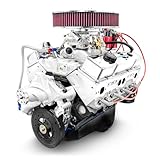
- Horsepower & Torque: 436 HP / 443 FT LBS Cylinder Heads: BluePrint Engines Aluminum Cylinder Heads Compression Ratio: 10:1 Camshaft: Hydraulic Roller Cam - .544 Intake / .555 Exhaust Lift and 230 Intake / 236 Exhaust Duration @ .050 - 110 Degrees LSA Pistons: Hypereutectic Crankshaft: Steel Crank - 3.750" Stroke and 5.700" Rods
Is the 1956 Continental a convertible?
The 1956 Continental is not a factory convertible. Foose Design removed the roof from the original fixed-roof coupe and extensively reworked the body so the car would read as an open-air, convertible-style grand tourer.
That distinction matters because the car is not simply a restored production model or a conventional chopped-top coupe. The conversion required the door openings and body side line to be reshaped, with the surrounding proportions adjusted so the roofless profile looked intentional rather than incomplete.
What did Chip Foose change on the 1956 Continental?
Chip Foose changed nearly every major visual area that defines the Continental’s profile while keeping the overall design restrained. The documented exterior work includes:
Quick wins for a faster PC:
Fix the driver behind crashes, sound loss and screen glitchesFind Drivers →Clear out junk files and repair common Windows errorsFree Scan →Scan for outdated or missing drivers - takes under a minuteDriver Scan →- Removing the roof and reshaping the door openings.
- Reworking the body side line for the open-air proportions.
- Reshaping the hood with smoother openings.
- Pulling the headlights back and lowering them.
- Deleting the front emblem.
- Modifying both bumpers to follow the revised contours.
- Incorporating 1956 Ford truck door handles into the cleaner side treatment.
- Redesigning the rear deck-lid opening.
- Lowering the spare-tire hump by three inches to improve the rear profile.
THE SHOP Magazine’s reveal coverage documents the one-off body alterations and the three-inch spare-tire-hump reduction. The result is less about adding decoration than about correcting the proportions created when a formal fixed-roof coupe becomes an open-air car.
| Area | Original 1956 Continental Mark II | Foose SEMA restomod |
|---|---|---|
| Body configuration | Fixed-roof luxury coupe | Custom open-air grand tourer conversion |
| Roof and doors | Factory roof and original door-opening treatment | Roof removed; door openings and side line reshaped |
| Front-end details | Original hood, headlights, emblem, and bumpers | Smoothed hood openings, lowered headlights, deleted emblem, revised bumpers |
| Side hardware | Original door handles | 1956 Ford truck door handles incorporated into the custom bodywork |
| Rear profile | Original deck-lid opening and spare-tire hump | Redesigned deck-lid opening and spare-tire hump lowered three inches |
What engine is in Chip Foose’s 1956 Lincoln Continental?
Chip Foose’s 1956 Lincoln Continental uses a BluePrint Engines LS-Compatible 376-cubic-inch Pro Series V8 rated at 530 horsepower. The engine is modern and LS-compatible rather than the original Lincoln V8 architecture, but the installation is visually disguised to suit the mid-century car.
Rank #2
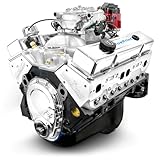
- Horsepower & Torque: 436 HP / 443 FT LBS Cylinder Heads: BluePrint Engines Aluminum Cylinder Heads Compression Ratio: 10:1 Camshaft: Hydraulic Roller Cam - .544 Intake / .555 Exhaust Lift and 230 Intake / 236 Exhaust Duration @ .050 - 110 Degrees LSA Pistons: Hypereutectic Crankshaft: Steel Crank - 3.750" Stroke and 5.700" Rods
According to BluePrint Engines’ 2025 build coverage, the engine produces 530 horsepower from 376 cubic inches. BluePrint’s current catalog lists 376-cubic-inch LS-Compatible Pro Series products, including 530-horsepower long-block and dressed-engine variants. The catalog establishes the engine family and available product configurations; it does not mean that the show-car installation is a universal direct-fit swap for every 1956 Continental.
Foose’s presentation is the interesting part of the engine choice. A stock-style air cleaner and stock-style valve covers cover the modern visual clues, allowing the powerplant to support the car’s vintage personality instead of turning the engine bay into an obviously modern LS conversion. The build therefore modernizes the mechanical package without abandoning the visual language of the original luxury coupe.
Free tools Windows power users keep installed
One-click scans. No signup required.
“This Continental represents what I love most about automotive design, respecting heritage while exploring what’s possible,” said Chip Foose, founder of Foose Design.
The quotation appears in THE SHOP Magazine’s published reveal account.
How much horsepower does the Foose Continental make?
The Foose Continental makes 530 horsepower according to the documented BluePrint Engines specification. The 530-horsepower rating belongs to the BluePrint LS-Compatible 376-cubic-inch Pro Series engine used for the build, not to a documented dyno test performed for this article.
Rank #3
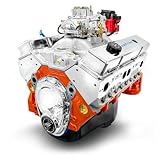
- Horsepower & Torque: 500 HP / 500 FT LBS Cylinder Heads: BluePrint Engines Aluminum Cylinder Heads Compression Ratio: 10.3:1 Camshaft: Hydraulic Roller Cam - .553 Intake / .576 Exhaust Lift and 236 Intake / 242 Exhaust Duration @ .050 - 110 Degrees LSA Pistons: Forged Crankshaft: Forged Steel Crank - 3.750" Stroke and 5.700" Rods
That output also explains why the chassis work is important. The project is not only an exterior design exercise: the modern V8 is paired with upgraded braking, revised suspension and stance components, and a stainless-steel exhaust system.
The Tool Desk
Outbyte PC Repair FREERepair Windows errors before they cause bigger problemsFix Now →Outbyte Driver Updater FREEFix the driver behind crashes, sound loss and screen glitchesFind Drivers →How were the brakes, suspension, exhaust, and wheels upgraded?
The restomod’s documented chassis changes combine improved stopping hardware with a lower, more deliberate stance. Master Power Brakes supplied a four-wheel disc-brake system, while the front spindles were reworked and rear lowering blocks were used to alter the ride height.
A MagnaFlow all-stainless-steel exhaust system handles the exhaust solution. One-off custom-built wheels and custom white-striped tires complete the exterior stance. The available authoritative coverage does not establish the wheel dimensions, tire sizes, transmission, rear axle, or complete suspension geometry, so those specifications should not be inferred from photographs.
| System | Documented build detail | What remains unspecified |
|---|---|---|
| Brakes | Master Power Brakes four-wheel disc system | Exact rotor, caliper, and master-cylinder specifications |
| Front suspension | Reworked front spindles | Complete suspension geometry and component list |
| Rear stance | Rear lowering blocks | Exact ride height and axle specifications |
| Exhaust | MagnaFlow all-stainless-steel system | Pipe diameter and muffler configuration |
| Wheels and tires | One-off custom wheels with custom white-striped tires | Wheel dimensions and tire sizes |
What is inside the custom Continental?
Bill Dunn Interiors created a cabin that is bespoke without discarding the car’s period character. The documented upholstery combines olive-green and eggshell-white leather, while the gauges receive green backing to coordinate with the color scheme.
The rear seat comes from a 1964 Ford Thunderbird. That choice is a custom fabrication detail rather than evidence that the Continental used an original factory interior component. The interior approach mirrors the exterior and engine strategy: modernized and individually made, but visually integrated with a mid-century grand-tourer theme.
Rank #4

- Horsepower & Torque: 436 HP / 443 FT LBS Cylinder Heads: BluePrint Engines Aluminum Cylinder Heads Compression Ratio: 10:1 Camshaft: Hydraulic Roller Cam - .544 Intake / .555 Exhaust Lift and 230 Intake / 236 Exhaust Duration @ .050 - 110 Degrees LSA Pistons: Hypereutectic Crankshaft: Steel Crank - 3.750" Stroke and 5.700" Rods
“Partnering with Chip Foose on this Continental build has been an incredible experience,” said Norris Marshall, founder and CEO of BluePrint Engines.
Norris Marshall’s statement is reproduced from THE SHOP Magazine’s build coverage.
What makes this restomod different from a typical 1956 Continental build?
The defining contrast is the separation between appearance and hardware. The body is heavily redesigned, but the changes are deliberately smooth and restrained. The engine is thoroughly modern and LS-compatible, but the stock-style air cleaner and valve covers conceal that fact at a glance. The result does not pretend to be mechanically original; it makes the modern engine part of the design argument.
| Decision axis | Foose Continental approach |
|---|---|
| Original body configuration | Fixed-roof coupe converted into an open-air grand tourer |
| Exterior style | Extensive one-off reshaping with restrained, period-aware surfacing |
| Engine architecture | BluePrint LS-Compatible V8 rather than the original Lincoln engine architecture |
| Engine presentation | Modern hardware visually softened by stock-style air cleaner and valve covers |
| Chassis modernization | Four-wheel disc brakes, reworked front spindles, rear lowering blocks, and stainless exhaust |
| Interior philosophy | Custom fabrication using period-inspired colors and a 1964 Thunderbird rear seat |
| Degree of customization | One-off body, trim, wheel, upholstery, and installation work; not a documented direct-fit package |
Where can you watch Chip Foose’s 2025 SEMA build?
A video walk-around of the completed car is available in Gas N Go With Snow’s 2025 SEMA build coverage. The video is useful for seeing the open-air proportions, wheel-and-tire treatment, interior colors, and concealed engine presentation, while published build coverage remains the better source for the documented specifications.
What’s actually slowing this PC down?
Pick the symptom - the matching free tool is one click away.
Can you buy the exact Foose Continental build?
The documented material identifies the car as a one-of-a-kind 2025 SEMA build and does not provide a sale price, total construction cost, final market value, production count, or complete parts list. The exact show car should therefore be treated as a unique custom vehicle, not as a catalog model or a complete conversion kit.
Best Value

- Horsepower & Torque: 436 HP / 443 FT LBS Cylinder Heads: BluePrint Engines Aluminum Cylinder Heads Compression Ratio: 10:1 Camshaft: Hydraulic Roller Cam - .544 Intake / .555 Exhaust Lift and 230 Intake / 236 Exhaust Duration @ .050 - 110 Degrees LSA Pistons: Hypereutectic Crankshaft: Steel Crank - 3.750" Stroke and 5.700" Rods
Readers researching the engine can use the BluePrint LS-Compatible 376 c.i. Pro Series engine family as a reference point, but a 1956 Continental installation would still require vehicle-specific decisions about mounts, cooling, wiring, transmission, exhaust, steering, braking, and chassis integration. The published build does not establish universal fitment.
Foose Design also lists an official 1956 Continental T-shirt in its Classic Tees collection. The shirt is official build-related merchandise, not evidence that the vehicle itself is available for purchase.
How does the 1956 Continental compare with the separate Foose FD-100?
The SEMA Continental is a 1956 Lincoln Continental Mark II restomod, while the FD-100 is Foose’s separate 1956 Ford F-100 project. The two vehicles share the 1956 model year and Chip Foose’s involvement, but they are different vehicles and should not be treated as the same SEMA build.
Frequently Asked Questions
Is Chip Foose’s 1956 Continental a factory convertible?
Chip Foose’s 1956 Lincoln Continental is a custom conversion, not a factory-built convertible. Foose Design removed the roof and reshaped the body and door openings to create an open-air grand-tourer profile.
What engine is in Chip Foose’s 1956 Lincoln Continental?
The Continental uses a BluePrint Engines LS-Compatible 376-cubic-inch Pro Series V8 rated at 530 horsepower. The modern engine is covered by stock-style air cleaner and valve covers for a period-correct appearance.
How much did Chip Foose’s 1956 Continental restomod cost?
The documented research does not provide a total build cost, sale price, final value, or complete parts list. The Continental was presented as a one-of-a-kind SEMA show build rather than a production conversion.
Where can I watch Chip Foose’s 2025 SEMA Continental build?
A Gas N Go With Snow walk-around of Chip Foose’s 2025 SEMA 1956 Continental is available online, while THE SHOP Magazine provides the documented build specifications and reveal coverage.
The Bottom Line
Chip Foose’s 1956 Lincoln Continental restomod is best understood as a one-off design-and-engineering exercise: a fixed-roof Mark II converted into an open-air grand tourer, powered by a 530-horsepower BluePrint LS-Compatible V8, and finished with enough vintage visual restraint to make the modern hardware feel intentional.
Quick Recap
Product prices and availability are accurate as of the date/time indicated and are subject to change. Any price and availability information displayed on Amazon at the time of purchase will apply.




