Quick wins for a faster PC:
Repair Windows errors before they cause bigger problemsFix Now →Scan for outdated or missing drivers - takes under a minuteDriver Scan →Tensor’s CES 2026 Robocar is an attempt to bring Level 4 autonomy into a privately owned passenger vehicle instead of limiting it to robotaxi fleets. Tensor claims eight NVIDIA DRIVE AGX Thor SoCs, more than 8,000 TOPS of GPU performance, over 100 sensors, five lidars, and a foldable Autoliv steering wheel. The concept is technically ambitious, but its final price, ordering process, approved operating areas, independent safety validation, and delivery schedule have not been confirmed.
Tensor’s CES pitch: Level 4 autonomy for private owners
Tensor used CES 2026 to present the Robocar as a privately owned alternative to the usual robotaxi model. The company says its vehicle combines Level 4 autonomous driving, an unusually large onboard AI-compute system, more than 100 sensors, five lidars, and a cabin that can physically change between autonomous and manual-driving modes.

As an Amazon Associate I earn from qualifying purchases.
That makes the Robocar an important product-positioning story, even though many of its biggest commercial and safety questions remain unanswered. Tensor has not publicly confirmed a final retail price, a live consumer ordering system, a definitive map of approved operating regions, independent performance testing, or customer deliveries.
The vehicle is expected to move toward volume production in the second half or late 2026, according to Tensor and its technology partners. That is a production target—not proof that the Robocar is already available to buy or legally deploy everywhere.
#1 Best Overall

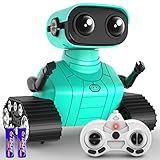
- 2-in-1 Transforming Design:Switch between a fast RC car and a cool robot with just one click—double the fun in one toy!
- Smart Interactive Play:Gesture-sensing transformation, automatic demonstrations mode, and dynamic LED lights with music for an immersive experience.
- Multiplayer Fun Without Interference:2.4GHz remote control allows multiple kids to play together—race or battle with no signal clashes!
- Long-Lasting Dual Battery Power:Two 600mAh rechargeable batteries provide up to 60 minutes of continuous playtime.
- Perfect Gift for Kids:An exciting and innovative toy that sparks creativity—ideal for birthdays, holidays, and special occasions!
What Level 4 means for the Tensor Robocar
Level 4 automation does not mean a vehicle can drive itself anywhere, in any weather, on every road. It means the automated driving system can perform the entire driving task within a defined operating domain—typically specific roads, geographic zones, speeds, and conditions—without the driver continuously supervising it.
Tensor’s own description follows that limited-domain model. In Level 4 mode, the Robocar is supposed to handle driving without supervision inside approved zones. Outside those zones, the occupant must take control or switch to an assisted-driving mode.
That distinction is central to understanding the product. The Robocar is not being presented as a vehicle in which the steering wheel is permanently unnecessary. Instead, Tensor is designing a vehicle that can operate autonomously in its intended domain while retaining manual control for trips or conditions outside that domain.
CES’s official interview and Tensor’s product materials also emphasize both autonomous and manual driving modes. The result is closer to a privately owned, geofenced autonomous vehicle than to an unrestricted autonomous car that can replace a human driver on every journey.
Why Tensor calls it a “supercomputer on wheels”
The phrase refers primarily to Tensor’s claimed computing architecture. Tensor says the Robocar uses eight NVIDIA DRIVE AGX Thor system-on-chip units, based on NVIDIA’s Blackwell architecture, and delivers more than 8,000 TOPS of GPU performance.
TOPS means trillions of operations per second. It is a measure of theoretical or stated AI-processing throughput, not a direct score for driving safety, reliability, or autonomy. A larger compute budget can allow a vehicle to process more sensor data and run larger or more numerous AI models, but it does not by itself demonstrate that the vehicle will drive safely in every real-world situation.
NVIDIA describes DRIVE AGX Thor as an automotive-grade platform intended for production-level autonomous-vehicle development. Its platform documentation covers high-throughput AI inference, automotive input/output, vehicle interfaces, and support for sensor types including cameras, radar, lidar, and localization systems. That supports the broader technical relevance of Thor, but it does not independently verify Tensor’s specific eight-chip configuration or its aggregate performance claim.
Recommended Free Tools
Tensor also presents the onboard computer as supporting more than driving. The same integrated hardware-and-software architecture is intended to process sensor information, run autonomous-driving models, and support in-cabin or conversational AI functions. Whether those capabilities work as advertised in a production vehicle remains to be established through independent testing.
Sensor suite: five lidars and more than 100 sensors
Tensor says the Robocar has more than 100 sensors and five lidar units. The company identifies one of those systems as Tensor Halo lidar, which it claims can emit 25.6 million beams per second and provide a 360-degree safety shield.
Tensor also describes the vehicle as having triple-layer safety redundancy. The intended architecture appears to be based on overlapping sensing and computing systems rather than dependence on one camera, one lidar, or one processing path.
Do these 3 things before closing this tab:
1Clear out junk files and repair common Windows errors2Scan for outdated or missing drivers - takes under a minute3Repair Windows errors before they cause bigger problemsThose specifications are substantial on paper, but sensor count should not be confused with operational assurance. More sensors can improve coverage, redundancy, and the ability to compare data from different modalities. They can also add cost, power consumption, calibration requirements, software complexity, and more possible failure points.
The available materials establish Tensor’s design claims—not a completed public safety case. There is no independent road-test result in the reviewed research that demonstrates how the Robocar performs in heavy rain, snow, fog, construction zones, poorly marked roads, unusual traffic behavior, sensor blockage, or other difficult conditions.
For that reason, the most accurate description is that Tensor is proposing a heavily instrumented Level 4 architecture. It is not yet possible to conclude from the sensor count alone that the production vehicle will be safer or more capable than competing autonomous systems.
The foldable steering wheel changes the cabin
The most visible CES feature may be the foldable steering wheel developed with Autoliv. During manual driving, the wheel provides conventional control. During Level 4 autonomous operation, it retracts to open additional space around the driver’s position.
This is a meaningful design choice rather than a cosmetic gimmick. If the Robocar can drive itself within its approved operating domain, the driver’s area does not need to remain arranged around a permanently active steering interface. Retracting the wheel allows Tensor to move the cabin toward a lounge-like interior while preserving manual control for situations outside the autonomous domain.
Rank #3

- Two In One Toy Cars: Combined with car and robot, this RC transformer car could transform automatically from car to robot back and forth fluently when you press the button on the remote control. Keep your child entertained with the toy that never gets old - cruise down the streets in a drifting sports car or man the battlefield with an intergalactic robot.
- One Button Transformation & Automatic Demonstration: When you press the button on the right, this RC drift car will switch smoothly from the car to the robot form, which is easy to switch back and forth. The automatic demonstration function will bring you surprises!! The unique universal wheel design allows you to enjoy 360-degree rotation and drift, forward & backward are very simple and easy to operate.
- Multiplayer Combat Fun: Equipped with cool LED police lights and perfect size, our RC cars for kids bring the most realistic experience. The 2.4G Hz remote control technology ensures that there will be no signal interference between each car, so parents and children or children themselves can use different cars to play together happily.
- Safe & Durable: This remote control robot car is made of durable ABS plastic material, non-toxic, durable, and safe for kids. The anti-fall car body is strong and resistant to fall and deal with a variety of barbaric children's operations, ensuring your kids have lasting and happy entertainment.
- Perfect Car Toy for Kids: With a cool box package, this excellent transform RC car is a perfect toy for boys and girls who are obsessed with robots and cars/police cars. Suitable toys for 3 6 7 8 5+ year old boys and girls, ideal present for kids’ birthdays, Christmas, or other festivals. Strong quality guarantee, for any problem you suffer, please contact the seller directly first, and we will solve it perfectly for you.
Autoliv says the system also changes the airbag arrangement according to the driving mode. In manual mode, a steering-wheel airbag is used. When the wheel is retracted for autonomous operation, a passenger airbag in the instrument panel is enabled instead.
That arrangement illustrates one of the difficult engineering problems created by autonomous interiors: restraint systems, occupant position, instrument-panel geometry, steering controls, and crash protection all have to work in more than one cabin configuration. Autoliv’s announcement confirms the co-developed steering-wheel and safety-system concept, but it does not amount to final regulatory approval for every market.
Autoliv said the Tensor Robocar was expected to be ready for volume production during the second half of 2026 and intended for the United States, European Union, and Middle East markets. Those are stated program targets, not confirmation that the vehicle has completed all market-specific certification or homologation requirements.
The Tool Desk
Outbyte PC Repair FREEClear out junk files and repair common Windows errorsFree Scan →Outbyte Driver Updater FREEFix the driver behind crashes, sound loss and screen glitchesFind Drivers →Manufacturing: VinFast is the industrialization partner
Tensor is not describing the Robocar as a one-off CES prototype. VinFast’s corporate disclosures identify the company as Tensor’s manufacturing and industrialization partner.
VinFast says Tensor had already tested fully functional prototypes in multiple regions while the program remained in pre-production and moved toward commercialization. A later corporate filing gives the same general picture: Tensor is developing personally owned Level 4 Robocars, with VinFast collaborating on manufacturing and industrialization.
Tensor’s newsletter says volume production is planned for late 2026, while Autoliv refers to production in the second half of 2026. The two descriptions point to a similar intended window, but neither establishes a firm delivery date.
Pre-production status matters because a CES vehicle can change substantially before it reaches customers. Final sensor placement, battery specifications, software features, interior equipment, crash-test results, service arrangements, and market availability may all differ from the displayed prototype.
Private car, luxury fleet vehicle—or both?
Tensor’s main commercial argument is that Level 4 autonomy should be available in a vehicle an individual can own, not only in a centrally managed robotaxi fleet. A private owner could use the Robocar as a conventional car when desired and as an autonomous vehicle inside its approved operating zone.
Rank #4

- Transforming Remote Control Car Has Lights, Music, Vapor Spray | Performs 360° Spins
- Kids RC Robot Truck Is Easy To Control | Inductive Deformation Transforms Robot With A Hand
- Gift For Boys Ages 8-13 Years | Fun and Cool Transforming Kids RC Toy Car Robot
- RC Truck Dimensions: - 14" x 5" x 6" | RC Robot - 8.75" x 5" x 10.5" | 1:12 Scale
- Boys RC Robot Car Includes 3.7V Rechargeable Battery | RC Requires 2 AA Batteries (Not Included) | Includes USB Charging Cable
The company is not abandoning fleet use, however. Tensor’s CES announcement says Lyft had reserved hundreds of Robocars for luxury fleet operations. Tensor’s press materials also describe a plan to make consumer-owned autonomous vehicles Lyft-ready and powered by NVIDIA technology.
That creates a potentially unusual dual-use model. An owner might use the car personally and, subject to the eventual business and regulatory arrangements, place it into a mobility network when it is otherwise idle. Fleet operation could help increase utilization, while private ownership would give Tensor a route beyond the depot-based robotaxi business.
The wording needs to remain future-focused. The available sources support describing an announced Lyft relationship and planned fleet deployment. They do not establish that customers can currently request a Tensor Robocar through the Lyft app or that a public Lyft service using these vehicles is operating today.
What the Robocar may cost—and what is not known
Tensor has not confirmed a final retail price in the reviewed primary materials. A secondary report suggested a starting price near $200,000, but that figure was not corroborated by Tensor, VinFast, or another primary source reviewed for this article. It should therefore be treated as an unconfirmed estimate, not the Robocar’s official price.
There is also no confirmed public order form, final delivery schedule, or definitive list of Level 4 operating areas. The intended markets named by Autoliv—the United States, European Union, and Middle East—are not the same thing as approval to operate autonomously throughout every country, state, city, or road within those regions.
For a privately owned Level 4 vehicle, the operating-domain question may be as important as the hardware specification. Prospective buyers would need to know:
- Which roads and geographic zones support unsupervised Level 4 operation?
- What weather, speed, and road-marking conditions are supported?
- What happens when the vehicle reaches the edge of its approved domain?
- How much notice does the vehicle provide before asking the occupant to drive?
- Can the owner operate it manually everywhere a conventional car can?
- Who handles software updates, sensor calibration, repairs, and liability after a system failure?
Tensor’s public CES presentation does not yet answer all of those questions.
What’s actually slowing this PC down?
Pick the symptom - the matching free tool is one click away.
Tensor Robocar claims versus what CES established
| Topic | What Tensor or its partners say | What remains unresolved |
|---|---|---|
| Automation | Level 4 autonomy in approved zones, with autonomous and manual modes | The final operating domain, locations, weather limits, and regulatory permissions |
| Compute | Eight NVIDIA DRIVE AGX Thor SoCs and more than 8,000 TOPS of GPU performance | Independent verification of the configuration, performance, and real-world safety benefit |
| Sensors | More than 100 sensors, five lidars, Tensor Halo lidar, and triple-layer redundancy | Independent validation of the sensor claims and a public safety case |
| Interior | Autoliv foldable steering wheel with mode-dependent airbag architecture | Final production design and market-specific certification |
| Production | Volume production targeted for the second half or late 2026 | Confirmed deliveries, final specifications, price, and order availability |
| Mobility service | Lyft reservation of hundreds of vehicles and a Lyft-ready partnership plan | A live public Lyft service using Tensor Robocars |
Why the CES debut matters
The Robocar is notable because Tensor is combining several industry ambitions in one product. It is trying to make autonomy a private-vehicle feature, use a large onboard compute system rather than rely on a remote operating model, redesign the cabin around multiple driving states, and preserve the possibility of fleet revenue through Lyft.
That is a different proposition from a conventional car with advanced driver assistance and different from a robotaxi that a customer summons but never owns. The company is effectively asking buyers to view the vehicle as an AI platform with an electric-car body, a sensor network, and a software-defined interior.
The challenge is turning that product story into a certifiable, maintainable, legally deployable vehicle. The headline numbers—8,000-plus TOPS, more than 100 sensors, and 25.6 million lidar beams per second—describe potential technical capacity. They do not answer whether the vehicle can reliably handle the edge cases that determine whether private owners will trust it.
Outdated Drivers Are Slowing You Down
One free scan finds every outdated or missing driver and matches the right update for your exact hardware.Free scan · exact hardware matchPC Slower Than It Used to Be?
A free scan shows the junk files, broken settings and background clutter dragging Windows down - then fixes them in one click.Free scan · Windows 10 & 11As of August 13, 2026, the most defensible conclusion is that Tensor has shown a serious pre-production concept and an ambitious commercialization plan. The Robocar is not yet a confirmed retail product with a public price, ordering process, delivery date, or broad operating authorization.
What to watch next
- Final production specifications: Check whether the eight-Thor, five-lidar, and 100-plus-sensor configuration remains unchanged from the CES presentation.
- Independent testing: Look for reproducible testing results covering normal roads, difficult weather, construction, emergency vehicles, and failures of individual sensors or compute units.
- Operating-domain disclosure: Tensor should publish the actual regions and conditions in which unsupervised Level 4 driving is available.
- Regulatory and safety approvals: Market-specific certification will matter more than the CES prototype’s visual or computing specifications.
- Commercial details: A final price, order process, delivery schedule, warranty, service network, and software-support policy will show whether the Robocar is genuinely ready for private buyers.
- Lyft deployment: A confirmed launch location and operating fleet would clarify whether the private-ownership and fleet strategies can coexist in practice.
Frequently Asked Questions
Is the Tensor Robocar fully autonomous everywhere?
Tensor says the Robocar can drive itself within approved zones without continuous supervision. Outside those zones, the occupant must take control or use assisted driving. Level 4 does not mean unrestricted autonomous driving on every road or in every weather condition.
How much will the Tensor Robocar cost?
No confirmed retail price or live consumer ordering system was identified in the available primary materials. A secondary report mentioned a possible starting price near $200,000, but Tensor and its partners have not confirmed that figure.
Can I currently hail a Tensor Robocar through Lyft?
Tensor says Lyft reserved hundreds of Robocars for luxury fleet operations and describes a plan to make consumer-owned vehicles Lyft-ready. However, the available sources do not show that a public Lyft service using Tensor Robocars is operating today.
Free tools Windows power users keep installed
One-click scans. No signup required.
When will the Tensor Robocar go on sale?
Tensor says volume production is planned for late 2026, while Autoliv refers to the second half of 2026. These are targets, not confirmed customer-delivery dates. Final specifications, regulatory approvals, and operating regions remain unresolved.
The Bottom Line
Bottom line: Tensor’s CES 2026 Robocar is a credible and unusually ambitious attempt to move Level 4 autonomy from robotaxi fleets into a privately owned vehicle. Its eight-chip Thor compute claim, extensive lidar and sensor package, foldable steering wheel, and VinFast production partnership make it more than a styling exercise. But price, ordering, approved operating areas, independent validation, regulatory status, and deliveries remain open questions. For now, it is best understood as an advanced pre-production program—not a confirmed $200,000 consumer car or a Lyft vehicle that riders can already hail.
Quick Recap
Product prices and availability are accurate as of the date/time indicated and are subject to change. Any price and availability information displayed on Amazon at the time of purchase will apply.




