Pop-up headlights were a practical styling solution, not merely a novelty. They concealed the headlamp when it was not needed and raised, rotated, or otherwise exposed it for nighttime driving. The 1936 Cord 810 is generally recognized as the first production car with retractable headlamps, while the 2004 Chevrolet Corvette C5 and Lotus Esprit are generally regarded as the last mainstream production cars with classic full pop-up lamps.
They were not universally banned in the United States. Federal safety rules specifically address headlamp-concealment devices. Pop-ups disappeared because fixed composite, projector, HID, and LED lamps became cheaper and easier to package, while pedestrian-impact requirements, global certification, and long-term mechanical complexity made retractable systems increasingly unattractive.
This guide separates true rising lamps from rotating pods, sliding doors, fixed lamps behind covers, and modern design tributes. It also identifies the important cars, explains what fails, and gives buyers a practical inspection and ownership framework.
What counts as a pop-up headlight?
Pop-up headlight is the familiar enthusiast term. Hidden headlamp and retractable headlamp are more technically inclusive because not every concealed lamp rises vertically out of the hood.
Do these 3 things before closing this tab:
1Clear out junk files and repair common Windows errors2Scan for outdated or missing drivers - takes under a minute3Repair Windows errors before they cause bigger problems#1 Best Overall

- Fits 1997-2004 C5 Corvette.
- Package Includes One Bronze Gear Kit to Repair One Headlight.
- One of the issues most C5 owners will have to deal or have dealt with is the headlight motors or more specifically the nylon main gear which will fail at some point. The signs are clear: noisy operation, failed up/down operations from time to time and finally complete lose of operation leaving you with just a running motor or a locked up motor.
- The kit will include everything (except tools) to complete headlight nylon to bronze gear replacement.
The essential idea is that the lighting installation is hidden or substantially concealed when switched off and moved into its legally usable position when required. The lamp itself may move, or a door may move around a lamp that remains fixed.
| Design | What moves? | Examples |
|---|---|---|
| True rising pod | The complete lamp pod pivots or rises from the hood. | Mazda MX-5 Miata NA, Toyota MR2, Chevrolet Corvette C5 |
| Rotating pod | The lamp rotates into position, often backward or forward. | Opel GT, Porsche 914, Porsche 928 |
| Hidden lamp door | A panel or door moves away from a lamp that is otherwise fixed. | Many Ferrari, Lamborghini, and Maserati applications |
| Exposed-lens rotating unit | The lens remains visible, but the lamp rotates between an upright and a horizontal position. | Porsche 928 and 968 |
| Partial concealment | A movable eyelid or upper panel covers part of the lamp. | Ferrari Daytona SP3 |
Operation could be manual, electric, vacuum-powered, cable-driven, or controlled through a combination of motors, gears, relays, switches, and linkages. That distinction matters when buying one. An electrically operated Mazda and a vacuum-operated Corvette may produce the same dramatic wink, but they do not fail or get diagnosed in the same way.
What does not qualify as a true pop-up?
- Lamborghini Miura: its lamps were fixed but partially concealed behind the famous decorative eyelashes.
- Transparent fixed covers: a lamp behind a stationary cover is concealed, but the lamp is not retractable.
- Ferrari Daytona SP3: its movable upper eyelids deliberately recall classic pop-ups, but it does not use a conventional pair of lamps rising from the hood.
- Pop-up hood systems: these raise the hood after a pedestrian collision. They have nothing to do with retractable headlights; Honda describes the separate safety technology here.
- Concepts, custom conversions, and restomods: they can be interesting, but should not be counted as production examples unless they actually entered series production.
The broader term hidden headlamp is therefore preferable when discussing the entire design family. In ordinary conversation, however, all of these mechanisms are often called pop-ups.
A short history: from the Cord 810 to the final mainstream cars
| Period | What happened |
|---|---|
| 1935 | The Cord 810 was publicly shown at the New York Auto Show with manually operated retractable headlamps. |
| 1936–1937 | The Cord 810, later updated as the 812, entered production. It is generally recognized as the first production car with retractable headlamps. The Studebaker National Museum documents the Cord 810. |
| 1942 | DeSoto used powered concealed headlamps, an early example of the idea appearing outside an exotic or low-volume sports car. |
| 1960s | The format returned in force with cars such as the Lotus Elan, Chevrolet Corvette, Oldsmobile Toronado, Maserati Ghibli, and Lamborghini Miura. |
| Late 1960s–1970s | European sports cars and GTs—including Ferrari, Porsche, Fiat, Lancia, Opel, and Lamborghini models—made hidden lamps a defining visual feature. |
| 1980s | Pop-ups reached their cultural and market peak. Japanese manufacturers used them on affordable coupes, hatchbacks, sedans, and sports cars as well as supercars. |
| 1990s | Fixed composite lamps, projector systems, changing regulations, cost pressures, and pedestrian-protection concerns began to displace retractable designs. |
| 2004 | The Chevrolet Corvette C5 ended with the 2004 model year. The final Lotus Esprits were completed around the end of 2003 or early 2004, depending on whether the reference is to the factory heritage timeline, final assembly, or specialist production records. |
The difference between first shown and first produced is important. The Cord appeared publicly in 1935, but the production car was the 1936 model. The same care is needed at the other end of the story: saying simply that the Corvette was the last pop-up car obscures the Lotus Esprit, while saying that no car after 2004 ever used a related design ignores very-low-volume coachbuilt cars and modern partial-concealment systems.
Why did manufacturers use pop-up headlights?
They solved a lighting problem created by the era
For much of the twentieth century, especially in the United States, manufacturers worked around standardized sealed-beam headlamp dimensions and prescribed lamp arrangements. Round and later rectangular sealed beams gave designers less freedom to shape the lamp itself. Rectangular sealed beams became permitted in the 1970s, but they were still standardized components rather than freely sculpted bodywork.
A retractable door allowed a car to meet the lighting rules when the lamps were deployed while presenting a much lower, smoother nose when they were closed. NHTSA’s 1986 interpretation describes the shift toward standardized replaceable light sources and photometric performance, a change that eventually gave designers much greater freedom with fixed composite headlamp shapes.
They enabled low noses and wedge styling
Sports-car designers wanted a low hood, a clean leading edge, and a wedge-shaped silhouette. A conventional headlamp often forced the front fenders and hood to be taller or more carefully sculpted around a fixed lens. Hiding the lamp made the closed car look flatter and more purposeful.
That did not mean pop-ups were always aerodynamically superior. With the lamps closed, they reduced clutter and could lower drag. With the lamps raised, they added exposed surfaces, turbulence, and aerodynamic lift or drag. The benefit was conditional, not a universal performance advantage.
Free tools Windows power users keep installed
One-click scans. No signup required.
Porsche’s historical account of its transaxle cars identifies the actual design compromise: lamp height, available lighting technology, aerodynamics, and styling all had to work together. That is a better explanation than the simplistic claim that every manufacturer used pop-ups solely to improve airflow.
They became a visual identity
Once the mechanism became recognizable, it also became marketing. A Corvette with both lamps raised, a Porsche 928 with its lenses standing upright, or a Lamborghini Countach emerging from the darkness had an immediate visual signature. The motion itself became part of the ownership experience.
They reflected the limitations of period lighting technology
Before modern composite and LED systems, the lamp was a relatively large, standardized object. Designers could either show it permanently, compromise the body shape, or hide it. Retractable systems were the clever third option.
Why did pop-up headlights disappear?
There was no single worldwide ban that suddenly ended the feature. Several developments made it unnecessary, expensive, and harder to certify at the same time.
Recommended Free Tools
Fixed composite and projector lamps became better
Composite headlamps could be molded into thin, sharply styled shapes and integrated into the body. Halogen bulbs, projector optics, HID systems, and eventually LEDs provided more packaging freedom and better lighting performance without requiring a motorized pod.
Once a fixed lamp could be narrow, aerodynamic, attractive, and compliant, a manufacturer had little reason to add a door, motor, gearset, wiring, and emergency mechanism merely to preserve a smooth nose.
The mechanism added cost and failure points
A retractable system can require:
- electric motors or vacuum actuators;
- plastic or nylon drive gears;
- relays, fuses, and headlamp switches;
- position or limit switches;
- pivot shafts, bushings, brackets, and linkages;
- additional wiring and grounding points;
- body structure and trim around the opening; and
- seals and drainage to keep water away from the mechanism.
Each part adds assembly cost and another way for an old car to develop an intermittent fault. A fixed LED module can also be difficult and expensive to replace, but it does not usually leave one headlamp stuck halfway open or force the owner to diagnose a motor, relay, and limit switch before the bulb is even considered.
Pedestrian protection became more important
A deployed headlamp pod is a raised, relatively rigid object in the area where a pedestrian may strike the front of a vehicle. Modern pedestrian-impact testing therefore created a substantial engineering complication. A movable lamp may need to meet requirements both stowed and deployed, with adequate control of impact energy in each position.
Quick wins for a faster PC:
Repair Windows errors before they cause bigger problemsFix Now →Fix the driver behind crashes, sound loss and screen glitchesFind Drivers →This was a major factor, but not the sole cause. NHTSA’s pedestrian-head-protection rulemaking discusses testing vehicles with pop-up lamps in both positions. That is evidence that the design was technically contemplated rather than automatically prohibited.
Global platforms made the compromise unattractive
Manufacturers increasingly designed one vehicle for many countries. A concealed-lamp system could involve different beam patterns, markings, side markers, daytime-running-light arrangements, failure behavior, and pedestrian-impact results between markets. Even if it could be certified, it made a global platform more complicated.
European type-approval rules also address concealable lamps and failure provisions. UNECE Regulation 48 and its later revisions are useful reminders that the story is about installation, visibility, and safety requirements—not a simple European ban.
Styling no longer needed the trick
By the 1990s, designers could create a low, aggressive front end with fixed lamps. Once the visual effect could be achieved without moving parts, the pop-up mechanism became a nostalgic styling choice rather than a necessary engineering solution.
The Tool Desk
Outbyte Driver Updater FREEFix the driver behind crashes, sound loss and screen glitchesFind Drivers →Outbyte PC Repair FREEClear out junk files and repair common Windows errorsFree Scan →Rank #2

- [Vehicle Fitment]: Compatible with Chevrolet Corvette 2000 2001 2002 2003 2004 V8 5.7L Coupe/Convertible/Hatchback
- [Part Number]: 10351400, 10351401, 16530235, 10351400, 16530236, 49-129, 49-130, 82-9129H, 82-9130H, 49129, 49130, 829129H, 829130H
- [Location]: Left and Right, Driver and Passenger Side; Headlight Motor Comes With 5-Pin Connector
- [OEM Design]: This headlight motor is manufactured to the OE specification to provide factory-fresh appearance and direct-fit. OE connector helps ensure a solid, positive connection. The plug and play design makes installation easy without much time or extra tools
- [Buy with Confidence]: A-Premium offers a one-year unlimited-mileage guarantee on our meticulously crafted headlight motor. We offer a wide variety of automotive accessory categories, ensuring that you can hit the road with peace of mind
The legends: cars that define the pop-up era
Fame is not the same as historical importance, and historical importance is not the same as a good used-car purchase. The following cars matter for different reasons: innovation, cultural recognition, engineering, accessibility, or the way they represent a particular period.
1. Cord 810 and 812: the pioneering production car
The Cord 810 was shown in 1935 and entered production for 1936. Its headlamps were manually operated: the driver used controls to retract the lamps into the front fenders and expose them when needed. That makes it different from the electric or vacuum systems that later made the feature effortless.
The front-wheel-drive Cord was technologically ambitious, and its retractable lamps were part of a remarkably advanced design rather than a decorative afterthought. It is a landmark for collectors and historians, not a sensible first pop-up project. Parts, originality, specialized knowledge, and the value of an unmolested car all make inspection by a marque expert essential.
2. Chevrolet Corvette C2 through C5: America’s enduring signature
The second-generation Corvette introduced pop-up headlamps in 1963, and the feature continued through the C3 and C4 generations into the C5. The 2004 model year was the final Corvette with the classic arrangement. Do not call the final C5 a 2005 model simply because some cars were registered or sold later.
Corvettes show how the same visual idea can span radically different mechanisms and ownership experiences. Older generations may use vacuum controls, while later cars use electric systems. A C5 is among the most usable modern-classic choices: it has strong performance, substantial parts support, and more comfortable everyday manners than many exotic contemporaries. It is not maintenance-free, however; age-related electrical faults, worn headlamp motors, body repairs, and poor modifications still matter.
3. Oldsmobile Toronado: hidden lamps beyond the sports-car world
The front-wheel-drive Toronado is important because it proves that concealed lamps were not restricted to two-seat sports cars. Its hidden headlamps helped give a large American luxury coupe a clean, imposing front end.
A Toronado can be historically fascinating and comparatively affordable, but size, weight, age, automatic-transmission complexity, rust, trim scarcity, and less predictable parts support make it a different proposition from an NA Miata or C5 Corvette.
4. Lotus Elan: the lightweight sports-car template
The Lotus Elan was one of the first major post-Cord sports cars to use the now-familiar retractable format. Its lightweight construction and elegant proportions made the lamps part of a delicate, purposeful design rather than a theatrical wedge.
Buyers should focus on chassis condition, corrosion, fiberglass repairs, suspension wear, and the quality of previous restoration work. An Elan can be rewarding because it is light and mechanically understandable, but a neglected example can require more structural and specialist attention than its small size suggests.
5. Maserati Ghibli: Italian GT drama
The original Giugiaro-designed Maserati Ghibli belongs to the classic concealed-lamp story; it is not the later Maserati sedan that reused the Ghibli name. It combined long-distance GT proportions with a low nose and hidden lamps, helping establish the visual language of 1960s Italian performance cars.
Rust, electrical work, trim, cooling, and the availability of correct parts should matter more to a buyer than a low advertised price. A restored car with documented work is generally a better proposition than an apparently cheap project missing unique details.
6. Porsche 914, 924, 944, 968, and 928: several solutions under one badge
Porsche did not use one universal pop-up mechanism. The 914, 924, and 944 lamps rotate backward into the hood. The 928 uses a visually different forward-rotating arrangement in which the lenses remain exposed when closed; the 968 adopted the 928-style housing concept. Porsche’s own historical explanation makes this distinction clear.
Crashes, No Sound, or Screen Glitches?
Random freezes, missing sound and display glitches usually trace back to one bad driver. Find and replace yours safely.Free scan · under a minutePC Slower Than It Used to Be?
A free scan shows the junk files, broken settings and background clutter dragging Windows down - then fixes them in one click.Free scan · Windows 10 & 11The 924 and 944 can offer a relatively approachable route into the design, but timing-belt service, transaxle and suspension wear, rust, electrical faults, and interior trim remain important. The 928 is a more complex grand tourer with expensive electrical, cooling, suspension, and body systems. It is a superb engineering artifact, but not generally the cheapest way to own retractable headlights.
7. Ferrari Daytona: a market-specific landmark
The Ferrari 365 GTB/4 Daytona is a key example of how regulations shaped appearance. Early European cars and cars prepared for other markets did not necessarily use exactly the same headlamp treatment as U.S.-market versions. Some U.S. cars used concealed or retractable lamp arrangements to meet applicable requirements.
That makes the Daytona historically important, but also a warning against describing all Ferrari headlamps as identical. Verify the market specification, chassis history, and original lighting configuration before judging a restoration.
8. Ferrari 308, 328, 288 GTO, F40, 348, 456, and related cars
Ferrari used pop-up or concealed headlamps across much of its 1970s, 1980s, and early-1990s sports-car range. The 308 and 328 are among the most recognizable; the 288 GTO and F40 turned the system into part of an unmistakable supercar silhouette; the 348 and 456 continued the theme in different forms.
These cars reward originality and documentation. Headlamp doors, trim, wiring, motors, and surrounding bodywork can be costly, and a non-original lighting conversion may reduce both compliance and collectibility. The later 550 Maranello returned to fixed headlamps, illustrating that Ferrari no longer needed retractability to create a low nose.
Ferrari’s lighting history is useful because it distinguishes the company’s different approaches rather than treating every concealed lamp as the same mechanism.
9. Lamborghini Countach and its wedge-era relatives
The Lamborghini Countach is perhaps the most visually famous pop-up supercar. Its lamps complement the low wedge, broad haunches, and dramatic scissor-door silhouette. The Urraco, Silhouette, Jalpa, and Diablo also belong to Lamborghini’s wider retractable-lamp story, although the exact equipment and market specification vary by model and year.
These are collector cars first. Front-end originality, correct lamp doors, electrical condition, cooling, suspension, and the availability of model-specific trim all have an outsized effect on cost. A mechanically incomplete Countach is not made affordable by the fact that its headlamps still open.
What’s actually slowing this PC down?
Pick the symptom - the matching free tool is one click away.
Rank #3

- [Fitment]: Vehicle-specific fit for the 1997-2004 Chevrolet Corvette (C5) ensures high compatibility and easy installation.
- [Complete Repair Solution]: Includes a pair of bronze gear kits, providing all necessary components to fully repair one malfunctioning headlight assembly.
- [Precision-Engineered Reliability]: Experience a flawless fit and exceptional durability designed to save you time and money by getting the repair right the first time.
- [Hassle-Free Returns]: Enjoy 30-day return policy, plus 1 year of premium after-sales support.
10. Lotus Esprit: the last-of-the-line supercar
The Lotus Esprit carried the classic hidden-lamp look through a long production run and into the early 2000s. Lotus’s heritage timeline places the end of production in late 2003, while specialist production records document final cars completed in February 2004. The careful conclusion is that the Esprit and 2004 Corvette C5 were the last mainstream examples, with the date depending on whether one means model year, final factory production, or completed individual cars.
The Esprit offers exceptional styling and a genuine supercar experience, but ownership requires tolerance for electrical gremlins, cooling issues, aging hydraulics and plumbing, brittle trim, difficult access, and scarce or expensive components. A well-supported car can be rewarding; an unknown project can consume the budget quickly.
11. Mazda RX-7: three generations of Japanese interpretation
All three generations of RX-7 are relevant, but they should not be treated as mechanically identical. The first-generation SA/FB used pop-up lamps as part of a low-drag, lightweight, rotary-powered design. Mazda’s corporate history specifically connects the first RX-7’s pop-ups with reducing air resistance. The FC and FD evolved the body, lighting, and electrical systems while retaining the visual theme.
Rotary engine condition, cooling, vacuum or electrical accessories, rust, body seals, and specialist support should drive the purchase decision. An SA/FB can be a relatively simple classic sports car when sorted; an FC or FD may offer more performance but brings greater age-related complexity and, in turbocharged forms, more expensive consequences when neglected.
12. Mazda MX-5 Miata NA: the approachable icon
Only the first-generation MX-5 Miata, known as the NA and sold from 1989 to 1997, has pop-up headlamps. The NB generation introduced fixed lamps in 1999. Mazda’s heritage timeline confirms the distinction.
The NA is one of the strongest entry points for the experience because it is light, mechanically straightforward, widely understood, and supported by a large enthusiast community. Rust is the central warning: inspect sills, rocker panels, wheel arches, chassis rails, floor areas, drain paths, and evidence of water intrusion. A cheap NA with severe rust is not cheap to restore.
13. Toyota MR2 AW11 and SW20: mid-engine pop-ups
The first-generation AW11 and second-generation SW20 MR2 both used retractable headlamps; the third-generation ZZW30 did not. Their mid-engine layouts give the cars a distinct balance and character, while the two generations differ substantially in suspension, performance, packaging, and age-related concerns.
Check rust, cooling systems, engine-bay heat damage, suspension geometry, accident repairs, and the condition of the lamp motors and linkages. The AW11 is usually the simpler classic, while the SW20 offers more performance but can be less forgiving of poor modifications or neglected suspension work.
14. Honda and Acura NSX: precision with a usable side
The early first-generation Honda NSX and Acura NSX used retractable headlights. The 2002 facelift changed to fixed headlamps, so the phrase first-generation NSX needs that qualification; not every first-generation car has pop-ups.
The NSX is one of the most usable high-performance cars in this group, but usable does not mean inexpensive. Timing-belt history, cooling, suspension, bodywork, aluminum-panel repairs, transmission condition, originality, and specialist inspection are vital. A damaged or modified example can erase the ownership advantages that make the NSX so appealing.
15. Nissan 180SX, 240SX, and Z31 300ZX
The 180SX and 240SX represent the regional and body-style differences that frequently confuse pop-up lists. The name, engine, steering position, rear body, lighting, and safety equipment vary by market. The Z31-generation 300ZX also used retractable lamps and broadened the feature’s appeal beyond small sports cars.
Rust, collision repairs, wiring modifications, cracked dashboards, worn suspension, and drift-related abuse deserve priority. Confirm that replacement lamps and imported components match the vehicle’s beam pattern and local requirements.
Do these 3 things before closing this tab:
1Repair Windows errors before they cause bigger problems2Scan for outdated or missing drivers - takes under a minute3Clear out junk files and repair common Windows errors16. Pontiac Fiero: an ordinary-car route to mid-engine ownership
The Pontiac Fiero brought a mid-engine layout and pop-up lamps to a much broader American audience. Year, engine, suspension, and specification differences are important: a later performance-oriented Fiero and an early base car are not interchangeable buying propositions.
Inspect space-frame corrosion, body-panel condition, cooling, wiring, engine swaps, headlamp motors, and evidence of overheating or poor modifications. It can be an affordable way into the period, but cheap examples often need more work than their purchase price suggests.
17. BMW M1 and E31 8 Series: German variations on the theme
The BMW M1 is a low-volume supercar with retractable lamps and exceptional historical importance. The E31 8 Series is a larger grand tourer whose lamps rotate into a visible position, making it a useful example of how hidden-headlamp design extended beyond lightweight sports cars.
The M1 belongs in the collector-exotic category. The E31 may be more attainable, but its electrical systems, cooling, suspension, automatic transmission, trim, and bodywork can be expensive. Neither should be assessed by purchase price alone.
Crashes, No Sound, or Screen Glitches?
Random freezes, missing sound and display glitches usually trace back to one bad driver. Find and replace yours safely.Free scan · under a minuteWindows Errors? Fix Them Before They Spread
Repair common Windows errors and clear accumulated junk for a smoother, more stable PC - no reinstall needed.Free scan · no reinstall18. Fiat X1/9 and Lancia Stratos: compact Italian drama
The mid-engine Fiat X1/9 made concealed lamps available in a small, relatively accessible package. The Lancia Stratos used the same broad design language in a much rarer rally-bred form. Both show how pop-ups helped keep a low nose on cars with very different missions.
Rust and structural repairs are decisive on the Fiat. On the Stratos, provenance, originality, competition history, and correct parts overwhelm almost every ordinary affordability consideration.
19. Volvo 480: the unusual practical hatchback
The Volvo 480 was Volvo’s first and only production model with pop-up lamps. Its front-wheel-drive hatchback layout makes it a useful counterpoint to the exotic-heavy image of retractable headlights.
Electrical faults, rust, interior trim, weather seals, and regional parts availability are the main concerns. It is an interesting collector choice for someone who values unusual engineering more than outright performance.
Free tools Windows power users keep installed
One-click scans. No signup required.
Rank #4
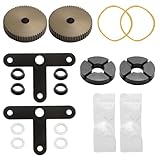
- Fitment: Replacement for Chevy Corvette C5 2000-2004, Replacement for Pontiac Firebird Trans Am 1993-2002, Replacement for Sunbird 1992-1994, Replacement for Saturn headlight motor 1991-1996
- Replace Part Number: 51072-54
- Easy Installation: The repair kit is designed with user convenience in mind, providing detailed installation instructions and a list of necessary tools for DIY enthusiasts. Even users without specialized skills can easily complete the installation, saving time and energy and avoiding the hassle of going to a repair store
- Endurance Property: The repair kit is equipped with robust brass gears with good wear and corrosion resistance, ensuring that they maintain their performance after long periods of use. The brass gears reduce wear and prolong the life of the motor, reducing the need for frequent repairs
- Enhance the Appearance of Your Vehicle: Restoring your headlights to their proper function not only improves the lighting, but also improves the overall appearance of your vehicle. Bright, clear headlamps make the vehicle look attractive, increasing its aesthetics
20. Cizeta V16T and other low-volume exotics
The Cizeta V16T is famous for its quad pop-up headlights and transverse-mounted V16 concept. It belongs to the low-volume-exotic category, where rarity and visual impact are accompanied by limited parts supply and a very small specialist network.
Other unusual European examples include the Alpine GTA and A610, Venturi 300 and 400, Isdera Imperator, TVR Tasmin family, Aston Martin Lagonda, Jaguar XJ220 and XJR-15, and Bitter CD and SC. They are important to the history, but their scarcity makes a pre-purchase inspection by someone familiar with the exact marque essential.
Japanese cars deserve more than a footnote
The 1980s Japanese market produced the largest concentration of attainable pop-up cars. Manufacturers used the mechanism on rear-drive sports cars, front-drive coupes, hatchbacks, family sedans, and luxury models. That breadth is one reason the feature remains especially associated with Japanese enthusiast culture.
- Mazda: RX-7 SA/FB, FC, and FD; MX-5 Miata NA only; 323F or Familia Astina.
- Toyota: MR2 AW11 and SW20; selected Celica and Celica Supra generations and markets; A70 Supra; AE86 Sprinter Trueno and related market-specific variants.
- Honda and Acura: second- and third-generation Prelude; third-generation Accord; first-generation Integra; early first-generation NSX.
- Nissan: 180SX and 240SX; Z31 300ZX.
- Mitsubishi: Starion; first-generation Eclipse; early GTO or 3000GT versions.
- Subaru: XT.
- Isuzu: Piazza or Impulse.
Names alone are not enough. A Sprinter Trueno is not equivalent to every Corolla GT-S, a Miata can mean seven generations but only the NA has pop-ups, and a 3000GT’s equipment depends on year and market. Import status, right- or left-hand-drive configuration, beam pattern, side markers, and replacement-part compatibility all need checking.
Recommended Free Tools
A broad production index
The table below is a practical reference index rather than a substitute for a factory parts catalog or homologation record. Production dates are approximate, and a model may have used different lamp designs by market, trim, facelift, or body style. True pop-up means the lamp or pod moves into use; hidden door means a cover moves around a fixed or differently mounted lamp; related means the visual idea is similar but does not meet the strict classic definition.
North American and mainstream examples
| Model | Era or generation | Classification and qualification |
|---|---|---|
| Chevrolet Corvette | C2–C5, 1963–2004 | True retractable lamps; the final mainstream Corvette generation with pop-ups was the C5, ending in the 2004 model year. |
| Oldsmobile Toronado | 1960s–1970s examples | Concealed headlamps on a front-wheel-drive luxury coupe. |
| Pontiac Fiero | 1984–1988 | True pop-up lamps; equipment and reliability vary by year and specification. |
| Pontiac Firebird | Selected 1980s–1990s generations | Retractable or concealed lamps on certain body styles and markets. |
| Buick Reatta | Selected early models | Hidden headlamp treatment; verify year and market equipment. |
| Chrysler Imperial | Selected 1980s examples | Concealed lamps; specification varies. |
| Nissan 240SX | S13, 1989–1994 | True pop-up lamps on the North American coupe and related configurations; body style and market matter. |
Japanese production examples
| Model | Generation or body code | Classification and qualification |
|---|---|---|
| Mazda RX-7 | SA/FB, FC, FD | True pop-up lamps across all three generations, with different mechanisms and electrical systems. |
| Mazda MX-5 Miata | NA, 1989–1997 | True pop-up lamps; NB and later generations use fixed lamps. |
| Mazda 323F / Familia Astina | BG-era hatchback | True pop-up lamps; market and trim dependent. |
| Toyota MR2 | AW11 and SW20 | True pop-up lamps; the ZZW30 third generation does not have them. |
| Toyota Celica | Selected A60-era and later variants | True pop-up lamps on particular generations and markets. |
| Toyota Celica Supra | Selected 1980s variants | Retractable lamps; verify body code and market. |
| Toyota Supra | A70 | True pop-up lamps. |
| Toyota Sprinter Trueno | AE86 | True pop-up lamps; do not generalize to every Corolla or market variant. |
| Honda Prelude | Second and third generations | True pop-up lamps; not a feature of every Prelude generation. |
| Honda Accord | Third generation | True pop-up lamps on relevant market versions. |
| Honda or Acura Integra | First generation | True pop-up lamps on applicable versions. |
| Honda or Acura NSX | Early first generation | True pop-up lamps before the 2002 facelift; later first-generation cars use fixed lamps. |
| Nissan 180SX | S13, late 1980s–1990s | True pop-up lamps; market and body style differ from the 240SX. |
| Nissan 300ZX | Z31 | True pop-up lamps. |
| Mitsubishi Starion | 1980s | True pop-up lamps; specification varies by market. |
| Mitsubishi Eclipse | First generation | True pop-up lamps; later generations use fixed lamps. |
| Mitsubishi GTO / 3000GT | Early first generation | Retractable lamps on early versions; confirm year and market. |
| Subaru XT | 1980s | True pop-up lamps. |
| Isuzu Piazza / Impulse | 1980s examples | True pop-up lamps on applicable versions. |
Mazda’s corporate RX-7 history and its RX-7 heritage material are useful starting points for generation-specific research, but buyers should still verify the exact car.
European sports cars, GTs, and exotics
| Model | Era or generation | Classification and qualification |
|---|---|---|
| Cord 810/812 | 1936–1937 | Manually operated retractable lamps; generally recognized as the first production example. |
| Lotus Elan | 1960s–1970s | True retractable lamps; lightweight sports car landmark. |
| Lotus Elite, Eclat, and Excel | 1970s–1990s | True or concealed retractable lamps, depending on model and specification. |
| Lotus Esprit | 1976–2004 | True pop-up or concealed lamps through most of the production run; final mainstream-era example. |
| Porsche 914 | 1969–1976 | Rearward-folding retractable lamps. |
| Porsche 924 and 944 | 1970s–1990s | Rearward-folding retractable lamps. |
| Porsche 928 and 968 | 1970s–1990s | Forward-rotating units with lenses visible when closed; 968 follows the 928-style arrangement. |
| Ferrari 308 and 328 | 1970s–1980s | True pop-up lamps. |
| Ferrari 288 GTO and F40 | 1980s | True or concealed retractable lamps, with market-specific details. |
| Ferrari 348 and 456 | Late 1980s–1990s | Retractable or concealed lamps; verify exact specification. |
| Ferrari 400/412 and 512 BB/512 TR | 1970s–1990s | Hidden or retractable headlamp arrangements, often market dependent. |
| Ferrari 365 GTB/4 Daytona | Late 1960s–1970s | Important regional-regulation example; U.S. and European treatments differ. |
| Lamborghini Miura | 1960s–1970s | Related hidden design: fixed lamps behind decorative eyelashes, not conventional pop-ups. |
| Lamborghini Countach | 1970s–1990s | True pop-up lamps; details vary by version and market. |
| Lamborghini Urraco, Silhouette, Jalpa, and Diablo | 1970s–1990s | Retractable or concealed lamps on relevant versions. |
| Maserati Ghibli | First generation, 1960s–1970s | Hidden headlamps; do not confuse with the modern Ghibli sedan. |
| Maserati Bora, Merak, Khamsin, and Indy | 1970s | Hidden or retractable lamp designs; confirm model and market. |
| Lancia Stratos | 1970s | True pop-up lamps on road and competition-related versions. |
| Fiat X1/9 | 1970s–1980s | True pop-up lamps. |
| De Tomaso Mangusta and Pantera | 1960s–1980s | Hidden or retractable lamps; year and market are important. |
| Alpine GTA and A610 | 1980s–1990s | True or concealed retractable lamps. |
| BMW M1 | Late 1970s–early 1980s | True pop-up lamps; low-volume supercar. |
| BMW 8 Series | E31, 1990s | Forward-rotating concealed lamps with visible lenses. |
| Aston Martin Lagonda | Selected wedge-era cars | Retractable lamps; exact configuration varies. |
| Jaguar XJ220 and XJR-15 | 1990s | Retractable or concealed lamps; low-volume and specification dependent. |
| Opel GT | Late 1960s–early 1970s | Rotating lamps operated through a manual lever rather than rising vertically. |
| Volvo 480 | 1980s–1990s | True pop-up lamps; Volvo’s first and only production model with them. |
| Saab Sonett III | 1970s | Hidden or retractable lamp treatment on the applicable model. |
| Bitter CD and SC | 1970s–1980s | Concealed or retractable lamps; low-volume GTs. |
| Matra 530, Bagheera, and Murena | 1960s–1980s | Hidden or retractable designs on applicable versions. |
| Cizeta V16T | 1990s | Distinctive quad pop-up lamps; very low volume. |
| Venturi 300 and 400 | 1990s | Retractable or concealed lamps; rare and market dependent. |
| Isdera Imperator | 1980s–1990s | Hidden or retractable lamps; very low volume. |
| TVR Tasmin family | 1980s–1990s | Retractable lamps on applicable variants. |
The Wikipedia production index is useful for discovering additional regional and obscure examples. It should be treated as a checklist, not as the sole authority for a restoration, import, or claim about a rare model.
Modern exceptions and designs that only look like pop-ups
Classic full pop-up headlights effectively disappeared from mainstream production after the Corvette C5 and Esprit. There are, however, carefully qualified exceptions.
Quick wins for a faster PC:
Scan for outdated or missing drivers - takes under a minuteDriver Scan →Clear out junk files and repair common Windows errorsFree Scan →Fix the driver behind crashes, sound loss and screen glitchesFind Drivers →ARES Panther ProgettoUno
The ARES Panther ProgettoUno is a very-low-volume coachbuilt car based on the Lamborghini Huracán platform and fitted with LED pop-up headlamps. It is a genuine modern retractable-lamp example, but it is not evidence that the mass market has returned to the mechanism. ARES’ own specification document describes the car.
Ferrari Daytona SP3
The Daytona SP3 uses movable upper panels or eyelids that partially conceal the headlamps. Ferrari presents the design as a modern reference to its lighting history, but it is not mechanically equivalent to a Corvette, Miata, or Countach pod rising from the hood. Ferrari’s design explanation is the appropriate source for the distinction.
Concept cars
Cars such as the Mazda Iconic SP and Honda 0 Saloon may use pop-up-inspired lighting in concept form. They should be labeled concepts unless and until a production version actually reaches customers. LED technology makes the visual effect easier to imitate, but a thin movable panel is not automatically a classic retractable headlamp.
Independent reader supportYour contribution helps us test, update, and keep practical guides available for everyone.Which pop-up car should you buy?
There is no universal best choice. The right car depends on whether you want an inexpensive weekend toy, a usable modern classic, a restoration, a grand tourer, or a historically important object. Judge the car—not just the badge—against purchase accessibility, parts supply, mechanical complexity, rust vulnerability, electrical diagnosis, body and trim scarcity, modern usability, specialist support, import status, originality, and whether the lamp mechanism can be repaired with commonly available components.
The Tool Desk
Outbyte Driver Updater FREEFix the driver behind crashes, sound loss and screen glitchesFind Drivers →Outbyte PC Repair FREEClear out junk files and repair common Windows errorsFree Scan →| Reader need | Strong candidates to investigate | Main caveat |
|---|---|---|
| Cheapest route to the experience | NA Miata, Pontiac Fiero, Toyota MR2 AW11, early Nissan 240SX | Condition matters more than the badge. Rust, neglected maintenance, and modifications dominate. |
| Best usable classic | Chevrolet Corvette C5, NA Miata, early first-generation NSX | Usable does not mean inexpensive after two or three decades of aging. |
| Lightweight handling | NA Miata, Lotus Elan, Toyota MR2, Porsche 944 | Rust, suspension wear, chassis repairs, and parts support need close inspection. |
| Rotary experience | RX-7 SA/FB, FC, or FD | Engine condition and access to rotary specialists are decisive. |
| Exotic styling | Lamborghini Countach, Ferrari F40-era cars, Lotus Esprit, Cizeta V16T | Running costs and trim scarcity can overwhelm the purchase price. |
| Grand touring | Porsche 928, BMW E31 8 Series, Ferrari 456 | Electrical, cooling, suspension, and interior systems can be expensive. |
| Mid-engine layout | Toyota MR2, Pontiac Fiero, Honda NSX, Lotus Esprit | Access and packaging make ordinary repairs more complicated. |
| Historical importance | Cord 810, Corvette C2, Lotus Elan, Oldsmobile Toronado | Historical importance does not make a car an easy first project. |
Cars for experienced owners only
Rare Ferrari, Lamborghini, Maserati, Cizeta, Venturi, Isdera, Jaguar, and Aston Martin examples can be extraordinary, but they require a larger reserve for specialist labor and unobtainable or expensive trim. A complete, documented car is often cheaper to own than a bargain example missing lamps, brackets, interior pieces, or original control units.
What commonly breaks?
Age is now a bigger threat than the original design concept. A well-engineered mechanism can still fail after decades of heat cycles, water exposure, corrosion, brittle plastics, and previous repairs.
- Electric motors: worn brushes, seized bearings, water damage, or internal failure can stop a pod halfway.
- Plastic drive gears: stripped nylon gears may produce clicking, grinding, or a motor that runs without moving the lamp.
- Relays, fuses, and switches: intermittent operation can originate in the control circuit rather than the lamp motor.
- Position and limit switches: a failed switch may cause prolonged motor operation or one lamp to stop in the wrong position.
- Grounds and connectors: corrosion can produce slow, uneven, or one-sided operation.
- Vacuum systems: hoses, check valves, reservoirs, and actuators can leak or harden, especially on older Corvettes and other vacuum-operated cars.
- Pivot shafts, bushings, and linkages: wear can create sagging doors, uneven gaps, or contact with the hood.
- Water intrusion: blocked drains and poor seals attack motors, wiring, bulbs, and metal brackets.
- Body and trim: cracked buckets, bent brackets, brittle doors, and accident damage can be more difficult to source than a replacement bulb.
- Headlamp aim: a mechanism can appear to work while leaving the beam incorrectly aimed after a front-end repair.
The recognizable one-lamp-open, one-lamp-closed condition is often called a winking car. Car and Driver identifies failed motors and electrical equipment as recurring causes, but the symptom alone does not identify the failed part.
Used-car inspection checklist
Test the complete system, not just whether the lamps move once in a seller’s driveway.
What’s actually slowing this PC down?
Pick the symptom - the matching free tool is one click away.
- Turn the lamps on and watch both sides rise. They should move smoothly and at approximately the same speed.
- Test low beam, high beam, flash-to-pass, parking lights, and turn signals separately.
- Switch the lamps off and confirm that both pods fully retract without stopping short.
- Cycle the system repeatedly. Intermittent faults often appear only after several operations.
- Listen for grinding, clicking, slipping, buzzing, or a motor that continues to run after the lamp reaches its position.
- Inspect the closed-door alignment and the gaps around each bucket. Uneven gaps can indicate worn pivots, incorrect adjustment, or front-end damage.
- Look for water, corrosion, brittle wires, poor grounds, non-factory connectors, and improvised repairs.
- Confirm that the manual override knob, crank, or emergency positioning method is present where the vehicle was designed to have one.
- Inspect the hood, fenders, brackets, nose, and lamp buckets for accident repairs or contact marks.
- Operate the lamps while watching for contact with the hood or bodywork.
- Have headlamp aim checked with proper equipment after any front-end, suspension, or mechanism repair.
- Verify that replacement lamps are compatible with the car’s original photometric requirements and legal markings.
Also inspect the ordinary car beneath the novelty: rust in structural areas, cooling, brakes, suspension, tires, steering, fluid leaks, wiring modifications, and evidence of track, drift, or amateur restoration work. A perfect pop-up mechanism cannot compensate for a rotten chassis.
How to diagnose and recover a failed lamp
Do not assume a dead bulb is the cause. Depending on the car, the diagnostic path may involve the fuse, relay, switch, ground, motor, vacuum actuator, hose, limit switch, linkage, or gear before the bulb is relevant.
- Use the model-specific service manual or wiring diagram. There is no universal repair procedure for a C3 Corvette vacuum system, NA Miata electric motor, Porsche 928 mechanism, and Ferrari headlamp door.
- Use the manual override only to place the lamp safely for an emergency or as directed by the owner’s manual. It is not automatically a permanent repair.
- Do not force a motorized mechanism by hand while it is energized.
- Do not drive at night if a required lamp is not correctly deployed, illuminated, and aimed.
- Do not permanently wire the lamps open or closed without confirming the effect on beam operation, failure behavior, and local law.
- After replacing a motor, gear, actuator, bracket, or door, check synchronization, stops, body clearance, and beam aim.
For a buyer, a functioning emergency override is reassuring but not proof that the system is healthy. A seller may have manually positioned a failed lamp immediately before showing the car.
Are pop-up headlights legal?
United States
Original-equipment pop-up headlights are not categorically illegal in the United States. Federal Motor Vehicle Safety Standard 108 contains provisions for headlamp-concealment devices, including a maximum opening time of three seconds, requirements addressing failures, and provisions for moving the lamps into their usable position without tools in specified circumstances. Read the current text of FMVSS 108 for the actual requirements.
Best Value

- COMPATIBILITY: Designed specifically for 1997-2004 Chevrolet C5 Corvette headlight motors with failed nylon gears, includes 2 complete repair kits
- DURABILITY UPGRADE: Bronze gear construction provides superior strength and longevity compared to original nylon components
- COMPLETE KIT: Each package contains two bronze gears with all necessary mounting hardware for a full repair of both headlight assemblies
- DIRECT REPLACEMENT: Precisely engineered to match original specifications for perfect fit and proper headlight operation
- EASY INSTALLATION: Straightforward repair solution that addresses a common C5 Corvette headlight failure point
That does not mean every modification is automatically legal. State inspection and equipment laws may impose additional rules. Replacement LED or HID assemblies must meet applicable photometric, marking, aiming, and installation requirements. A clear styling cover in front of an illuminated lamp can also create compliance problems; NHTSA has addressed restrictions on ornaments or covers in front of operating headlamps.
Europe and other markets
It is inaccurate to say that European law simply banned pop-up headlights. Vehicle type approval increasingly emphasized pedestrian protection, exterior projections, lamp performance, failure behavior, and compatibility across markets. These requirements made retractable systems less attractive and sometimes more difficult to certify, but the legal result depends on the country, date of approval, and exact vehicle.
For an imported or modified car, check the national or regional inspection authority rather than relying on a general internet claim. Japanese-market and U.S.-market versions can differ in beam pattern, lamp markings, side markers, wiring, and daytime-running-light arrangements. A car may be physically roadworthy yet fail inspection because the lamps are incorrectly aimed, incorrectly marked, or unsuitable for the local beam pattern.
LED conversions: useful upgrade or compliance trap?
Some classic cars can accept a modern replacement lamp that fits the original sealed-beam dimensions or mounting system. That can improve light output and reduce the load on aging wiring, but the conversion must be evaluated as a lighting system, not just as a brighter bulb.
Check that the replacement has appropriate markings, beam pattern, photometric performance, connector compatibility, aiming range, and heat management. Do not assume that an LED bulb inserted into an old reflector is equivalent to a compliant LED headlamp. The conversion should also preserve the original pop-up mechanism’s operation, clearance, and failure behavior.
The most common myths, corrected
- Myth: Pop-up headlights were banned worldwide.
- There was no single worldwide ban. U.S. rules specifically recognize concealment devices, while lighting, pedestrian protection, type approval, cost, and global-platform pressures made new designs unattractive.
- Myth: The Corvette was the last pop-up car.
- The 2004 Corvette C5 and Lotus Esprit are generally treated as the last mainstream production examples. Very-low-volume cars and partial-concealment designs continued afterward.
- Myth: Every Miata has pop-ups.
- Only the NA generation, sold from 1989 to 1997, has them. The NB and later generations use fixed lamps.
- Myth: Every NSX has pop-ups.
- Early first-generation cars do. The 2002 facelift changed to fixed headlamps.
- Myth: The Miura had conventional pop-ups.
- Its headlamps were fixed and partially concealed behind decorative eyelashes.
- Myth: Every Ferrari used the same pop-up mechanism.
- Ferrari used several designs, and the Daytona’s treatment varied by market. Model, year, and destination specification matter.
- Myth: Raised lamps always improve aerodynamics.
- The closed position can reduce visual and sometimes aerodynamic clutter. Raised lamps are exposed and can increase drag and turbulence.
Scope and terminology for collectors
A genuinely useful vehicle list should state whether it includes only series-production passenger cars or also race cars, concepts, coachbuilt specials, regional variants, and custom conversions. This guide focuses on production passenger cars and identifies low-volume coachbuilt and concept examples separately.
When a listing says a car has pop-up headlights, verify four things: the generation, the body code, the market, and the actual mechanism. The same nameplate can span several generations, only one of which used retractable lamps. A photograph can also mislead: a fixed lamp behind a door, a visible-lens rotating lamp, and a true rising pod may look similar when closed but have very different parts and repair requirements.
Frequently Asked Questions
What was the first car with pop-up headlights?
The 1936 Cord 810 is generally recognized as the first production car with retractable headlamps. It was publicly shown at the 1935 New York Auto Show, and its lamps were manually operated. Earlier prototypes or disputed special cars may complicate an absolute claim, so first production car is the careful wording.
What was the last car with pop-up headlights?
The last mainstream production cars with classic full retractable lamps were the 2004 Chevrolet Corvette C5 and the Lotus Esprit, whose final production and completion dates extend across late 2003 and early 2004 depending on the source and definition. Very-low-volume exceptions followed.
Are pop-up headlights illegal in the United States?
No. They are not categorically illegal. FMVSS 108 specifically includes requirements for headlamp-concealment devices. A particular car or lighting conversion must still meet federal requirements and applicable state inspection and equipment laws.
Why did manufacturers stop using pop-up headlights?
Fixed composite, projector, HID, and LED lamps became easier to style and package. Retractable systems added motors, gears, wiring, weight, cost, and failure points, while pedestrian-impact requirements and global certification made them harder to justify.
Did every Mazda Miata have pop-up headlights?
No. Only the first-generation NA Miata, sold from 1989 to 1997, used pop-up lamps. The NB generation introduced fixed headlights in 1999, and later generations continued with fixed designs.
Do these 3 things before closing this tab:
1Clear out junk files and repair common Windows errors2Scan for outdated or missing drivers - takes under a minute3Repair Windows errors before they cause bigger problemsWhich Porsche models had pop-up headlights?
The Porsche 914, 924, and 944 used lamps that rotated backward into the hood. The 928 used forward-rotating lamps whose lenses remained visible when closed, and the 968 used a related 928-style arrangement.
Which Japanese cars had pop-up headlights?
Important examples include the Mazda RX-7, NA MX-5 Miata, Mazda 323F, Toyota MR2 AW11 and SW20, selected Celica and Supra models, AE86 Sprinter Trueno variants, Honda Prelude and third-generation Accord, first-generation Integra, early first-generation NSX, Nissan 180SX, 240SX and Z31 300ZX, Mitsubishi Starion, first-generation Eclipse and early GTO or 3000GT, Subaru XT, and Isuzu Piazza or Impulse.
Are pop-up headlights reliable?
They can be reliable when maintained, but age makes motors, gears, relays, switches, grounds, wiring, vacuum hoses, actuators, pivots, and brackets common failure points. Reliability depends more on the specific car’s condition and mechanism than on the mere presence of pop-ups.
Can pop-up headlights be converted to LED?
Often, a compatible replacement LED headlamp can be installed, but legality and performance depend on markings, beam pattern, photometric compliance, aiming, connectors, heat management, and the original mounting system. An LED bulb inserted into an old reflector is not automatically a compliant conversion.
Are hidden headlights and pop-up headlights the same thing?
Pop-up is the common term for many retractable designs, but hidden headlamp is broader. It includes rising pods, rotating lamps, sliding doors, exposed-lens rotating units, and some fixed lamps behind movable covers.
What is the cheapest car with pop-up headlights?
There is no permanent cheapest model because prices vary by country and condition. NA Miatas, Pontiac Fieros, Toyota MR2s, and early Nissan 240SXs are sensible candidates to investigate, but rust and deferred maintenance can make a cheap example more expensive than a better car bought initially at a higher price.
Are modern concept cars included in pop-up-headlight lists?
They can be discussed as design references, but they should not be counted as production cars unless they entered series production. The Mazda Iconic SP and Honda 0 Saloon, for example, should remain labeled concepts unless production specifications change.
The Bottom Line
Pop-up headlights were the right answer to an earlier automotive problem: standardized lamps, high mounting requirements, limited lighting technology, and the desire for a low, clean nose. They became a defining feature of cars as different as the Cord 810, Corvette, Porsche 928, Lamborghini Countach, Mazda RX-7, NA Miata, and Honda NSX.
Quick wins for a faster PC:
Fix the driver behind crashes, sound loss and screen glitchesFind Drivers →Repair Windows errors before they cause bigger problemsFix Now →Scan for outdated or missing drivers - takes under a minuteDriver Scan →They did not disappear because one worldwide law suddenly outlawed them. Better fixed lamps, lower manufacturing cost, pedestrian protection, global certification, and the accumulated burden of motors and linkages made them unnecessary. For a buyer today, the best choice is usually not the rarest or most dramatic car, but the example with the least rust, the strongest parts support, documented maintenance, and a fully functioning mechanism.
Before buying, identify the exact generation and market, test the lamps repeatedly, inspect the surrounding structure and wiring, confirm beam aim and legal compatibility, and budget for age-related repairs. The magic is in the movement—but ownership success depends on everything behind it.
Quick Recap
Product prices and availability are accurate as of the date/time indicated and are subject to change. Any price and availability information displayed on Amazon at the time of purchase will apply.




