The best water deionizer for washing your car is the one that can treat your tap water at a useful rinse rate, has enough compatible resin for your routine, and lets you check when its output needs attention. No single system is best for every driveway: resin life depends heavily on incoming water quality and how much deionized water you use.
Use DI water for the final rinse after washing away dirt and soap. It reduces dissolved ions that can leave mineral residue as water dries; it does not replace washing, rinsing off grime, or drying where your finish requires it.
How a car-wash deionizer works
A hose-fed deionization (DI) system passes water through ion-exchange resin that removes dissolved ions, including minerals associated with spots left behind when water evaporates. The practical use is a final rinse, after the normal wash has removed dirt and soap. Both CR Spotless and Unger describe DI water as a final-rinse step: CR Spotless FAQ and the Unger Rinse ’n’ Go Plus manual.
“Spot-free” is not a universal technical threshold. CR Spotless describes under 20 ppm total dissolved solids (TDS) as its working definition, but recommends replacing its filters when its meter reads above 0 ppm. Unger’s guidance says below 20 ppm for car rinsing and below 10 ppm for glass, and directs users to replace its filter above 20 ppm. Follow the instructions for the system you own rather than treating either company’s threshold as a rule for all DI units.
#1 Best Overall

- Spotless Car Wash: Featuring 2 x 4L premium mixed-bed resin, this deionized water system for the final stage of car wash efficiently removes calcium, magnesium, and other dissolved ions, allowing the car to air dry naturally for a spot-free finish without wiping, saving time and effort
- Strong Purification Capacity: Under average 200 ppm water conditions, this spotless car wash water system delivers a rated purified water capacity of up to 330 Gallons (1250 L), providing sufficient deionized water for continuous spotless car washes
- Real-time Water Quality Monitoring: Designed with a TDS meter, this water deionizer for car washing allows quick checks and timely resin refills to maintain optimal water purity and get spotless results. Replacement is recommended around 30 ppm
- Dual-Mode Operation: Switch to BYPASS mode to wash the car with tap water, apply soap foam, and rinse off the foam. Then switch to FILTER mode for the final deionized water rinse and let it air dry naturally for a spotless finish
- Easy Mobility: This spot-free deionized water filter is mounted on a convenient trolley base with dual handles and wheels for effortless movement. Also features two adjustable height levels to suit different user preferences and working conditions
How to choose a system for your water and routine
- Measure your incoming TDS. Your source-water reading is a key input to any estimate of resin life. Higher TDS generally means less treated water from a given resin charge. Use a meter to measure your own supply rather than relying on a generic drinking-water figure.
- Check usable resin capacity. Compare the resin volume or compatible cartridge capacity, not just the unit’s size or marketing claims. CR Spotless’s selection guide estimates gallons using the formula 235,000 divided by source-water TDS, multiplied by resin volume in cubic feet. This is the manufacturer’s estimate, not a guaranteed yield; the guide also cautions that flow affects purification. See CR Spotless’s system-selection guide.
- Match flow to the job. You need enough flow to rinse the vehicle conveniently, but pushing water through too quickly can reduce purification. CR Spotless gives an example in which a DIC-20 treating 400 ppm source water at 6 gallons per minute produces 85 ppm output; the company calls that cleaner water, but not spot-free by its definition.
- Plan how you will use DI water. A final rinse usually consumes less DI water than using it throughout the wash. CR Spotless says reserving DI water for the final rinse can extend resin life. Estimate your own final-rinse volume rather than assuming a manufacturer’s example will match your vehicle, nozzle, or washing habits.
- Look for outlet monitoring and clear replacement guidance. An outlet TDS meter helps you see how the treated water is performing. Check whether one is included and what threshold the manufacturer sets for its filters or resin.
- Verify consumables and water conditions. Confirm that replacement filters or resin are available for the exact model and follow its pressure and source-water instructions. If you use well water or water processed by a softener or iron-removal equipment, consult the maker’s guidance and monitor the output.
Two systems with published car-rinse guidance
The following examples have manufacturer-published product or operating information. They are not a head-to-head test, and the available guidance does not establish a universally best system.
| System | Published details | What to keep in mind |
|---|---|---|
| CR Spotless DIC-20 | CR Spotless gives an example of about 300 gallons—roughly 38 washes with a four-minute final rinse—at 220 ppm source-water TDS. The FAQ does not state a publication year. | This is a conditional manufacturer example, not a promise for every water supply or wash routine. Resin volume, incoming TDS, flow, and rinse duration affect actual output. The company recommends replacing its filters above 0 ppm on its meter. |
| Unger Rinse ’n’ Go Plus | The official product page lists the unit, two resin filters, a TDS meter, soap-blasting nozzle, hose adapters, stoppers, and an 8-foot hose. The manual, published approximately 2020, gives an approximate flow of 2.5 gallons per minute at typical 40–60 psi line pressure and a maximum pressure of 90 psi. | Unger says to replace its filter when outlet TDS exceeds 20 ppm. Its flow figure is approximate and tied to the stated typical pressure conditions. |
Unger’s manual also states that average drinking-water TDS is 180 ppm; that is the figure cited by the manual, not a newly verified national average. It should not substitute for measuring your tap water.
Rank #2

- 15L Large Capacity——Enjoy stronger ion-exchange performance and longer service life with our upgraded 15L resin capacity, perfect for frequent car washing and long-term use. When fed with 50 ppm TDS tap water, this system delivers up to approximately 1,500 gallons of purified deionized water—enough for about 300 car washes or 75 RV washes. Actual lifespan may vary based on local water quality and mineral content.
- Spot-Free Wipe-Free Finish——After washing a vehicle, water spots often appear as minerals in tap water dry on the surface. Our AKM Deionized Water Car Wash System effectively removes calcium, magnesium, and other mineral ions to produce pure DI water. Using deionized water for your final rinse delivers a flawless spot-free finish, so your car, RV, boat, or motorcycle can air dry completely without towel drying.
- Dedicated Mobility Cart——This spot-free car wash system comes with a custom AKM mobility cart, solving the hassle of moving large-capacity water tanks. The cart is simple to assemble, offers smooth and stable mobility, and lets you easily move the system anywhere in your driveway, garage, or yard for convenient car cleaning.
- Built-In Bypass Valve——Featuring an integrated bypass valve, this system allows quick and easy switching between bypass mode and filtration mode. Use bypass mode for your main wash, then switch to filtration mode for the final rinse to conserve deionized water and greatly extend the service life of your DI resin.
- Refillable DI System——Unlike disposable car wash filters, this system is built for repeated use. When the resin is exhausted, simply empty the old resin and refill the tank with AKM Mixed Bed DI Resin to restore full performance. The heavy-duty, durable tank is designed for long-term use—meaning only the resin needs replacement, saving you money over time.
How many washes will a resin charge handle?
There is no dependable wash count without knowing the water and how the system will be used. A manufacturer example can help with rough planning, but your own results may differ because of:
- Incoming water TDS.
- Resin volume and condition.
- Flow rate through the system.
- How long the final rinse takes and how much DI water it uses.
For example, CR Spotless’s estimate of about 300 gallons or 38 four-minute final rinses applies to its DIC-20 example at 220 ppm source TDS. It should not be used as a general yield for another system or a different water supply.
Rank #3

- Spot-Free Water System for Car Wash: Achieve a completely wipe-free finish with our advanced deionized water system. By delivering zero to minimal TDS water, this system allows your vehicle to air dry without leaving any water spots. It protects your paint from towel scratches and is highly effective for cars, RVs, motorcycles, and boats.
- Built-In Bypass Valve for Extended Filter Life: Maximize your filter lifespan and save money with the integrated bypass valve. Easily switch between standard tap water for your initial wash and the water deionizer mode for your final spot free rinse. This smart design eliminates the hassle of constantly connecting and disconnecting hoses during your wash routine.
- 1,200 Gallons High Capacity Filtration: Experience long-lasting performance with up to 1,200 gallons of filtration capacity. This spot free car wash system provides up to 12 months of filter life, equating to approximately 240 car washes or 60 RV rinses based on 50 ppm source water.
- Durable Rolling Cart & Quick Setup Designed for ultimate mobility and ease of use, this car wash equipment features a sturdy metal stand mounted on wheels. It includes a standard 3/4" GHT quick connector, allowing you to seamlessly attach your garden hose and start washing in seconds without the need for extra plumbing tools.
- Advanced 20-Inch DI Water Filter: Equipped with a premium 20-inch DI water filter, this system effectively removes water hardness and prevents stubborn scale buildup on your vehicle's exterior. It tackles hard water issues effortlessly, delivering a professional-grade spot free rinse that makes it an essential addition to your auto detailing setup.
When to change resin or filters
Check outlet TDS and use the replacement threshold specified for your model. CR Spotless recommends changing its filters when its meter reads above 0 ppm. Unger’s manual says to replace the Rinse ’n’ Go filter when outlet TDS exceeds 20 ppm. Those are different company instructions, not interchangeable standards.
CR Spotless notes that some users may see no spots with readings between 1 and 20 ppm, while still recommending testing on a local surface. Treat that as the company’s guidance, not a guarantee that a particular finish, glass surface, or drying condition will remain spot-free.
Rank #4
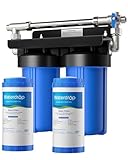
- 𝗦𝗽𝗼𝘁 𝗙𝗿𝗲𝗲: Our water spot remover filter uses pre-mixed premium resin, reduces mineral and calcium-magnesium ion particles in the water, can reduce scratches and wear on the paint during washing.
- 𝗪𝗶𝗽𝗲 𝗙𝗿𝗲𝗲: You simply need to relax and wait while our machine does the work, ensuring a spotless and sparkling finish. Strongly recommended to only use the spotless rinse mode during the final rinse (about 8-10minutes).
- 𝗧𝗶𝗺𝗲 𝗙𝗿𝗲𝗲: The resin spotless car wash system is equipped with a bypass switch, allowing for easy switching between tap water and purified water, making car washing a breeze, saving you time and energy. Make sure The bypass is rotated to the correct position to avoid affecting using effect and service life.
- 𝗖𝗼𝘀𝘁-𝗲𝗳𝗳𝗲𝗰𝘁𝗶𝘃𝗲 𝗖𝗵𝗼𝗶𝗰𝗲: Our car wash machine offers lower single-use cost compared to others or car wash shops. Based on feed water quality of 200ppm TDS, it supports 8 times spotless clean (Actual lifespan will vary based on your actual water condition.) The system can be fixed and installed by hanging it on a board or simply placed on the ground. It provides full range of accessories.
- 𝗗𝘂𝗿𝗮𝗯𝗹𝗲 𝗤𝘂𝗮𝗹𝗶𝘁𝘆: Built with durable materials, our water spot remover for cars with stands rigorous lab pressure tests to resist harsh environments, reducing maintenance and replacement hassle. (Maximum pressure of 300psi)
Using a deionizer with well or softened water
Water treatment upstream does not automatically extend resin life. CR Spotless says softened water may have a similar TDS and therefore may not increase resin yield; it also warns that some well-water users have experienced problems downstream of iron removers or softeners. If your supply comes from a well or passes through other treatment equipment, follow the system maker’s advice and watch the outlet TDS rather than assuming the setup is compatible.
Quick Recap
Best Value

- 𝐒𝐩𝐨𝐭-𝐅𝐫𝐞𝐞 𝐅𝐢𝐧𝐢𝐬𝐡: Our spotless water system uses premium ion exchange resin to reduce minerals and calcium-magnesium ions, helping prevent water spots during rinsing and leaving your vehicle's surface clean and shiny.
- 𝐖𝐢𝐩𝐞-𝐅𝐫𝐞𝐞 𝐖𝐚𝐬𝐡: You only need to relax while the spotless car wash system does the work, delivering a spotless and shiny finish. For best results, we strongly recommend using the spotless rinse mode during the final rinsing.
- 𝐅𝐥𝐞𝐱𝐢𝐛𝐥𝐞 𝐁𝐲𝐩𝐚𝐬𝐬, 𝐄𝐟𝐟𝐨𝐫𝐭𝐥𝐞𝐬𝐬 𝐔𝐬𝐞: The water deionizer for car washing features a bypass switch that allows easy switching between tap water and filtered water. This makes washing your car easier and faster, saving both time and effort. Ensure the bypass is in the correct position to avoid affecting performance and filter lifespan.
- 𝐂𝐨𝐬𝐭-𝐄𝐟𝐟𝐞𝐜𝐭𝐢𝐯𝐞 𝐂𝐡𝐨𝐢𝐜𝐞: The WD-CWE2 car wash system is a cost-saving solution for frequent washes, helping you save on long-term cleaning costs. Based on a feed water quality of 50ppm TDS, it supports up to 200 spotless rinses. Actual lifespan may vary depending on your local water quality.
- 𝐌𝐨𝐯𝐞𝐚𝐛𝐥𝐞 & 𝐃𝐮𝐫𝐚𝐛𝐥𝐞 𝐃𝐞𝐬𝐢𝐠𝐧: Built with a rust-resistant metal frame and quiet wheels, this spotless water system moves smoothly and can be set up anywhere for quick washing. The modular design allows easy assembly, while the sturdy frame supports up to 132lbs/60kg, passes 400PSI pressure tests and -4℉ cold tests for long-term durability.
Practical final-rinse routine
- Measure the untreated supply’s TDS and note the result for future comparisons.
- Wash the vehicle normally, removing dirt and soap before using DI water.
- Use the deionizer for the final rinse, keeping within the unit’s pressure and flow guidance.
- Check outlet TDS according to the product instructions and replace resin or filters at that system’s stated threshold.
Product prices and availability are accurate as of the date/time indicated and are subject to change. Any price and availability information displayed on Amazon at the time of purchase will apply.




