Free tools Windows power users keep installed
One-click scans. No signup required.
There is no single best tune for every 5.3L Vortec. The right calibration depends on the truck’s model year, exact engine and controller, installed modifications, and the fuel you use. Start by confirming those details, then choose a compatible programmer, software-and-interface workflow, or custom tuning service. Published horsepower figures are specific to their tested or advertised applications—not promises for every 5.3L.
Why “5.3L Vortec” is not enough to choose a tune
“5.3L” describes displacement, not one interchangeable engine and control system. Applications vary by year and vehicle, and tuning coverage can differ accordingly. HP Tuners, for example, lists distinct Silverado 5.3L year ranges on its vehicle coverage page. A tuning provider also asks customers to identify the actual engine and installed parts before calibration.
| # | Preview | Product | Price | |
|---|---|---|---|---|
| 1 |

|
Diablosport 8200 Intune i3 Performance Programmer & Tuner | $419.97 | Buy on Amazon |
| 2 |

|
DiabloSport S1000 Sprint Tuner Module | $270.99 | Buy on Amazon |
| 3 |
|
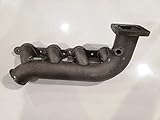
T4 TURBO MANIFOLD CAST for VORTEC LS MOTORS 4.8 5.3 5.7 6.0 6.2 4x2 4x4 | $121.99 | Buy on Amazon |
Before buying hardware or a tune, record the vehicle’s year and model, verify the engine code or RPO from the vehicle’s label or reliable vehicle documentation, and identify the controller. Then check that the specific product or service covers that combination. Do not assume that coverage for one Silverado 5.3L means coverage for every 5.3L truck.
What kind of 5.3L tune should you choose?
| Option | What it is | What to verify |
|---|---|---|
| Handheld programmer | A device intended to load a supported calibration, sometimes with selectable settings. | Exact year, vehicle and engine coverage; whether the calibration is suitable for your fuel and modifications; and whether the advertised figures apply to your exact application. |
| Software and tuning interface | An interface connects a compatible vehicle controller to tuning software; a calibration may be developed or loaded through that workflow. | Supported interface and controller coverage, software licensing, controller access or unlock requirements, and the cost of each item. |
| Custom tuning service | A provider prepares a calibration for a particular vehicle and may revise it using data logs. | That the provider supports your exact application, accounts for your modifications and fuel, and explains what information or logging is required. |
There is no neutral head-to-head test here that establishes one of these routes as best for every owner. The most sensible choice is the compatible option whose calibration process and costs fit your truck and use case.
Recommended Free Tools
#1 Best Overall
- Built for Your Truck: Specifically designed to be compatible with 1999-2016 Silverado 1500 Sierra 1500 with 4.8L V8, 5.3L V8, or 6.0L V8 Engine; Fits applications with direct OBD-II connection
- Unlock Full Performance: Features dyno-tested performance tunes engineered to enhance horsepower, torque, throttle response, drivability, and fuel economy without needing to lift the hood
- Easy Tuning: Adjust vehicle parameters with Easy Tune mode and responsive touchscreen interface; Customize tire size, speedometer calibration, speed/rev limits, transmission shifting, and more
- Plug & Play Installation: Unlock performance enhancements in a matter of minutes as the i3 connect directly to your vehicle's OBD-II port without drilling, splicing wires, or additional modifications; easily updates through Wi-Fi using Windows or Mac systems for convenient tuning access
- Tune with Confidence: Unlock your vehicle's full potential with DiabloSport i3 Performance Programmers backed by a limited one-year warranty covering defects in workmanship and materials and CARB EO D-770 for added peace of mind
What horsepower gains are actually documented?
Published numbers need their application and source attached. Hypertech’s chart for the 2005–2007 GM K1500 5.3L High Output application reports 243 hp at 5,300 rpm stock, 247 hp at 5,300 rpm with its regular-fuel tuning, and 251 hp at 5,300 rpm with its premium-fuel tuning. The same vendor chart states maximum gains of 6 hp and 12 hp at 5,600 rpm, respectively. These are Hypertech-reported figures for that specific application, not independent results or a guarantee for another 5.3L vehicle. See the Hypertech application information.
A separate historical reference illustrates why engine identity matters: GM Performance Parts’ 2011 catalog rated the LC9 5.3L crate engine at 315 hp at 5,400 rpm and 335 lb-ft at 4,000 rpm, with automatic- and manual-calibrated controller configurations. That is a catalog rating for the LC9 crate engine, not a tuning gain or a general rating for production 5.3L applications. GM Performance Parts LC9 catalog listing.
Rank #2
- Built For Your Vehicle: Specifically designed to be compatible with your 2005-2024 GM with Active Fuel Management ; Fits applications with direct OBD-II connection
- Instant Throttle Connection: Eliminates the annoying hesitation and physical delay commonly felt during hard acceleration, delivering linear power
- Easy Cylinder Deactivation: Reverts your vehicle to stock form, eliminating the factory performance restrictions of your cylinders so you can reclaim the true potential of your vehicle
- Plug and Play Installation: Unlock performance enhancements in a matter of minutes as the Sprint Tuner connects directly into your vehicle's OBD-II port without drilling, splicing wires, or additional modifications
- Tune with Confidence: Unlock your vehicle's full potential with DiabloSport Sprint Tuner backed by a limited one-year warranty covering defects in workmanship and materials
Those figures do not establish a typical horsepower gain across all 5.3L Vortec applications. A vendor’s advertised gain should not be treated as a measured result for your truck unless the source tested the same application under relevant conditions.
Independent reader supportYour contribution helps us test, update, and keep practical guides available for everyone.What to check before buying an HP Tuners interface
An interface-based workflow can be a practical route if you want access to tuning software or a custom calibration, but the interface is not necessarily the whole purchase. The cited workflow identifies supported HP Tuners MPVI2, MPVI3, or MPVI4 hardware and notes that licensing and controller access can be separate requirements.
Rank #3
- STRONG CAST TURBO MANFOLD with T4 FLANGE
- T4 CAST MANIFOLD FOR PASS. SIDE ON ALL LS/VORTEC MOTORS..
- AMAZING STYLE with EXTRA THICK HEAD FLANGE
- Open the HP Tuners vehicle coverage page and check your exact year, model, engine and controller. Coverage can change, so confirm it before purchase.
- Confirm which supported MPVI interface and software apply to your vehicle. The MPVI2, MPVI3 and MPVI4 are examples from the cited workflow, not a blanket compatibility promise.
- Calculate the full cost: interface hardware, required licensing, and any controller-access or unlock costs. Check the provider’s current terms rather than assuming these are included.
- Decide whether you will use a compatible existing calibration or work with a tuner. If the truck has modifications, verify that the calibration process accounts for them.
HP Tuners’ credits and licensing information is a useful starting point for understanding licensing, but confirm vehicle-specific costs and controller requirements before paying.
Match the calibration to your fuel and modifications
A calibration should match the fuel actually used and the parts installed on the vehicle. Hypertech’s figures distinguish regular-fuel and premium-fuel tuning for its specified 2005–2007 K1500 5.3L High Output application; that distinction should not be generalized to other products or engines.
JR Jones Racing describes basing its calibration on the vehicle, modifications and actual fuel, then refining it from data logs. That is the provider’s description of its process, not independent proof of results. Ask any tuner what vehicle information, parts list, fuel details and logs it needs, and whether it supports your specific controller and setup.
Quick Recap
A practical way to pick your tune
- For a stock truck: prioritize verified fitment and fuel compatibility. Treat published power numbers as application-specific evidence, not a forecast for your vehicle.
- For a modified truck: choose a process that explicitly accounts for the installed parts and can work from relevant vehicle data. A generic canned calibration may not reflect those changes.
- If you want to tune it yourself: price the interface, software licensing and controller access together, and make sure you understand the supported workflow before purchase.
- If you prefer a service: confirm the tuner’s coverage, the information it needs, and how revisions or data logging are handled.
Product prices and availability are accurate as of the date/time indicated and are subject to change. Any price and availability information displayed on Amazon at the time of purchase will apply.




