Quick wins for a faster PC:
Repair Windows errors before they cause bigger problemsFix Now →Fix the driver behind crashes, sound loss and screen glitchesFind Drivers →Clear out junk files and repair common Windows errorsFree Scan →There is no single best off-road engine for every vehicle or terrain. For crawling, mixed trails, towing, or high-speed desert driving, the best choice depends on how the engine’s power is delivered through the transmission and transfer case—and on traction, tires, suspension, and vehicle geometry. Peak horsepower alone cannot identify a universal winner.
What makes an engine good off road?
An engine is only one part of an off-road powertrain. Low-range gearing can multiply torque at the wheels for controlled movement; four-wheel drive and locking differentials help manage traction; and ground clearance, suspension, tires, and vehicle mass determine whether the vehicle can use its power on a particular route. The right combination changes with terrain and speed.
For technical trails, useful comparison details include torque and the engine speed at which it is rated, transmission type, transfer-case low range, axle ratio, and crawl ratio. Jeep defines crawl ratio as the product of first gear, rear axle ratio, and low-range 4WD gearing. It describes the Wrangler Rubicon’s 4:1 Rock-Trac low gear as part of a system that can deliver an available 100:1 crawl ratio with the specified manual transmission and 4.88:1 axle ratio. That is a configuration-specific manufacturer claim, not a standalone engine measurement.
Choose by terrain and task
Rock crawling and steep technical trails
Slow, controlled wheel movement matters more than a headline horsepower figure. Look for a suitable low-range transfer case, manageable power delivery, and traction equipment such as available locking differentials. The Wrangler illustrates the point: Jeep’s capability information describes its engine options alongside low-range gearing and available front and rear electronic locking differentials. Its published 100:1 crawl-ratio figure applies only to the specified manual-transmission and axle-ratio configuration.
#1 Best Overall

- 1-Ton Capacity: Supports engines up to 2,000 lbs. for service, repair and assembly applications
- 360° Rotating Engine Mount: Fully adjustable mount rotates smoothly and locks securely in place for controlled access
- Axle-Bearing Rotation Post: Integrated axle bearing allows the mounting plate to rotate more smoothly under load
- 4-Arm Adjustable Faceplate: Adapts to multiple engine configurations for secure mounting
- H-Shaped Steel Base: Wide footprint improves load distribution and stability during service
Mixed trails and general off-road use
For varied trails, assess the complete vehicle: powertrain, four-wheel-drive system, ground clearance, tires, and geometry. INEOS reports testing the Grenadier on Schöckl Mountain and says its engine, transmission, permanent four-wheel drive, and ground clearance worked together on the trails. That is the manufacturer’s account of its own testing, not a controlled comparison against other vehicles.
High-speed desert running
Fast desert driving places different demands on a vehicle than slow crawling. Sustained performance, cooling, transmission and driveline capability, suspension, and tires all matter alongside engine output. Ford’s announcement for the 2023 F-150 Raptor R described a 5.2-liter supercharged V8 and supporting changes that included cooling, transmission, driveline, suspension, and tires. Ford listed 700 hp and 640 lb-ft for that model. It is an example of a powertrain package aimed at high-speed off-road use, not evidence that the engine is best for every kind of trail or a current model-year comparison.
Towing and loaded overlanding
Match the powertrain to the vehicle’s rated towing capacity, the weight it will carry, and the routes it will travel. The cited manufacturer pages do not provide a controlled comparison of towing performance, fuel economy, or reliability across these examples, so their engine ratings alone cannot establish which is best for a particular load or long-distance trip.
Manufacturer-listed engine examples
These examples show how different manufacturers pair engines with different vehicles and intended uses. Their ratings are not directly comparable tests: they cover different model years, markets, units, and configurations.
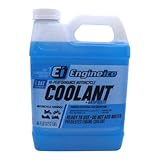
Rank #3

- PHOSPHATE FREE, RTU: Engine Ice Hi-Performance coolant is phosphate free and prediluted, so it’s ready to use, reducing operating temperatures and effectively keeping boil over temperatures to 256 Fahrenheit or less and freeze-up protection to -7 Fahrenheit
- MAXIMIZE PERFORMANCE: With an average reduction in operating temperatures of 10 Fahrenheit - 20 Fahrenheit Engine Ice is perfect for the high-performance demands of your powersports vehicle.
- EASY TO USE: Engine Ice Hi-Performance Motorcycle Coolant + Antifreeze provides superior head dispersion allowing you to maximize horsepower and performance. Easy to Use – Premixed with deionized water for out-of-the-bottle use.
- STOP LOSING PERFORMANCE: Engineered to keep your operating temperatures at optimum performance to not lose power through excess heat; Engine Ice is safe for vehicles over all types of terrain and offers superior heat reduction vs. competitive products as shown in independent lab testing.
- ADVANCED FORMULATION WITH OAT TECHNOLOGY: Product contains no ethylene glycol, uses propylene glycol to reduce operating temperatures more than other coolants
| Vehicle and source context | Manufacturer-listed engine figures | What the example shows |
|---|---|---|
| INEOS Grenadier; US testing page, accessed 2026 | 3.0L BMW diesel: 245 hp and 406 lb-ft; gasoline option: 281 hp and 332 lb-ft | INEOS describes the engine working with the transmission, permanent four-wheel drive, and ground clearance during mountain testing. These are manufacturer-reported ratings and testing claims. |
| Jeep Wrangler; 2026 capability page | 2.0L turbo: 270 hp and up to 295 lb-ft; 3.6L V6: 285 hp and up to 260 lb-ft; 6.4L V8 in the 392 section: 470 hp and 470 lb-ft | Jeep presents engine options alongside low-range and traction equipment. Specifications can vary by trim and market; confirm the local configuration. |
| Ford F-150 Raptor R; 2023 model, announced in 2022 | 5.2-liter supercharged V8: 700 hp and 640 lb-ft | A high-output engine within a package of supporting off-road changes. The announcement does not establish current availability. |
| Mahindra Thar; India launch announcement, August 2020 | 2.0L petrol: 150 bhp and 320 Nm; 2.2L diesel: 130 bhp and 320 Nm | A historical, market-specific example in which the two engine choices had the same published torque but different rated power. Do not treat these figures as current specifications for other markets or model years. |
How to compare engines for your own use
- Define the job. Decide whether the priority is slow crawling, mixed trails, towing or loaded travel, or fast desert running. These uses call for different combinations of gearing, traction, cooling, and suspension.
- Compare torque with its context. Note the vehicle, engine, units, and rated engine speed when provided. Torque figures from different vehicles are not directly comparable without considering gearing and configuration.
- Check the gearing and drivetrain. Look up the transmission, transfer-case low range, axle ratio, and any published crawl ratio. Confirm which trim and transmission a figure applies to.
- Assess the rest of the vehicle. Verify four-wheel-drive hardware, available locking differentials, ground clearance, approach and departure angles, breakover angle, tires, suspension, and vehicle mass.
- Confirm local fit. Check the exact model year and trim sold in your market, along with fuel, maintenance, and towing requirements. The examples here do not establish reliability, ownership cost, fuel-economy, emissions, or engine-longevity advantages.
Why horsepower alone cannot name a winner
The cited examples span distinct vehicles and purposes, and no source here compares them under the same tires, gearing, terrain, vehicle setup, and test protocol. Manufacturer specifications and brand-reported testing can explain how a vehicle is configured; they do not prove that one engine is the best across all off-road uses. A high-output engine may suit a vehicle built for speed, while low gearing and traction hardware may be more decisive on technical terrain.
Quick Recap
Best Value

- Maintain peak engine performance and reliability
- Provides outstanding wear and corrosion protection to help extend engine life
- Minimizes performance-robbing deposits
- Exceeds manufacturer and industry specifications and recommended for use in all major OEM brands
- Off-road design for ATV/UTV and motorcycles
Rank #4

- Used Book in Good Condition
Sources and configuration notes
- INEOS Grenadier US testing: US testing account and Grenadier engine ratings.
- Jeep Wrangler capability: 2026 capability-page information, including engine options and off-road equipment; exact figures depend on trim and market.
- Ford’s 2022 announcement of the 2023 F-150 Raptor R: model-specific engine and package details.
- Mahindra’s August 2020 India launch announcement for the All-New Thar: historical, India-specific engine figures.
- Jeep Wrangler capability details: crawl-ratio information and the configuration required for the available 100:1 figure.
Product prices and availability are accurate as of the date/time indicated and are subject to change. Any price and availability information displayed on Amazon at the time of purchase will apply.




