Free tools Windows power users keep installed
One-click scans. No signup required.
If you mean replacing lead in aviation gasoline, the best option is an approved unleaded aviation fuel—such as UL94 only when the aircraft and engine are authorized for it. There is no universal lead substitute for every aircraft, and neither an additive nor ordinary automotive gasoline should be treated as a drop-in replacement. If you mean gasoline for a car, the available evidence does not establish a suitable lead-replacement product or performance benefit.
What does “lead substitute for gasoline” mean?
The phrase can refer to two different fuels. In cars, it may suggest adding a product to automotive gasoline. In aviation, it usually means replacing tetraethyl lead in avgas used by piston-engine aircraft. The aviation context is the one addressed here because the relevant official guidance identifies unleaded aviation gasoline as a replacement-fuel category.
For piston aircraft, the practical answer is not a universal additive: use only a fuel authorized for the particular aircraft and engine. The FAA identifies UL94 as an unleaded aviation gasoline that is currently available, but availability does not establish compatibility with every aircraft. See the FAA’s unleaded aviation fuel transition information.
Why does avgas contain lead?
The FAA says tetraethyl lead has been used in aviation gasoline to raise octane and help prevent engine knock, a damaging form of abnormal combustion. Using fuel with a lower octane rating than the engine requires can damage the engine. That is why replacing lead is not simply a matter of choosing a fuel labeled unleaded: the replacement must meet the engine’s requirements and have the necessary aircraft authorization. The FAA explains the role of lead in Leaded Aviation Fuel and the Environment.
#1 Best Overall
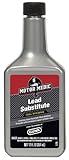
- Allows engines designed for leaded gasoline to run safely with low lead or unleaded fuels
- Prevents valve damage and upper cylinder wear in older engines
- Coats with a protective film designed to prevent valve recession
- Intended for off-road use
- Replaces lead protection
How the available options differ
| Option | When it may be appropriate | What to verify |
|---|---|---|
| Unleaded aviation gasoline, such as UL94 | When the aircraft and engine are authorized for that fuel. | Approved fuel requirements for the specific aircraft and engine, plus local availability. FAA guidance identifies UL94 as currently available; that does not make it suitable for every aircraft. FAA |
| Automotive gasoline | Only when the applicable aircraft is covered by an FAA supplemental type certificate (STC) and is operated within that STC’s instructions, limitations, and procedures. | Whether the STC applies to the specific aircraft and whether its operating requirements are met. It is not a general avgas substitute. FAASTeam guidance |
| UL91 | Only for an engine approved for that fuel. | Do not assume approval based on the fuel being unleaded. EASA warns that using UL91 in an engine not approved for it may cause extensive damage or in-flight failure because its Motor Octane Number is lower than 100LL’s. EASA fuel guidance |
| Lead-replacement additive | No general aircraft use is established by the cited official guidance. | An additive is not proof that a fuel meets the aircraft’s approved fuel requirements. Do not treat it as a replacement for the fuel itself. |
How to choose a fuel for a specific aircraft
- Check the aircraft and engine documentation. Identify the fuel grades and limitations approved for that exact combination; do not infer compatibility from another model or from a fuel’s name.
- Confirm the authorization. If considering automotive gasoline, verify that an applicable FAA STC covers the aircraft and follow its instructions and limitations. For aviation fuels, confirm that the specific aircraft and engine are authorized for the fuel.
- Check local supply. Ask the airport or fuel supplier whether the authorized grade is available. The cited guidance does not establish airport inventories or local prices.
- Do not substitute based on an additive or a performance claim. No verified comparative figures establish that a lead-substitute additive or unleaded fuel universally improves horsepower, fuel efficiency, or other performance measures.
The FAA’s aviation fuels technical-discipline page provides additional context on fuel and certification. For an actual operating decision, the aircraft’s current approved documentation and any applicable STC govern.
Independent reader supportYour contribution helps us test, update, and keep practical guides available for everyone.What the FAA’s transition goal does—and does not—mean
The FAA’s EAGLE initiative aims to eliminate leaded fuel in piston-engine aircraft safely by the end of 2030. That is a program target, not confirmation that every aircraft already has an approved replacement fuel. The FAA says Transition Plan V1.0 is published and tentatively expects V2.0 after Phase 1, in late 2027. Those dates describe the agency’s plan as stated on its unleaded aviation fuel transition page; they do not determine which fuel an individual aircraft may use.
Quick Recap
Best Value

- Replaces Lead with Added Protection – Provides valve lubrication and combustion support.
- Prevents Valve Recession & Wear – Formulated to help reduce valve recession and wear.
- Stops Power & Compression Loss – Helps support stable power and compression.
- Concentrated & Easy to Use – One 32 oz bottle treats up to 50 gallons of fuel.
- Made in USA
Rank #4

- Replaces Lead with Added Protection – Provides valve lubrication and combustion support.
- Prevents Valve Recession & Wear – Formulated to help reduce valve recession and wear.
- Stops Power & Compression Loss – Helps support stable power and compression.
- Concentrated & Easy to Use – One gallon treats up to 200 gallons of fuel.
- Made in USA
Rank #3

- Prevents valve seat damage in engines designed for leaded gasoline
- Prolongs the useful life of older engines without updated valve seats
- Also cleans carburetor deposits and injectors, safe for catalytic converters
- For racing, marine or off-road use only; one bottle treats up to 25 gallons
- Pack of 1
Rank #2
- Made in United States
Product prices and availability are accurate as of the date/time indicated and are subject to change. Any price and availability information displayed on Amazon at the time of purchase will apply.




