What’s actually slowing this PC down?
Pick the symptom - the matching free tool is one click away.
The Tesla Model 3 is the best electric sedan for most U.S. buyers in 2026. It combines the lowest starting price in this group with up to 346 miles of EPA-estimated range, broad fast-charging access, useful cargo space, and strong—but not perfect—IIHS safety results. The Hyundai Ioniq 6 is the better value-and-safety choice, the Lucid Air is the range champion, and the Porsche Taycan is the performance pick.
This is a specification- and safety-based comparison of the U.S. market, current to August 11, 2026. It is not based on hands-on driving or instrumented testing. Prices, inventory, incentives, model-year designations, wheel choices, and charging availability can change, so verify the exact vehicle before purchasing.
Best electric sedans at a glance
| Rank | Model | Best for | Published U.S. range | Main compromise |
|---|---|---|---|---|
| 1 | Tesla Model 3 | Best overall for most buyers | 321–346 miles EPA-estimated | Minimalist controls and configuration-dependent pricing |
| 2 | Hyundai Ioniq 6 | Value, efficiency, and safety | Up to 342 miles EPA-estimated | Low roofline and less practical cargo opening |
| 3 | Lucid Air | Maximum range and premium comfort | Up to 431 miles in Touring; 512 miles in Grand Touring | High price, limited availability, and service reach |
| 4 | Tesla Model S | Long-range flagship performance | 410 miles dual motor; 368 miles Plaid | Expensive and physically large |
| 5 | Porsche Taycan | Driving performance | Approximately 276–318 miles depending on version and listing | Very high price and option-sensitive range |
| 6 | BMW i4 | Traditional luxury-car experience | 307–333 miles for 2026 eDrive40 | Costs more than the mainstream choices |
EPA estimates are the fairest common comparison for U.S. shoppers, but they are not a promise of real-world distance. Highway speed, cold weather, hills, wind, climate-control use, battery temperature, tire choice, wheel size, and driving style all affect range.
What counts as an electric sedan here?
This guide covers four-door electric sedans and sedan-shaped liftbacks. That includes the BMW i4 because its four-door Gran Coupe body provides sedan proportions with liftback-style cargo access. SUVs, crossovers, and larger electric hatchbacks are excluded even when they compete for the same household budget.
Recommended Free Tools
#1 Best Overall

- Flex Level 1 EV Charger - The EVDANCE Level 1 electric car charger is compatible with J1772 electric vehicles and plug-in hybrid vehicles (North American Standard). *Tesla requires a SAE J1772 adapter.
- Convenient to Use - This charger has both NEMA 6-20 plug for 16A 240V charging (3.68kW, 10-12 mi/h) and a NEMA 6-20 to 5-15 plug adapter for 12A 120V charging (1.44kW, 2-5 mi/h). The included bag makes it easier to carry on the go. It also has a 25ft cable length, you can use it flexibly from anywhere in the garage or driveway.
- Check Your Outlet Type -This charger works with standard 120V NEMA 5-15/5-20 outlets (2-5 mph charging speed) and 240V NEMA 6-20 outlets (10-12 mph) . It's not compatible with NEMA 6-15/10-30/14-30/14-50/6-50 outlets – you'll need a NEMA 14-50/14-30/10-30/6-50 to 6-20 adapter (sold separately) to connect.
- Compatible EV Models -This EV charger works with most major electric vehicles, including Ford, Chevrolet, Hyundai, Audi, Nissan Ariya, Rivian R1S, Kia, and others. However, it's not compatible with Mini Cooper Electric Hardtop,Toyota Prus Prime/Z4X/RAV4Prime, Porsche Taycan Base/4S/Turbo/Turbo S or Tesla models (Tesla requires a J1772 to Tesla Adapter, sold separately). For a full list of compatible models, check out the Full Compatibility List on our product page.
- Indication Displays - LED display that can tell you the status as well as indicate errors while charging your electric vehicle.
The list is also a 2026-current buying guide rather than a claim that every vehicle carries a clean 2026 model-year label in every dealership. The researched U.S. Ioniq 6 range and pricing data are for the 2025 model, while current manufacturer pages can transition between model years. Porsche’s U.S. site was already showing 2027 Taycan listings in August 2026. Check the window sticker, VIN-specific equipment, and current manufacturer configuration before treating any number as final.
1. Tesla Model 3: best electric sedan for most buyers
The Model 3 is the broadest recommendation because it avoids the biggest compromises found elsewhere in the category. Tesla lists a starting price of $38,630 for the current U.S. model page, along with 321 miles of EPA-estimated range for the Standard version and 346 miles for the Premium version. It also lists 24 cubic feet of total cargo capacity and says the car can add as much as 185 miles in 15 minutes under its stated charging conditions.
That combination makes the Model 3 particularly compelling for a buyer who wants a relatively compact sedan, long road-trip range, access to Tesla’s fast-charging ecosystem, and a lower entry price than the luxury alternatives. The Premium version’s extra published range may be worth considering for frequent travelers, while the Standard version is the more persuasive value play if its equipment and range meet your needs.
Why choose the Model 3
- Lowest listed starting price among the six recommendations.
- Up to 346 miles of EPA-estimated range in the researched U.S. lineup.
- Strong fast-charging convenience through Tesla’s network, subject to route, availability, and vehicle conditions.
- Useful published cargo capacity for a compact sedan.
- Strong independent safety evidence for the 2025 model.
What to consider before buying
The Model 3’s minimalist cabin places many functions on the central screen, and some drivers may prefer the physical controls and conventional instrument layout found in the BMW i4 or Hyundai Ioniq 6. Tesla pricing and range are also configuration-dependent, and actual range can vary substantially from the EPA estimate. Confirm the selected version, wheels, tires, included charging equipment, warranty terms, and local service options.
Do these 3 things before closing this tab:
1Fix the driver behind crashes, sound loss and screen glitches2Repair Windows errors before they cause bigger problems3Scan for outdated or missing drivers - takes under a minuteSafety is a meaningful strength, but the IIHS result deserves precision. IIHS named the 2025 Model 3 a Top Safety Pick and gave it Good ratings in the small-overlap front, side, vehicle-to-vehicle front crash-prevention, and pedestrian front-crash-prevention evaluations. Its updated moderate-overlap front result was Acceptable, not Good, and its seat-belt-reminder rating was Marginal. The award should therefore be described as strong evidence, not as a flawless safety record.
2. Hyundai Ioniq 6: best value, efficiency, and safety package
The Ioniq 6 is the strongest alternative to the Model 3 for buyers who want a highly aerodynamic electric sedan from a traditional automaker. Hyundai lists a $37,850 starting MSRP for the researched 2025 U.S. model and up to 342 miles of EPA-estimated range for the SE Long Range rear-wheel-drive trim. All-wheel-drive versions are listed at up to 316 miles, and higher trims generally have lower published range.
Its biggest advantage is how many desirable traits arrive together: a low purchase price, excellent stated efficiency, long range in the right trim, and an outstanding IIHS safety award. IIHS gives the 2025 Ioniq 6 a Top Safety Pick+ designation, with Good results in the principal crashworthiness categories and Good pedestrian front-crash-prevention performance. Its headlight rating is Acceptable, so the plus award should still be read alongside the individual results.
Why choose the Ioniq 6
- Up to 342 EPA-estimated miles in the long-range rear-wheel-drive configuration.
- A lower listed starting MSRP than most premium electric sedans.
- Top Safety Pick+ recognition for the 2025 model from IIHS.
- Manufacturer-advertised ultra-fast charging capability that suits road-trip use on paper.
- Traditional dealer support and familiar controls for shoppers moving from a gasoline sedan.
What to consider before buying
The Ioniq 6’s sleek roofline is a design and efficiency advantage, but it can reduce rear-seat headroom and make the trunk opening less convenient than a hatchback or crossover. Sit in the back seat with the people who will actually use it, and test the luggage opening rather than judging cargo capacity by a volume number alone.
Quick wins for a faster PC:
Fix the driver behind crashes, sound loss and screen glitchesFind Drivers →Clear out junk files and repair common Windows errorsFree Scan →Scan for outdated or missing drivers - takes under a minuteDriver Scan →Hyundai’s fast-charging claims depend on charger output, battery temperature, state of charge, trim, and other conditions. They are manufacturer claims, not independently measured results in this comparison. If road trips are central to your decision, compare the exact trim’s charging equipment and plan routes around the chargers available where you travel.
Rank #2
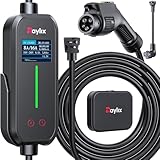
- [2026 INTELLIGENT CHARGING UPGRADE — PRECISION CONTROL MEETS SMART SCHEDULING] After surveying 100K+ U.S. EV owners, the Raylix R&D team found that nearly all drivers recognized the necessity of adjustable current and scheduled charging. Our upgraded J1772 charger features 4-level adjustable current (8A/10A/12A/16A) and a 1–12 hour smart delay timer. Whether you're charging overnight or during off-peak hours, enjoy smarter energy use, lower costs, and total convenience—on your schedule.
- [ONE CHARGER, ALL J1772 EVs/PHEVs READY!] Compatible with all SAE J1772 electric vehicles and plug-in hybrids—whether it’s Ford, GM, Nissan, Audi, BMW, Kia, Hyundai, Honda, Chevy, or more. Perfect for home or on-the-road charging, our 16A Level 1 & 2 charger ensures your EV is always powered and ready for any journey.
- [CHARGE 4× FASTER — NO MORE WAITING] In a rush? Our 16A Level 1 & 2 charger delivers charging speeds up to 4× faster than standard 8A Charger Level 1. Whether it's an early commute, a spontaneous trip, or last-minute errands, your EV will be ready when you are.
- [LEVEL 1 & 2 PORTABLE CHARGER — CHARGE ANYWHERE, ANYTIME] Designed for maximum flexibility, Raylix Level 1 & 2 EV charger features both 5-15 and 6-20 plug compatibility. Whether you're charging in your garage, at a friend's house, or at a roadside motel. NEMA 6-20 plug for Level 2 ev charging (240V, 16A, 3.68kW, 9-12 miles/hr) and a NEMA 5-15 adapter for Level 1 ev charging (120V, 12A, 1.44kW, 3-5 miles/hr) NOTE: In compliance with North American electrical safety standards, the charger automatically limits current to 12A when using a 5-15 outlet—protecting both your vehicle and your home’s electrical system.
- [AT-A-GLANCE CHARGING COMMAND: TOTAL CONTROL, INSTANTLY] While most ev chargers solutions confine vital data to in-car screens, the Raylix tesla charger breaks free with its enhanced TFT color display. This Raylix-exclusive feature delivers crystal-clear, real-time updates—voltage, current, power load, AND critical charging temperature—directly on the unit. Just one glance gives you complete charging insight. It’s not just information; it's the empowering peace of mind and satisfying control that transforms every charge into a masterfully managed experience.
3. Lucid Air: best maximum-range luxury electric sedan
The Lucid Air is the range leader in this comparison by a wide margin. Lucid states that the 2026 Air Touring reaches 431 EPA-estimated miles and that the Air Grand Touring reaches up to 512 EPA-estimated miles. Those figures make the Air the most persuasive choice for drivers who want to minimize charging stops and are willing to pay for a premium sedan.
Lucid’s 2026 announcement lists the Air Pure at $70,900 in the United States. That is a starting point for the lineup, not a price for the 512-mile Grand Touring model; higher trims cost substantially more. The Air should be considered a premium long-distance car, not a lower-cost alternative to the Model 3 or Ioniq 6.
Why choose the Lucid Air
- Highest published EPA range in this group: up to 512 miles for the 2026 Grand Touring.
- The 2026 Touring still offers a stated 431 miles, giving buyers a more accessible route to exceptional range within the lineup.
- Premium design, a quiet-luxury positioning, and generous long-distance comfort are central to its appeal.
- Lucid says all 2026 Air models gain access to more than 23,500 Tesla Superchargers, subject to charging compatibility and the required adapter arrangements.
What to consider before buying
The price premium is substantial, and availability and service reach may be more limiting than with Tesla, Hyundai, or BMW. Before committing, identify the nearest authorized service location, confirm mobile or roadside support in your area, verify the exact trim’s EPA label, and make sure the charging hardware supplied for that vehicle matches your home and travel plans.
Free tools Windows power users keep installed
One-click scans. No signup required.
The Air’s range advantage matters most to people who regularly drive long distances or have limited access to convenient charging. If you normally charge overnight at home and drive a short daily commute, the additional cost may provide less practical benefit than a less expensive sedan with 300-plus EPA miles.
4. Tesla Model S: best established long-range performance flagship
The Model S remains a compelling choice for buyers who want a large, fast Tesla sedan with a long-range mission. Tesla lists up to 410 EPA-estimated miles for the dual-motor Model S and 368 miles for the Model S Plaid. It also lists 28 cubic feet of cargo volume, 250-kilowatt Supercharging capability, and as much as 205 miles added in 15 minutes under its stated conditions.
Compared with the Model 3, the Model S offers more space, more performance, and a flagship position. Its large cargo area helps it function as a practical long-distance vehicle, while the Plaid version targets a buyer who values extreme acceleration more than maximum range.
Why choose the Model S
- Up to 410 miles of published EPA range in the dual-motor version.
- More cargo volume than the Model 3, with a total listed capacity of 28 cubic feet.
- Fast-charging access and a high listed peak charging capability.
- Strong acceleration and flagship performance without moving to an SUV.
What to consider before buying
The Model S costs considerably more than the Model 3 and Ioniq 6, and its larger exterior dimensions can make parking and tight garages less convenient. It is also a technology-heavy ownership proposition with the same general preference for screen-based controls and Tesla’s service model. Verify current inventory, pricing, included equipment, and configuration-specific range instead of relying on an older listing.
5. Porsche Taycan: best electric sedan for driving performance
The Porsche Taycan is the enthusiast choice. It is designed around acceleration, braking, chassis tuning, and handling rather than range-per-dollar. Porsche’s referenced U.S. range data lists EPA estimates of 318 miles for the base Taycan, 294 miles for the Taycan 4, 295 miles for the 4S, 293 miles for the GTS, and 317 miles for the Turbo. The broader range shown across the referenced Taycan listings is approximately 276 to 318 miles, depending on version, equipment, and model-year data.
The rear-wheel-drive Taycan is listed on Porsche’s current U.S. model page from $111,900, with a 4.5-second 0-to-60-mph launch-control time. Higher-performance versions rise sharply in both output and price. Porsche also emphasizes the car’s 800-volt architecture and charging capability of up to 320 kW when equipped with the Performance Battery Plus.
Rank #3

- ✅【Fast & Adjustable Charging Power – Up to 7.68kWh, 16A–32A Output】This Level 2 portable EV charger delivers up to 32A and 7.68kWh for fast, efficient charging. Easily adjust current based on your home circuit: 32A for 40A, 24A for 30A, or 16A for 20A breakers. Simply long-press the “A” button to change amperage when pluged in,You can easily adjust the current (16A/24A/32A) to match your home circuit — no electrician required.
- ✅【Wide Compatibility – J1772 Connector for All Non-Tesla EVs】Equipped with a standard SAE J1772 plug, this EV charger works with most North American electric vehicles and plug-in hybrids, including models from Ford, GM, Nissan, Kia, Hyundai, BMW, and more. Tesla vehicles require a J1772-to-Tesla adapter (not included).
- ✅【Smart LED Screen】You Can View real-time charging data on the LED screen: amperage, voltage, speed, and delay settings. Stay fully informed with the built-in LED display that shows real-time charging data, including amperage, voltage, charging speed, and delay settings,Easily schedule your charging sessions during off-peak hours to save on electricity bills, set custom delays, It’s all about charging smarter, not just faster
- ✅ 【Smart Charging for Long-Term EV Care】: EVDANCE Level 2 EV charger offers flexible amperage settings ranging from 10A to 32A (10A/16A/20A/24A/32A). With a simple touch of the "A" button, you can easily select the appropriate charging speed to suit your specific needs. Lower amperage charging can reduce heat and extend battery health over time. Choose the current that suits your car and charging scenario — fast when you need it, gentle when you don’t.
- ✅【Built for Safety & Durability 】The EV charger is designed to handle tough environments with NEMA Type 4/IP66-grade protection against dust and water. While it’s not recommended for installation in direct sunlight or heavy rain, it performs reliably in garages, carports, and covered outdoor areas. The 25-foot military-grade charging cable features a drop-resistant plug tested to withstand over 10,000 insertions — built to last, wherever you charge.
Why choose the Taycan
- The clearest performance-first choice in this comparison.
- High-voltage charging architecture and a high stated peak charging capability with the appropriate battery and equipment.
- Porsche’s familiar performance-car design and driving position.
- Multiple versions let buyers prioritize range, all-wheel drive, or performance.
What to consider before buying
The Taycan’s maximum 320-kW figure is a peak capability, not a charging rate it will sustain in every session. Charging speed depends on the battery’s temperature and state of charge, the charger, the vehicle configuration, and the condition of the charging site. Wheel and tire choices also affect range, and Porsche options can significantly change the purchase price.
The current U.S. website already includes 2027 Taycan listings, so shoppers should not mix a 2026 configuration with a 2027 price or specification. If the goal is the best driving experience, the Taycan is the natural choice; if the goal is the best value or longest distance between charges, the Model 3, Ioniq 6, or Lucid Air makes a stronger case.
The Tool Desk
Outbyte Driver Updater FREEFix the driver behind crashes, sound loss and screen glitchesFind Drivers →Outbyte PC Repair FREERepair Windows errors before they cause bigger problemsFix Now →6. BMW i4: best conventional-luxury alternative
The BMW i4 is the best choice for shoppers who want an electric sedan that feels more like a conventional premium car. Its liftback-style rear opening is more practical than a traditional trunk, while the cabin, driving position, and controls will be familiar to BMW owners and drivers who do not want a minimalist interior.
BMW’s U.S. offer page lists 307–333 miles of range for the 2026 i4 eDrive40, along with 335 horsepower and rear-wheel drive. BMW lists 16.6 cubic feet of i4 trunk capacity. The range spread reflects configuration differences; BMW specifically notes that wheel size, wheel design, and tire type affect electric range.
Why choose the i4
- Traditional BMW cabin ergonomics and a familiar premium-car interface.
- Sporty rear-wheel-drive character in the eDrive40.
- Liftback access that improves everyday loading flexibility.
- Competitive published range for a luxury electric sedan.
What to consider before buying
The i4’s entry price is higher than the Model 3 and Ioniq 6, and its best range depends on selecting the right wheel and tire package. Ask the dealer to show the EPA range for the exact stock number rather than quoting the broad model range. Also compare the rear-seat space and cargo opening with the Model 3 and Ioniq 6 in person.
Range comparison: the number on the window sticker matters most
| Model | Configuration or range reference | Published U.S. range |
|---|---|---|
| Tesla Model 3 | Standard to Premium | 321–346 miles EPA-estimated |
| Hyundai Ioniq 6 | SE Long Range RWD; AWD reference | Up to 342 miles; AWD up to 316 miles EPA-estimated |
| Lucid Air | 2026 Touring; Grand Touring | 431 miles; up to 512 miles EPA-estimated |
| Tesla Model S | Dual motor; Plaid | 410 miles; 368 miles EPA-estimated |
| Porsche Taycan | Listed versions vary by model year and equipment | Approximately 276–318 miles in the referenced data |
| BMW i4 | 2026 eDrive40 | 307–333 miles as listed by BMW |
Do not compare a vehicle’s maximum range with a lower-range all-wheel-drive or performance version and assume the figures apply equally across the lineup. The same model can lose range with larger wheels, wider tires, dual motors, cold-weather equipment, or a larger performance battery.
PC Slower Than It Used to Be?
A free scan shows the junk files, broken settings and background clutter dragging Windows down - then fixes them in one click.Free scan · Windows 10 & 11Outdated Drivers Are Slowing You Down
One free scan finds every outdated or missing driver and matches the right update for your exact hardware.Free scan · exact hardware matchFor a U.S. purchase, use the EPA label for the exact trim and wheel configuration. WLTP figures from Europe and Canadian figures should not be substituted for EPA estimates without clearly labeling the different test standard.
Independent reader supportYour contribution helps us test, update, and keep practical guides available for everyone.Charging an electric sedan at home
For most owners with dedicated home parking, a home Level 2 setup is more important than the car’s maximum DC-fast-charging headline. It can replenish the car while it is parked overnight and reduces dependence on public charging. The right choice depends on the vehicle’s charging port, its onboard AC-charging limit, the home’s electrical service, the circuit configuration, whether the unit will be hardwired or plugged in, and whether it will be mounted outdoors.
When comparing a Level 2 EV charger, start with compatibility rather than brand or maximum amperage. ChargePoint’s Home Flex is offered with J1772 and NACS connector choices, supports adjustable amperage, and is listed at up to 12 kW and up to 37 miles of range per hour under the company’s stated conditions. Wallbox says its North American Pulsar Plus is available in J1772 and NACS versions, supports up to 40 amps or 48 amps on select models, and typically adds 30–40 miles of range per hour depending on the vehicle and electrical installation.
Those output figures are not universal promises. A car may accept less AC power than the charger can deliver, and the actual miles added per hour vary with the vehicle, battery state, weather, electrical supply, and charging losses. Tesla’s home-charging lineup includes portable and wall-mounted options, including an all-in-one NACS-plus-J1772 product intended to support broader EV compatibility. Confirm the current product configuration before ordering.
Rank #4

- 【Efficient Charging】VDLPOWERVP level 2/level 1 EV charger is equipped with NEMA 6-20 Plug(220V/240V), it offers 16A current and up 3.5kW output. Two charging options, low current charging can effectively reduce battery wear and prolong service life. Choosing to connect the conversion line for charging can realize a full day's commute mileage in one night.
- 【Level 1 & Level 2 EV Charger Adapter】This portable ev charger is equipped with NEMA 6-20 plug (Level 2, 240V, 16A) and NEMA 5-15 adapter (Level 1, 110V, 12A), you can connect our electric vehicle chargers to a standard household socket or a dedicated industrial socket, use it flexibly from anywhere in the garage or driveway.
- 【Intelligent Charging-Durable and Safe】The intelligent chip design of its control box can keep monitoring the charging status at any time, provides multiple safety protections such as lightning protection and leakage protection. This electric vehicle charger is made of premuim and sturdy materials and is FCC certified. EV Control box is IP65 waterproof and dustproof.
- 【Easy Charging and Indication Displays】Just connect to the outlet and the car, the ev charger can work properly. LED indicators that can tell you the status as well as indicate errors while charging your electric vehicle. It can help you get the charging station status information quickly.
- 【Portable Design】The ev charger has a 20ft charge cable, which is long enough for you to charge without getting tangled.The appropriate cord length and weight allow you to easily put it in the trunk of an electric car whether you are visiting friends or renting a vacation house.
Home-charging compatibility checklist
- Identify the vehicle’s port. Confirm whether the car uses NACS or J1772 for AC home charging. Do not assume that a vehicle’s DC fast-charging access determines its home connector.
- Check the electrical service. Have the electrician determine whether the panel, wiring, breaker, and available capacity support the desired installation.
- Match the charger to the car. A higher-rated charger does not make a vehicle charge faster than its onboard AC system allows.
- Choose plug-in versus hardwired installation. The decision affects installation cost, portability, weather exposure, and electrical requirements.
- Consider the location. Verify cable reach, outdoor rating, mounting surface, drainage, and protection from vehicle traffic.
- Use a licensed professional where required. ChargePoint and other manufacturers state that installation should be handled by a licensed electrician or qualified installer, and local electrical code controls the final setup.
An EV charging cable is a different purchase from a wall-mounted Level 2 unit. A cable may be useful as a replacement, for portable AC charging, or for connecting a compatible vehicle to a compatible outlet or charging unit. Check its connector ends, current rating, plug type, weather rating, and whether it is intended for AC use. It is not a substitute for DC fast-charging hardware.
A NACS-to-J1772 adapter can be useful when the vehicle and an AC charging source use different connector standards, but adapters are not universally interchangeable. Verify the vehicle, charger, AC or DC use, current rating, physical fit, and manufacturer approval. Never assume that an adapter designed for one charging situation is safe or suitable for another.
Safety: what the available IIHS evidence says
The strongest independent safety evidence in this group belongs to the Hyundai Ioniq 6 and Tesla Model 3, but the award years and individual test results matter.
- Hyundai Ioniq 6: IIHS gives the 2025 model a Top Safety Pick+ award. It receives Good ratings in the principal crashworthiness categories and Good pedestrian front-crash-prevention performance. The headlight rating is Acceptable.
- Tesla Model 3: IIHS rates the 2025 model a Top Safety Pick. It receives Good ratings in small-overlap front, side, vehicle-to-vehicle front crash prevention, and pedestrian front crash prevention. The updated moderate-overlap result is Acceptable, and the seat-belt-reminder result is Marginal.
Award status is not a permanent label for every model year, trim, software revision, or production date. It is also not a complete substitute for reviewing the individual IIHS test categories. The dossier does not provide equivalent current IIHS results for the Lucid Air, Model S, Taycan, or BMW i4, so this comparison does not imply that those cars are unsafe or assign them an unsupported safety ranking.
Which electric sedan should you buy?
| If your priority is… | Start with… | Why |
|---|---|---|
| The best balance of cost, range, and charging convenience | Tesla Model 3 | Broadest all-round specification package and lowest listed entry price in this group |
| Value plus the strongest researched safety award | Hyundai Ioniq 6 | Up to 342 EPA miles, low listed MSRP, and 2025 IIHS Top Safety Pick+ |
| Maximum distance between charging stops | Lucid Air Grand Touring | Up to 512 EPA-estimated miles |
| A large, fast, long-range flagship | Tesla Model S | Up to 410 EPA miles, 28 cubic feet of cargo, and strong performance |
| Handling and acceleration above all else | Porsche Taycan | Performance-focused chassis and 800-volt charging architecture |
| Familiar premium controls and liftback practicality | BMW i4 eDrive40 | Conventional BMW cabin experience, rear-wheel drive, and up to 333 listed miles |
Final electric-sedan buying checklist
- Price the exact car. Include destination charges, options, taxes, registration, financing, insurance, and available federal, state, utility, or local incentives. Advertised prices and incentives can change quickly.
- Read the exact EPA label. Confirm range for the specific drivetrain, battery, trim, wheel, and tire package—not just the model’s maximum.
- Check the charging port and equipment. Identify the AC connector, DC fast-charging compatibility, included cables, adapter requirements, and the vehicle’s onboard AC-charging limit.
- Map your charging routine. Determine whether you can charge at home, work, or nearby public stations. A 512-mile sedan is less useful if it cannot be serviced conveniently where you live.
- Inspect passenger and cargo fit. Test rear headroom, child-seat access, trunk or liftback opening, and luggage space with the people and items you actually carry.
- Compare wheel options carefully. Larger wheels and different tire designs can reduce range and raise replacement costs.
- Verify safety data by model year. Review the current IIHS results and individual categories rather than relying only on a Top Safety Pick name.
- Confirm warranty and service access. Ask who performs warranty work, where the nearest service location is, how roadside support works, and how long common parts may take to obtain.
- Check current inventory and model year. Manufacturer sites may show overlapping 2026 and 2027 vehicles, especially during a model-year transition.
- Arrange home charging safely. Confirm circuit capacity, local permits and code requirements, outdoor-rating needs, and professional installation before buying charging equipment.
Frequently Asked Questions
Which electric sedan has the longest range in 2026?
The Lucid Air has the highest published range in this comparison. Lucid lists up to 431 EPA-estimated miles for the 2026 Air Touring and up to 512 miles for the 2026 Air Grand Touring. The Grand Touring is a premium-priced vehicle, so the Model 3 or Ioniq 6 may provide better value for buyers who do not need that much range.
Is the Tesla Model 3 or Hyundai Ioniq 6 better?
The Model 3 is the better all-round choice for most buyers because of its price, range, cargo capacity, and charging-network convenience. The Ioniq 6 is the better choice for shoppers who prioritize value, traditional automaker support, efficiency, and the stronger researched IIHS award. Compare the exact trims, charging access, rear-seat space, and local service options.
Do I need a Level 2 charger for an electric sedan?
Not necessarily, but Level 2 home charging is the most practical setup for many owners with dedicated parking. The required equipment depends on your parking location, daily mileage, electrical service, vehicle connector, and onboard AC-charging limit. A licensed electrician should verify the circuit and installation requirements before you purchase a charger.
Are the published EV range figures realistic?
EPA estimates are the appropriate U.S. comparison metric, but actual driving distance varies with speed, weather, elevation, wind, climate use, wheels, tires, battery temperature, and driving style. Use the exact vehicle’s EPA label as a consistent baseline rather than treating any published figure as a guarantee.
Are electric liftbacks included as sedans in this comparison?
Yes. This guide includes sedan-shaped four-door liftbacks such as the BMW i4 because they serve the same premium-sedan shopping need while offering a larger rear opening. SUVs and crossovers are excluded.
The Bottom Line
For most shoppers, buy the Tesla Model 3. Choose the Hyundai Ioniq 6 if value and safety are the priority, the Lucid Air if maximum range justifies its premium price, the Model S for flagship Tesla performance, the Taycan for enthusiast driving, and the BMW i4 for a conventional luxury-car experience. Before signing, verify the exact trim’s EPA range, wheels, charging port, incentives, warranty, service access, and current model year.
Quick Recap
Product prices and availability are accurate as of the date/time indicated and are subject to change. Any price and availability information displayed on Amazon at the time of purchase will apply.




