Do these 3 things before closing this tab:
1Repair Windows errors before they cause bigger problems2Scan for outdated or missing drivers - takes under a minute3Clear out junk files and repair common Windows errorsThe best performance pushrod tube is the one that fits your exact engine, seals correctly and clears the pushrod throughout its travel. Adjustable or upgraded tubes can solve a fitment problem—such as a changed crankshaft stroke—or make replacement easier on some engines. The available product specifications do not establish that pushrod tubes increase horsepower, fuel economy or engine efficiency.
Pushrod tubes are protective housings around the valvetrain pushrods; they are not the pushrods that transmit motion through the valve train. This guide compares the application-specific tube options documented for air-cooled Volkswagen engines, with fitment and installation limits in view.
What matters when choosing performance pushrod tubes?
Start with the engine, not the marketing label. Confirm the engine family, year, displacement and stroke, then account for head and block dimensions and any changes to valve geometry. A tube that fits one version of a Type 1 engine may not suit another configuration.
- Fitment: Check the manufacturer’s application list and exclusions against the actual engine, especially if it has been modified.
- Length and dimensions: For adjustable tubes, compare the installation range with the distance between the engine block and cylinder head. Check inner diameter and pushrod clearance.
- Sealing: Identify the seal material and arrangement, and match replacement seals to the engine, tube and location.
- Installation: Verify whether the specific design and application permit installation without removing the cylinder head, and whether a dedicated tool is required.
These are fitment and serviceability distinctions, not evidence of comparative power, fuel-economy, durability or leakage performance.
Recommended Free Tools
#1 Best Overall

- For VW Beetle Sedan 1954 - 1977;Ragtop 1954 - 1963;Sunroof 1964 - 1977;Convertible 1954 - 1970
- For VW Super Beetle Sedan 1971 - 1975;Convertible 1971-1979
- For VW Karmann Ghia Coupe 1956 - 1974;Convertible 1957 - 1974
- For VW Type II (Bus) Bus 1955 - 1971;Single Cab 1955 - 1971;Double Cab 1958 - 1971
- For VW Type 3 Squareback 1962 - 1973;Notchback 1962 - 1973;Fastback 1966 - 1973
How do the documented adjustable tube options compare?
| Product | Construction and seals | Fitment and dimensions | Installation notes |
|---|---|---|---|
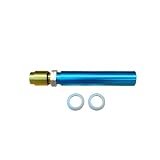
| Paruzzi adjustable pushrod tubes | Blue anodized aluminum, two sections and an O-ring between them. | Paruzzi lists Type 1 engines except 25 hp and 30 hp versions, and Type 3 engines through July 1970. The listing does not state an installation-length range or tube inner diameters. | Paruzzi says the tubes tighten with nuts and may be used to replace tubes without dismantling the motor or cylinder heads. It cautions that pushrods must move freely without touching the tube; some heads or modified valve geometry may cause contact. Follow its specified mounting orientation. |
| CSP pushrod tubes | Two-part aluminum construction, internal FKM O-rings and stainless-steel springs. | CSP specifies a flexible installation dimension of 186.5–197.5 mm, a 22 mm inner diameter at the cylinder head and 19 mm at the engine block. CSP lists Type 1 engines from 1300 cc and also associates the product with WBX and CT applications; confirm the exact application with CSP. | CSP says this system can be installed without removing the cylinder head. Its product description says the spring-loaded seals maintain contact pressure. CSP lists a dedicated mounting tool that compresses and inserts the two tube halves. |
These are manufacturer-listed specifications and fitment statements, not independent comparative test results. Neither listing establishes that one design lasts longer or seals better under the same engine conditions.
Do adjustable pushrod tubes improve engine efficiency?
The available product information supports practical uses such as accommodating a changed crankshaft stroke or replacing tubes on some engines without removing the heads. It does not provide independent engine-specific measurements showing gains in horsepower, fuel economy or efficiency. Choose a tube to solve a verified fitment or service issue rather than expecting a performance increase from the tube alone.
Rank #2
- For VW Beetle Sedan 1954 - 1977;Ragtop 1954 - 1963;Sunroof 1964 - 1977;Convertible 1954 - 1970
- For VW Super Beetle Sedan 1971 - 1975;Convertible 1971-1979
- For VW Karmann Ghia Coupe 1956 - 1974;Convertible 1957 - 1974
- For VW Type II (Bus) Bus 1955 - 1971;Single Cab 1955 - 1971;Double Cab 1958 - 1971
- For VW Type 3 Squareback 1962 - 1973;Notchback 1962 - 1973;Fastback 1966 - 1973
Do adjustable pushrod tubes stop oil leaks?
Not necessarily. Paruzzi identifies aged pushrod tube seals as a possible source of leakage and lists stock and silicone seal options for different applications. A replacement tube will not reliably fix a leak if the underlying issue is an aged, unsuitable or incorrectly fitted seal. Match the seal to the engine family, its location and the tube, and follow the tube maker’s installation requirements.
Before replacing parts, confirm that the leak is coming from the tube seal. The product information does not establish that any particular tube or seal prevents leaks in every engine or condition.
What’s actually slowing this PC down?
Pick the symptom - the matching free tool is one click away.
Rank #3

- Aluminum Material, "Adjustable" / Includes Seals
- Threaded Adjustable Design Allows Quick Change Of Damaged Push Rod Tubes With The Engine In The Car
- Ideal For Emergency Repairs Or Permanent Installation
- 1600cc Base Engines
- Sold As Each
Can you replace pushrod tubes without removing the cylinder head?
Some designs are described as allowing it, but it is not a universal feature. Paruzzi says its adjustable tubes may be used for replacement without dismantling the motor or cylinder heads. CSP says its two-part system can be installed without removing the cylinder head on compatible applications. CSP’s statement applies to its listed system, not to all pushrod tubes or every engine configuration. Follow the exact product instructions and verify fitment before beginning.
What to check before ordering
- Identify the engine: Record its family, year, displacement and stroke. If it has been modified, document changes to the crankshaft, heads, block or valve geometry.
- Compare the application listing: Check the exact manufacturer listing and exclusions. Do not assume that a broad Type 1, WBX or CT label confirms fitment for every variant.
- Measure and check clearance: Compare the required installed length with the tube’s stated range, where provided. Confirm that the pushrod moves freely without contacting the tube and that the tube clears the head.
- Confirm the sealing parts: Select seals for the engine, tube and installation location. Check whether replacement seals are supplied or must be ordered separately.
- Review the installation method: Follow the product’s orientation and sealing instructions. For the CSP system, confirm whether its dedicated mounting tool is required for the intended installation.
Keep tubes and pushrods straight
A pushrod tube surrounds and protects the pushrod; the pushrod transmits motion in the valvetrain. High-performance pushrods—such as chrome-moly parts—are a separate component and are not substitutes for upgraded tubes. A US Seal engine pushrod guide concerns pushrods, so its performance claims should not be applied to pushrod tubes.
Quick Recap
Best Value
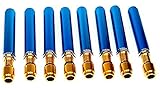
- set of 8 adj push rod tube
- 8 adj p/r tubes
Rank #4

- Stainless Steel Material, "No Rust Or Corrosion" / Does Not Includes Seals
- 1600cc Base Engines
- Ideal For Stock Engine Builds And Rebuilds
- Sold As Each
- Empi Quality
Product prices and availability are accurate as of the date/time indicated and are subject to change. Any price and availability information displayed on Amazon at the time of purchase will apply.




