RISC-V is becoming a serious architectural option for software-defined, electrified and increasingly AI-enabled vehicles—but it is not a single chip, a replacement already installed across production cars, or a guarantee of lower cost. It is an open instruction-set architecture (ISA) that lets different companies build automotive processors, microcontrollers, accelerators and system-on-chips. The strongest near-term opportunities are selected controllers, safety islands, custom accelerators and specialized compute, while software maturity, functional-safety evidence, cybersecurity and production qualification still determine whether a design can ship.
The European automotive shift was outlined by RISC-V International in an article published May 16, 2025 and updated June 12, 2025: “Automotive Industry Charts New Course with RISC-V”. Its panel included executives from Infineon Technologies, Codasip, Resiltech, Quintauris and CARIAD, moderated by Cortus’s Michael Chapman.
What RISC-V actually is
RISC-V is an ISA: the specification describing instructions, registers and related architectural behavior that software uses to control a processor. RISC-V International maintains and ratifies the standard. It does not manufacture chips, sell processor cores or provide a complete vehicle platform.
IP companies and semiconductor manufacturers implement the ISA in processor cores, MCUs, SoCs, vector units and AI accelerators. A chip may combine a standard RISC-V base with ratified extensions, vendor-specific instructions and automotive peripherals. “Open” means the standard is available under RISC-V International’s governance model and is not controlled by one silicon vendor. It does not mean every core, chip, compiler, safety package or development tool is free or open source. See the organization’s automotive overview.
Quick wins for a faster PC:
Repair Windows errors before they cause bigger problemsFix Now →Scan for outdated or missing drivers - takes under a minuteDriver Scan →Clear out junk files and repair common Windows errorsFree Scan →#1 Best Overall
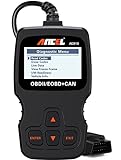
- CEL Doctor: The ANCEL AD310 is one of the best-selling OBD II scanners on the market and is recommended by Scotty Kilmer, a YouTuber and auto mechanic. It can easily determine the cause of the check engine light coming on. After repairing the vehicle's problems, it can quickly read and clear diagnostic trouble codes of emission system, read live data & hard memory data, view freeze frame, I/M monitor readiness and collect vehicle information
- Sturdy and Compact: Equipped with a 2.5 foot cable made of very thick, flexible insulation. It is important to have a sturdy scanner as it can easily fall to the ground when working in a car. The AD310 OBD2 scanner is a well-constructed mechanic tool with a sleek design. It weighs 12 ounces and measures 8.9 x 6.9 x 1.4 inches. Thanks to its compact design and light weight, transporting the device is not a problem. The buttons are clearly labelled and the screen is large and displays results clearly
- Accurate Fast and Easy to Use: The AD310 scanner can help you or your mechanic understand if your car is in good condition, provides exceptionally accurate and fast results, reads and clears engine trouble emission codes in seconds after you fixed the problem. This device will let you know immediately and fix the problem right away without any car knowledge. No need for batteries or a charger, get power directly from the OBDII Data Link Connector in your vehicle
- OBDII Protocols and Car Compatibility: Many cheap scan tools do not really support all OBD2 protocols. AD310 scanner as it can support all OBDII protocols such as KWP2000, J1850 VPW, ISO9141, J1850 PWM and CAN. This device also has extensive vehicle compatibility with 1996 US-based, 2000 EU-based and Asian cars, light trucks, SUVs, as well as newer OBD2 and CAN vehicles both domestic and foreign. Pls confirm with our customer service whether it is compatible with your vehicle before purchasing
- Home Necessity and Worthy to Own: This is an excellent code reader to travel or home with as it weighs less and it is compact in design. You can easily slide it in your backpack as you head to the garage, or put it on the dashboard, this will be a great fit for you. The AD310 is not only portable, but also accurate and fast in performance. Moreover, it covers various car brands and is suitable for people who just need a code reader to check their car
It is also useful to separate four layers: the ISA, a processor core implementing it, a SoC or MCU containing that core and peripherals, and the ECU or vehicle system in which the chip is deployed. Portability at the first layer does not make complete platforms interchangeable.
Why automakers are reconsidering processor architecture
Software-defined vehicles
Vehicles are consolidating functions into domain and zonal controllers, with software updates and long service lives becoming central to the product. A common, adaptable ISA can help preserve software and engineering expertise across processor generations, although peripheral, memory, interrupt, security and accelerator differences still require platform work.
Electrification
Battery management, inverter control, charging, thermal systems and power electronics all need efficient, deterministic embedded compute. A designer can tailor a RISC-V implementation to a narrow control workload rather than accept every feature on a generic processor roadmap.
ADAS, autonomy and AI
Driver assistance and automated-driving systems combine real-time control CPUs with GPUs, vector engines, neural accelerators and independent monitoring. RISC-V’s extensibility is relevant to that heterogeneous mix, but it does not make an AI accelerator a substitute for deterministic control, redundancy or validated fallback behavior.
Crashes, No Sound, or Screen Glitches?
Random freezes, missing sound and display glitches usually trace back to one bad driver. Find and replace yours safely.Free scan · under a minuteWindows Errors? Fix Them Before They Spread
Repair common Windows errors and clear accumulated junk for a smoother, more stable PC - no reinstall needed.Free scan · no reinstallRank #2

- Multi-Functions - Practical Multi-Functions OBD2 code reader features built-in OBD2 DTC lookup library, which help you to determine the cause of the engine light, read code, erase code, view freeze frame, I/M ready, vehicle information, data flow, real-time curve, get vehicle speed information, calculate load value, engine coolant temperature, get engine speed.
- Wide Capability - Supports 9 protocols compatible with most 1996 US-Based, 2000 EU-Based and Asian cars, and newer OBD II & CAN domestic or import vehicles. Supports 6 languages - English,German, Dutch, Spanish, French, Italian.
- 2.8" LCD Display - Designed with a clear display 2.8" Large LCD screen - white backlight and contrast adjustment. No need any battery or charger, OBD reader gets the power directly from your vehicle through the OBDII Data Link Connector.
- Compact Design - Car diagnostic scanner is equipped with a 2.5 feet long cable and made of a very thick flexible insulator.There are 6 buttons on OBD2 Scanner:scroll up/down,enter/exit and buttons that quick query VIN vehicle number& the DTC fault code.
- ABS / Airbag codes NOT Supported - It is able to read and clear check engine information which is part of OBDII system, but it cannot work with non-OBDII systems, including ABS / Airbag / Oil Service Light, etc.
Long programs and technology sovereignty
Vehicle programs commonly outlast individual semiconductor roadmaps. Multiple potential IP and silicon suppliers can improve negotiating leverage and architecture-level optionality. That is different from guaranteed supply independence: foundries, memory, packaging, EDA, software, certification and geopolitical conditions remain dependencies.
Where RISC-V could appear in a vehicle
RISC-V International describes a range extending from low-power embedded control to centralized compute. Possible applications include:
- Body-control modules, actuator control and sensor hubs
- Battery-management, powertrain and power-conversion controllers
- Chassis, braking and steering subsystems
- Gateway, communications and zonal controllers
- Safety islands that monitor higher-performance processors
- Instrument clusters, digital cockpits and infotainment support
- ADAS perception, sensor fusion and machine-learning accelerators
- Central vehicle computers and secure-boot or cryptographic functions
This is an architectural opportunity map, not evidence that every listed function is already deployed in a RISC-V production ECU. RISC-V can also coexist with Arm, proprietary DSPs, GPUs and NPUs in one heterogeneous vehicle.
The technical case—and its limits
Modularity and custom instructions
Standard extensions can target vector processing, virtualization, real-time behavior and cryptography; custom extensions can accelerate a tightly defined workload. That can improve performance per watt, latency or silicon efficiency when the implementation, memory system and software are designed together.
Free tools Windows power users keep installed
One-click scans. No signup required.
Rank #3
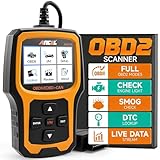
- Understand Your Check Engine Light – The ANCEL AD410 OBD2 scanner helps everyday drivers quickly read and clear engine-related fault codes, view code definitions, and understand why the check engine light is on before visiting a repair shop. With 42,000+ built-in DTC lookups, this car code reader helps reduce guesswork and makes basic vehicle diagnostics easier for beginners and DIY users
- Full OBD2 Diagnostics Made Simple – More than a basic engine code reader, this OBD2 scanner diagnostic tool supports key OBDII functions including reading/clearing codes, live data, freeze frame, I/M readiness, O2 sensor test, EVAP test, vehicle information, and MIL status. It helps you check your car’s condition, verify repairs after the issue is fixed, and communicate with mechanics more confidently
- Live Date & Real-time Vehicle Insights – View real-time engine data such as RPM, coolant temperature, fuel trim, oxygen sensor readings, and other available OBD2 parameters directly on the screen. These live data readings help you better understand how your vehicle is running, spot abnormal patterns, and make more informed repair decisions instead of relying only on a warning light
- Smog Check Readiness At A Glance – Use the I/M readiness function before a smog check or emissions inspection to see whether your vehicle’s monitors are ready. This OBD2 code scanner helps you confirm if recent repairs have brought the system back to a ready state, reducing the chance of failed inspections, retests, wasted trips, and unnecessary inspection fees
- Works With Most OBD2 Vehicles – Compatible with most 1996 and newer U.S.-based OBD2 cars, SUVs, and light trucks, as well as many 2000 and newer EU/Asian OBD2 vehicles. Supports major OBDII protocols including CAN, ISO9141, KWP2000, J1850 VPW, and J1850 PWM. This automotive diagnostic scanner is designed for wide vehicle coverage; please check compatibility with your vehicle before purchase
Customization has a cost. Code using one supplier’s instructions may not move cleanly to another core. Teams should prefer common profiles where portability matters and isolate proprietary extensions behind stable software interfaces where differentiation is necessary.
Power, performance and area
RISC-V can let a designer allocate silicon to the actual workload instead of following a one-size-fits-all processor roadmap. Potential benefits include predictable latency, smaller implementations and specialized acceleration. They are not guaranteed product results: process node, caches, memory bandwidth, compiler quality, thermal design, safety hardware and validation often dominate system performance.
Software reuse without false promises
A shared ISA can support reuse of compilers, debuggers, operating-system ports, middleware and engineering skills. It does not promise binary compatibility across all RISC-V processors. Boot firmware, peripherals, interrupt controllers, privilege configuration, RTOS ports, security hardware and custom accelerators can still force substantial porting and qualification.
Safety and cybersecurity are implementation questions
RISC-V itself is not automatically ISO 26262-certified because the ISA is open. Certification and a vehicle safety case attach to a particular core, chip, toolchain, development process and system. Automotive programs may require:
Recommended Free Tools
Rank #4

- 【Diagnose Check Engine Light in Seconds – No Mechanic Needed】The FOXWELL NT301 OBD2 scanner instantly reads & clears engine fault codes (DTCs) with one click. Simply plug into the 16-pin DLC port, turn ignition on, and get accurate results within seconds—No prior car knowledge required. Save hundreds on dealership fees by knowing exactly what’s wrong before you visit a shop. The #1 choice car scanner for DIYers and car owners who want to take control of their vehicle’s health
- 【Clear & Reset CEL with Confidence】Unlike cheap code readers that just erase codes temporarily, NT301 works like all professional vehicle code readers: It clears the check engine light only after you’ve fixed the underlying issue. If the problem isn’t fully repaired, the fault code will reappear. So you’ll never get a false pass. Use the foxwell scanner to verify your repair work and drive with peace of mind
- 【Sm-og Check Helper – Know Your Pass/Fail Status Before the Test】With dedicated one-click I/M readiness hotkeys and a simple Red-Yellow-Green LED indicator, you’ll instantly know if your vehicle is ready for annual testing. Built-in speaker provides clear audio feedback. No guesswork—just confidence before you head to the test center. One less thing to worry about when inspection day comes
- 【Advanced OBDII Modes – O- 2 Sensor & EVAP Testing】NT301 go beyond basic code reading with enhanced OBD2 modes. Run an EVAP system check to assess fuel tank condition, and use the O- 2 sensor test to optimize air-fuel ratio, boosting fuel economy, cutting em- issions, and saving you money at the pump. The code reader for cars and trucks is like having a mini em-issions lab in your glove box
- 【Live Data Graphing – Spot Engine Issues in Real Time】View and log live sensor data in easy-to-read graphs with this OBD2 scanner diagnostic tool. Monitor ox- ygen sensors, fuel trims, coolant temperature, RPM, and more to spot suspicious values instantly. This obd scanner gives you professional-grade insight without the pro price tag—a feature you won’t find on basic $20 car code readers
- ISO 26262 processes and evidence for the applicable ASIL target
- ISO/SAE 21434 cybersecurity engineering
- Deterministic real-time behavior and freedom from interference
- Memory protection, privilege separation and fault detection
- Secure boot, authenticated firmware and protected over-the-air updates
- Diagnostics, trace, tool qualification, safety manuals and certification artifacts
- AUTOSAR or other production software integration and long-term maintenance
A processor IP block advertised as suitable for safety applications is not the same as a chip developed under a certified process, and neither is the same as a qualified ECU or complete vehicle system.
AI and ADAS: promising, but not a shortcut
Automotive AI must operate within tight power, thermal, cost, latency and reliability limits. RISC-V’s AI discussion emphasizes that “a car is not a cloud”; vehicle compute needs different trade-offs from data-center infrastructure. The RISC-V AI opportunities and challenges paper links successful deployment to software frameworks, model tooling, memory bandwidth, standards and safety evidence—not just an ISA.
In a practical architecture, vector or neural hardware may handle perception and prediction while independently monitored processors run bounded control loops. AI output should not automatically receive final authority over braking, steering or power delivery without the surrounding safety architecture, diagnostics and fallback paths.
Independent reader supportYour contribution helps us test, update, and keep practical guides available for everyone.Europe’s strategic role
The European Commission’s digital vehicle ecosystem initiative includes work on open-source building blocks, interfaces and tools for software-defined vehicles, alongside a pre-competitive RISC-V-based automotive hardware platform with AI capability. Those programs support European competitiveness, shared infrastructure and technology sovereignty.
Do these 3 things before closing this tab:
1Clear out junk files and repair common Windows errors2Fix the driver behind crashes, sound loss and screen glitches3Repair Windows errors before they cause bigger problemsBest Value
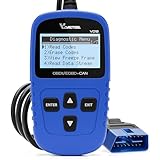
- 【A MUST-HAVE SCANNER TOOL FOR DIYERS】 - VDIAGTOOL VD10 car code reader is an incredibly useful, handheld obd2 scanner for each car owner or hobbyist, even for those with little to no experience when it comes to vehicle mechanics! Similar to a fixd car diagnostic tool, using this car diagnostic scanner is extremely easy. All you have to do is attach it to your car OBDII port and you can diagnose car problems in seconds! Read Codes (DTCs); Clear Codes; Live Data; View Freeze Frame; I/M Readiness; Vehicle Information.
- 【KEEP ENGINE IN GOOD STATUS】 - VDIAGTOOL check engine code reader brings a fast access to scan, read the car fault code, show its definition on the screen instantly, troubleshooting to find the root causes of problems, erase the engine fault code and turn off the MIL (Malfunction Indicator Light). Similar to a fixd car diagnostic tool, this car code reader helps ensure your engine stays in top condition.
- 【READ/CLEAR CODES & DTC LOOKUP】- No search online & saving your time, this vehicle car code reader retrieves generic (P0, P2, P3, and U0), manufacturer specific (P1, P3, and U1) codes, pending codes and displays DTC definitions based on the built-in database(more than 3000 codes) on the TFT screen, find out the root causes and clear the codes after fixed.
- 【ENHANCED OBD2 SCANNER WITH LIVE DATA & RETRIEVE FREEZE FRAME】 - This diagnostic scan tool for accurate diagnosis enables you to retrieve data from vehicle sensors, such as Engine RPM, Intake air temperature, Short/Long term fuel, Misfire data and etc. The freeze frame is stored in the PCM together with the diagnostic trouble code (DTC) related to the fault. Comparable to a fixd car diagnostic tool, the VD10 car code reader car scanner can be a valuable & practical diagnostic aid and also greatly help when diagnosing intermittent problems.
- 【I/M READINESS for THE S-nn-0-g CHECK】- OBDII vehicle may not pass the annual inspection unless the required monitors since reset are complete. So you should at least read the readiness monitors and make sure they are ready. This car obd2 scanner diagnostic tool is equipped with I/M readiness function to check the operations of the e-m-issi0n system on OBD2 compliant vehicles, run I/M monitor readiness test, checking if the pass vehicle s-m-0-g inspection.
A public research or pre-competitive platform is evidence of strategic interest, not proof of a mass-market vehicle using an all-RISC-V compute stack. Commercial roadmaps, demonstration hardware, production-intent designs and volume deployment should be treated as separate maturity levels.
What adoption evidence exists?
Infineon’s roadmap
RISC-V International’s 2025 annual report says Infineon’s automotive MCU roadmap would be fully based on RISC-V and describes work on a standard MCU profile. An earlier Infineon-focused announcement described the effort more cautiously as an expansion of its automotive MCU portfolio for the next 5–10 years and beyond. The stronger statement should therefore be understood as RISC-V International’s account, not as independently verified market-wide deployment.
Tools and development platforms
IAR advertises automotive development tools supporting RISC-V alongside Arm, RH850, RL78, STM8 and other architectures, with AUTOSAR and MCAL integration: IAR automotive tools. Pricing is quote-based rather than publicly listed on the referenced page.
Microchip’s Mi-V ecosystem includes PolarFire SoC FPGAs with a five-core, 64-bit RISC-V processor and mixed real-time/Linux support. That is useful development hardware, not proof of a production automotive ECU or vehicle deployment.
The Tool Desk
Outbyte Driver Updater FREEFix the driver behind crashes, sound loss and screen glitchesFind Drivers →Outbyte PC Repair FREEClear out junk files and repair common Windows errorsFree Scan →A practical maturity ladder
- ISA capability and ratified extensions
- Announced processor IP
- Development board or FPGA platform
- Automotive-qualified silicon
- Production-intent design
- Volume production
- Confirmed vehicle deployment
Public material establishes substantial ecosystem activity and commitments, but it does not establish RISC-V market share in production vehicles, a specific all-RISC-V car or superior automotive benchmark performance versus Arm.
RISC-V compared with established architectures
| Criterion | RISC-V | Established proprietary architecture |
|---|---|---|
| Governance | Open standard with multiple implementers | Controlled by an architecture owner |
| Customization | Strong extension model | Usually more constrained or vendor-specific |
| Ecosystem maturity | Growing and uneven by segment | Broad, established automotive workflows |
| Safety evidence | Depends on individual cores, tools and processes | Often more mature and widely deployed |
| Supplier choice | Potentially broad, subject to compatible products | May be concentrated but commercially mature |
| Software portability | Good at ISA level; not automatic at platform level | Supported by mature vendor ecosystems |
| Migration risk | New qualification and software work may be required | Existing investments can reduce transition risk |
| Differentiation | Greater freedom for custom silicon | Faster access to established roadmaps |
How an OEM or Tier 1 should evaluate a RISC-V design
Score the complete program, not just the instruction set:
- Technical: performance, latency, power, thermal envelope, memory bandwidth, determinism, vector/accelerator support, virtualization, debug and trace, networks and peripherals.
- Safety and security: ASIL target, safety mechanisms, freedom from interference, secure boot, update security, diagnostics, tool qualification and available safety evidence.
- Software: Linux, AUTOSAR and RTOS support; compiler quality; MCAL and middleware; portability across suppliers; cybersecurity maintenance.
- Commercial: IP licensing, NRE and verification cost, qualified silicon, foundry and packaging options, second-source feasibility, vendor stability and 10-year-plus support.
- Program risk: determine whether the offering is shipping, sampling, announced or experimental; document every custom extension; avoid dependence on one compiler, debugger or supplier.
What could slow adoption
- Fragmentation from incompatible custom extensions and profiles
- Higher migration, verification and certification costs than expected
- Gaps in automotive-grade middleware, trace, diagnostics and tool qualification
- Unproven performance or thermal behavior for a particular workload
- Long vehicle design cycles and cautious supplier qualification
- Continued dependence on foundries, EDA, memory, packaging and software vendors
RISC-V can reduce dependence on one ISA owner, but it cannot by itself eliminate vendor lock-in. A software stack, safety case or custom extension can still bind a program to one implementation.
Quick Recap
Product prices and availability are accurate as of the date/time indicated and are subject to change. Any price and availability information displayed on Amazon at the time of purchase will apply.




