The Tool Desk
Outbyte PC Repair FREERepair Windows errors before they cause bigger problemsFix Now →Outbyte Driver Updater FREEFix the driver behind crashes, sound loss and screen glitchesFind Drivers →Are Donut Lab’s solid-state battery claims actually real? As of August 13, 2026, the answer is partly demonstrated, not fully proven: a VTT report supports unusually fast charging for a supplied 26 Ah cell, while public evidence does not independently verify Donut Lab’s all-solid-state chemistry, 400 Wh/kg, 100,000 cycles, or scaled production.
Donut Lab’s January 2026 announcement made a much broader case. The company described an all-solid-state battery for OEM production vehicles, claimed five-minute full charging and up to 100,000 cycles, and said the battery would deliver 400 Wh/kg. Donut Lab also said Verge Motorcycles would use the technology in production motorcycles.
As an Amazon Associate I earn from qualifying purchases.
The evidence available by the date above supports a fast-charging cell and a ten-day idle-retention observation. It does not independently establish the chemistry, energy density, cycle life, complete vehicle-pack performance, or repeatable manufacturing behind the headline marketing.
Crashes, No Sound, or Screen Glitches?
Random freezes, missing sound and display glitches usually trace back to one bad driver. Find and replace yours safely.Free scan · under a minuteWindows Errors? Fix Them Before They Spread
Repair common Windows errors and clear accumulated junk for a smoother, more stable PC - no reinstall needed.Free scan · no reinstallKey takeaways
- Donut Lab claims its battery delivers 400 Wh/kg, charges fully in five minutes, and lasts up to 100,000 cycles, but those figures remain company claims rather than independently established results.
- According to the 2026 VTT customer report, a supplied 26 Ah cell was tested at 5C (130 A) and 11C (286 A), with charging to a maximum of 4.3 V.
- Independent reporting describes the tested cell reaching approximately 80% charge in 4.5 minutes at 11C, but that result does not prove a five-minute full charge for a complete vehicle pack.
- Donut Lab’s ten-day idle test supports the narrower conclusion that the device retained voltage like a battery rather than behaving as a simple supercapacitor.
- More than 20 battery experts reportedly challenged the solid-state interpretation, saying the published voltage curves and expansion behavior look more consistent with conventional lithium-ion chemistry; Donut Lab rejects that criticism.
- The responsible verdict as of August 13, 2026, is “partly demonstrated, not fully proven.”
What exactly does Donut Lab claim?
Donut Lab claims that its Donut Battery is an all-solid-state battery ready for original-equipment-manufacturer production vehicles. In its January 5, 2026 announcement, Donut Lab claimed 400 Wh/kg energy density, full charging in five minutes, and a design life of up to 100,000 cycles. Donut Lab also said the design contains no flammable liquid electrolyte and should cost less to produce than conventional lithium-ion batteries. Those are company claims, not independently verified specifications.
#1 Best Overall

- Capacity: total 66.6Wh ( 11.1V 6000mAh, or 3.7V 18000mAh ). Rechargeable DC 12V and 5V USB double output lithium ion battery pack. Voltage range of the 12V output port is 12.6-9V, it is not constant, compatible with most 12 volt devices. 12v DC port: Inner Positive(+), Outer Negative(-).
- Compatible with any LED strip light products, CCTV Camera, IP Camera , LED Panel, Amplifier, Modem,Car DVR, Speaker, mobile phone, spectra S2 breast pump, 12V Heated Jacket and other 12V/5V devices, etc. TalentCell 12V Lithium-ion Battery Pack also runs robotic telescopes fine. ★★★PLEASE NOTE: The size of our battery output port and power cable are DC5521, please confirm the size of your equipment input port before you order, if it's not DC5521, you need to purchase another power cable to connect your device. Any questions, please get support.
- Multi-led indicator, 5 LED indicators displaying battery percentage. If you don't use the battery for a long time, we suggest you charged it periodically. We provide 18-month warranty.
- LIthium ion battery have excellent characteristics: large capacity, small volume, light weight, etc. Multiple Protection, keep battery safely. Over-charge protection, over-discharge protection, short-circuit protection.
- Wall plug 12.6V 1A AC/DC Charger and DC 1 Female to 2 Male Power Splitter Cable are included. The size of our battery output port and power cable are DC5521. Inner positive, outer negative. Please confirm the size of your equipment input port before you order. Any questions, please get support.
Donut Lab CEO Marko Lehtimäki made the company’s position unusually explicit:
“At Donut Lab, our answer on solid state batteries being ready for use in OEM production vehicles is now, today, not later.”
Donut Lab’s January 5, 2026 announcement also stated: “As of today, these batteries are real, in production vehicles, and represent the future of electric mobility.” The wording establishes what Donut Lab is promising; it does not independently establish the battery’s chemistry, energy density, durability, or manufacturing scale.
Which Donut Lab battery claims are supported, and which remain unproven?
The public record supports unusually fast charging for a supplied cell, but it does not verify the complete breakthrough package. The distinction is easiest to see when each headline claim is compared with the evidence actually available.
| Headline claim | Who made the claim | What the public evidence supports | What remains unresolved |
|---|---|---|---|
| All-solid-state construction | Donut Lab, 2026 | Donut Lab describes the battery as all-solid-state and says it has no flammable liquid electrolyte. | No publicly disclosed independent compositional or manufacturing analysis settles whether the relevant cell contains a genuinely solid electrolyte throughout, without a meaningful liquid or gel component. |
| 400 Wh/kg energy density | Donut Lab, 2026 | The figure appears in Donut Lab’s announcement. | The reviewed VTT charging tests did not establish or independently measure 400 Wh/kg. |
| Five-minute full charge | Donut Lab, 2026 | VTT-associated testing supports a high-rate charging result; reporting describes approximately 80% charge in 4.5 minutes at 11C. | An 80% single-cell result is not the same as a five-minute full charge for a production vehicle pack. |
| Up to 100,000 cycles | Donut Lab, 2026 | The number is presented as a design-life claim. | The reviewed reports do not provide long-duration capacity-fade data demonstrating 100,000 cycles. |
| Commercial-scale production | Donut Lab, 2026 | Donut Lab announced intended OEM use and said Verge motorcycles would use the battery. | The public material reviewed does not independently demonstrate repeatable, defect-controlled production at the claimed commercial scale. |
IEEE Spectrum’s May 2026 reporting and Electrek’s June 2026 review both emphasize the same central limitation: the available tests provide useful information about charging and related behavior, but not independent confirmation of the 400 Wh/kg and 100,000-cycle headline specifications.
What did VTT actually test?
The VTT evidence concerns a specific customer-supplied cell, not a fully characterized production battery pack. According to the VTT Technical Research Centre of Finland customer report VTT-CR-00092-26, published in 2026, the tested cell had a nominal capacity of 26 Ah within the report’s recommended voltage range.
Rank #2

- 【Superior Performance】: Lithium iron phosphate battery has high energy density, Long cycle life, Good safety performance, No memory effect, etc. NERMAK LiFePO4 battery has built-in BMS protection to prevent overcharge, Over-discharge, Over-current and short circuit, and excessive low self-discharge rate ensuring up to 1-year maintenance-free storage.
- 【Long Cycle Times】: Lithium batteries 2000 + cycles no problem while the traditional lead-acid batteries only 200-300 cycles, More safety and environmentally friendly than lead-acid batteries.
- 【Widely Uses】: Widely uses in most areas such as: Lighting (LED strip etc), Scooters, 12V router, RV/outdoor camping, Power wheels, Fish finder, Backup power, Ham Radio, Cellular remote camera, Solar/Wind power and more...
- 【Expansion and Recharge】Can be connected in series or parallel, in series, Up to 4 identical batteries can be connected,Quick charge by 5A , and heavy-duty output discharge up to 10A continuous and 2C Pulse.
- 【Warm Note】: 2*12 Volt Replacement lithium ion battery,12 months warranty, If you have any question for our product, Contact us: click the "Ask a question" on our storefront or in "YOUR ORDER" options click the "contact seller" (please use LiFePo4 special charger, with fully automatic SLA charger may not be fully charged)
The report describes charging under two high-rate conditions:
- 5C, or 130 A
- 11C, or 286 A
The charging protocol used constant-current and constant-voltage stages and charged to a maximum of 4.3 V. Those details matter because a charging result is meaningful only alongside the current, voltage limit, temperature, cell condition, and protocol used to obtain it. A C-rate is a rate relative to the cell’s capacity; it is not itself an energy-density or durability measurement.
What does the 11C charging result prove?
The 11C result provides credible evidence that the tested cell tolerated an exceptionally high charging rate under the specified test conditions. According to IEEE Spectrum’s 2026 coverage, the cell reached approximately 80% charge in about 4.5 minutes at 11C.
That result is impressive, but it is narrower than Donut Lab’s five-minute marketing claim in three important ways:
- 80% is not a full charge. The reported result describes reaching approximately 80%, while Donut Lab’s headline claim refers to full charging.
- The test involved a supplied cell. The result does not automatically describe a vehicle pack containing many cells, cooling hardware, balancing electronics, protection systems, busbars, and mechanical packaging.
- Fast charging does not establish chemistry. A cell can demonstrate a high charge rate without that result alone proving that its electrolyte is solid-state.
The VTT charge test also does not establish the cell’s 400 Wh/kg energy density, its discharge performance, its capacity retention after many cycles, or whether the same performance can be reproduced across a manufacturing run. The public tests support a fast-charging cell, not yet the entire breakthrough package.
What’s actually slowing this PC down?
Pick the symptom - the matching free tool is one click away.
What did the ten-day charge-retention test show?
Donut Lab’s third announced test examined the cell’s behavior during a ten-day idle period. In its March 9, 2026 test announcement, Donut Lab said the voltage stabilized during the first ten hours and remained level for the remaining approximately nine and a half days.
Rank #3
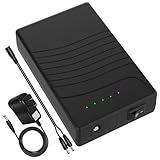
- DC 12V rechargeable lithium ion battery power bank, 3000mAh high capacity. DC 5521 port: Inner Positive(+), Outer Negative(-).
- Voltage range of the 12V output port is 12.6-9V, it is not constant, compatible with most 12 volt devices. Multi-led indicator, 5 LED indicators displaying battery percentage.
- 12 volt lithium battery compatible with most LED strip light products, CCTV Camera, IP Camera, LED Panel, Amplifier, Modem, Celestron NexStar, Car DVR, Speaker, Spectra S2 breast pump, etc.
- TalentCell Lithium-ion Battery Pack also runs robotic telescopes fine.
- 12.6V/0.5A wall plug AC/DC charger and DC 1 Female to 2 Male power splitter cable are included.
Donut Lab presented the result as evidence that the device behaved like a battery rather than a supercapacitor. That is a reasonable response to the specific supercapacitor theory, but it answers only that narrower question. The ten-day voltage-retention observation does not independently prove all-solid-state construction, 400 Wh/kg energy density, 100,000-cycle life, or production-scale repeatability.
Did VTT prove Donut Lab’s solid-state battery claims?
No. VTT-associated testing provided useful evidence about the charging behavior of one supplied cell, but it did not prove every claim Donut Lab made about its solid-state battery.
The report should not be dismissed as meaningless. Testing a 26 Ah cell at 11C, or 286 A, is a substantive result. At the same time, the report’s scope should not be expanded beyond its measurements. The reviewed evidence does not show that VTT independently certified the cell’s chemical composition, measured 400 Wh/kg, completed a 100,000-cycle capacity-fade program, or audited commercial manufacturing.
Calling the result “independent proof” without qualification would therefore be misleading. A more accurate description is that VTT conducted a technical test on a customer-supplied cell, while independent technical coverage assessed what the test did and did not demonstrate.
Is Donut Lab using a normal lithium-ion battery?
Public evidence does not settle whether Donut Lab’s tested cell is a conventional lithium-ion battery, an all-solid-state battery, or a construction that falls between those descriptions. The chemistry claim is actively disputed.
A June 2026 investigation summarized by TechSpot reported that an analysis led by independent researcher Ryan Hughes, known online as Ziroth, and supported by more than 20 battery experts, found the published voltage curves and expansion behavior more consistent with conventional lithium-ion chemistry than with the solid-state design Donut Lab promoted.
Rank #4

- 12V Rechargeable Battery Pack with Charger: The rapthor 12V 2600mAh Li-ion battery pack delivers DC 12V output with up to 3A max current. Includes a 12.6V/1A charger, DC power connector, and DC pigtail cable for easier setup with compatible 12V devices.
- Made for Low-Power 12V Devices: Ideal for compatible LED strip lights, CCTV/IP cameras, routers, modems, fishing lights, small Bluetooth speakers, small amplifiers, and DIY electronics that require compact 12V portable power.
- Easy for DIY Power Setups: The included DC connector and pigtail cable make it practical for custom wiring, project boxes, portable lighting, camera setups, and small electronic projects. Great for users who need a compact 12V power source with flexible connection options.
- Built-in Protection System: Designed with built-in protection to help guard against overcharge, over-discharge, overcurrent, overheating, and short circuit, supporting stable and reliable performance during everyday use.
- Rechargeable and Reusable Design: Built with rechargeable lithium-ion cells, this battery pack supports 800+ charge-discharge cycles without memory effect. Please check your device voltage, plug type, polarity, and current requirements before purchase.
That criticism is technically significant, but it should be stated precisely. The public account describes an expert analysis based on disclosed test behavior and related technical material. It is not the same as a publicly disclosed, universally accepted teardown, and the dossier does not establish a peer-reviewed adjudication that resolves the chemistry question. The strongest defensible conclusion is that Donut Lab’s solid-state designation is disputed and remains unresolved in the public record reviewed here.
Quick wins for a faster PC:
Scan for outdated or missing drivers - takes under a minuteDriver Scan →Clear out junk files and repair common Windows errorsFree Scan →How has Donut Lab answered the criticism?
Donut Lab rejects the interpretation that its battery is ordinary lithium-ion. In its June 9, 2026 response, the company said the circulated investigation compiled claims it had already addressed and challenged the relevance and qualifications of people cited in the criticism.
Donut Lab said: “We stand fully behind the technical data and commitments we have provided, taking them with the utmost seriousness.”
The statement is important because it confirms that the company has not withdrawn its chemistry or performance claims. The statement is also a company position, not independent confirmation. The evidence therefore has two clearly separated sides: critics argue that the disclosed behavior resembles conventional lithium-ion chemistry, while Donut Lab says its data and commitments remain valid.
Independent reader supportYour contribution helps us test, update, and keep practical guides available for everyone.Does Verge motorcycle deployment prove the battery claims?
No. A genuine production-vehicle deployment would be meaningful commercialization evidence, but it would not independently validate every cell-level specification.
Do these 3 things before closing this tab:
1Clear out junk files and repair common Windows errors2Scan for outdated or missing drivers - takes under a minute3Repair Windows errors before they cause bigger problemsDonut Lab said Verge Motorcycles would use the technology in production motorcycles, including the Verge TS Pro and Ultra, and said vehicles would be on the road in the first quarter of 2026. The announcement demonstrates the company’s commercialization intent. The evidence reviewed for this article does not independently confirm the extent of deployment, the production volumes, or whether motorcycles using the battery meet the advertised 400 Wh/kg, five-minute full-charge, and 100,000-cycle figures.
Best Value

- Package Includes: 1* 2600mAh 11.1v- 12v rechargeable battery pack, 1*12V battery charger, 1* cable connector, 1* DC5521 extension cord. The maximum output current is 6A (MAX)
- Wide Compatibility: Compatible with most 12V devices. Great for RC car, robot toy, DIY, solar panel, LED strip, CCTV camera, wireless camera, Bluetooth device, walkie-talkies, digital camera, video recorder, CD player, portable DVD player, MP3 player, electronic piano, router, mini Bluetooth Amp, turn signal, car DVR, etc
- Built-in Safety Chip: This 11.1v- 12v battery rechargeable comes with a built-in safety board. It protects the battery from over-charge, over-discharge, over-voltage, over-current, over-heat and short-circuit. Each battery is made with premium batteries to ensure safety and reliability
- Long Lifespan: This 11.1v- 12v lithium battery pack uses lithium-ion battery, no memory effect. The 11.1v- 12 v battery pack can handle over 800 charge and discharge cycles. No need to replace it often, so it’s both convenient and cost-effective
- Customer Support: If you have any issues or questions about the product, feel free to contact with us. We’ll get back to you quickly and help you sort it out
Vehicle use would also leave important technical questions open. A production motorcycle could establish that a battery operates in a real vehicle, but it would not by itself reveal the electrolyte composition, usable pack-level energy density, long-term capacity fade, or manufacturing yield. Commercial availability and full technical validation are related but separate milestones.
Why are the five-minute and 100,000-cycle claims not interchangeable?
Five-minute charging and 100,000-cycle life measure different aspects of battery performance, so success on one does not prove success on the other.
| Performance question | Public Donut Lab evidence | Evidence still needed |
|---|---|---|
| Can the cell accept charge quickly? | VTT tested 5C (130 A) and 11C (286 A) charging; reporting describes approximately 80% charge in 4.5 minutes at 11C. | Repeatable results across representative cells, with full temperature and safety data and a clearly defined full-charge procedure. |
| Can the battery fully charge in five minutes? | Donut Lab claims five-minute full charging; the public result described above reaches approximately 80% rather than documenting a complete vehicle-pack charge. | Pack-level testing showing the time to the stated full-charge condition under defined real-world limits. |
| Can the battery last 100,000 cycles? | Donut Lab states a design life of up to 100,000 cycles. | Long-duration cycling data showing capacity fade, test conditions, end-of-life criteria, and whether the claim applies to a cell, module, or complete pack. |
| Can the battery deliver 400 Wh/kg? | Donut Lab claims 400 Wh/kg; the reviewed VTT tests did not establish the figure. | Independent gravimetric energy-density measurement with transparent mass boundaries, voltage window, and test protocol. |
This separation prevents a common mistake in battery coverage: treating one fast-charge result as proof of energy density, longevity, safety, and commercial readiness at the same time.
What evidence would settle the Donut Lab battery dispute?
The dispute would be substantially clearer if independent parties published results across four separate evidence categories: chemistry and construction, cell-level performance, pack and vehicle behavior, and durability and manufacturing.
| Evidence category | Question that must be answered | What the current public record provides | What would make the claim stronger |
|---|---|---|---|
| Chemistry and construction | Is the electrolyte demonstrably solid throughout the relevant cell, without a meaningful liquid or gel component? | Donut Lab’s all-solid-state description and an unresolved expert challenge based on published behavior. | An independently inspectable composition analysis, teardown, and manufacturing description for representative cells. |
| Cell-level performance | What are the measured energy density, charge rate, discharge rate, temperature, voltage window, and test protocol? | VTT’s 26 Ah cell, 5C and 11C charging conditions, 4.3 V maximum, and constant-current/constant-voltage protocol. | Independent measurements of energy and power under disclosed, repeatable conditions, including the mass and voltage boundaries. |
| Pack and vehicle behavior | Do the cell results survive integration with cooling, balancing, protection circuitry, mechanical constraints, and safety requirements? | Donut Lab’s announced intended use in Verge TS Pro and Ultra motorcycles. | Public pack-level test data and verified vehicle results tied to defined battery specifications. |
| Durability and manufacturing | Does the battery retain useful capacity over its claimed life, and can it be produced consistently? | Donut Lab’s up-to-100,000-cycle design-life claim and production-vehicle announcement. | Capacity-fade data over many cycles, transparent end-of-life criteria, production sampling, defect rates, and evidence of repeatable scale manufacturing. |
For a technical reader evaluating the claim, independent battery testing, certification, or teardown work is more relevant than a consumer battery tester or charging accessory. No verified commercial referral program for that type of service was established in the research reviewed for this article, so this is an evidence standard rather than a product recommendation.
Are Donut Lab’s solid-state battery claims actually real?
Donut Lab’s solid-state battery claims are partly supported but not fully proven as marketed. The public evidence supports the narrower claim that a supplied cell can charge unusually quickly and retain voltage during a ten-day idle test. The evidence does not independently confirm all-solid-state chemistry, 400 Wh/kg energy density, 100,000-cycle life, or repeatable commercial-scale production.
The fair conclusion is not that every Donut Lab claim has been debunked. The fair conclusion is also not that the headline specifications are established facts. Until the company or an independent laboratory publishes transparent chemistry analysis, energy-density measurements, long-term capacity-fade results, pack-level testing, and production evidence, the complete breakthrough claim remains unproven.
Free tools Windows power users keep installed
One-click scans. No signup required.
Verdict: partly demonstrated, not fully proven. That wording reflects both sides of the evidence: a technically interesting high-rate cell test and substantial unanswered questions about what the cell is, how long it lasts, how much energy it stores, and whether the claimed design can be manufactured consistently at scale.
The Bottom Line
Bottom line: As of August 13, 2026, Donut Lab has public evidence for unusually fast charging of a supplied cell, but not independent public confirmation of the full all-solid-state battery package. The 400 Wh/kg, five-minute full-charge, 100,000-cycle, chemistry, and commercial-scale production claims remain unproven.
Quick Recap
Product prices and availability are accurate as of the date/time indicated and are subject to change. Any price and availability information displayed on Amazon at the time of purchase will apply.




